Fine Motor Skills Normal Letter E Worksheets for Ages 4-7
3 filtered results
-
From - To
Unlock your child's potential with our Fine Motor Skills Normal Letter E Worksheets specially designed for ages 4-7. These engaging worksheets help young learners practice their handwriting and letter recognition while developing crucial fine motor skills. Each activity is carefully crafted to make learning the letter E enjoyable and effective. Kids will benefit from tracing, writing, and various fun exercises that enhance dexterity and hand-eye coordination. Perfect for both classroom and home settings, our worksheets provide a solid foundation for reading and writing success. Discover the joy of learning with these innovative resources today!
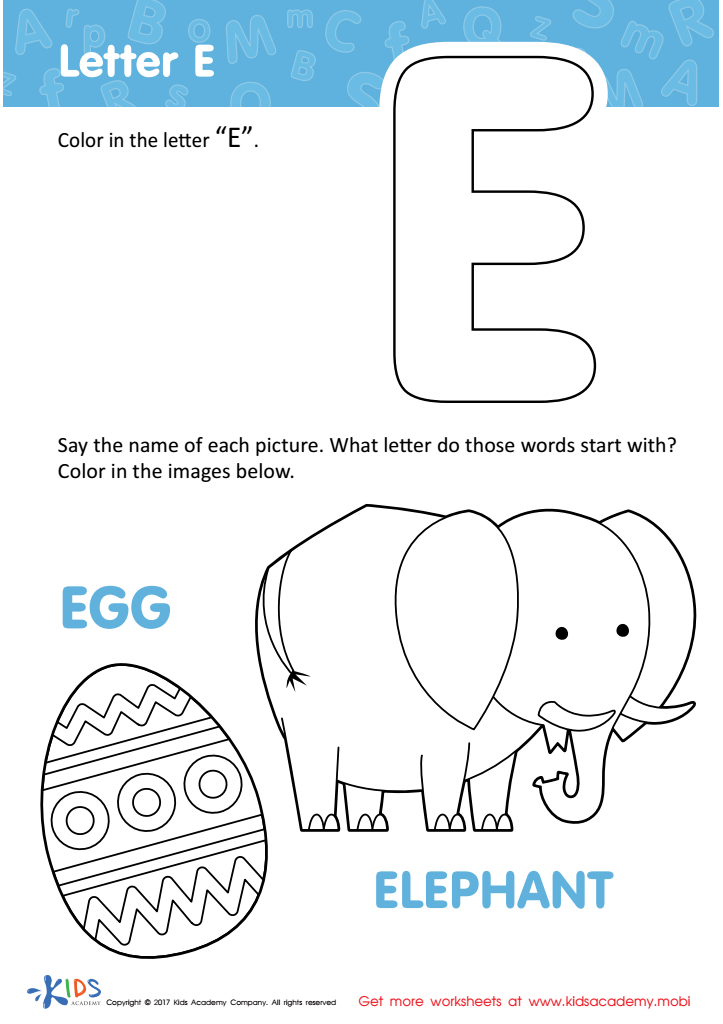
Letter E Coloring Sheet
 Assign to My Students
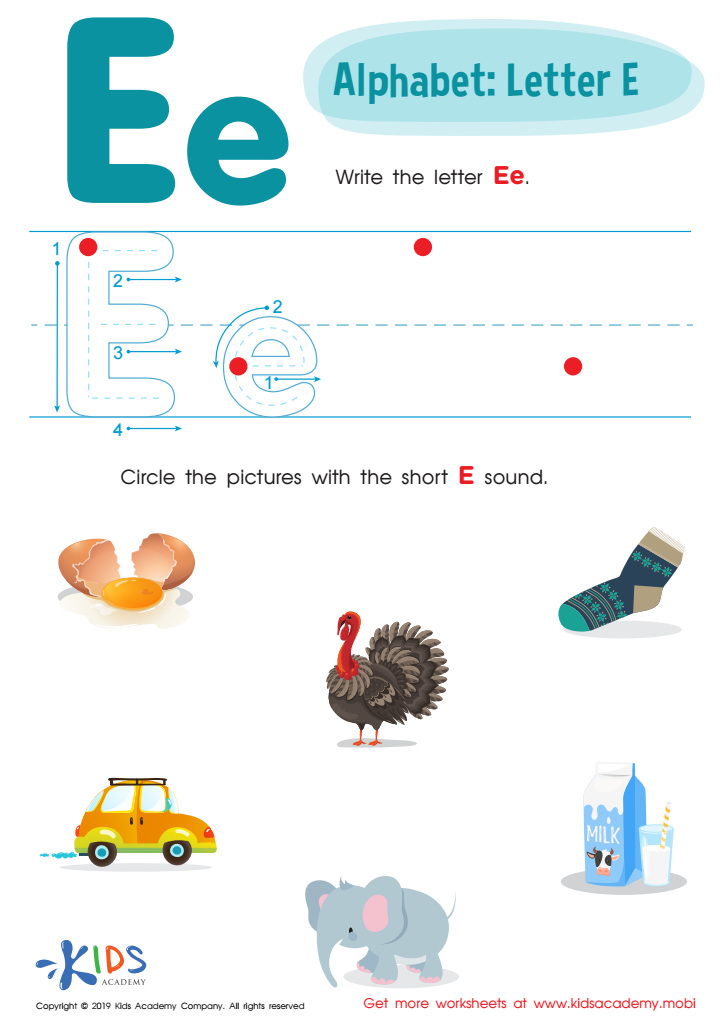
Letter E Tracing Worksheet
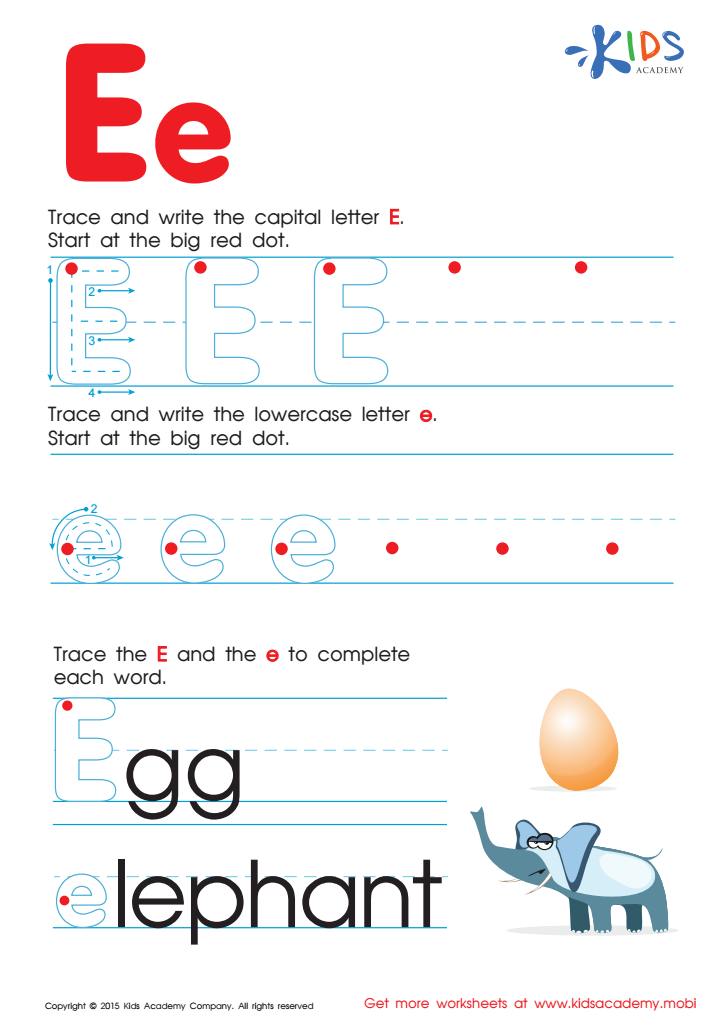
Letter E Tracing Page






It is essential for parents and teachers to care about the development of fine motor skills, particularly focusing on the competency in forming the letter 'E', in children aged 4-7. Fine motor skills entail the precise movements of small muscles, especially in the hands and fingers, and are fundamental for a child's daily activities and academic success. Properly forming the letter ‘E’, a basic yet common character, can be a significant indicator of a child’s development in writing.
Children who develop these skills early often show better hand-eye coordination, improved dexterity, and more robust cognitive linking between physical activities and mental processes. By mastering the writing of a letter like ‘E’, children not only gain a sense of confidence and pride but also lay a necessary foundation for more complex writing and learning tasks ahead.
Focusing on these skills helps ensure that a child is not struggling with the very act of writing, which can hinder their overall academic progress and diminish their eagerness for learning. Hence, attention to fine motor skills, starting with the basics such as the letter 'E', can result in significant positive outcomes in a child's school readiness and lifelong educational journey.