Visual discrimination skills Normal Letter Recognition Worksheets for Ages 4-7
5 filtered results
-
From - To
Enhance your child’s visual discrimination skills with our Normal Letter Recognition Worksheets, designed specifically for ages 4-7. These engaging and interactive worksheets help young learners identify, distinguish, and recognize letters in various formats, fostering essential foundational skills that support their literacy development. Through fun activities and colorful illustrations, children improve their focus and attention to detail while building confidence in letter recognition. Perfect for at-home practice or classroom use, our resources cater to diverse learning styles and promote early reading readiness. Equip your child with the tools they need for academic success and watch them flourish in their educational journey!
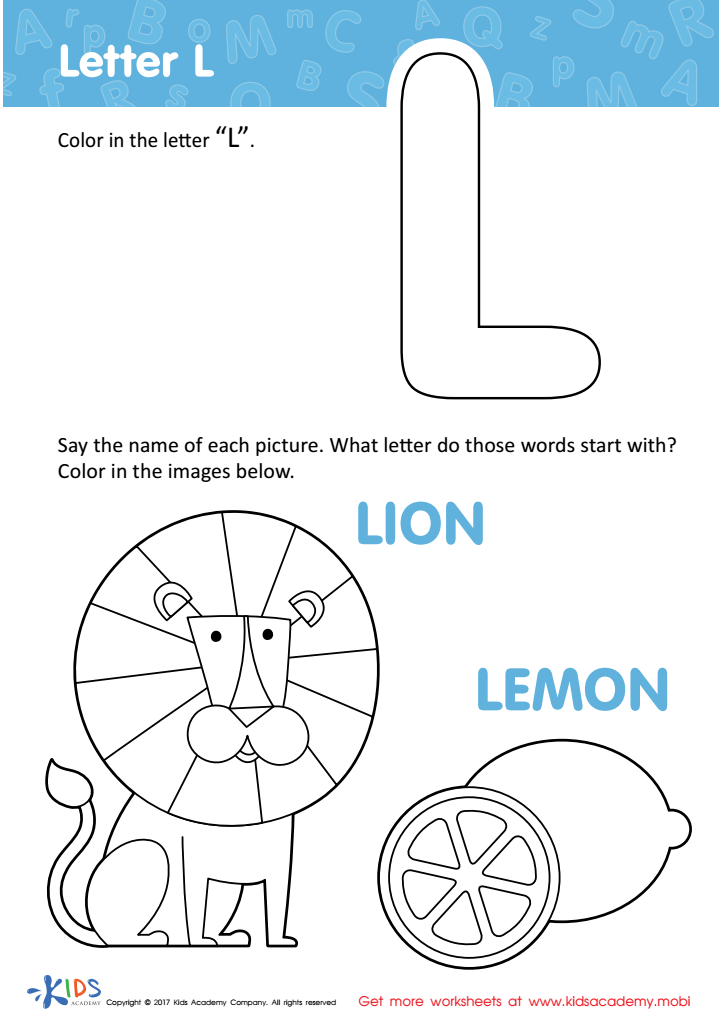
Letter L Coloring Sheet
 Assign to My Students

Find Uppercase Letters A, B, and C Worksheet
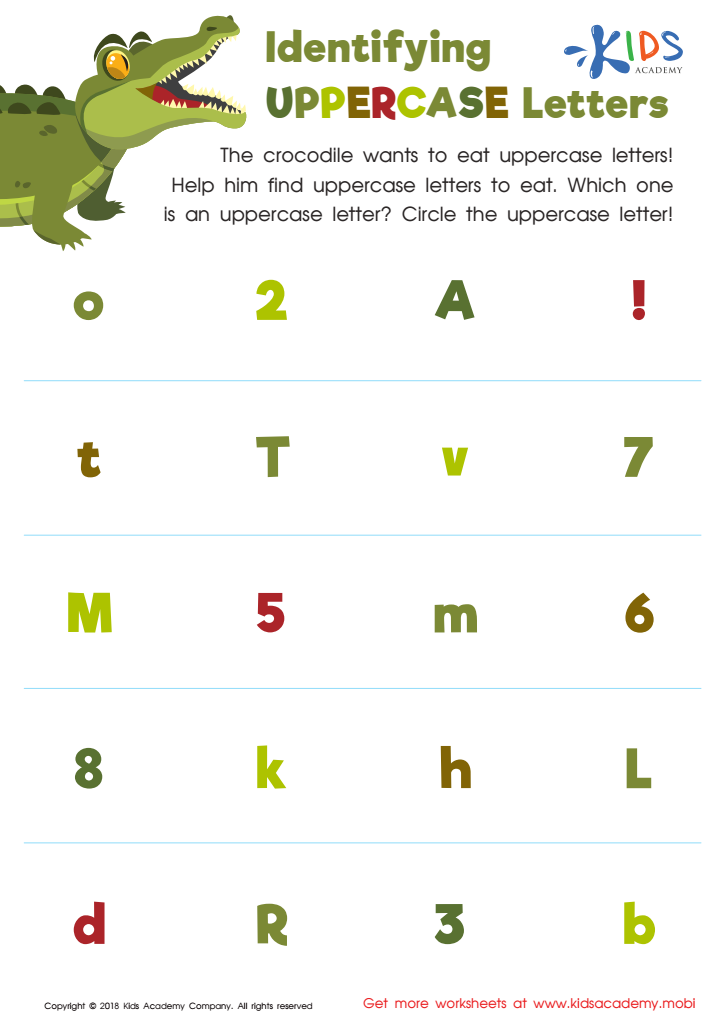
Identifying Uppercase Letters Worksheet
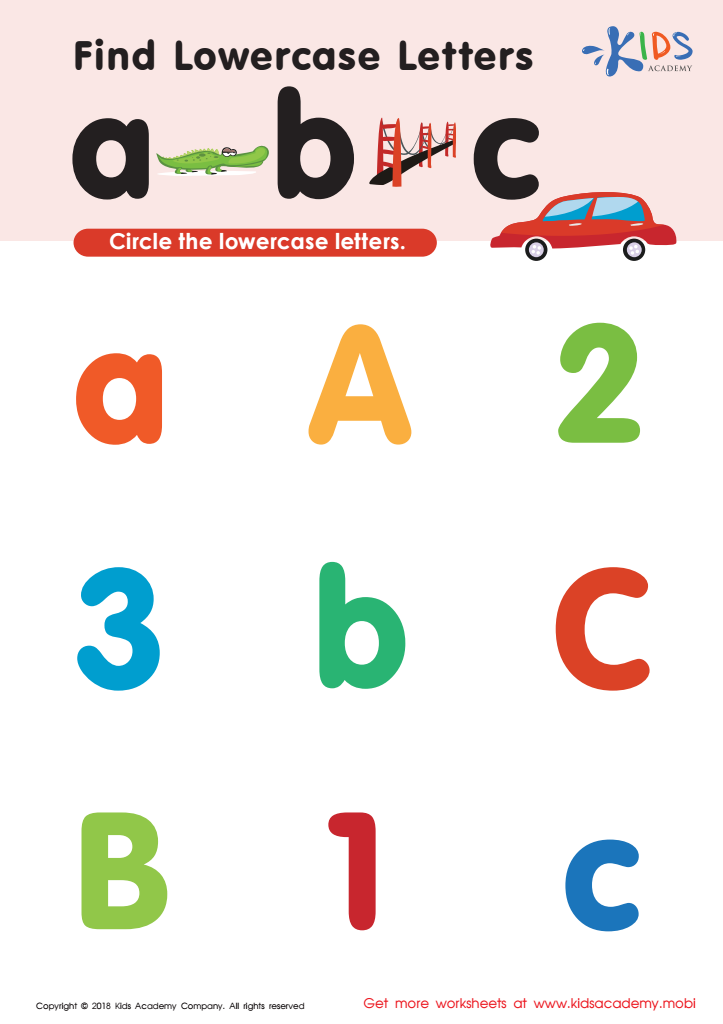
Find lowercase letters a b c Worksheet
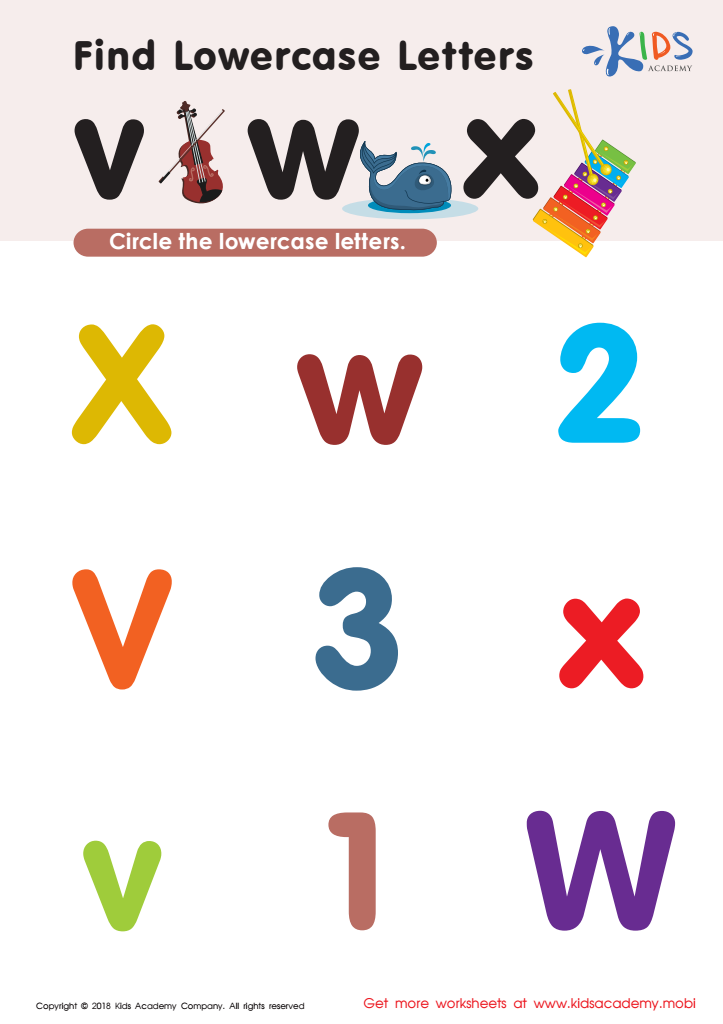
Find Lowercase Letters v w x Worksheet








Visual discrimination skills and normal letter recognition are crucial for children aged 4-7, significantly impacting their literacy development. At this stage, children begin to learn to read and write, and strong visual discrimination skills help them differentiate between similar letters (like ‘b’ and ‘d’) and identify distinct features of letters and words. This ability lays the groundwork for successful reading comprehension and spelling in later years.
Parents and teachers should prioritize these skills, as they enable children to process written information accurately and efficiently. When children struggle with visual discrimination, they may experience frustration, hindering their self-esteem and motivation to learn. Early intervention can alleviate potential issues and foster a love for reading and writing.
Moreover, a strong foundation in letter recognition assists children in following instructions, recognizing familiar signs, and enhancing their overall academic performance across subjects. Encouraging activities that promote visual discrimination, such as letter matching games, puzzles, and interactive reading, can significantly benefit children. By investing time and resources in developing these crucial skills, parents and teachers can ensure that children embark on a journey of literacy with confidence and enthusiasm, paving the way for ongoing academic success.








