Phonics practice Normal Long Vowels Worksheets for Ages 4-7
4 filtered results
Difficulty Level
Grade
Age
-
From - To
Subject
Activity
Standards
Enhance your child's reading skills with our Engaging Long Vowels Worksheets, specially designed for ages 4 to 7! These interactive phonics practice resources focus on normal long vowels, helping young learners recognize sounds and improve their pronunciation. Each worksheet features fun activities aligned with early learning standards, making phonics practice both educational and enjoyable. From coloring tasks to matching exercises, your child will build confidence and mastery in recognizing long vowel sounds. Foster a love for reading and phonics in your home with these dynamic worksheets that encourage skill development in a playful, hands-on way. Explore the joy of learning today!
Favorites
With answer key
Interactive
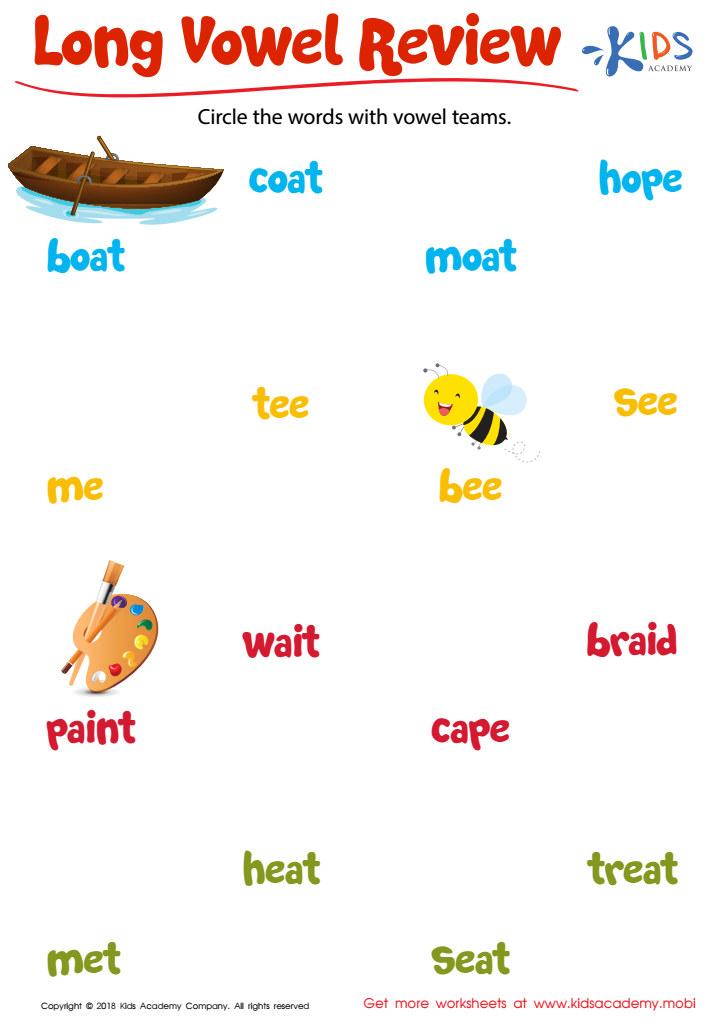
Long Vowel Review Worksheet
Vowel teams like "ea" and "ai" help us make words, and understanding these patterns aids emerging readers in becoming more fluent. This review worksheet has students finding words with vowel teams that make the long vowel sound, and helps them recognize high-frequency words.
 Assign to My Students
Long Vowel Review Worksheet
Worksheet
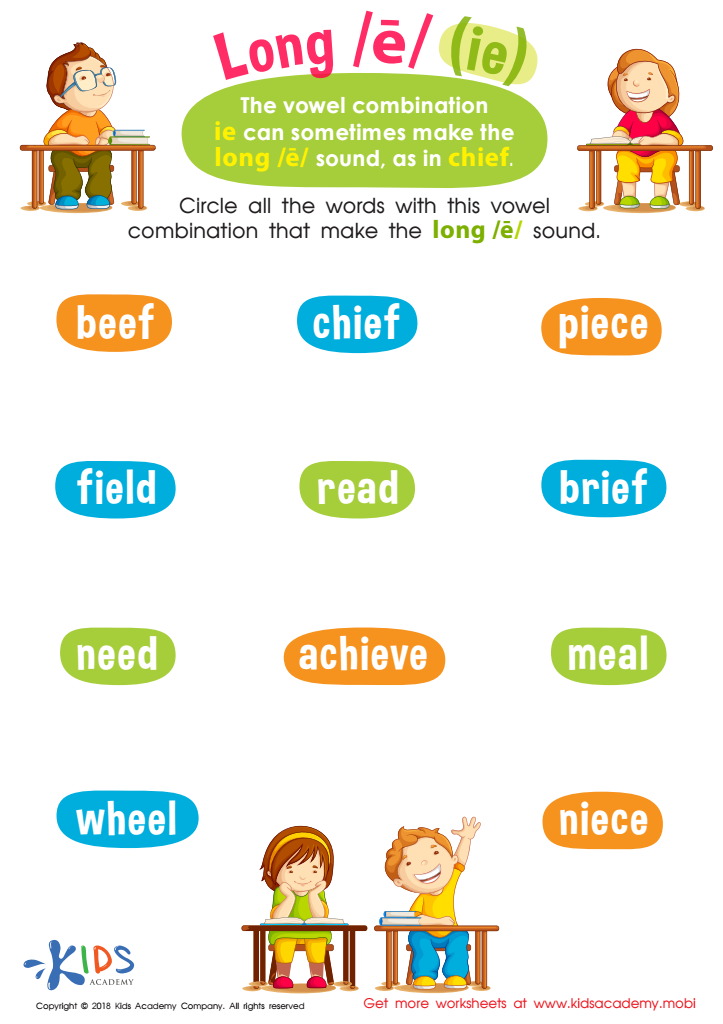
Reading: Long E and IE Worksheet
Ask your child to name some words with the long /e/ sound they hear every day. Then, read aloud all the words in the worksheet with them. Ask them to circle the words containing ie that make this sound.
Reading: Long E and IE Worksheet
Worksheet
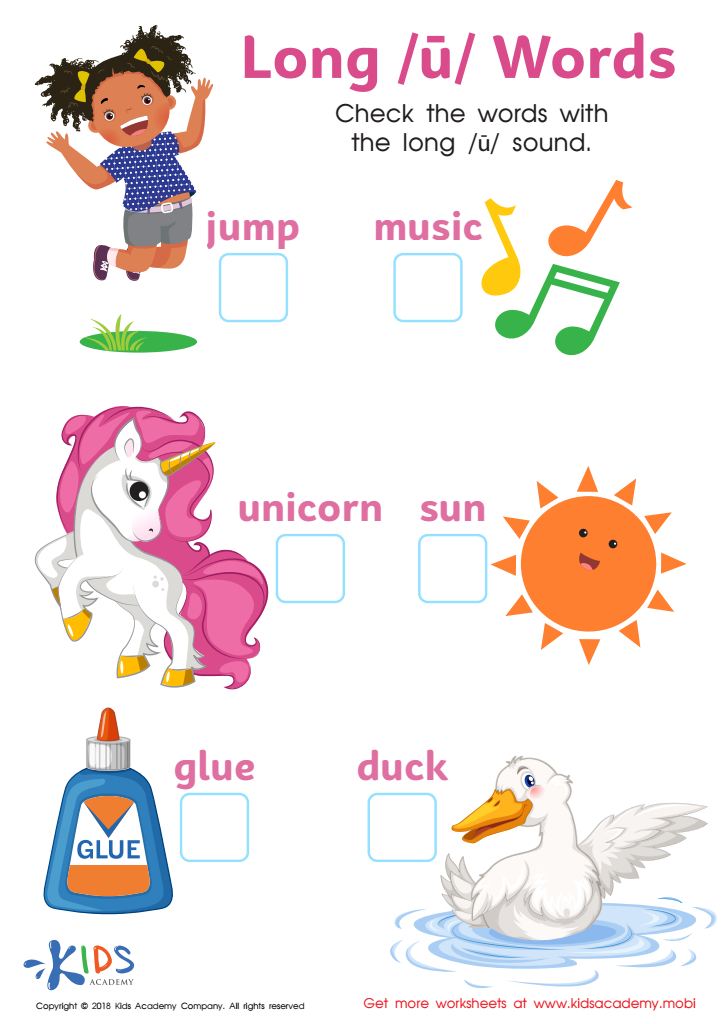
Long U Words Reading Worksheet
Emerging readers will love this free worksheet! It's a great way to practice distinguising between long and short vowel sounds, while identifying high-frequency words. They'll also get to develop fine motor skills and gain confidence in decoding and reading skills.
Long U Words Reading Worksheet
Worksheet
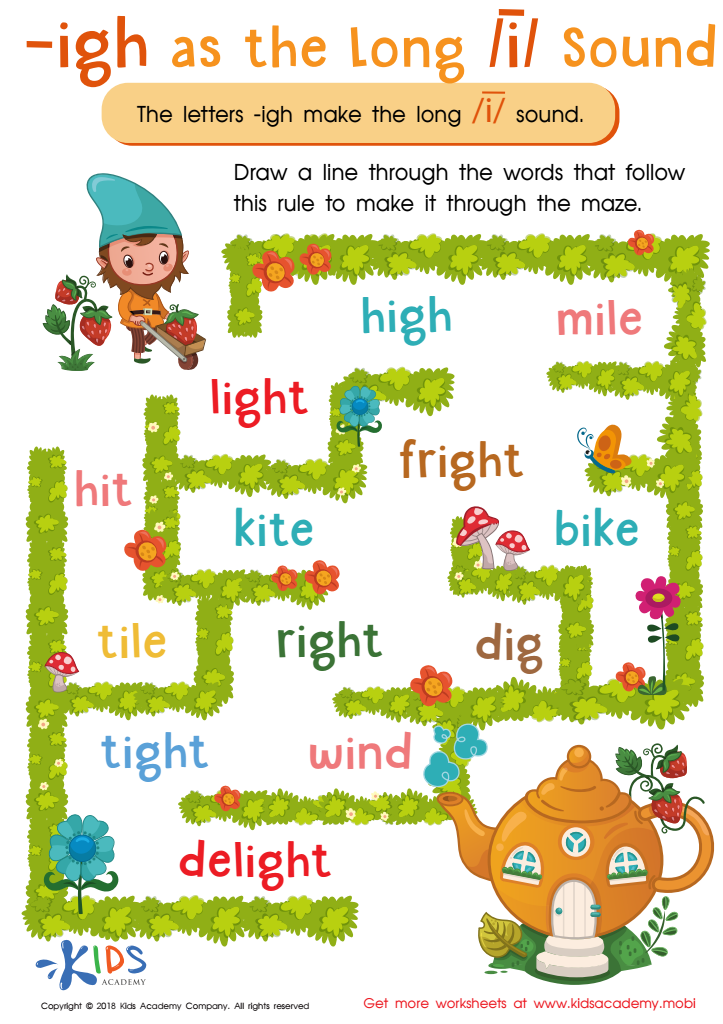
Reading: IGH as Long I Worksheet
Kids can have fun and learn with this maze! They'll look for and read words with the 'long I' sound spelled 'igh'. Most words ending with 'T' have this spelling. Decode words while learning about long vowel sounds and their spellings.
Reading: IGH as Long I Worksheet
Worksheet
Join Kids Academy for Free
Who is primarily going to use this learning content?



Phonics practice, particularly for normal long vowels, is crucial for children aged 4-7 as it lays the groundwork for their reading and writing skills. This developmental stage is where children begin to understand the relationship between letters and sounds. Long vowels, which can sound like their letter names (e.g., 'a' in "cake"), require specific teaching techniques to help children recognize and produce these sounds accurately.
Effective phonics practice enhances not only reading fluency but also spelling abilities, enabling children to tackle unfamiliar words more confidently. When children grasp the concept of long vowels, they begin constructing words and sentences, fostering early literacy competence and a love for reading.
Parents and teachers should prioritize phonics instruction in this formative age because it supports overall language development and critical thinking skills. Additionally, strong phonemic awareness leads to better comprehension, which is essential for academic success in all subjects. In a world increasingly reliant on textual communication, equipping children with phonics skills ensures they are prepared to navigate their educational journey and engage meaningfully with content. Helping children master long vowels can ignite their curiosity and inspire a lifelong love for learning, setting the stage for future achievement.