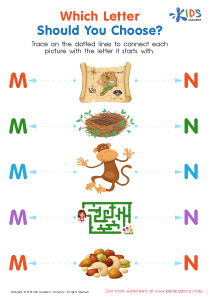
Alphabet sequencing Normal Lowercase/Small Letters Worksheets for Ages 4-7
3 filtered results
-
From - To
Introduce your little ones to alphabetical order with our engaging Alphabet Sequencing Normal Lowercase/Small Letters Worksheets, specially designed for children aged 4-7. These worksheets assist young learners in recognizing, sequencing, and writing lowercase letters from A to Z. With fun activities and cheerful illustrations, this set aims to strengthen letter recognition and foundational reading skills. Tailored to captivate young minds, our resources support early literacy development, making learning enjoyable and effective. Perfect for both classroom and at-home practice, these printable worksheets are an excellent tool for parents and educators to foster a love for learning.

Find Lowercase Letters g h i Worksheet
 Assign to My Students
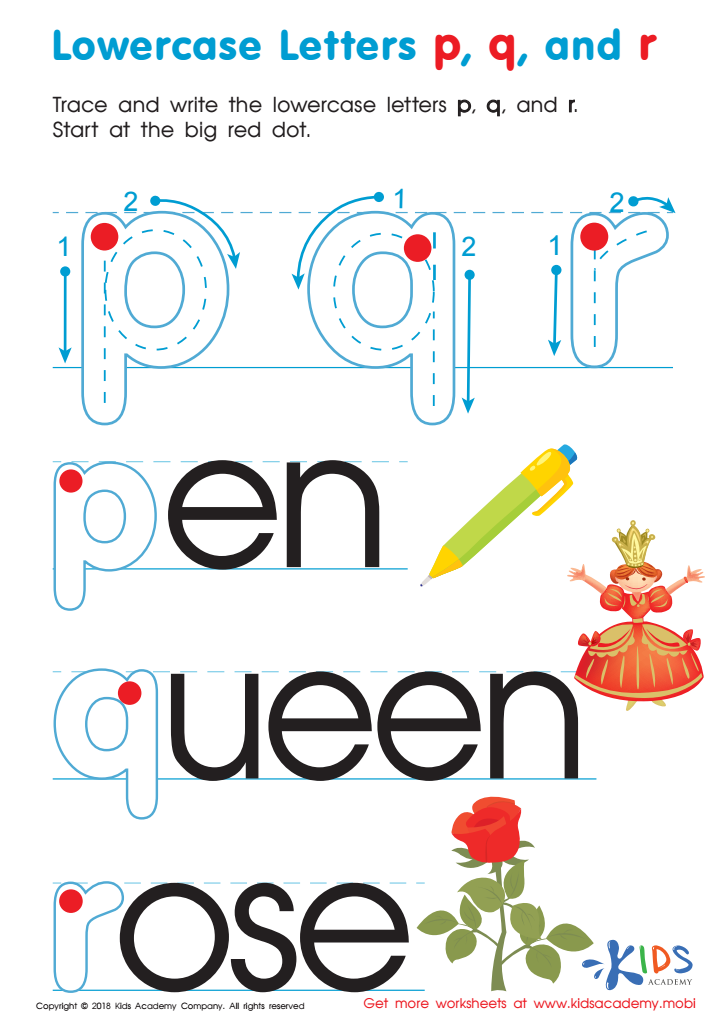
Lowercase Letters p q r Worksheet
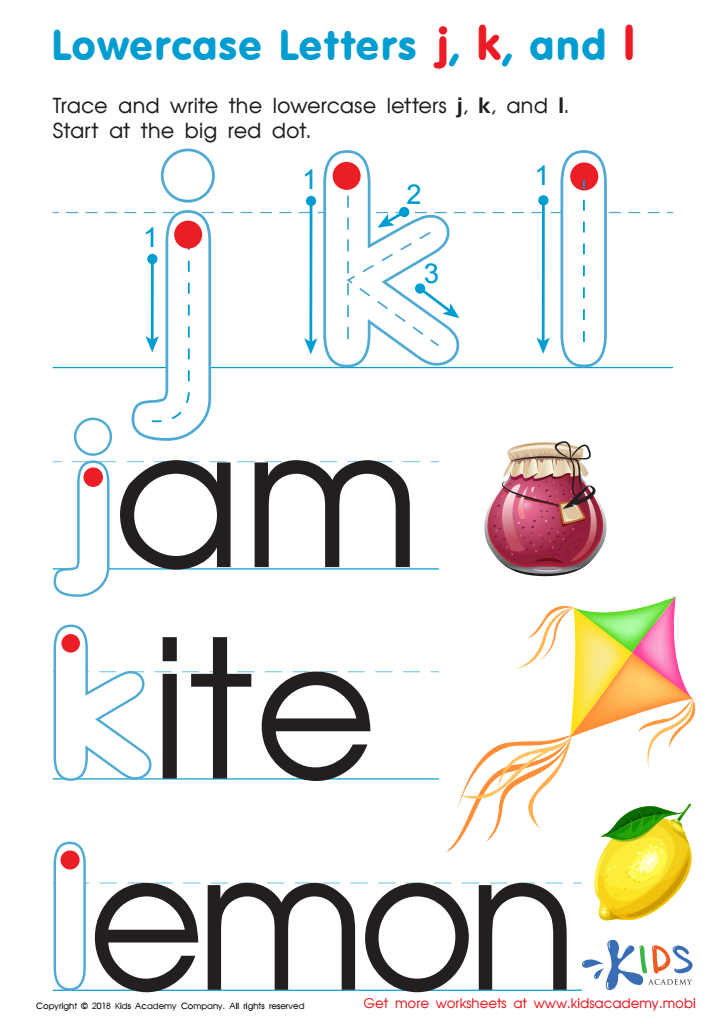
Lowercase Letters j k l Worksheet


Parents and teachers should care deeply about alphabet sequencing in lowercase letters for children ages 4-7 because it lays a crucial foundation for literacy development. Lowercase letters are predominant in written texts; thus, familiarity and proficiency with them are essential for reading fluency. At this age, the brain’s plasticity means young learners are especially receptive to mastering fundamental skills that will influence their future academic success.
Knowing the order of the alphabet and recognizing lowercase letters help children in multiple ways. Firstly, it enhances their ability to decode words, aiding in phonemic awareness and spelling. Secondly, understanding alphabetical order is vital for skills like dictionary use and developing systems of organization, which are foundational for future study habits.
Additionally, lowercase letter recognition supports development in writing. Consistent and correct use of lowercase letters facilitates better handwriting, promotes self-confidence in written communication, and meets standard educational benchmarks. This holistic development of literacy ensures children can effectively process more complex reading and writing tasks as they grow older.
By emphasizing alphabetical sequencing in lowercase during the formative years, parents and teachers help children build a solid literacy base, reducing future challenges in learning and opening doors to academic and personal achievement.