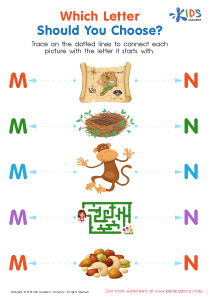
Handwriting practice Normal Lowercase/Small Letters Worksheets for Ages 4-7
8 filtered results
-
From - To
Boost your child’s writing skills with our engaging Handwriting Practice Worksheets for Normal Lowercase/Small Letters, designed for ages 4-7. These worksheets offer a fun and interactive way for young learners to master their handwriting. Our carefully crafted activities help reinforce proper letter formation and improve fine motor skills, setting a solid foundation for future writing. Each worksheet provides guided practice, allowing children to trace and write lowercase letters while enjoying colorful illustrations that capture their interest. Perfect for use at home or in the classroom, these worksheets will nurture confidence and competence in budding writers. Start your child’s handwriting journey today!
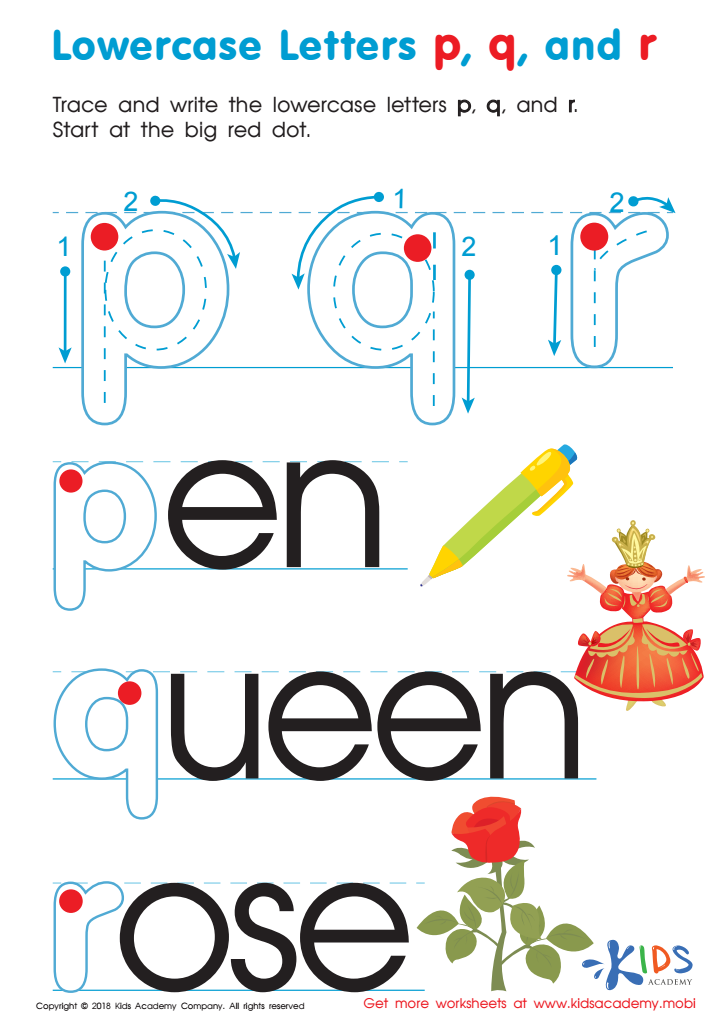
Lowercase Letters p q r Worksheet
 Assign to My Students
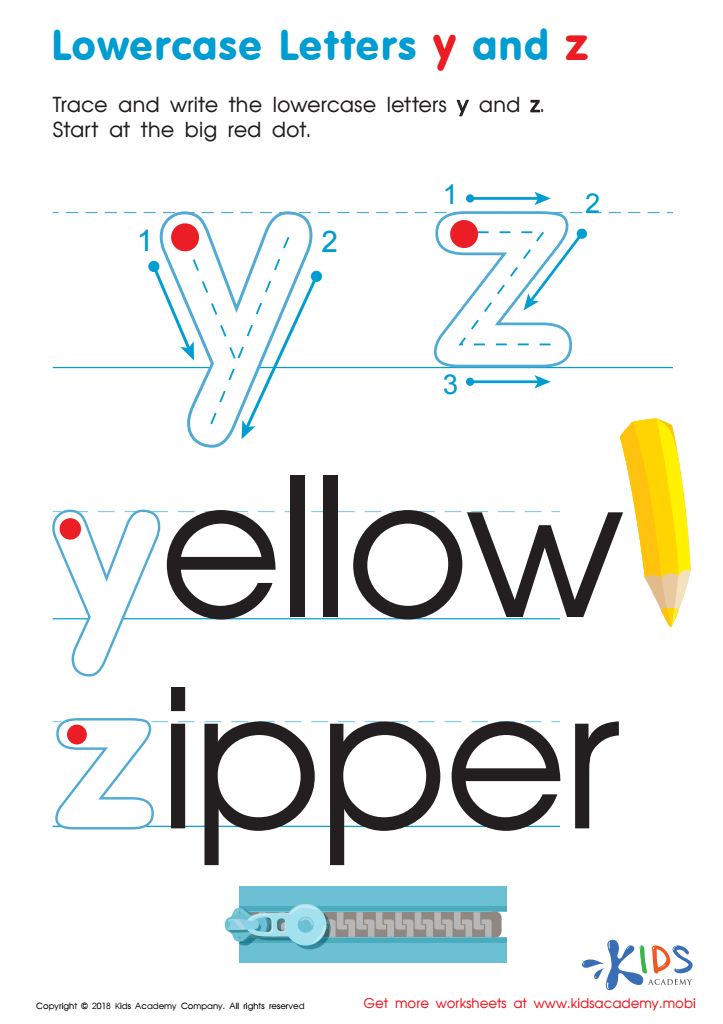
Lowercase Letters y z Worksheet
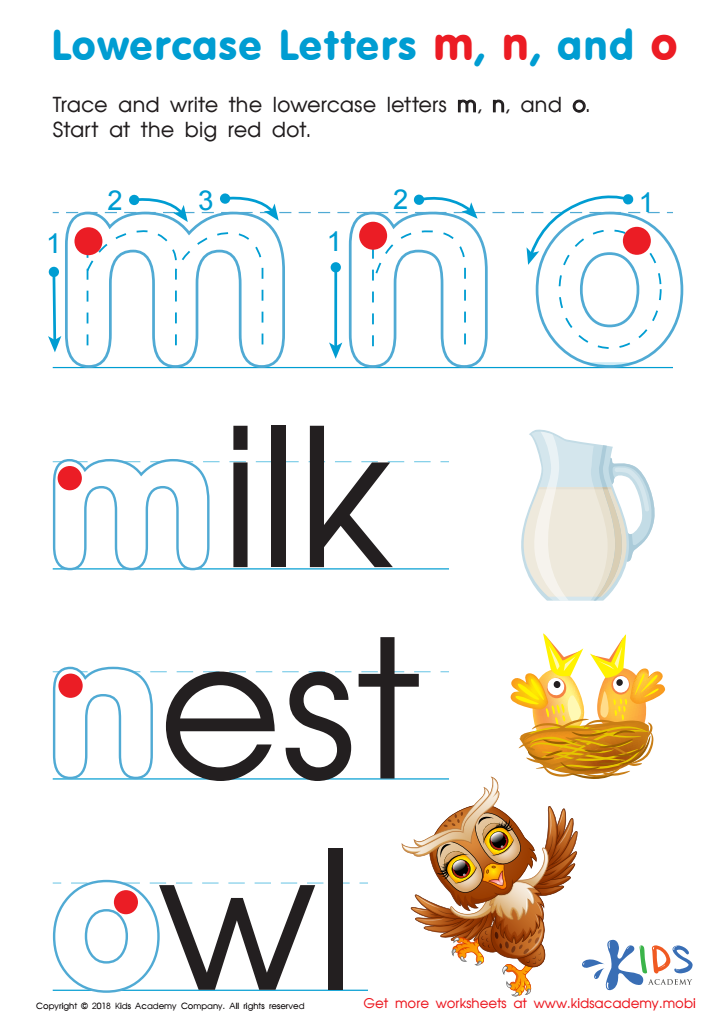
Lowercase Letters m n o Worksheet
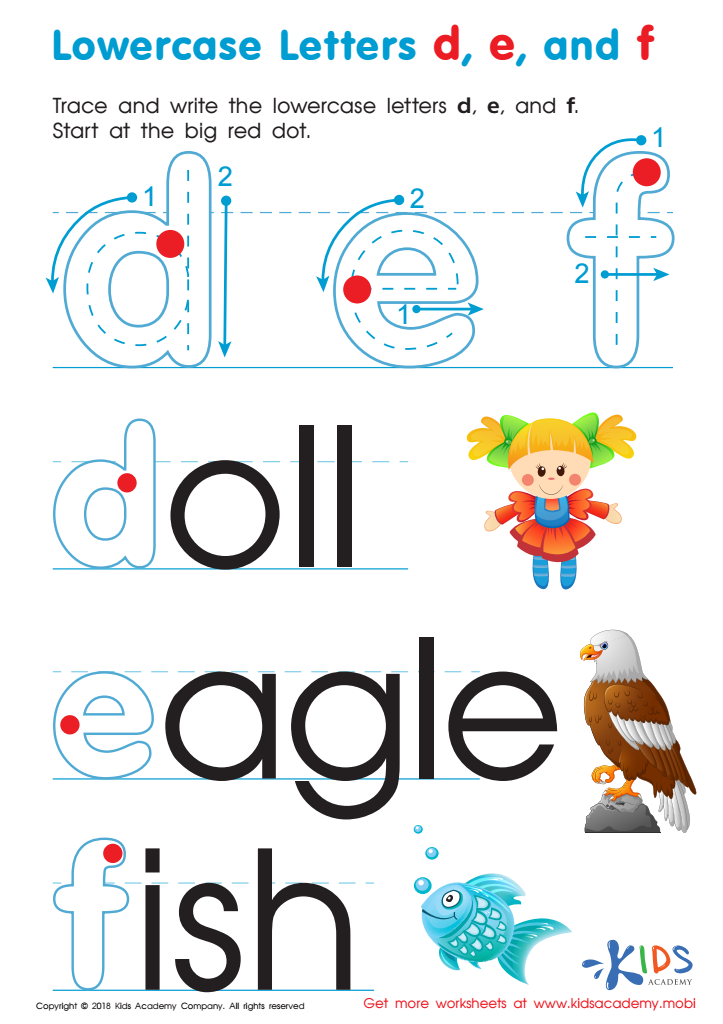
Lowercase Letters d e f Worksheet
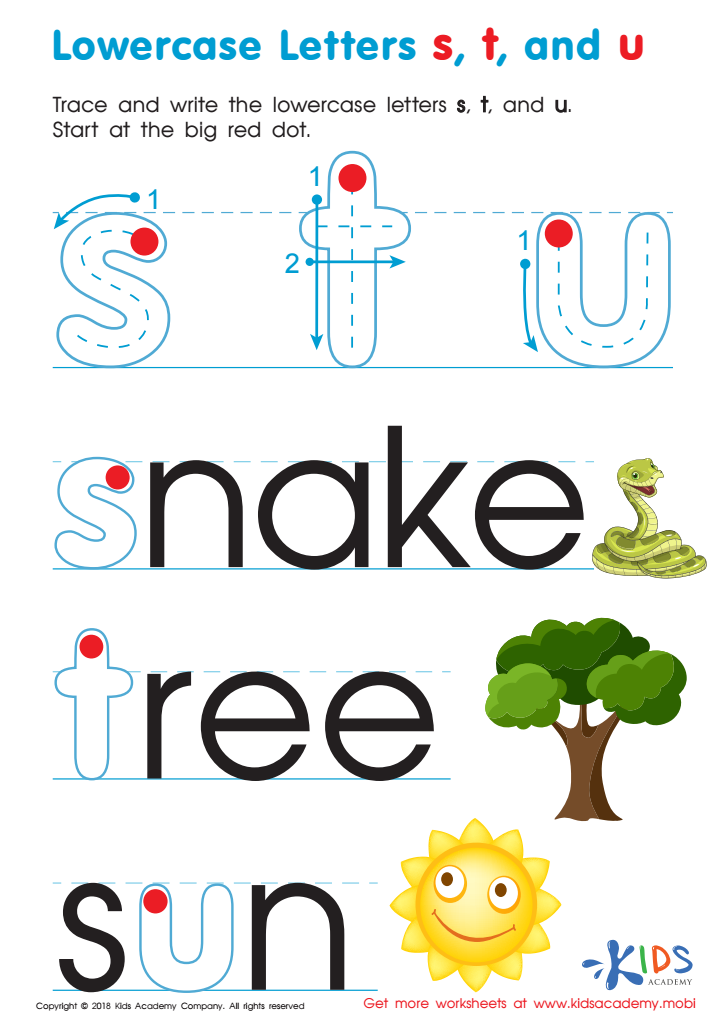
Lowercase Letters s t u Worksheet
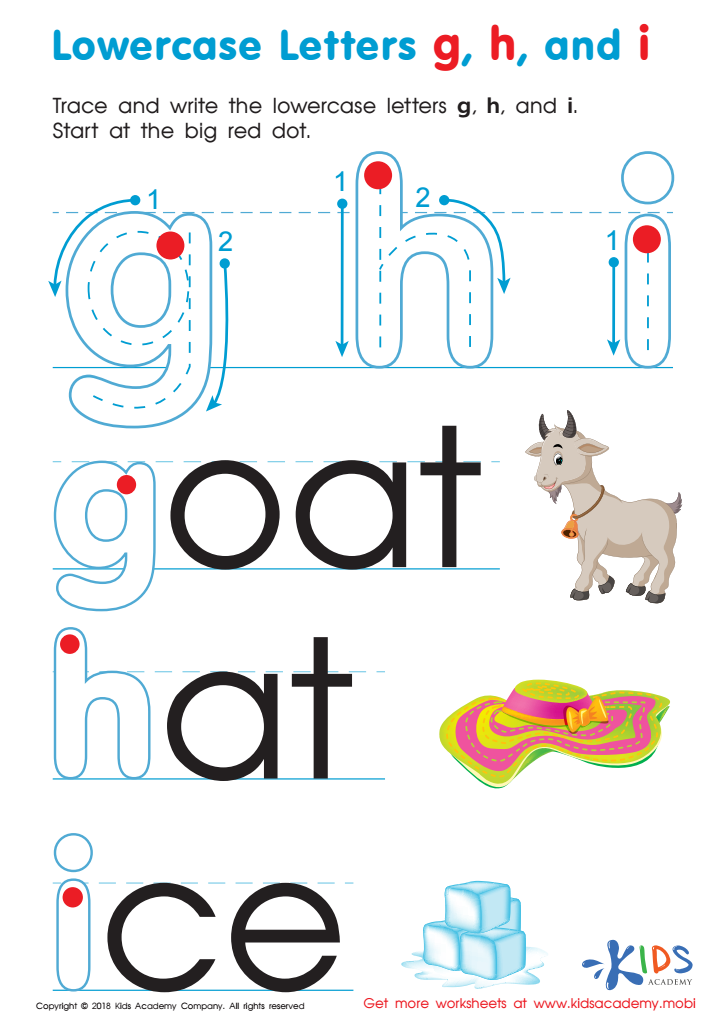
Lowercase Letters g h i Worksheet
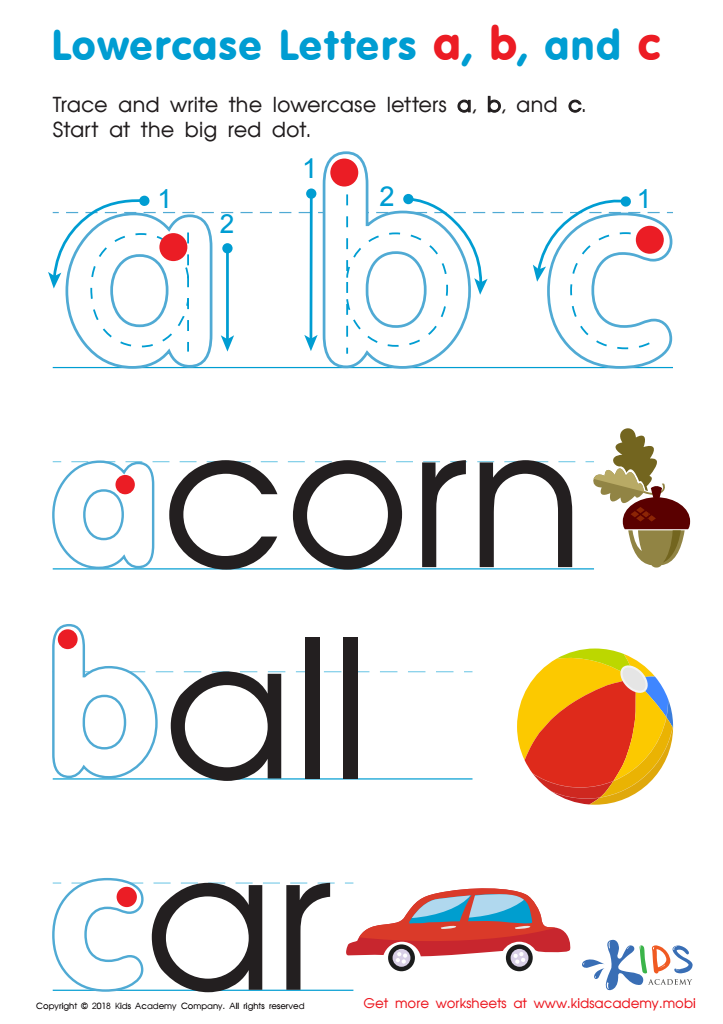
Lowercase Letters a b c Worksheet
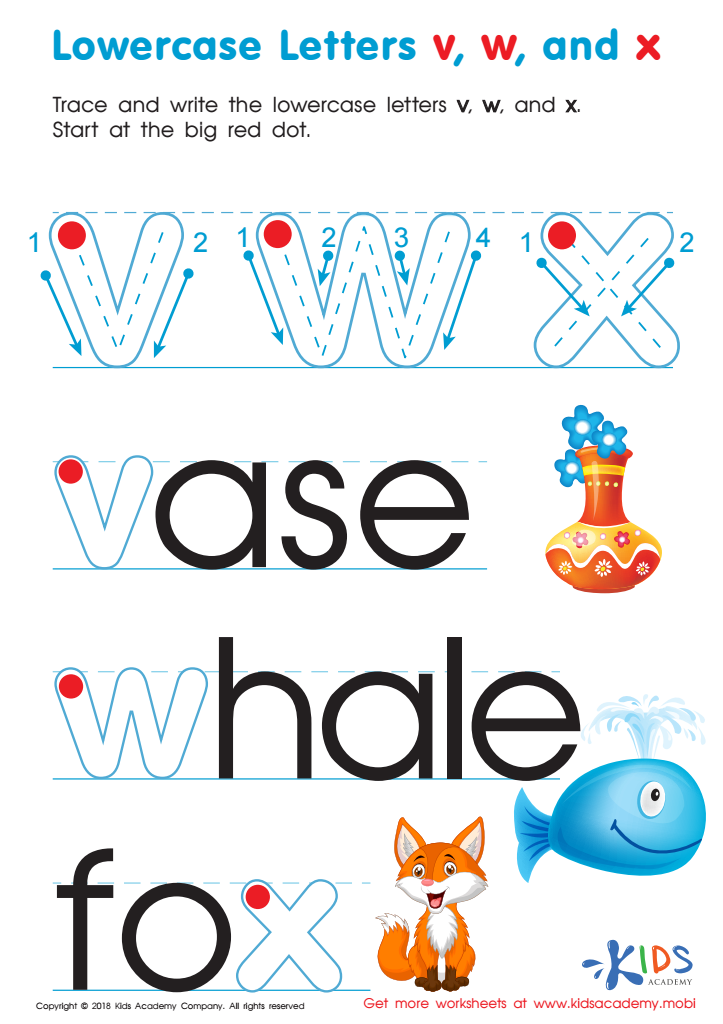
Lowercase Letters v w x Worksheet


Handwriting practice of normal lowercase letters for ages 4-7 is crucial for several reasons. First, developing good handwriting skills lays the foundation for effective communication. At this age, children are beginning to express their thoughts and feelings through writing, and legible handwriting helps ensure their messages are understood.
Additionally, practicing lowercase letters aids in fine motor skills development. The grip, control, and hand-eye coordination necessary for writing improve through consistent practice, which also supports their ability to engage in other activities, such as drawing or playing instruments. This ultimately contributes to their overall physical development.
Moreover, learning to write lowercase letters helps children understand letter formation, which is important for later literacy skills. It reinforces their understanding of phonics and helps them recognize that these letters are frequency used in texts. When children gain confidence in their writing abilities, it encourages a love for literacy that can enhance their learning experience.
Finally, handwriting practice can foster patience and focus. The act of forming letters can be a calming exercise that encourages children to concentrate. Overall, investing time in handwriting practice for young learners supports their cognitive, emotional, and physical development, paving the way for lifelong learning and communication skills.