Counting skills Normal Phonics Worksheets for Ages 4-7
3 filtered results
-
From - To
Boost your child's early math and reading abilities with our "Counting Skills Normal Phonics Worksheets for Ages 4-7". Designed to blend counting and phonics practice seamlessly, these worksheets nurture your child's numerical understanding and phonetic awareness simultaneously. Featuring engaging activities and colorful designs, they capture young learners' attention, making number and letter recognition fun. Our expertly crafted worksheets cater specifically to ages 4-7, ensuring developmental appropriateness. Help your child build a strong foundation in essential skills, preparing them for future academic success. Explore a fun-filled, integrated learning experience with our comprehensive collection today!
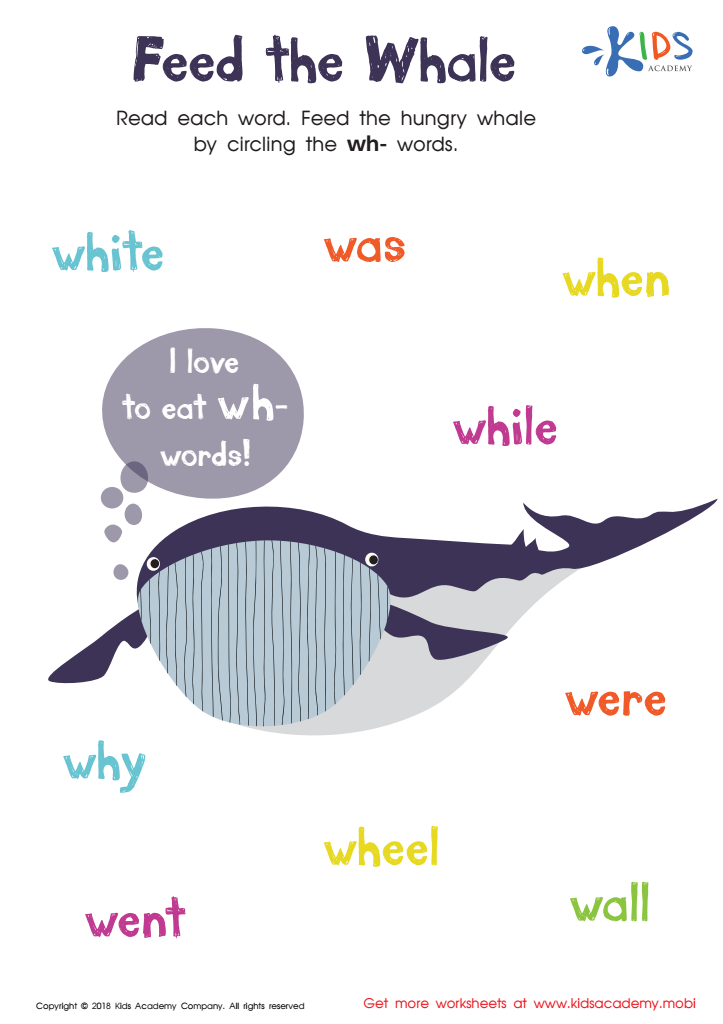
Feed the Whale Worksheet
 Assign to My Students
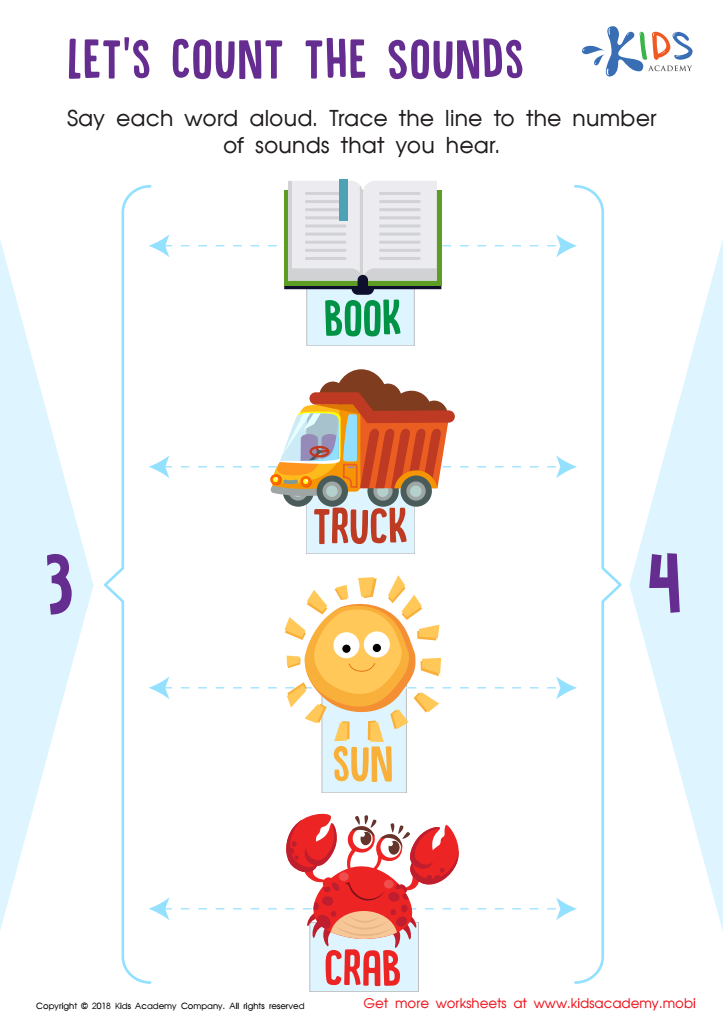
Let's Count the Sounds Worksheet
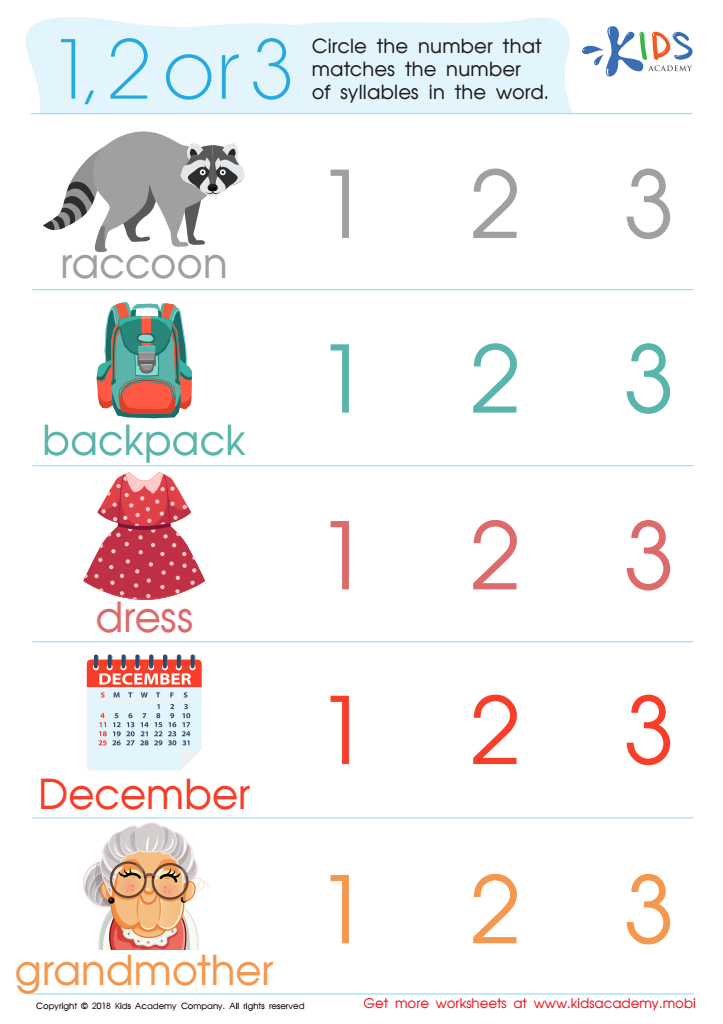
1, 2 or 3? Worksheet








Counting skills and phonics form the bedrock of early childhood education and are critical for cognitive and language development. For children aged 4-7, mastering these foundational skills lays the groundwork for future academic success and everyday competence.
Counting skills are vital because they introduce children to numeracy, which directly influences their ability to understand and manage numbers in routine activities, academic tasks, and problem-solving situations. Building a robust sense of number order, quantity, and basic arithmetic fosters critical thinking and analytical skills. These skills are essential not only in math but in science, technology, engineering, and even the arts.
Phonics, the system of relationships between letters and sounds, is crucial for reading and writing proficiency. At ages 4-7, children typically transition from recognizing letters to decoding simple words and sentences. Strong phonics skills enable children to decode new words, expanding their vocabulary, improving comprehension, and instilling a love of reading that fuels lifelong learning.
Parents and teachers play a pivotal role in nurturing these abilities by providing engaging, age-appropriate activities. Interactive counting games, tangible learning materials, and storybooks with clear phonetic patterns can make learning enjoyable and effective. By prioritizing counting and phonics, caregivers ensure children are equipped with the essential skills needed for academic and real-world success.







