Vocabulary enhancement Normal Vowel Diphthongs Worksheets for Ages 4-7
4 filtered results
-
From - To
Boost your child's language skills with our engaging Vocabulary Enhancement Normal Vowel Diphthongs Worksheets, ideal for ages 4-7! These interactive resources are designed to help young learners understand the concept of vowel diphthongs while expanding their vocabulary. Each worksheet features fun activities that encourage phonetic recognition and sound blending, making learning both effective and enjoyable. By participating in these exercises, children will not only enhance their reading and writing abilities but also build confidence in their language proficiency. Explore our collection today and watch your child thrive as they master essential diphthong sounds in a playful and supportive environment!
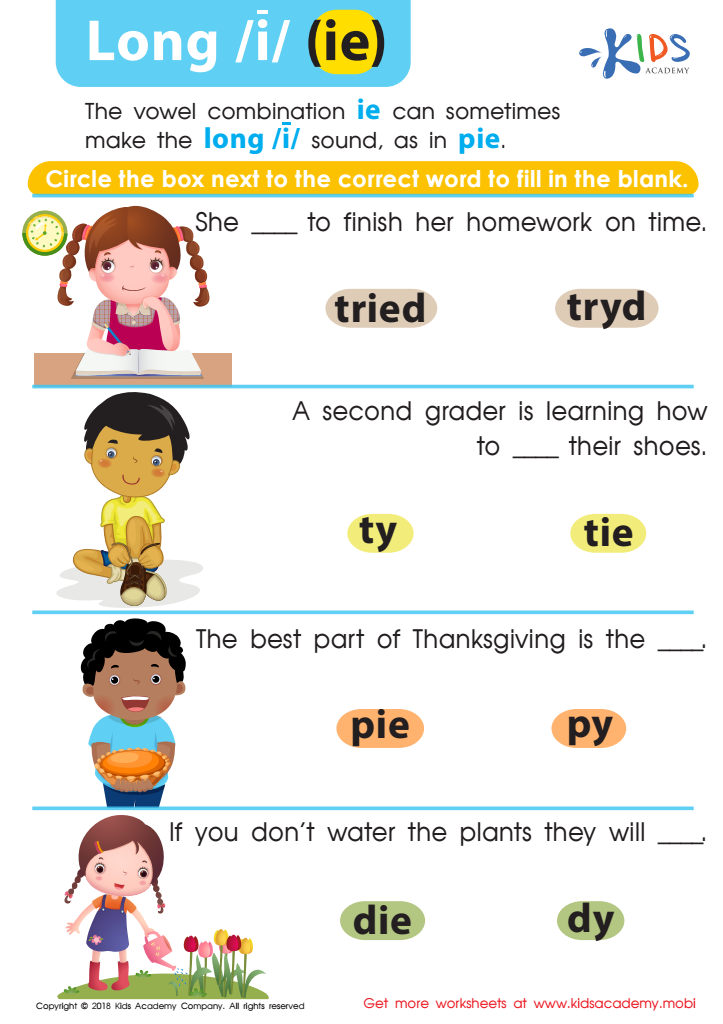
Reading: Long I and IE Worksheet
 Assign to My Students
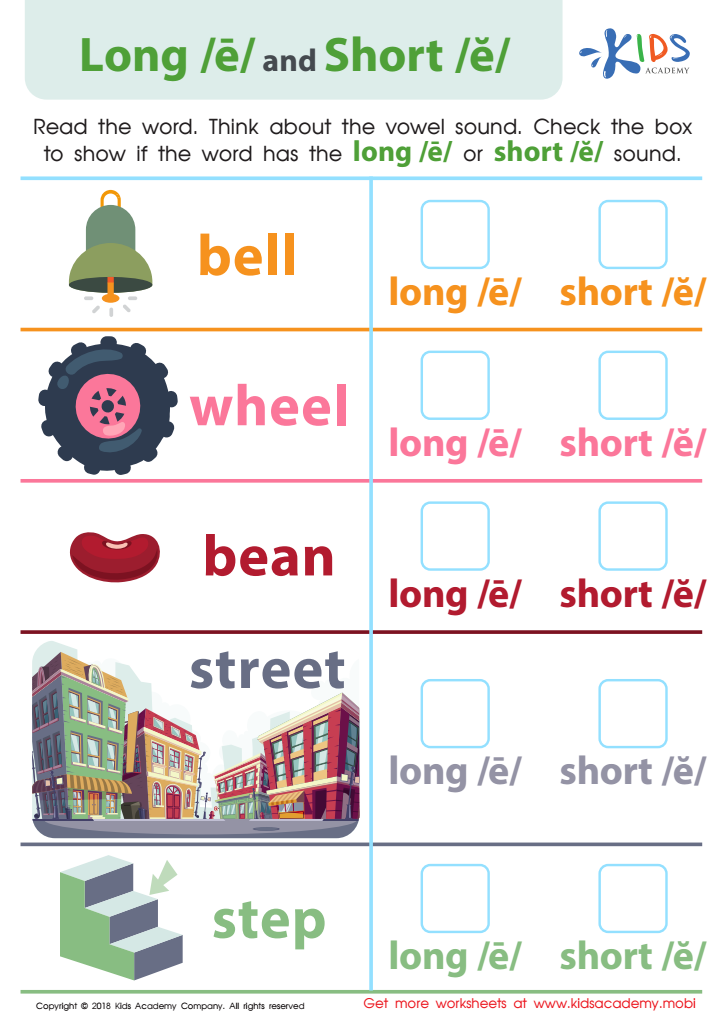
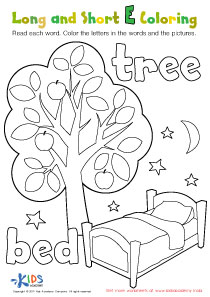
Reading: Long E and Short E Worksheet
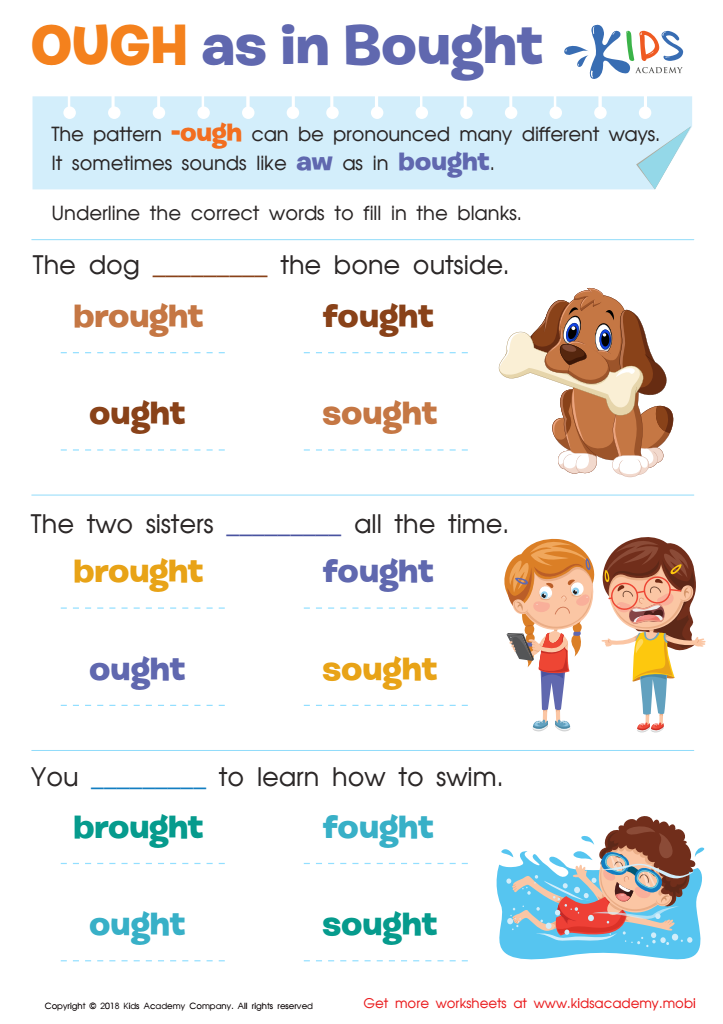
OUGH as in Bought Worksheet
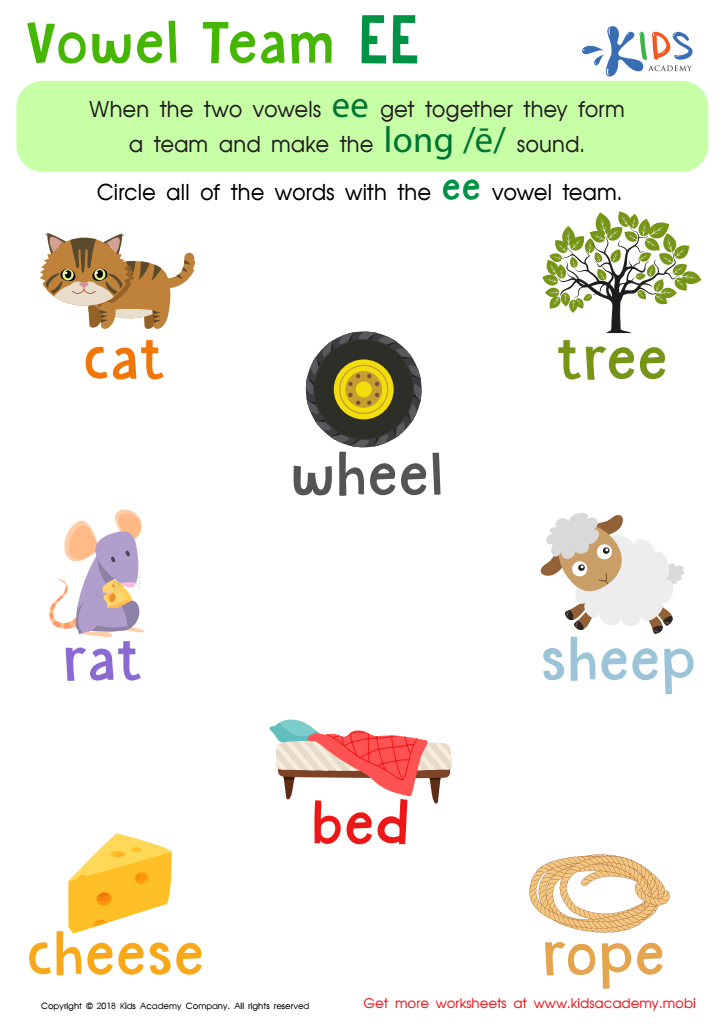
Reading: Vowel Team EE Worksheet


Vocabulary enhancement is crucial for young learners, especially between the ages of 4-7, as this is a pivotal period for language development. One important aspect of this enhancement is the understanding of normal vowel diphthongs—combinations of two vowel sounds pronounced in one syllable. Mastering diphthongs enriches a child’s vocabulary, aids in reading fluency, and improves overall literacy skills.
When children grasp diphthongs, they can decode complex words more effectively, leading to greater confidence when reading aloud. This understanding bolsters their ability to articulate thoughts clearly and to better express themselves in conversations. Additionally, a rich vocabulary is essential for academic success across all subjects; effective communication fosters collaboration, critical thinking, and creativity.
Furthermore, early exposure to diphthongs through playful learning—such as songs, rhymes, and interactive games—encourages engagement and joy in language learning. Hearing and using these sounds in context provides a strong foundation for phonetic awareness, which is critical as they progress to more advanced literacy skills.
In summary, by focusing on vocabulary enhancement through normal vowel diphthongs, parents and teachers create a robust linguistic foundation that promotes effective communication and lifelong learning in young children.