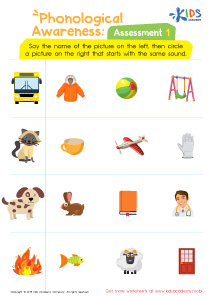
Hand-eye Coordination Normal Vowels Worksheets for Ages 4-7
4 filtered results
-
From - To
Enhance your child's alphabet learning with our Hand-eye Coordination Normal Vowels Worksheets, designed for ages 4-7. These engaging resources improve essential skills through fun, interactive activities focused on vowel recognition and formation. Each worksheet combines vibrant illustrations with expertly crafted exercises to ensure children develop accurate hand-eye coordination while mastering vowels. Perfect for early learners, these printable worksheets are ideal for home or classroom use, blending education and play seamlessly. Equip your young ones with the foundational tools to excel in reading and writing with these expertly designed, kid-friendly worksheets. Get started today and watch your child's skills flourish!
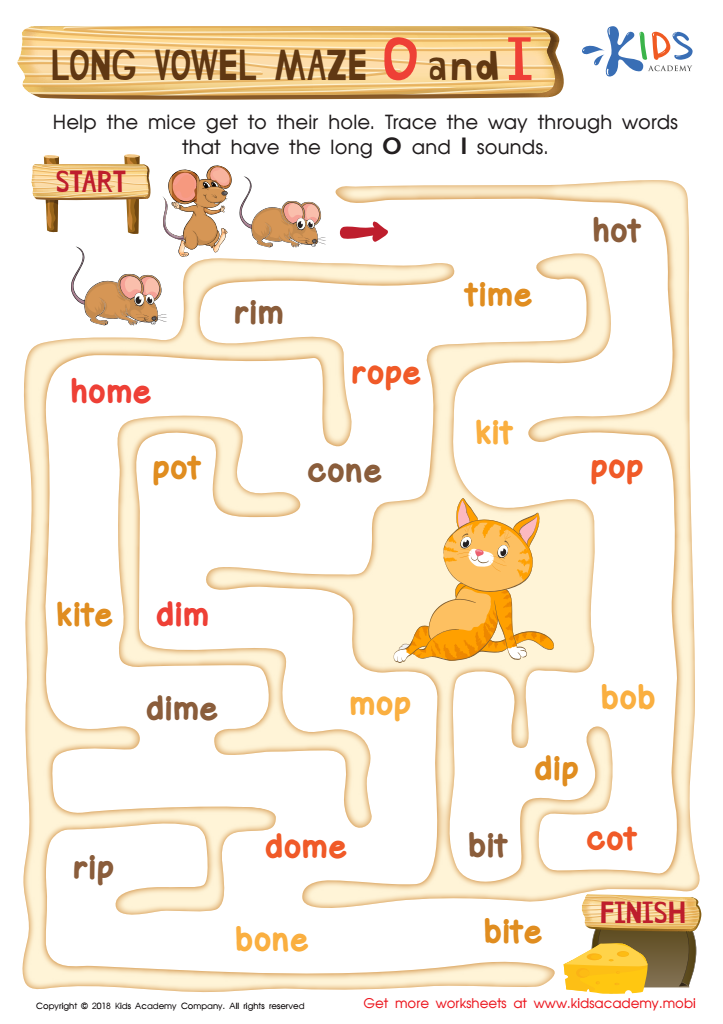
Long Vowel Maze /o/ and /i/ Worksheet
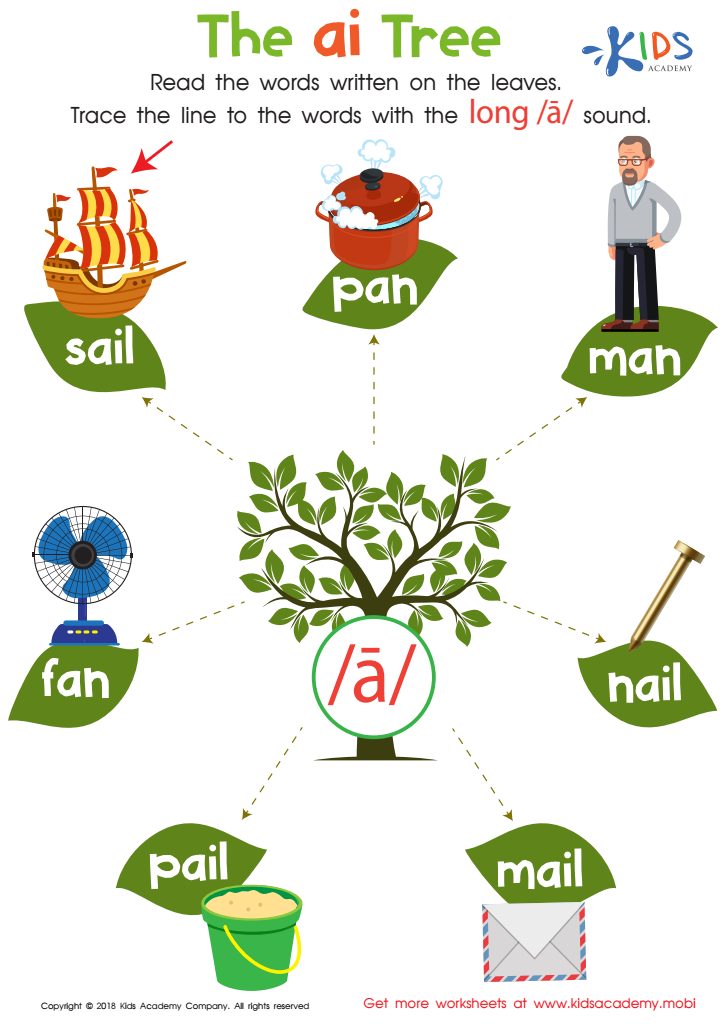
The AI Tree Worksheet

Long and Short U Worksheet
 Assign to My Students

Long and Short E Worksheet
Assign to My Students





Hand-eye coordination and recognizing normal vowels are crucial developmental milestones for children aged 4-7, and both parents and teachers should prioritize them for a balanced growth trajectory.
Hand-eye coordination, the ability to use our eyes to direct attention and our hands to execute a task, is foundational for daily activities such as writing, drawing, and eventually, playing sports. Mastering these skills fosters a sense of independence and confidence as children engage in different tasks. Improved hand-eye coordination also correlates with enhanced fine motor skills, which are essential for academic tasks like cutting with scissors, tying shoelaces, and buttoning clothing.
Understanding normal vowels is a building block for literacy development. Vowels are integral to syllable structure, word pronunciation, and decoding skills in early reading. Familiarity with these sounds aids children in recognizing patterns, building vocabulary, and understanding sentence structure. Vowel knowledge is often linked to phonemic awareness, a critical step in learning to read.
Early intervention via activities that improve hand-eye coordination— like puzzles, LEGO building, and art projects—and enhancing vowel recognition through songs, rhymes, and interactive storybooks can holistically empower young children. When parents and teachers dedicate attention to these areas, they lay the groundwork for further academic and personal achievements, setting children up for lasting success.