Spelling practice Normal Vowels Worksheets for Ages 4-7 - Page 2
29 filtered results
-
From - To
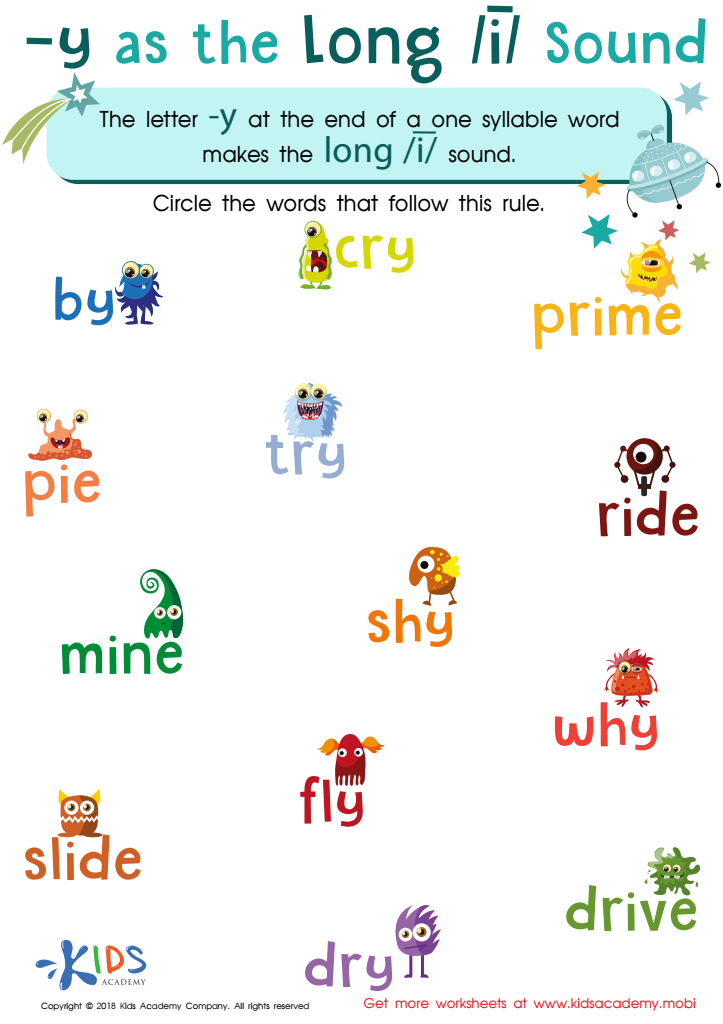
Reading: Y as Long I Worksheet
 Assign to My Students
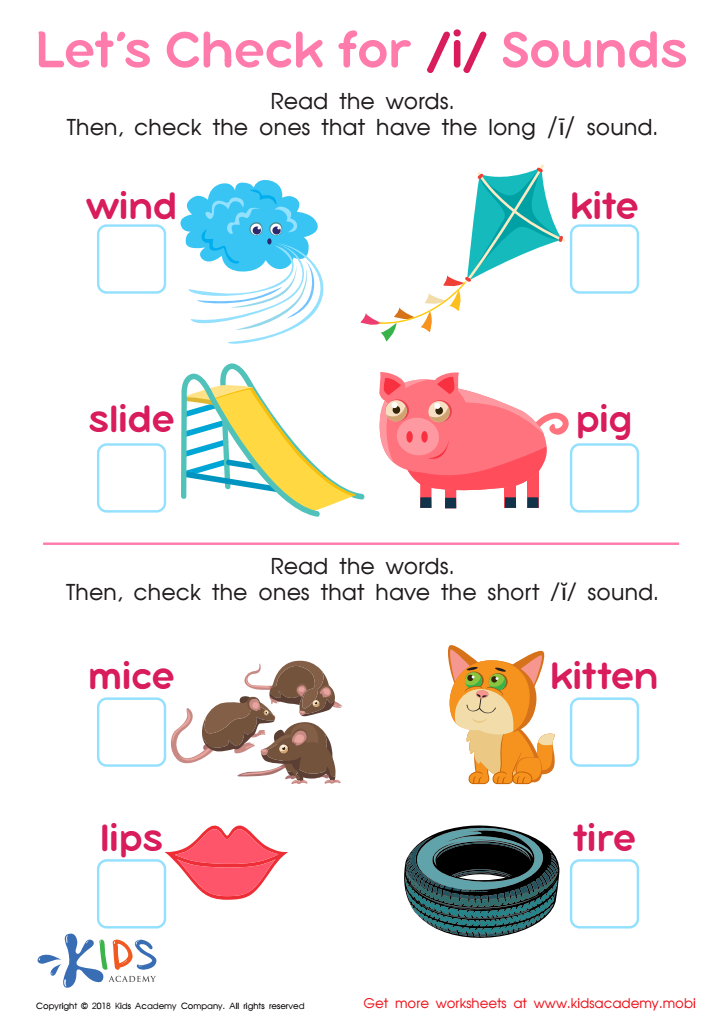
Let's Check for «i» Sounds Worksheet
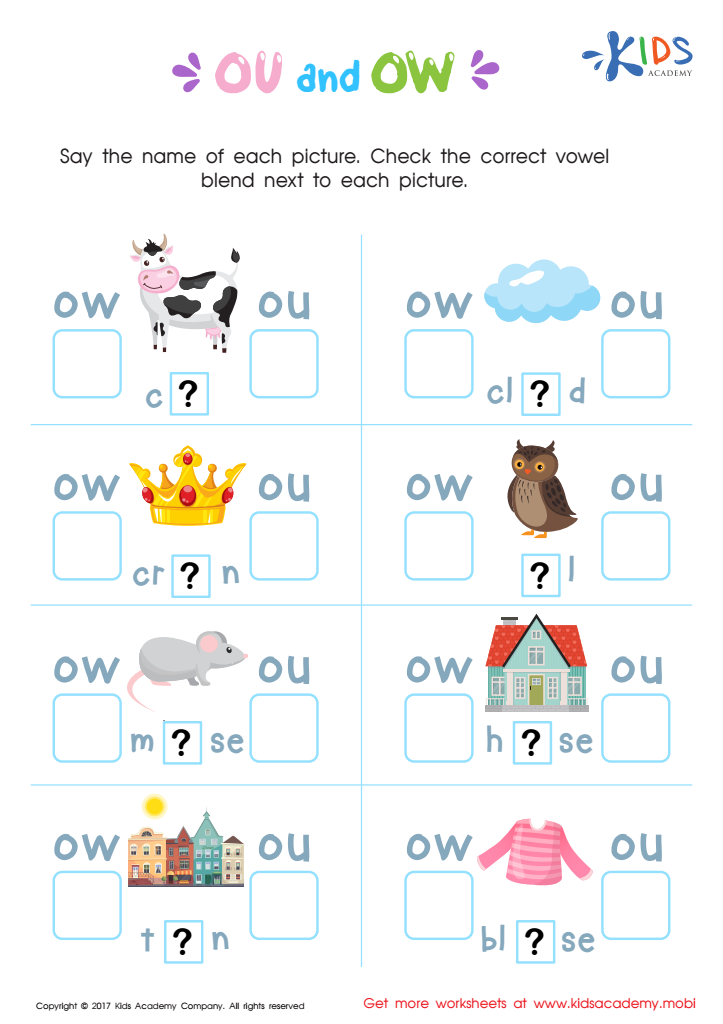
OU and OW Words Worksheet
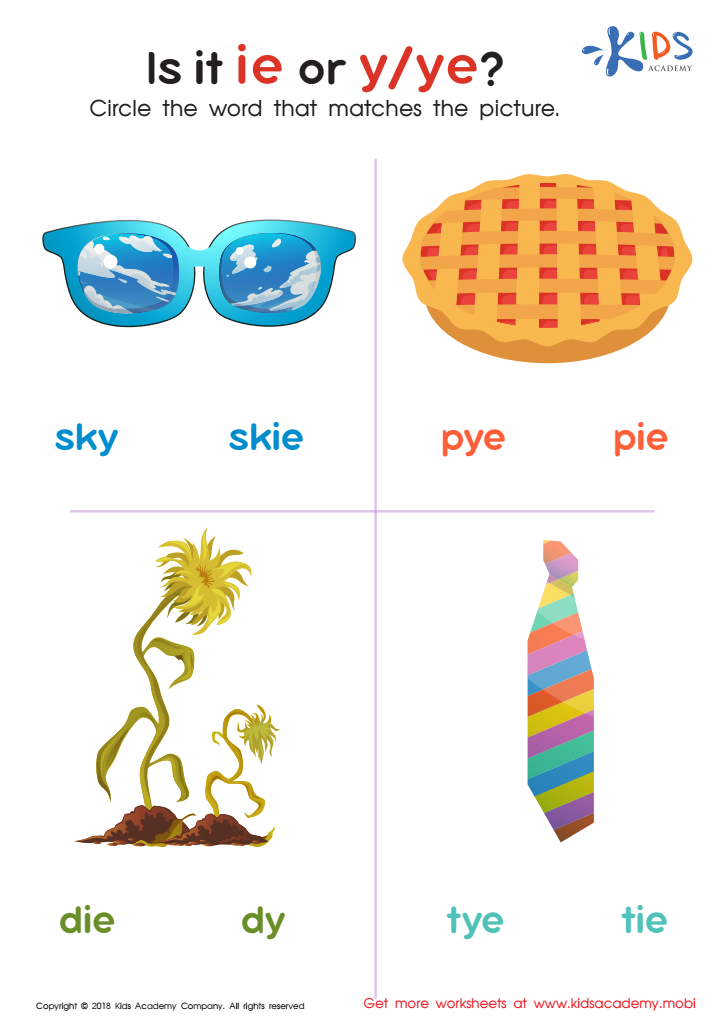
Is It IE or Y/Ye? Worksheet
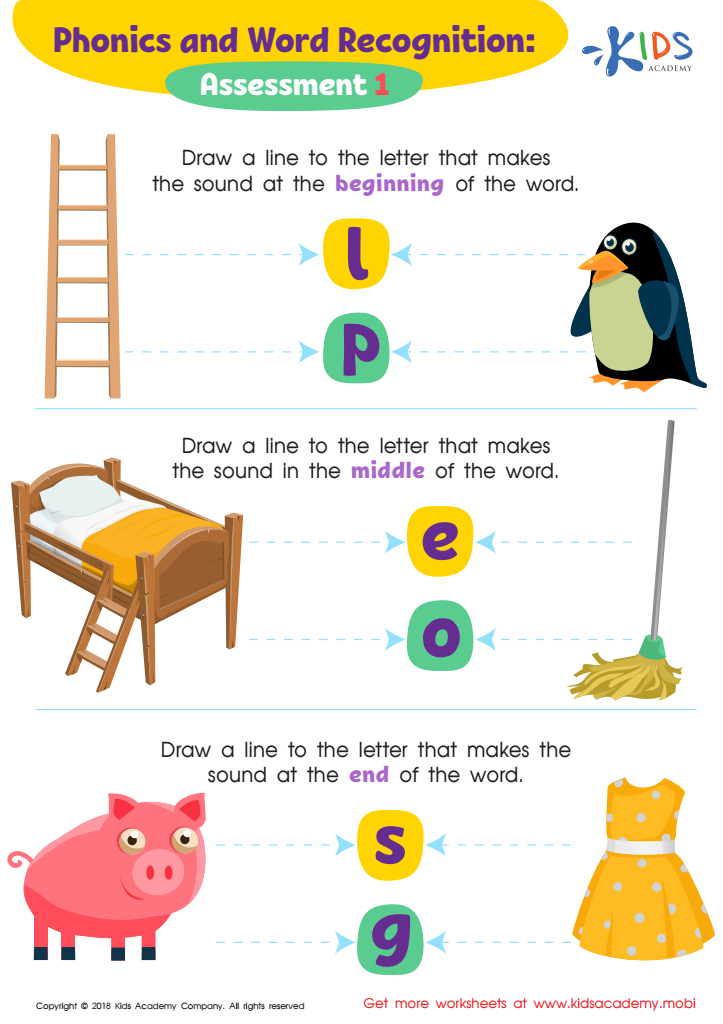
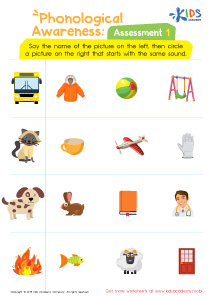
Phonics and Word Recognition: Assessment 1 ELA Worksheet





Spelling practice with normal vowels is crucial for young learners aged 4-7, as it forms the foundation for literacy development. During this age, children are typically beginning to understand the relationship between sounds and letters, making it vital to focus on vowel recognition and usage. Mastering normal vowel sounds helps children decode words, which enhances their reading skills and promotes confident communication.
Engaging in spelling practice can also boost a child’s cognitive development. It encourages critical thinking as they learn to make connections between letters and sounds, fostering an understanding that will serve them in more complex language tasks later on. Moreover, frequent spelling practice contributes to improved writing abilities; when children become familiar with the structural elements of words, they are better equipped to express their ideas effectively.
For teachers and parents, consistent spelling practice offers an opportunity to strengthen the bond between home and school. It promotes a shared goal of educational success, encouraging children through engaging methods and reinforcing their learning experiences. As young learners gain proficiency in spelling normal vowels, they develop confidence, motivation, and a lifelong appreciation for reading and writing—essential skills for their academic and personal growth.