Basic astronomy knowledge Normal Worksheets for Ages 4-7
3 filtered results
-
From - To
Explore the wonders of space with our "Basic Astronomy Knowledge" worksheets, designed specifically for ages 4-7. These engaging and educational resources introduce young learners to fundamental concepts such as the solar system, planets, stars, and moons. Through fun activities and illustrations, children develop a curiosity about the universe while enhancing their critical thinking and observational skills. Perfect for both classroom and at-home learning, our worksheets align with early science curricula, making astronomy accessible and enjoyable. Ignite a passion for space exploration in your child and watch their knowledge of the cosmos grow! Discover more at Kids Academy.
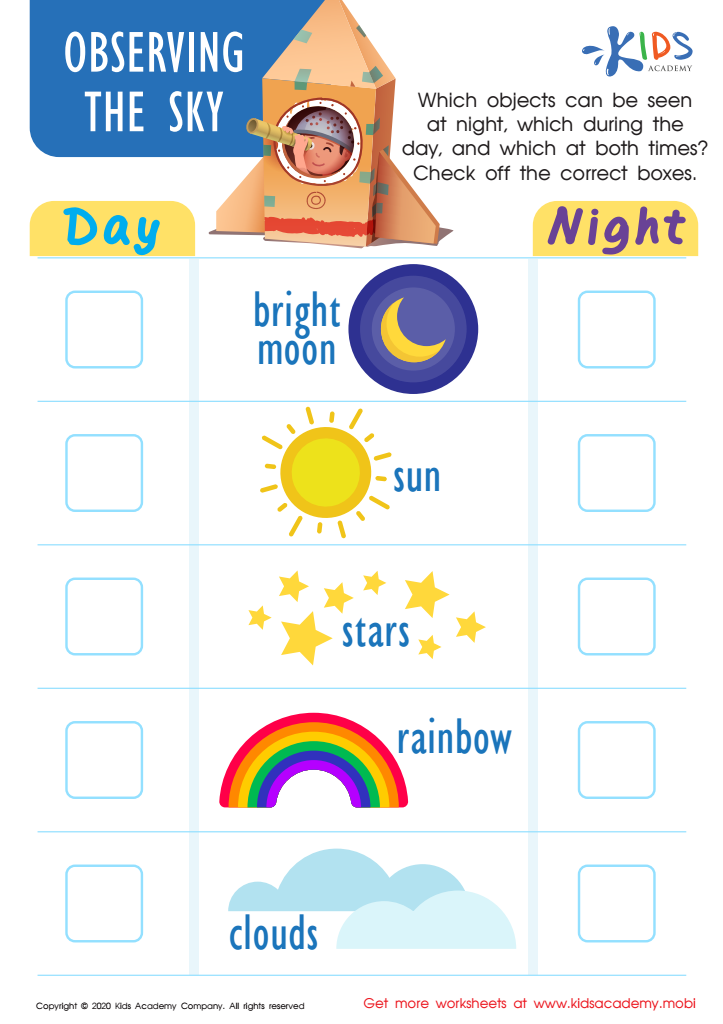
Observing the Sky Worksheet
 Assign to My Students
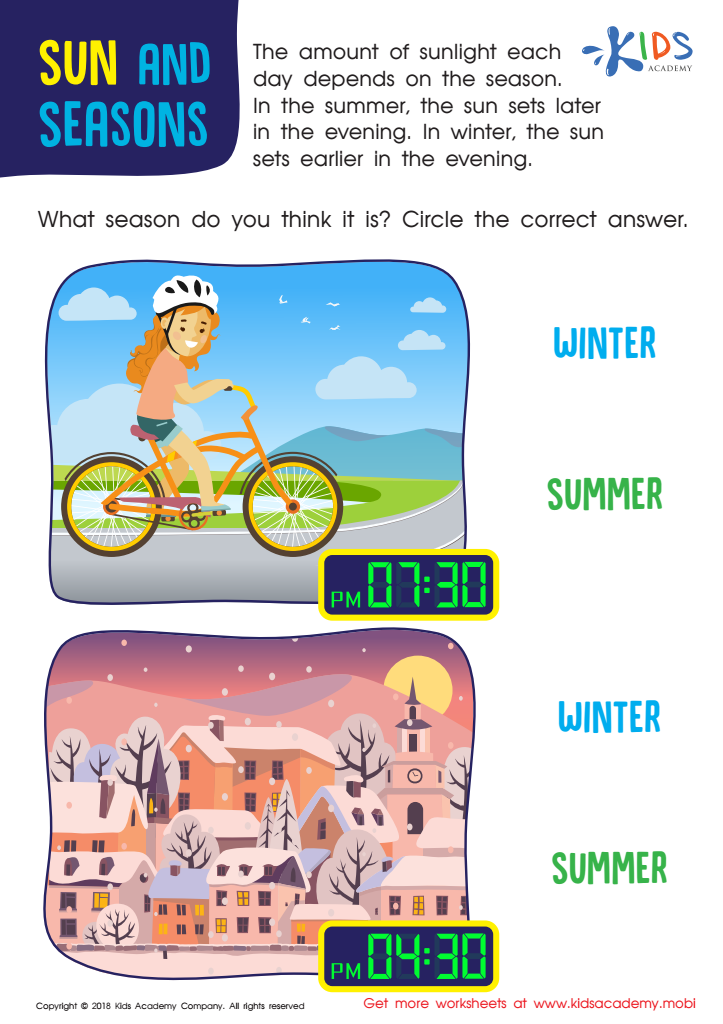
Sun and Seasons Worksheet
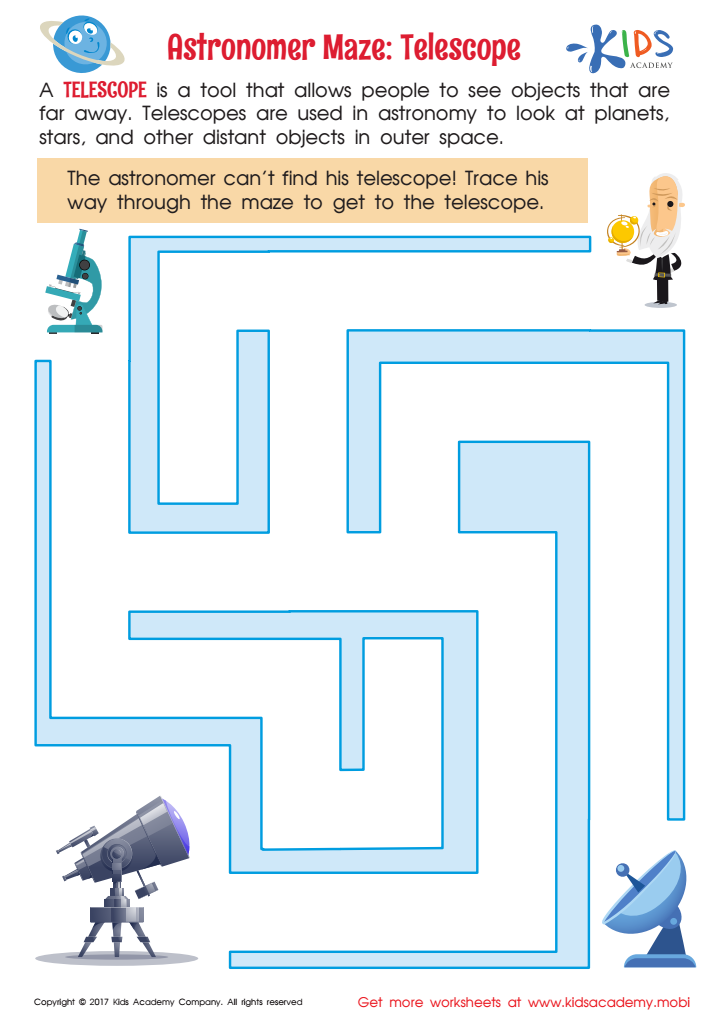
Astronomer Maze: Telescope Worksheet








Basic astronomy knowledge is highly valuable for young children, aged 4-7, as it fosters a sense of curiosity and wonder about our universe. Parents and teachers should care about this foundational understanding because it sparks early interest in science, encouraging a lifelong passion for learning and discovery.
At this young age, children are naturally curious about the world around them, and astronomy provides captivating insights into the sun, moon, stars, and planets. Learning these concepts helps them grasp the basic components of our solar system, enhancing their cognitive development.
Furthermore, including basic astronomy aids in the development of observational skills. Watching the night sky can teach children to notice patterns, observe changes, and ask questions about their environment, all critical thinking skills that benefit their overall education.
Integrating astronomy into early education also supports learning in other subjects. For example, discussing day and night cycles can improve understanding in science and reinforce concepts learned in math and literacy.
Lastly, studying astronomy can cultivate a sense of scale and perspective in children. Realizing their place in the vast universe can promote humility, curiosity, and a sense of global citizenship, encouraging them to be responsible stewards of our planet. For these reasons, fostering an early interest in astronomy is beneficial and highly worthwhile for young learners.








