Comparing objects Normal Worksheets for Ages 4-7
4 filtered results
-
From - To
Comparing Objects Normal Worksheets for Ages 4-7 are perfect educational tools designed to enhance early learning skills. These engaging and interactive worksheets help young learners understand the basic concepts of comparing and contrasting objects by size, length, height, and quantity. Through fun activities, children are encouraged to observe and analyze differences, improving their cognitive development, observational skills, and critical thinking. With vibrant visuals and easy-to-follow instructions, these worksheets are ideal for home or classroom use, making learning both effective and enjoyable for little ones. Foster your child's curiosity and foundational math skills with our expertly crafted resources.
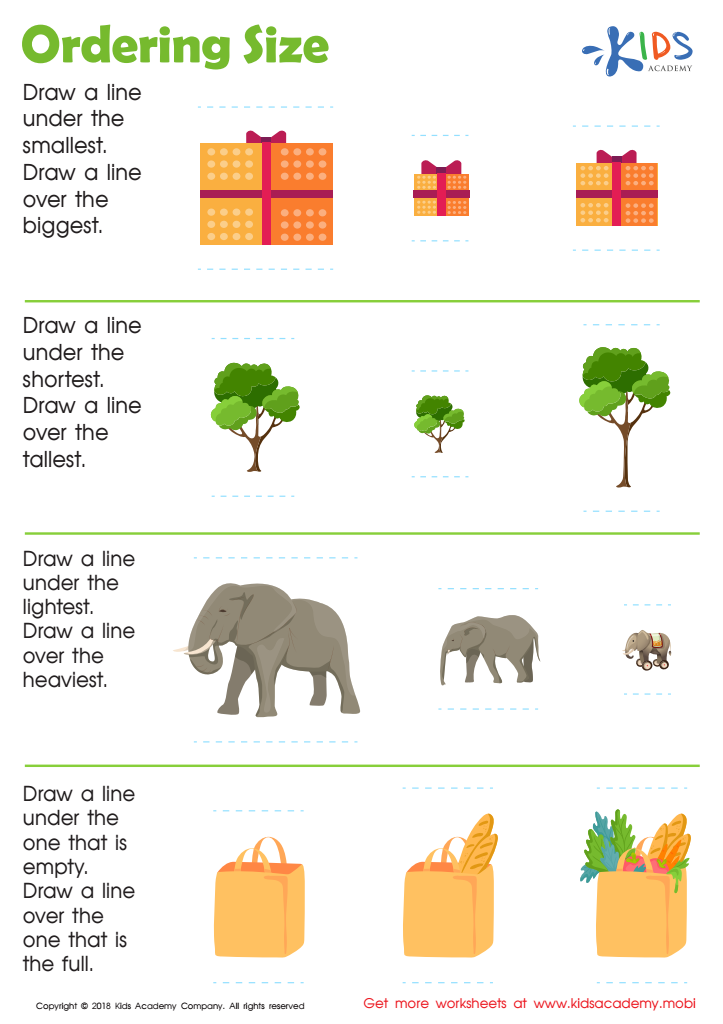
Ordering Size Worksheet
 Assign to My Students
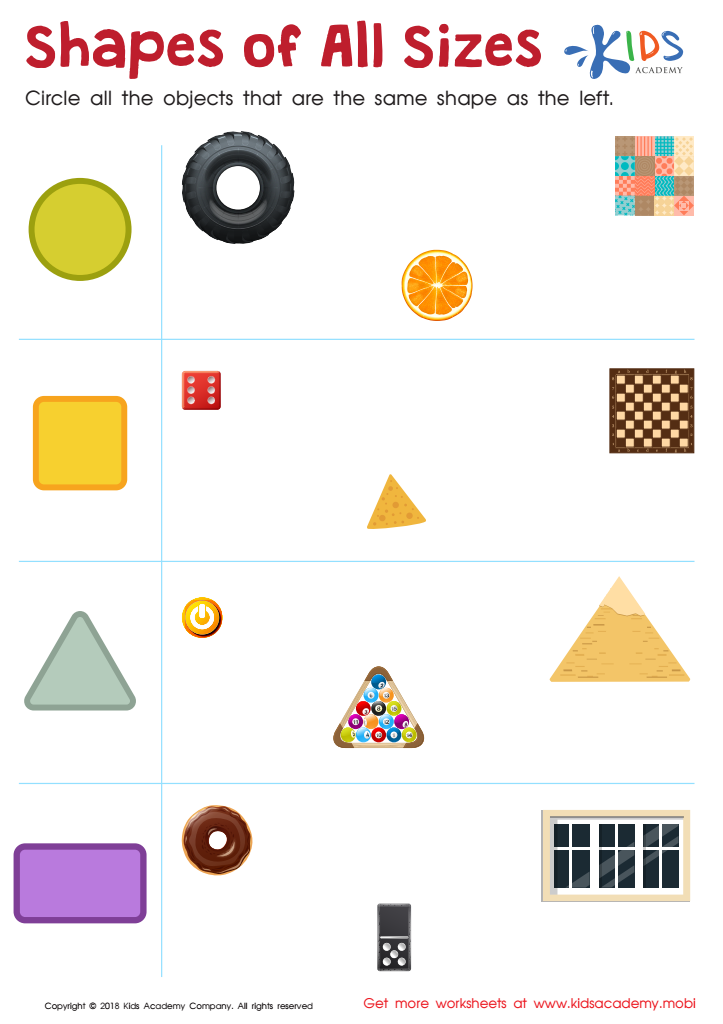
Shapes of All Sizes Worksheet
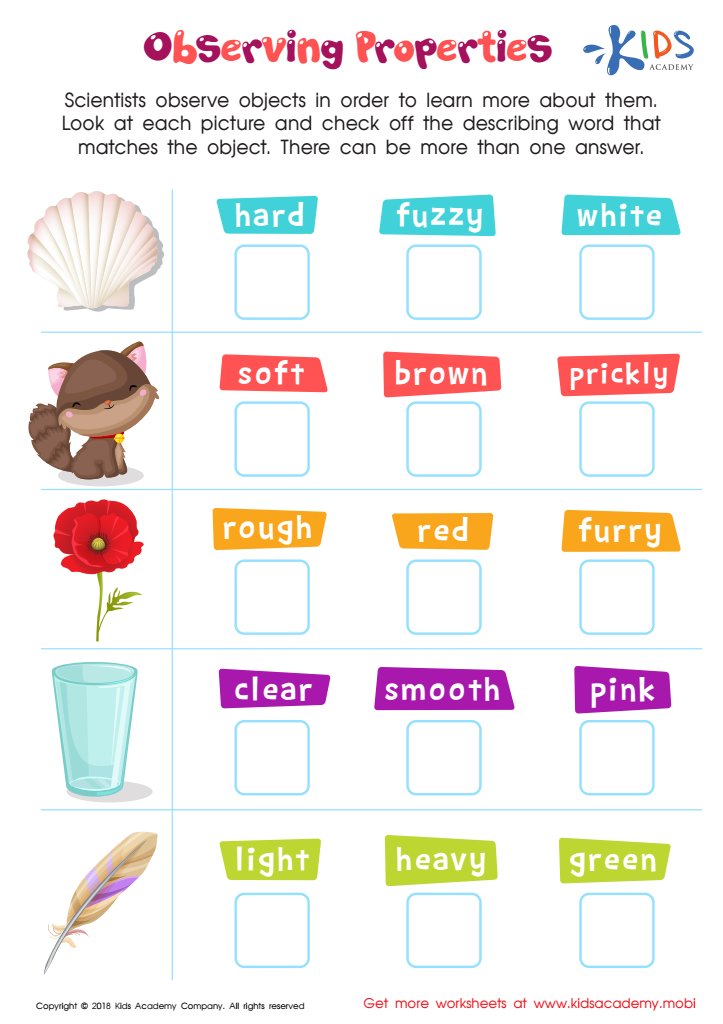
Observing Properties Worksheet
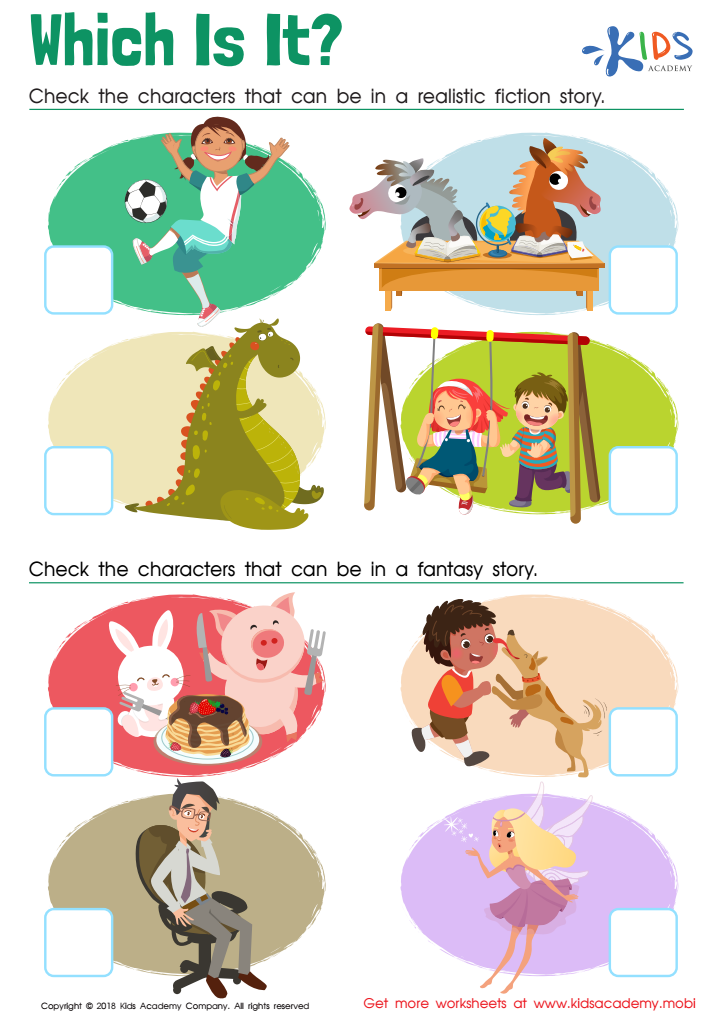
Which Is It? Worksheet








Comparing objects is a fundamental concept in early childhood education, essential for children aged 4-7. Parents and teachers should care about this because it encourages a child's cognitive development, critical thinking, and problem-solving skills. When children engage in comparing objects by attributes such as size, shape, color, and quantity, they learn to observe and categorize the world around them. This process lays the groundwork for mathematics, as children begin to understand concepts like measurements, patterns, and sequences.
Moreover, comparing objects helps improve language skills. When guided to observe differences and similarities, children expand their vocabulary to describe objects' properties accurately. It also bolsters social skills; activities that involve comparing objects can be done in a group setting, teaching children to communicate their observations and to listen to others.
Equally important is that these comparison activities make learning hands-on and interactive, which is critical for young children's engagement and retention. For instance, when children compare objects they encounter daily, it makes learning relatable and fun. Ultimately, understanding and distinguishing between objects from an early age fosters a mindset eager to explore, learn, and interact with the world analytically and thoughtfully.








