Contextual understanding Normal Worksheets for Ages 4-7
5 filtered results
-
From - To
Introduce your little learners to the exciting world of contextual understanding with our specialized worksheets for ages 4-7. These engaging activities are designed to enhance critical thinking and comprehension skills by using relatable scenarios and imagery. Perfect for classrooms and homeschool settings, our worksheets help children make sense of words and phrases within various contexts, boosting their vocabulary and reading comprehension. With fun stories, puzzles, and exercises, kids will enjoy learning while mastering essential language skills. Explore our carefully crafted resources to support your child's journey in becoming a confident and competent reader and thinker.
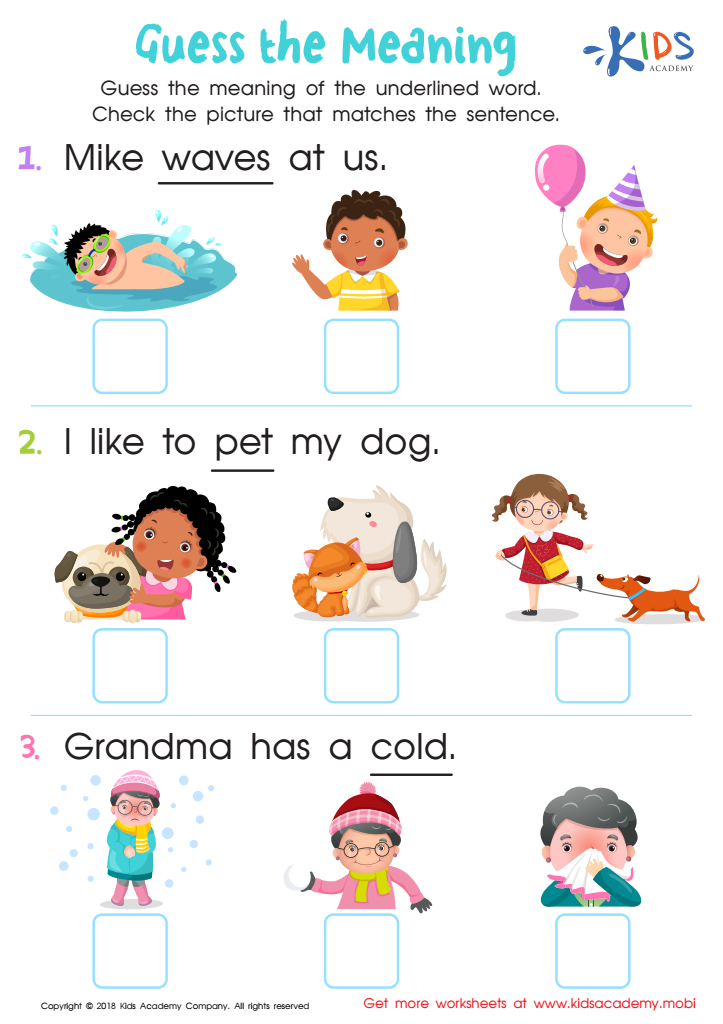
Guess the Meaning Worksheet
 Assign to My Students
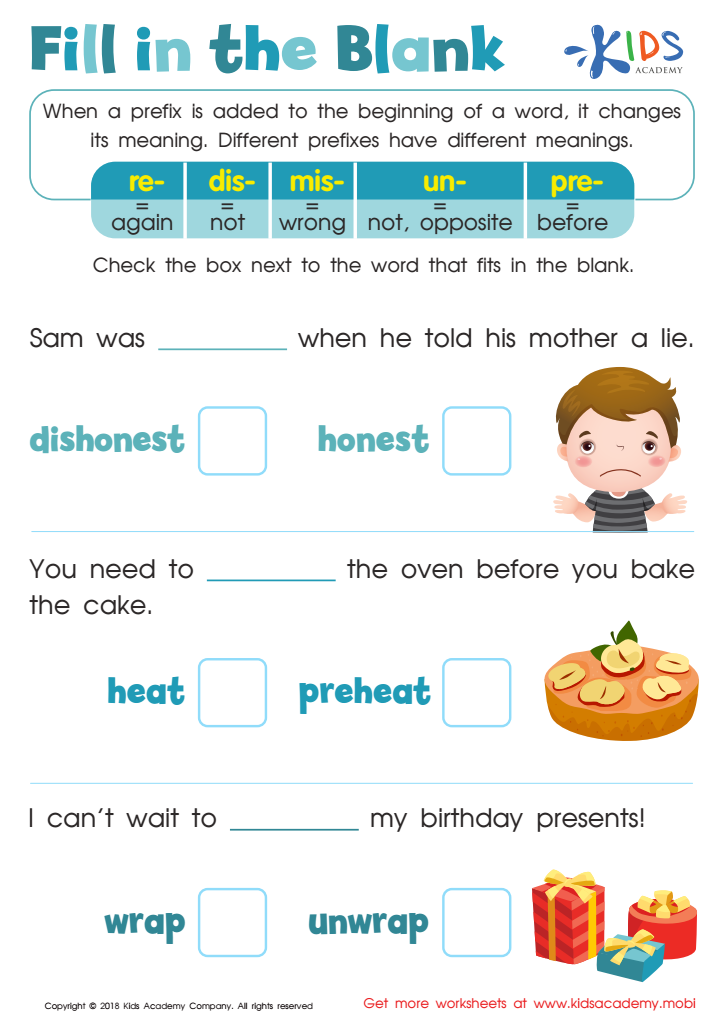
Reading: Fill in the Blank Worksheet
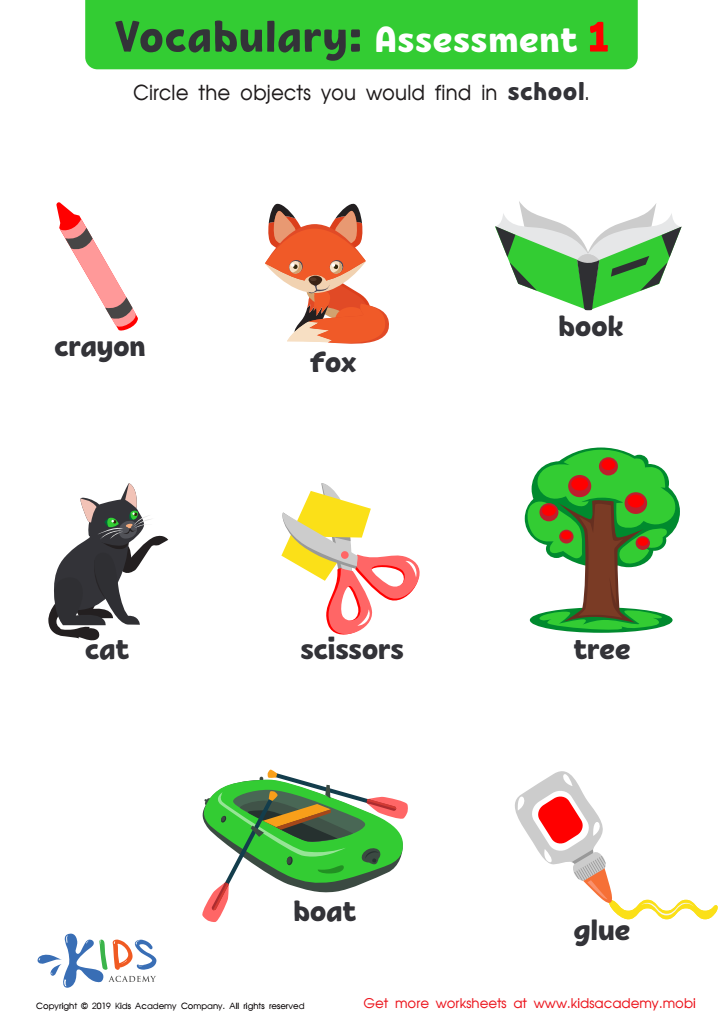
Vocabulary: Assessment 1 Worksheet
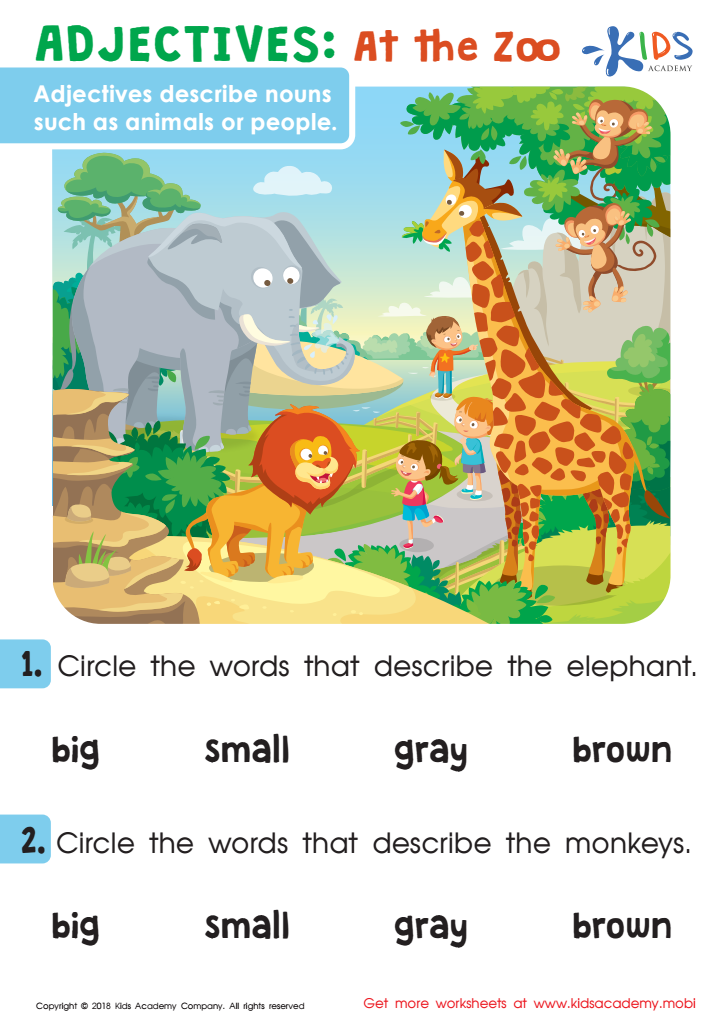
Adjectives: At The Zoo Worksheet
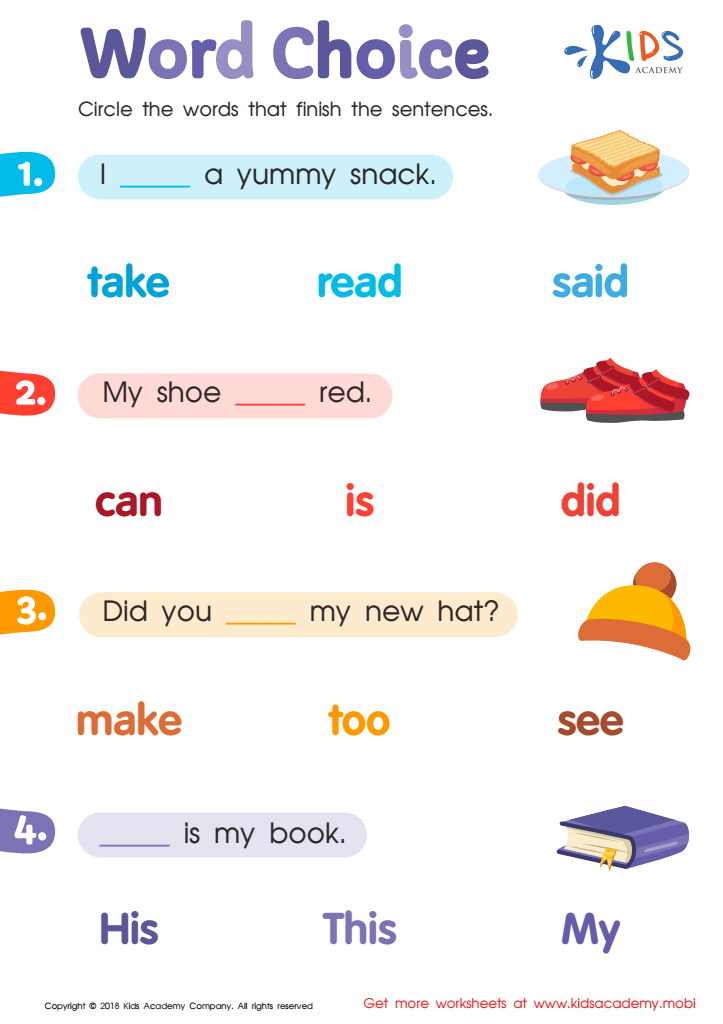
Word Choice Worksheet








Contextual understanding is critical for children aged 4-7 as it lays the foundation for effective communication and cognitive development. Parents and teachers should care about fostering this skill because it's essential for children to grasp the meaning behind words, situations, and social interactions, which are key components for their future learning and social competence.
For example, when a child understands context, they can infer meaning from the surrounding environment or discussion, even if they don't understand every single word. This skill helps them follow instructions in the classroom, engage in storytelling, and predict outcomes in a narrative. As they interact more meaningfully with their peers and adults, they also build stronger linguistic abilities and empathy, important for both academic success and personal relationships.
Moreover, contextual understanding supports reading comprehension, a critical skill that influences overall academic performance. Children can better understand and recall details from stories if they can connect new information to what they already know. This forms the basis for critical thinking and problem-solving.
Ultimately, ensuring that children develop strong contextual understanding during these formative years equips them with the tools to navigate the world around them, fostering confidence, effective communication, and a love of learning. Parents and teachers play a central role in creating rich, engaging environments and experiences where these skills can thrive.








