
Weather identification Normal Worksheets for Ages 4-7
4 filtered results
Difficulty Level
Grade
Age
-
From - To
Subject
Activity
Standards
Discover our engaging Weather Identification Normal Worksheets designed specifically for children ages 4-7. These fun and interactive worksheets will help young learners recognize different weather conditions, enhancing their observational skills and expanding their vocabulary. With vibrant illustrations and easy-to-follow activities, kids will enjoy identifying sunny, rainy, windy, and snowy days while developing essential knowledge about the world around them. Our worksheets are perfect for use at home or in the classroom, promoting learning through play. Foster your child's curiosity about nature and the environment with our thoughtfully crafted educational resources. Start their weather journey today!
Favorites
With answer key
Interactive
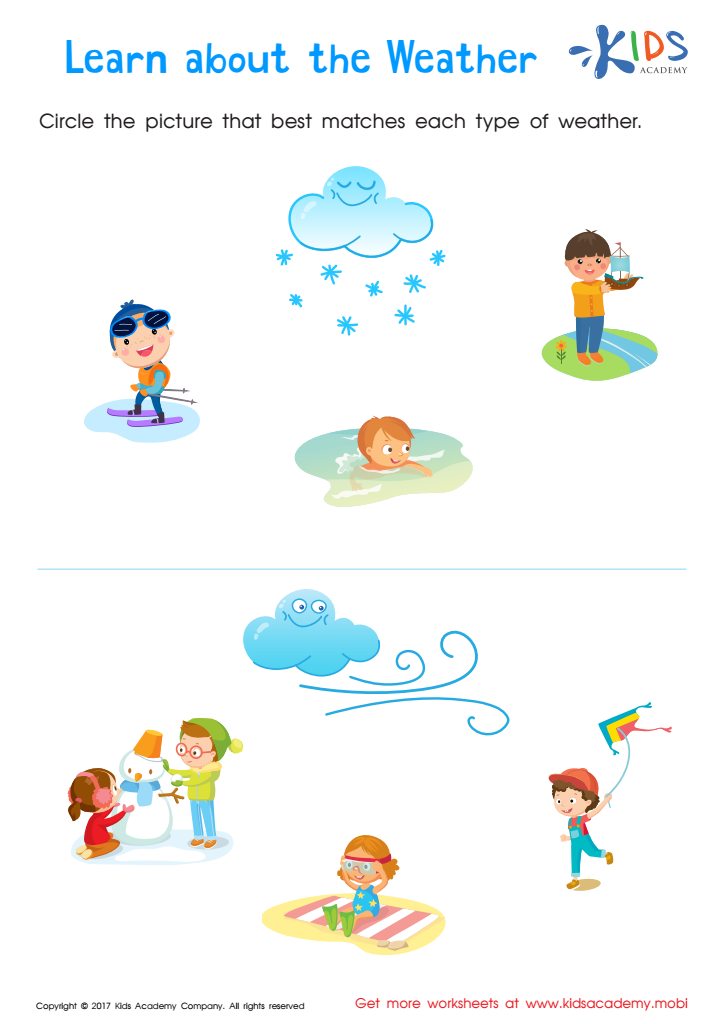
About the Weather Printable
This worksheet is perfect for reinforcing knowledge about changing weather and activities that suit each season. Help your child use their life experiences to observe the weather and complete the worksheet. Fun and colorful, it's a great way to learn about weather and seasons. Let's get started!
 Assign to My Students
About the Weather Printable
Worksheet
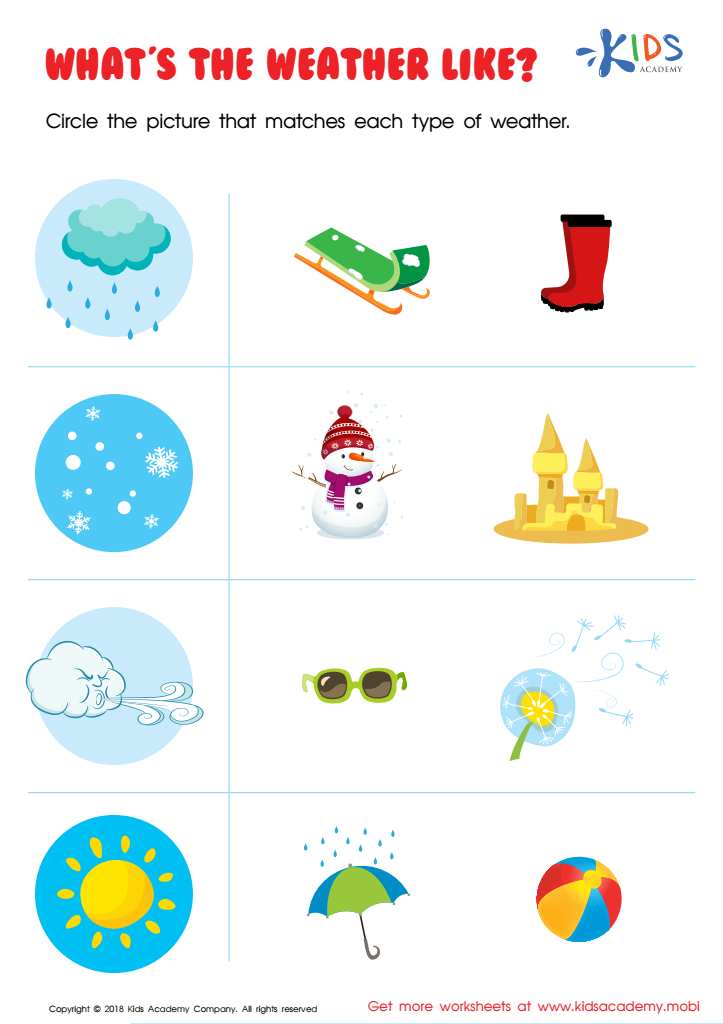
What's the Weather Like? Worksheet
Help budding meteorologists practice matching weather to seasons with this PDF worksheet. Picture clues help identify seasons and fine motor skills are practiced circling the correct weather patterns. Bright and engaging characters make learning fun and reinforce weather knowledge.
What's the Weather Like? Worksheet
Worksheet
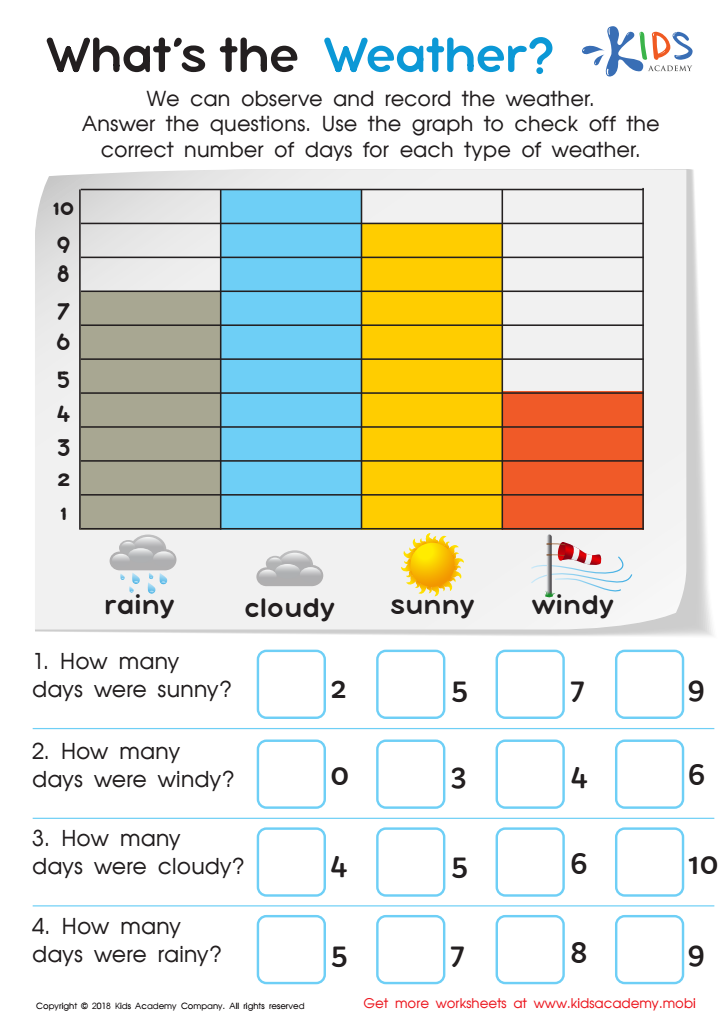
What's the Weather? Worksheet
Check the weather outside. Help kids learn and practice science and math by tracking different types of days using this printable worksheet. Have them count bars next to weather types like cloudy, sunny, windy, and rainy. Answer the questions and take the lesson further by creating a bar graph to show the monthly weather.
What's the Weather? Worksheet
Worksheet
Join Kids Academy for Free
Who is primarily going to use this learning content?







Weather identification is an essential skill for children aged 4-7, and parents or teachers should prioritize its importance. Firstly, understanding weather plays a critical role in children's safety. By teaching them to identify weather conditions, such as rain, sunshine, snow, or storms, we empower them to make informed decisions about dressing appropriately and engaging in safe outdoor activities.
Additionally, learning about the weather promotes curiosity and exploration. Children often connect their everyday experiences to the weather. For example, they can observe how rain affects their environment or relate sunny days to outdoor play. These observations support cognitive development and help children develop critical thinking and observation skills.
Weather education also fosters a sense of wonder about the natural world. It opens opportunities for discussions about nature, science, and the environment. Activities such as creating weather charts or participating in simple experiments related to temperature and precipitation can enhance their learning experience.
Finally, addressing weather phenomena aids in social-emotional development. Identifying weather encourages children to express their feelings about conditions—like excitement over snow or frustration with rain—which is vital for emotional literacy. Therefore, parents and teachers play a crucial role in nurturing this awareness, ensuring children's holistic development.








