Counting skills Normal 2D Shapes Worksheets for Ages 4-7
4 filtered results
-
From - To
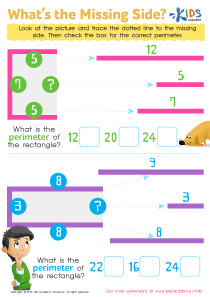
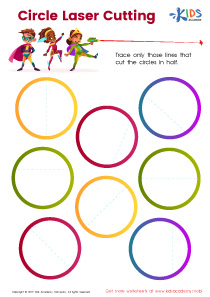
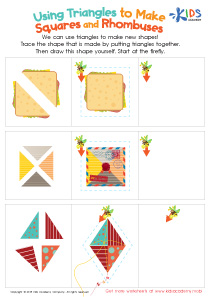
Enhance your child's counting skills with our engaging 2D shapes worksheets, designed specifically for kids aged 4-7. These worksheets incorporate fun and interactive activities that help young learners identify, count, and organize various 2D shapes, including squares, circles, and triangles. Each worksheet emphasizes hands-on learning, fostering a deeper understanding of shape recognition and numerical concepts. Perfect for use at home or in the classroom, these resources cater to diverse learning styles and encourage skill mastery through repetition and practice. Get your little ones excited about math while building a strong foundation in counting and shape recognition with our thoughtfully crafted worksheets!
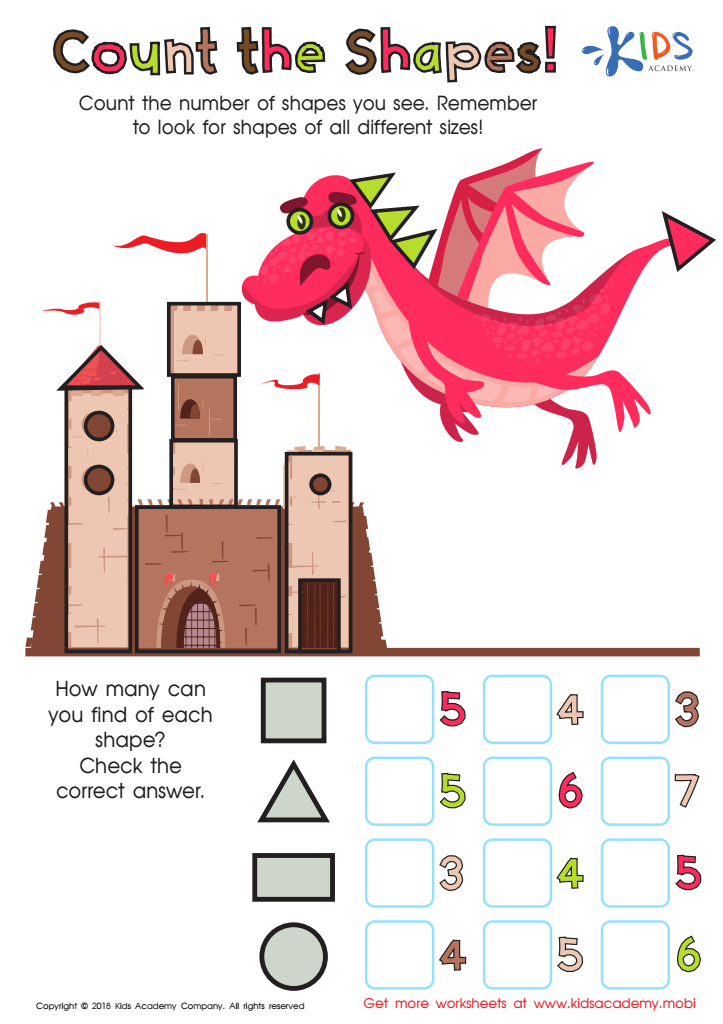
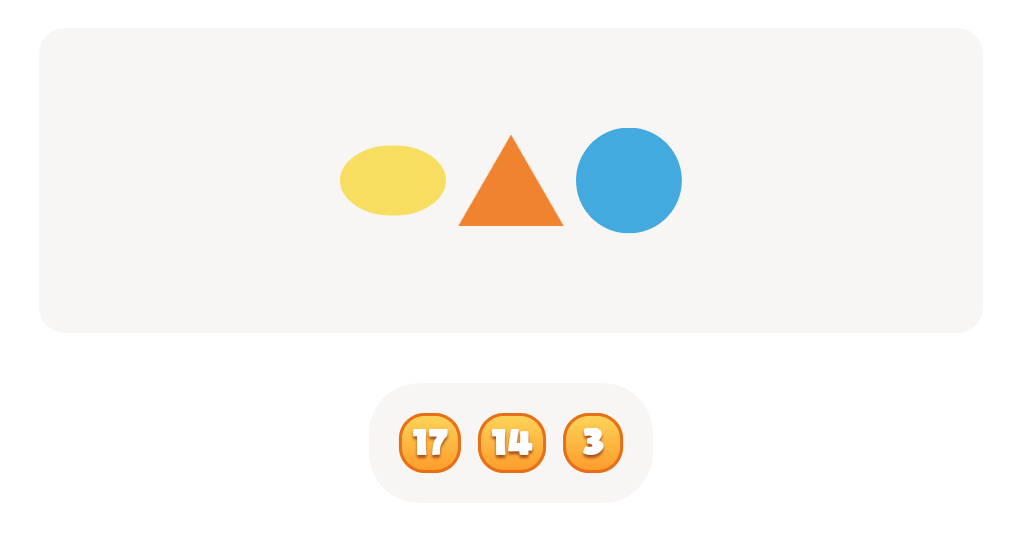
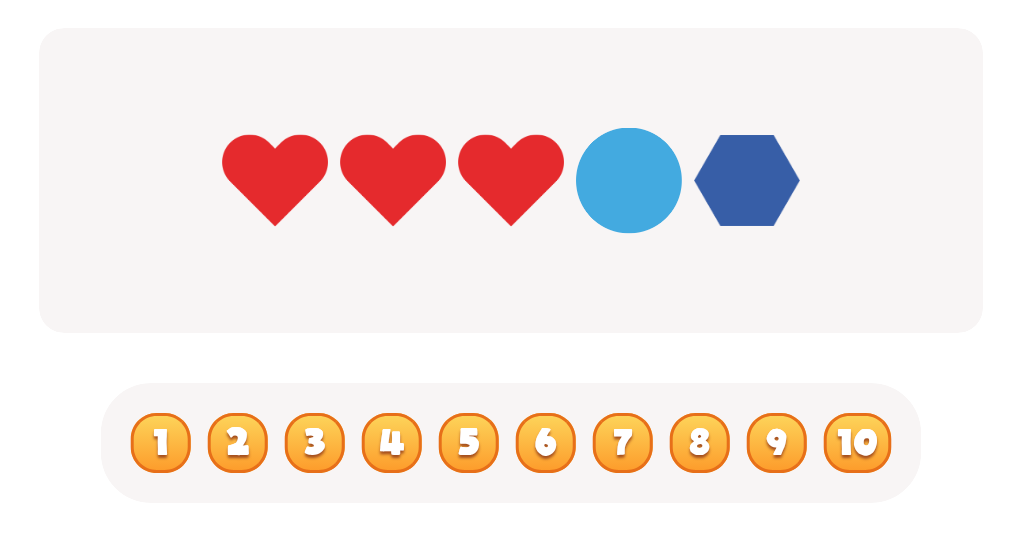
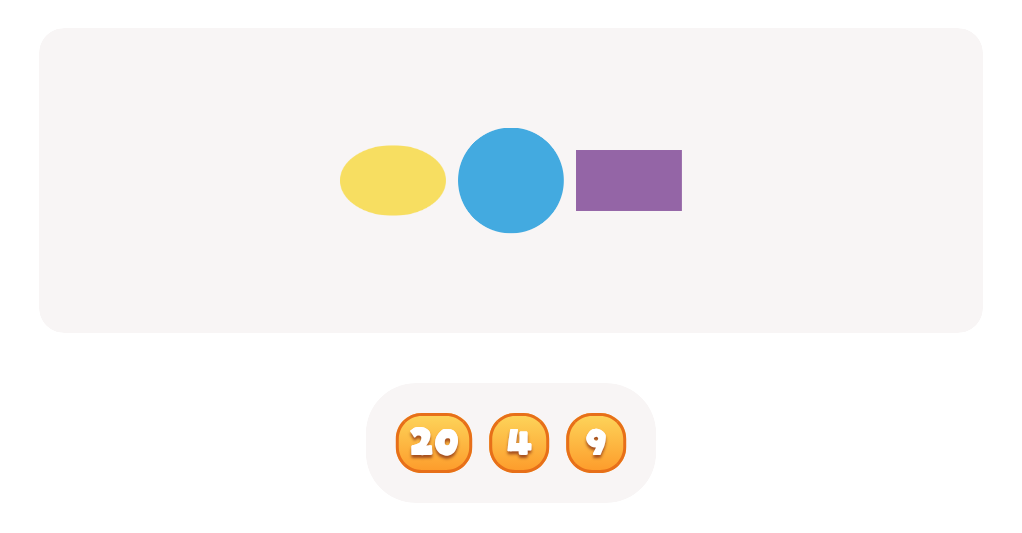
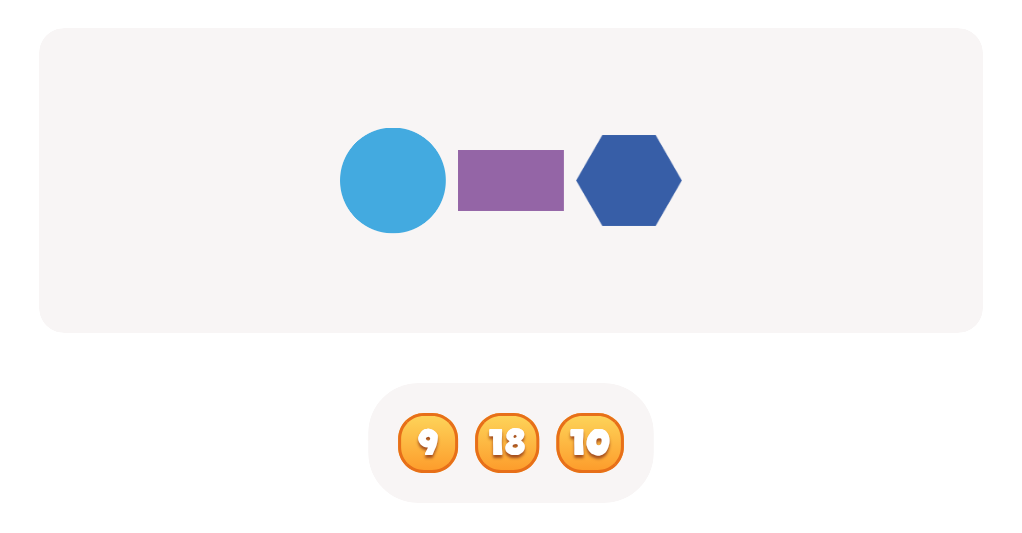
Count the Shapes Worksheet
 Assign to My Students


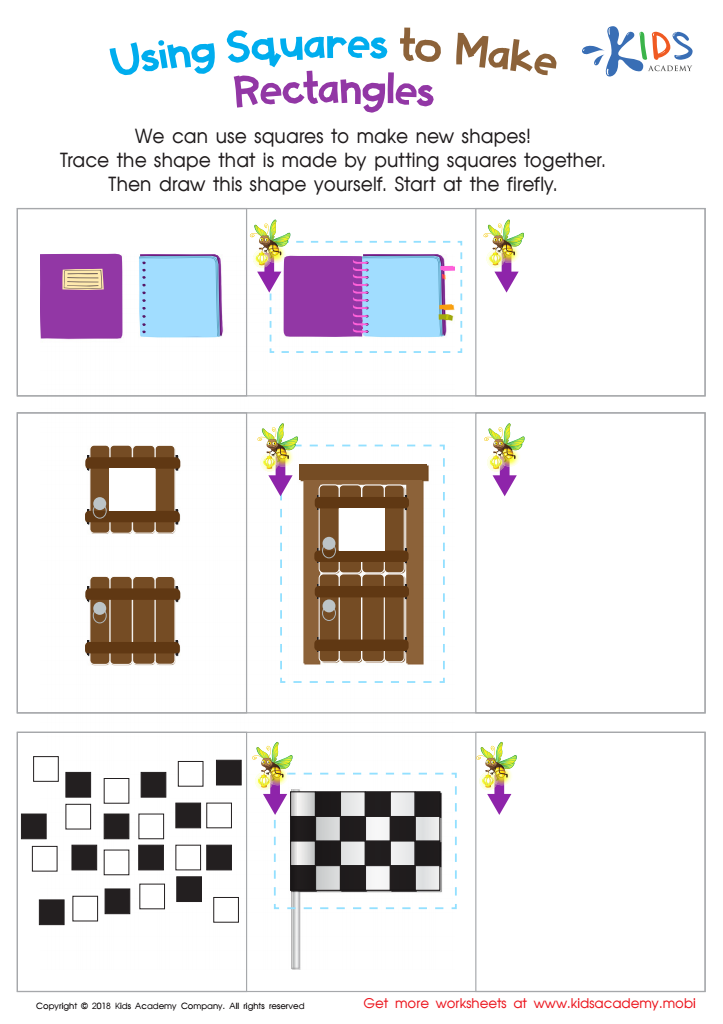
Using Squares to Make Rectangles Worksheet
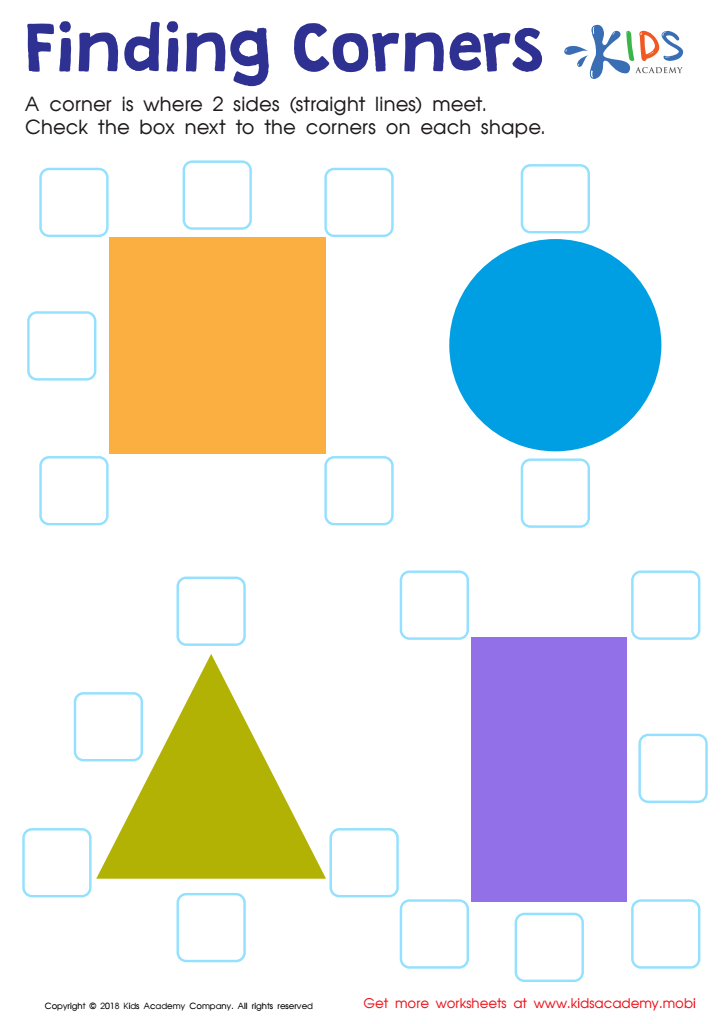
Finding Corners Worksheet
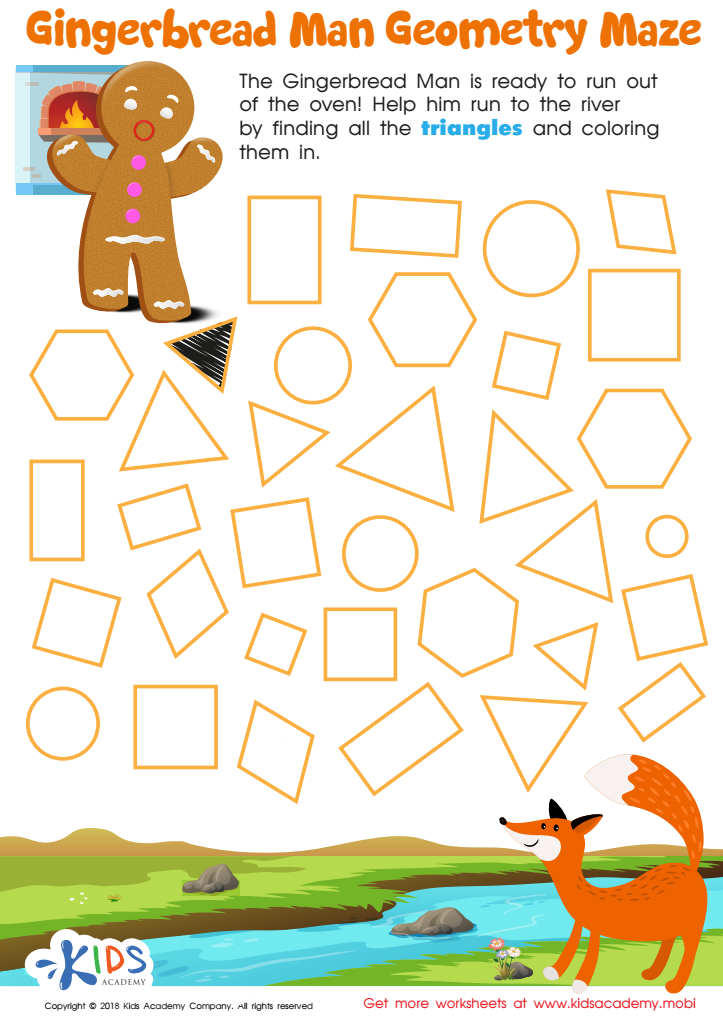
Gingerbread Man Geometry Maze Worksheet








Counting skills and understanding 2D shapes are foundational components of early mathematics education for children aged 4-7. Parents and teachers should prioritize these skills as they foster cognitive development, spatial awareness, and problem-solving abilities.
Counting helps children understand quantities, sequence, and the relationships between numbers. By developing robust counting skills, children build a solid foundation for more complex mathematical concepts in the future. Moreover, teaching counting within the context of everyday activities, such as counting fruits during snack time or tallying toy cars, can make learning engaging and relevant.
Similarly, knowledge of 2D shapes—such as circles, squares, triangles, and rectangles—introduces children to geometry in a tangible way. Recognizing and categorizing shapes helps them develop visual-spatial skills, enhancing their ability to navigate their environment and understand patterns. It also encourages critical thinking as children begin to explore the properties and attributes of different shapes.
Combining these skills not only boosts mathematical understanding but also supports overall cognitive and social-emotional development. When parents and teachers care about fostering these skills, they empower children to become confident learners, equipped to tackle future academic challenges. Investing time in counting and shape recognition ensures that children gain the foundational skills necessary for lifelong learning.