Mathematical reasoning Normal Addition Facts Worksheets for Ages 4-7
3 filtered results
-
From - To
Enhance your child's math skills with our "Mathematical Reasoning Normal Addition Facts Worksheets for Ages 4-7." These engaging and educational sheets focus on building foundational addition facts through fun and interactive exercises. Designed for early learners, our worksheets support cognitive development and critical thinking, helping children understand and apply mathematical concepts. With a variety of activities tailored to young minds, each worksheet encourages practice and mastery of essential addition facts in an enjoyable way. Ideal for homeschooling or supplementary practice, these printable resources will give your child the confidence and skills needed to excel in math.
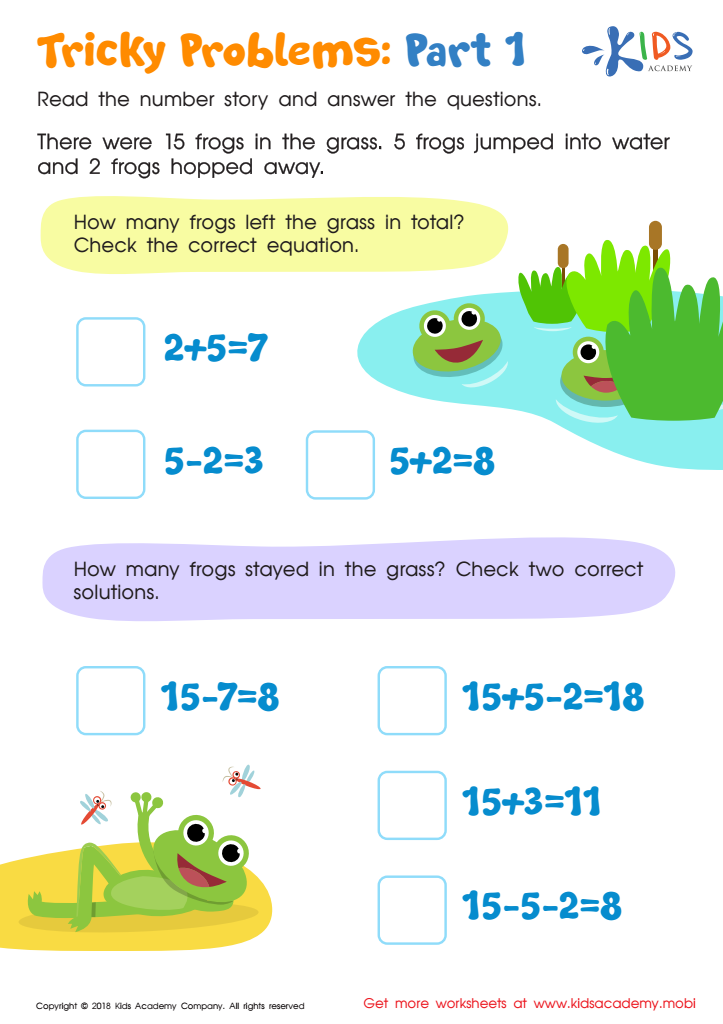
Tricky Problems Worksheet: Part 1
 Assign to My Students



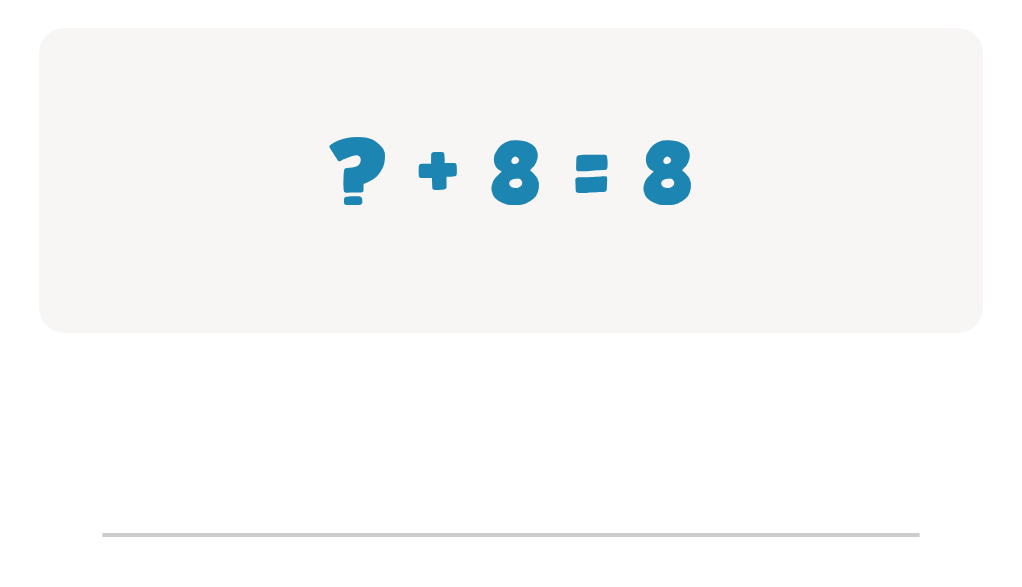
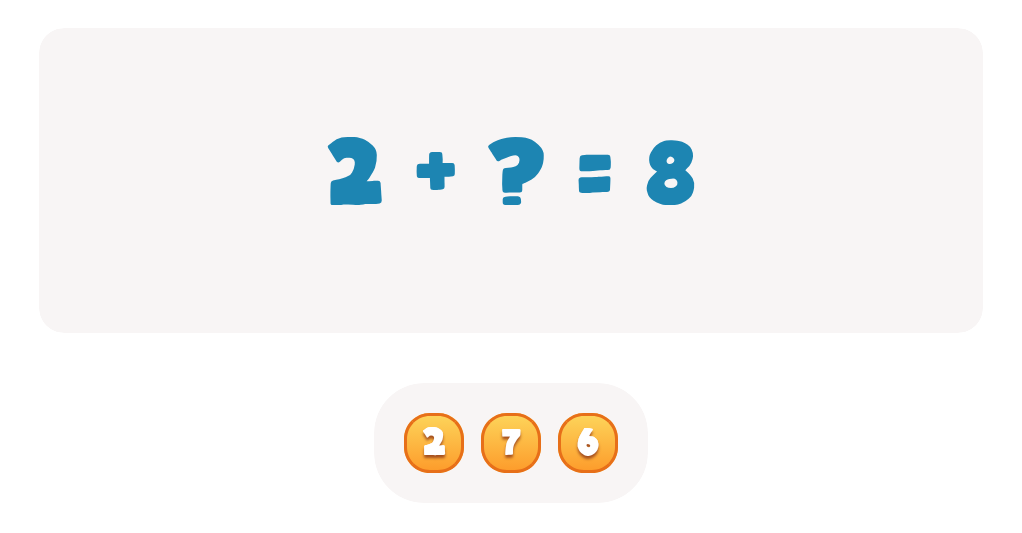


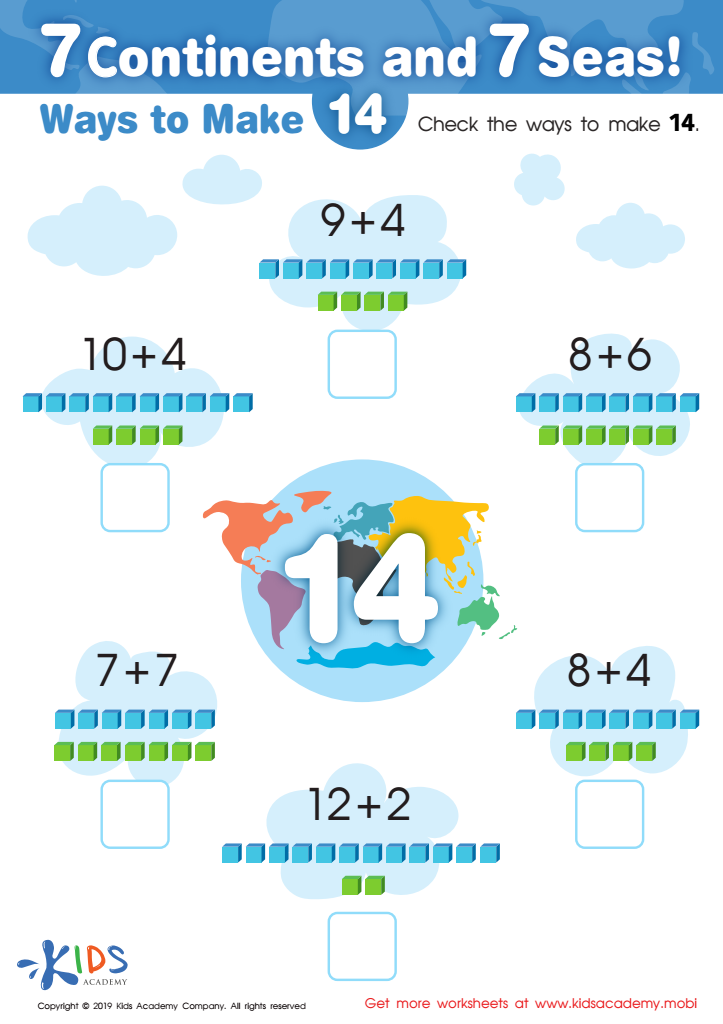
7 Continents and 7 Seas Worksheet
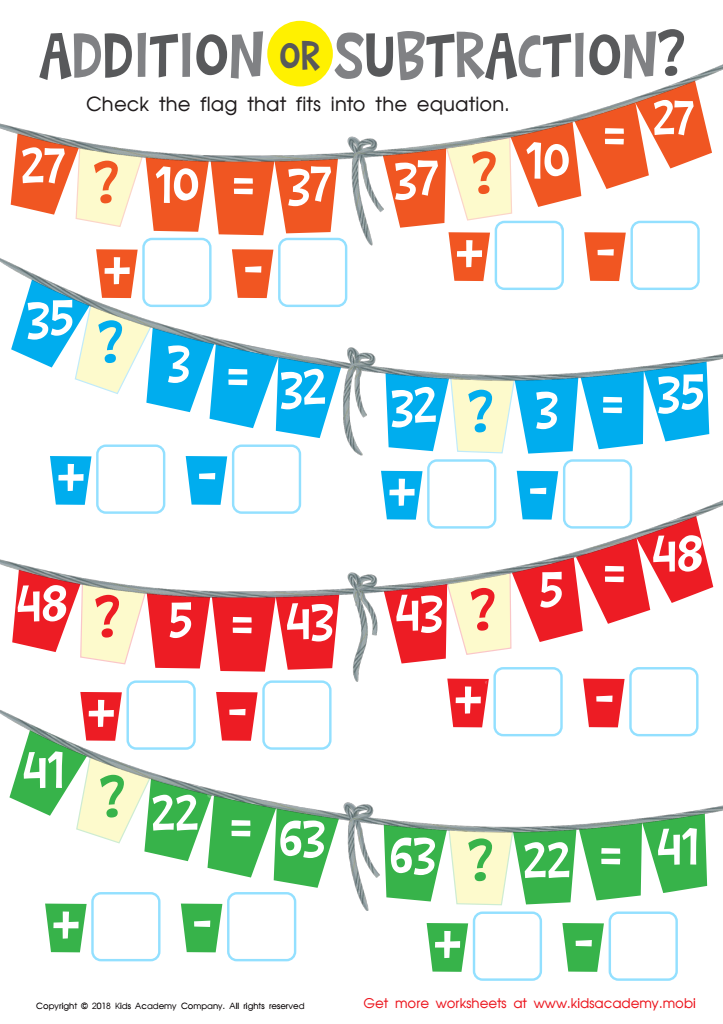
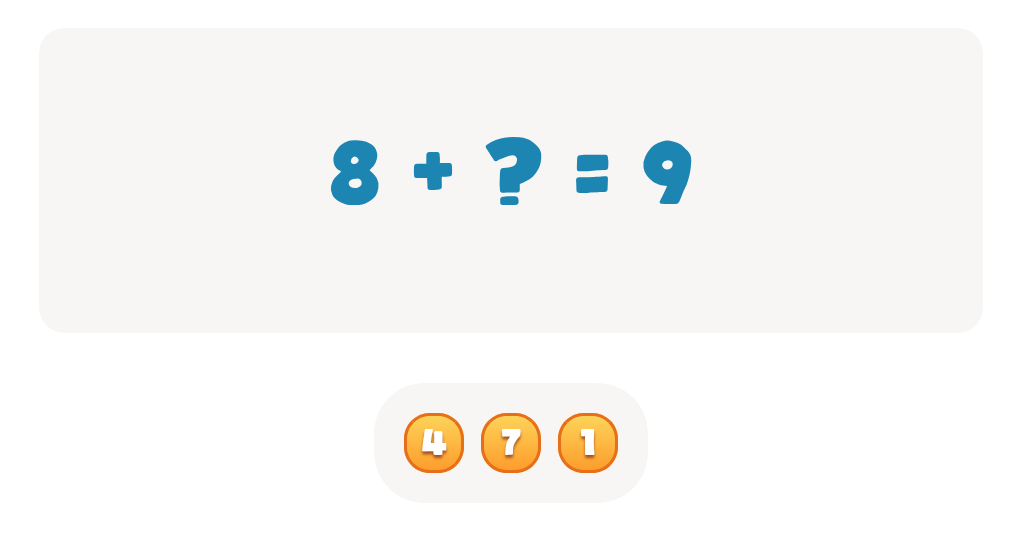
Addition or Subtraction? Worksheet








Mathematical reasoning and normal addition facts for ages 4-7 form the cornerstone of a child's numerical understanding and cognitive development. Early mastery of these skills equips children with fundamental tools necessary for more advanced math concepts encountered later. When parents and teachers emphasize arithmetic accuracy, they lay the groundwork for problem-solving, logical reasoning, and analytical thinking skills—valuable across all subjects and in real-life scenarios.
At this crucial developmental stage, consistent practice of addition facts helps solidify basic number sense, enabling children to understand quantities, relationships between numbers, and basic computation. It builds confidence and reduces math anxiety, making future mathematics learning both more enjoyable and effective.
Additionally, early mathematical proficiency influences other academic areas, including reading comprehension and critical thinking, as it involves similar pattern recognition and sequential thinking strategies. By bolstering these skills early, children are more likely to have positive attitudes towards learning and increased academic success overall.
Teachers and parents working together to foster a deep understanding of these concepts through hands-on activities, games, and daily practice also help children see math as a practical, engaging part of everyday life, fostering a lifelong appreciation for the subject. This collaborative investment during the ages of 4-7 sets the stage for academic achievement and meaningful skill development.








