Fine Motor Skills Normal Addition Worksheets for Ages 4-7
3 filtered results
-
From - To
Boost your child's fine motor skills while mastering fundamental addition with our "Fine Motor Skills Normal Addition Worksheets" designed specifically for ages 4-7. These engaging, colorful worksheets combine enjoyable math challenges with activities that enhance hand-eye coordination, pencil grip, and dexterity. Kids will love solving simple addition problems, while cutting, tracing, and coloring adds a fun twist to their learning process. Perfect for home or classroom use, these worksheets support early math literacy and promote cognitive development through play-based learning. Download now and watch your little ones build essential skills in a fun, interactive way!

18 Candles Worksheet
 Assign to My Students
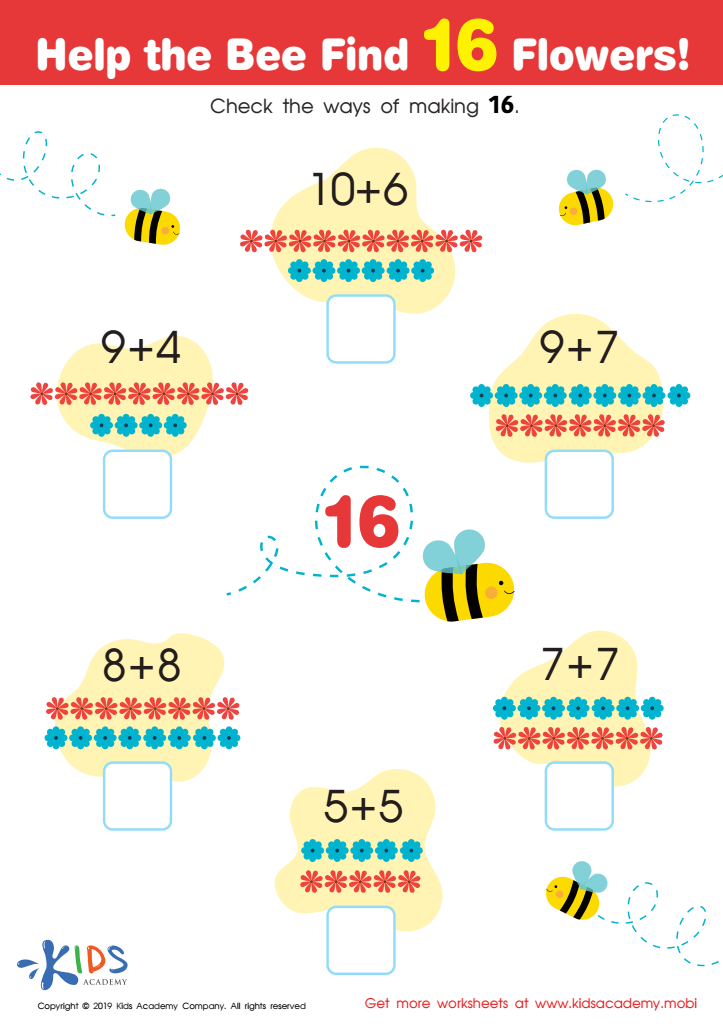
Help the Bee Find 16 Flowers Worksheet
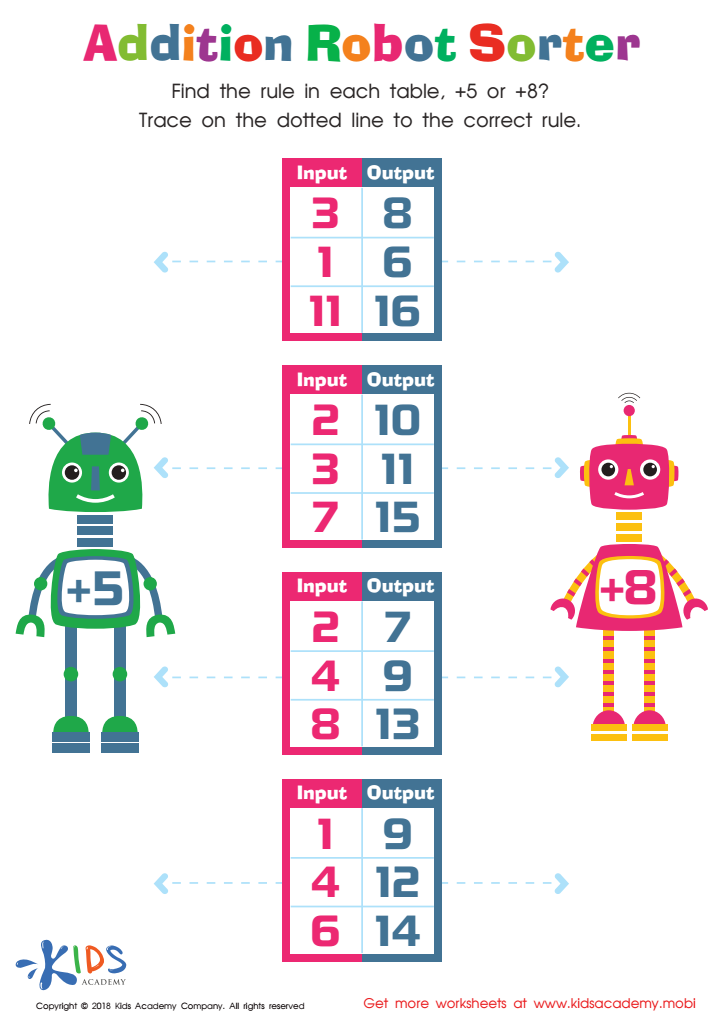
Addition Robot Sorter Worksheet








Fine motor skills are essential for young children, particularly for those aged 4 to 7, as they underpin many critical developmental milestones. This stage is crucial for the development of coordination and control, which are necessary for daily tasks such as writing, using utensils, and fastening clothing. As children engage in normal addition activities, they not only enhance their mathematical understanding but also improve their fine motor skills through the manipulation of objects like counters or beads.
Parents and teachers should be concerned about fostering these skills because they are foundational for a child’s overall learning experience. Strong fine motor skills contribute to improved handwriting, better performance in classroom activities, and increased independence in self-care tasks. Moreover, as students grow, the ability to manipulate tools and materials becomes vitally important in more complex subjects, ranging from art to science.
Elevated fine motor skills also facilitate cognitive development, enhancing problem-solving abilities and fostering confidence. Engaging children in fun, interactive addition activities that require the use of their hands can create an enjoyable learning environment while ensuring that they develop the dexterity needed for long-term success in both academic and life skills. Thus, nurturing fine motor skills should be a priority for both parents and educators.