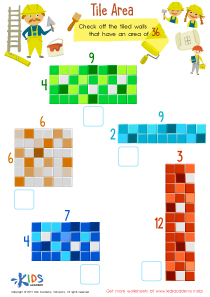
Learning addition Normal Numbers Worksheets for Ages 4-7
4 filtered results
-
From - To
Enhance your child's mathematical skills with our "Learning Addition Normal Numbers Worksheets," designed specifically for ages 4-7. These engaging worksheets provide a fun and interactive way for young learners to grasp the fundamentals of addition using normal numbers. Through colorful illustrations and age-appropriate exercises, children will build confidence in their counting and problem-solving abilities. The worksheets are perfect for home or classroom use, catering to various learning styles and paces. Encourage a positive learning environment while giving your child a solid foundation in mathematics. Start the journey to mathematical mastery today with our thoughtfully crafted addition worksheets!
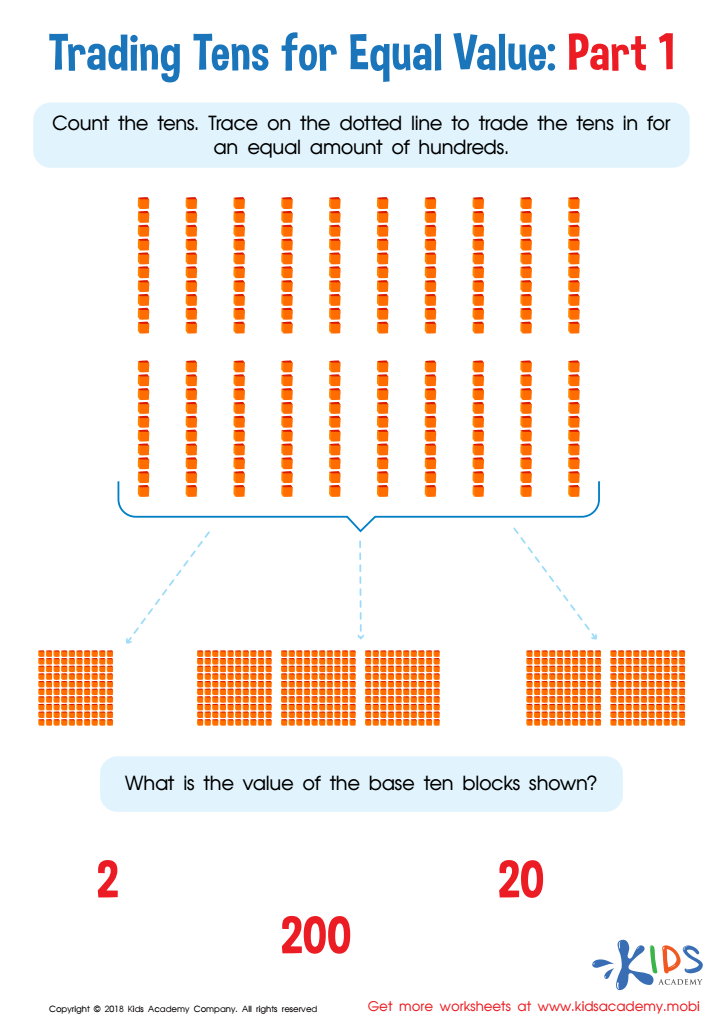
Trading Tens for Equal Value Worksheet: Part 1
 Assign to My Students
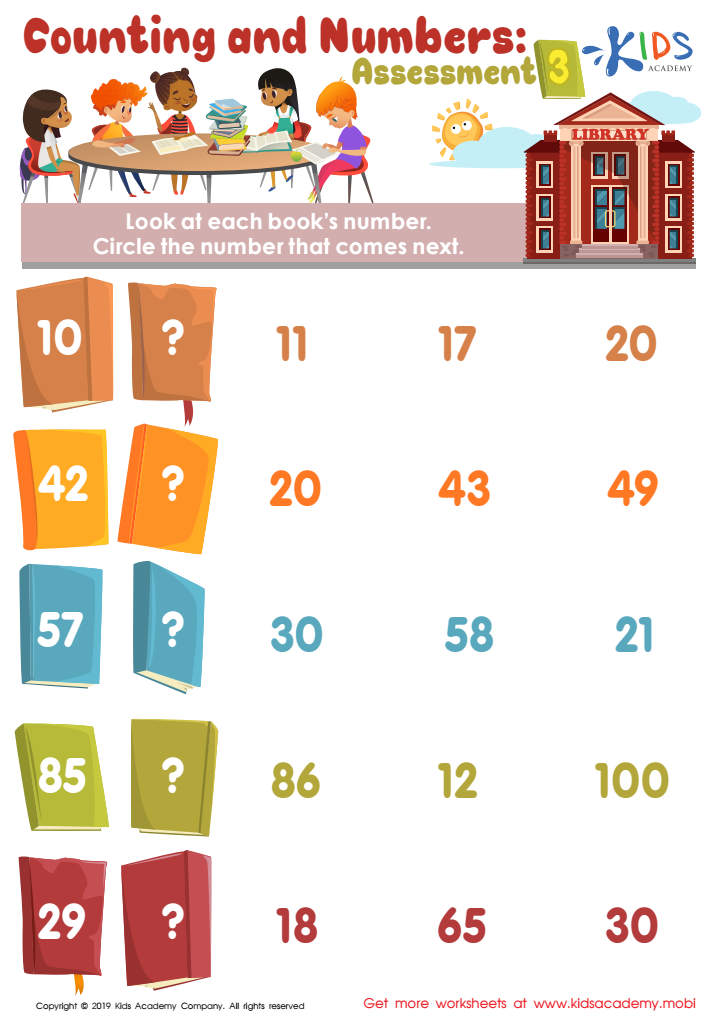
Counting and Numbers: Assessment Worksheet
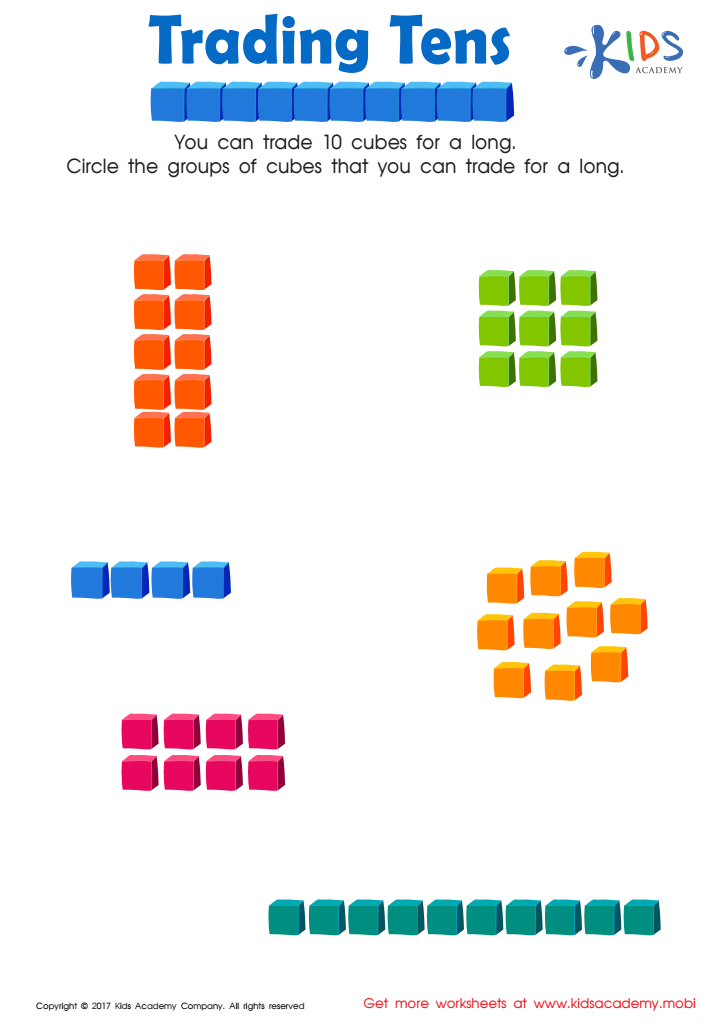
Trading Tens Worksheet
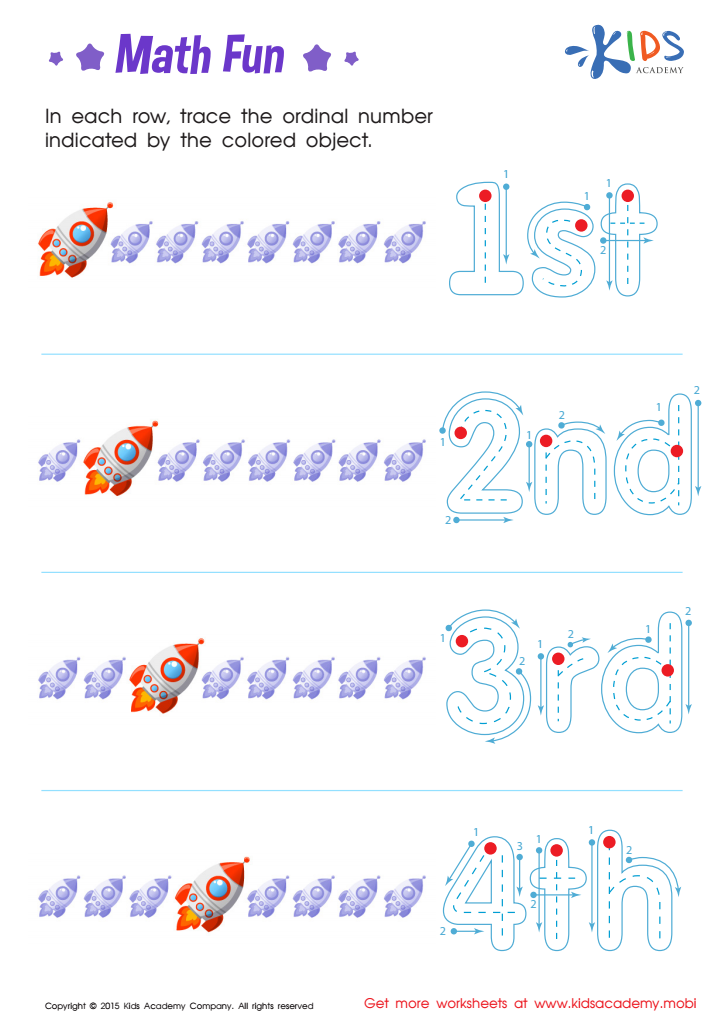
Ordinal Numbers: Math Fun Worksheet







Parents and teachers should prioritize learning addition of normal numbers for ages 4-7 because this foundational skill is critical for a child’s cognitive development. During this stage, children are naturally curious and eager to learn. Introducing them to basic addition helps ignite their interest in mathematics and fosters essential problem-solving skills.
Understanding addition develops logical thinking, enhances memory retention, and builds confidence in handling numbers. As they learn to count and combine quantities, children also improve their understanding of patterns and relationships between numbers, which is pivotal for more complex math concepts later on.
Moreover, mastering addition equips children with skills necessary for daily activities, such as setting the table, sharing snacks, or playing games where counting is involved. These real-life applications make learning meaningful and relatable, enhancing their engagement.
Additionally, the group work often involved in teaching addition cultivates social skills as children learn to collaborate an share ideas. For parents, it’s also a chance to bond during homework, establishing a supportive learning environment. Overall, nurturing a strong grasp of addition within this age range lays the groundwork for academic success and fosters a positive attitude toward mathematics.