Discover our engaging "Sorting Skills Normal Math Worksheets" designed specifically for children aged 4-7. These worksheets help young learners develop critical sorting and categorization skills through fun and interactive activities. Kids will enjoy sorting various items by color, shape, and size, enhancing their understanding of essential math concepts. Perfect for home schooling or classroom use, our worksheets promote essential cognitive development while making learning enjoyable. With a variety of colorful illustrations and age-appropriate challenges, children will be inspired to explore the world of math through sorting. Click to download and watch your child's skills flourish with our creative resources!

Check out this FREE Trial Lesson on Math for age 4-7!

Sorting Objects into 3 Categories

Favorites
With answer key
Interactive
  • 4-7
  • Sorting skills
  • Math
  • Normal
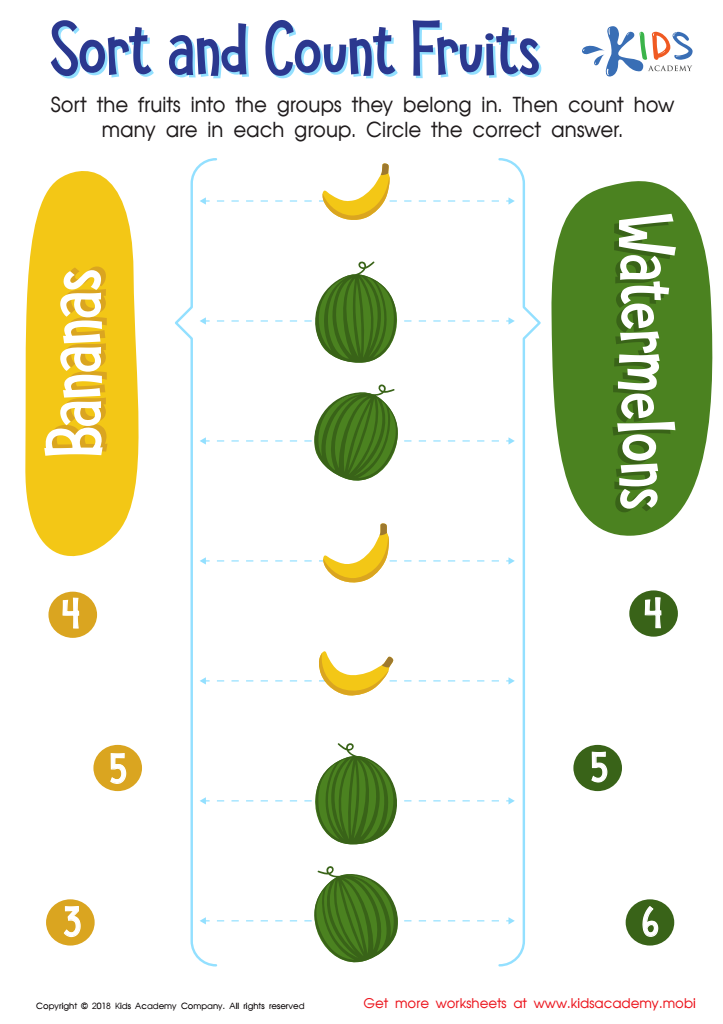
Sort and Count Fruits Worksheet

Sort and Count Fruits Worksheet

Allow your children to hone their critical thinking and number reasoning skills with this free worksheet. They'll sort, count, and trace fruits while learning basic number sense. A fun, delicious learning experience with familiar pictures they'll love.
Sort and Count Fruits Worksheet
Worksheet
Sort and Count to the Moon Worksheet

Sort and Count to the Moon Worksheet

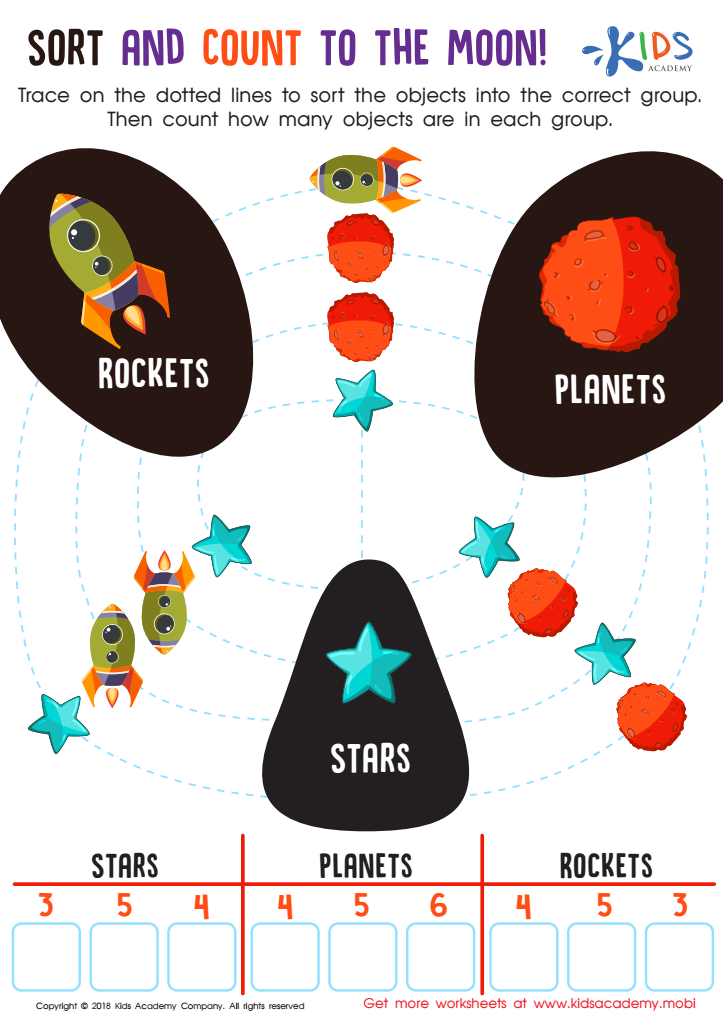
Little space explorers will love counting, sorting and strengthening number sense with this galactic worksheet! They'll use traceable lines to sort pictures of stars, planets and rockets into categories according to properties. After sorting, they'll count each item and fill in the boxes. Bold pictures make it fun and build critical thinking skills.
Sort and Count to the Moon Worksheet
Worksheet
Sorting Shapes - Part 3 Worksheet

Sorting Shapes - Part 3 Worksheet

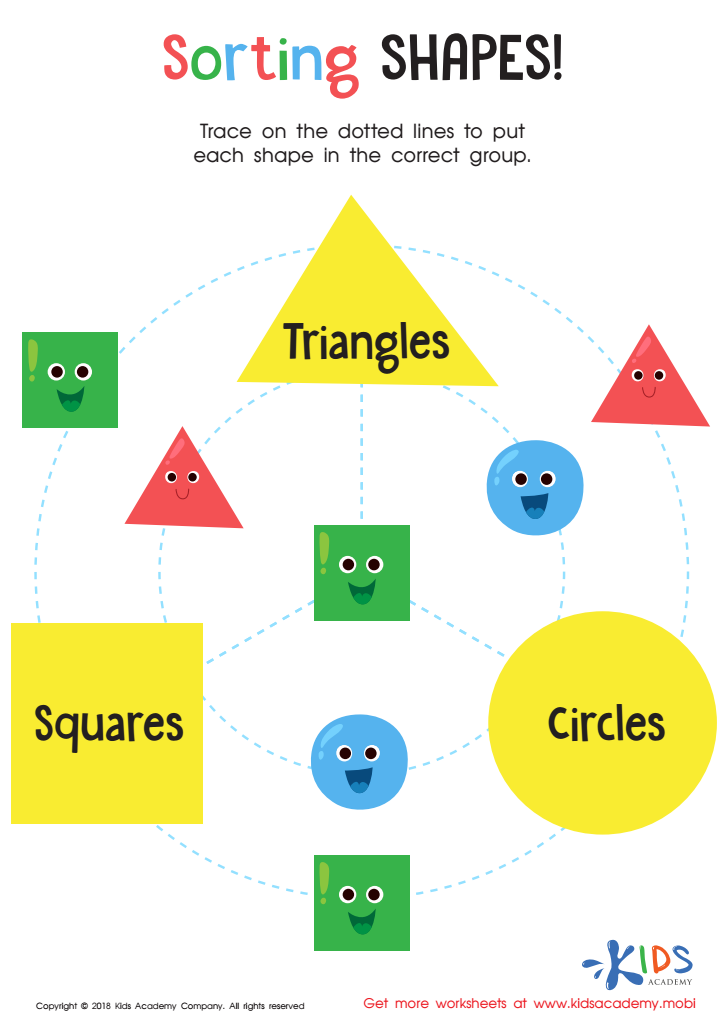
Download this fun PDF to help your kiddos recognize basic shapes like circles, squares, and triangles. It'll sharpen their fine motor skills as they trace and sort shapes by color, size, and sides. Your kids won't even realize they're learning with these cheery shapes!
Sorting Shapes - Part 3 Worksheet
Worksheet
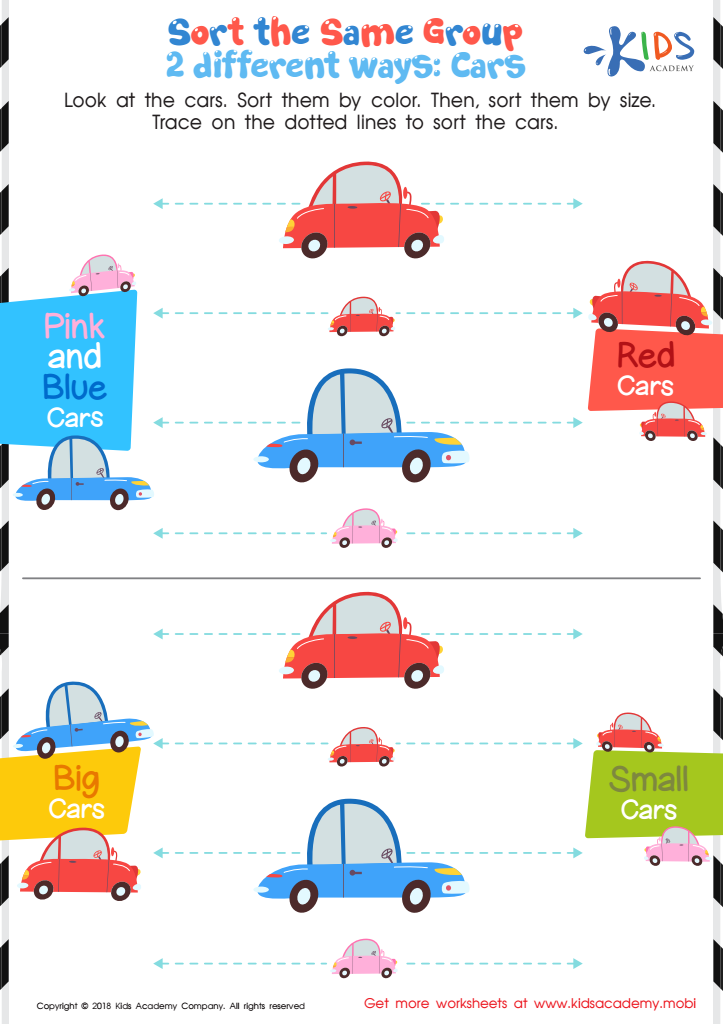
Sort the Same Group 2 Different Ways: Cars Worksheet
Sort the Same Group 2 Different Ways: Cars Worksheet

Look at the pictures with your child. Can they identify the objects? Ask them to sort the cars first by color and then size. Assist them to trace the dotted lines to sort the cars by color and size. This worksheet lets you easily assess your child's color and size organization skills.
Sort the Same Group 2 Different Ways: Cars Worksheet
Worksheet
Sorting Games for Kindergarten
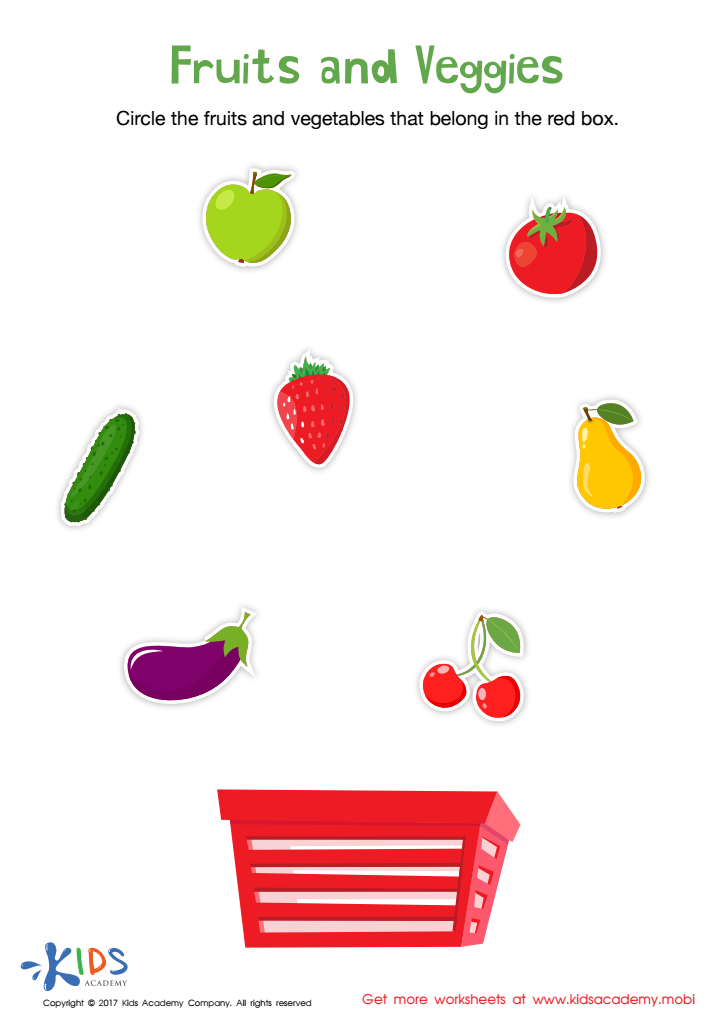
Classifying Fruits and Veggies by Color Sorting Worksheet
Worksheet
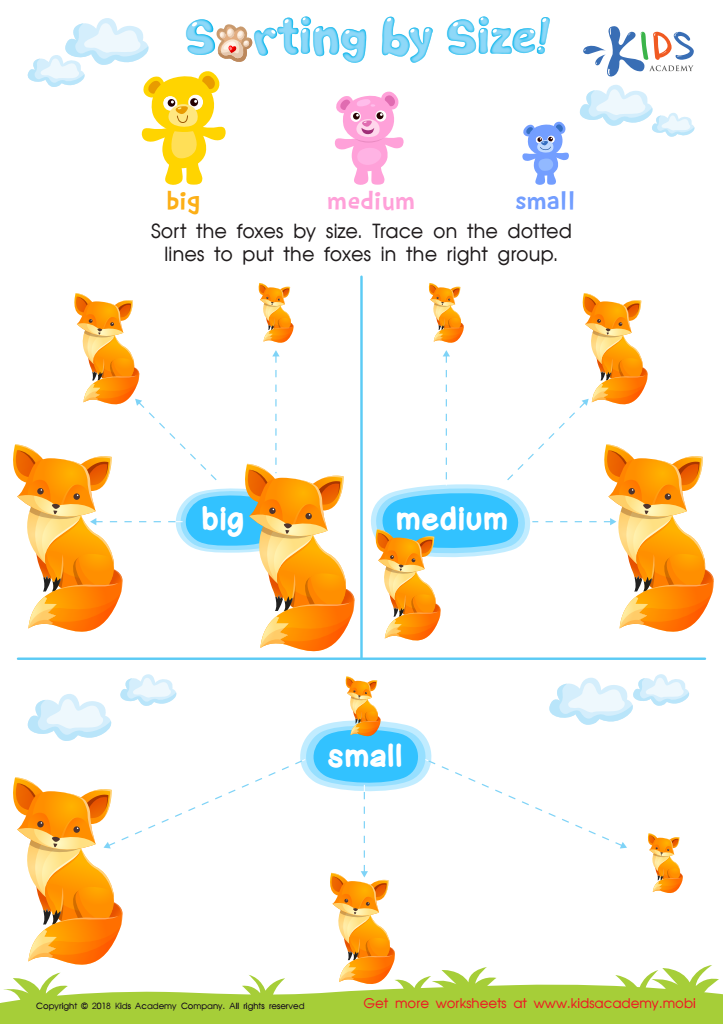
Sorting by Size Worksheet

Sorting by Size Worksheet

This bright printout lets your students sort the foxes by size. Ask them to identify objects, then trace the dotted lines to put the foxes in the right group. Clear and easy instructions make this a fun and colorful exercise for your young ones.
Sorting by Size Worksheet
Worksheet
The Four Seasons Worksheet


The Four Seasons Worksheet

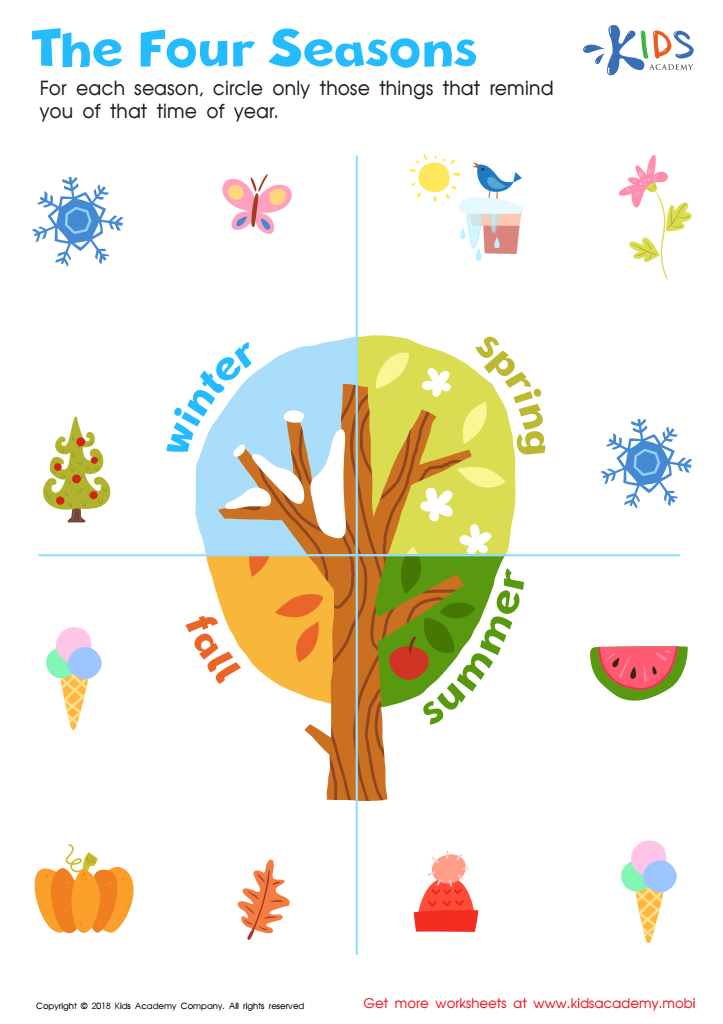
Tell your child to circle things that remind them of each season. The tree has four squares, one for each season. Some things in each square match the season, others don't. Ask if any are out of place. Help them circle only items that remind them of that season.
The Four Seasons Worksheet
Worksheet


Sorting skills, often overlooked, play a vital role in the developmental journey of children aged 4-7. At this stage, children are not only learning to recognize and organize objects, but they are also laying the groundwork for critical math concepts. Sorting teaches essential cognitive skills, such as categorization, classification, and pattern recognition, which are fundamental in developing logical thinking and problem-solving abilities.

When children sort items based on attributes like size, shape, or color, they enhance their understanding of similarities and differences, an essential concept in math. This skill is directly applicable to more complex tasks like addition and subtraction, where recognizing groups and quantities becomes crucial. Moreover, sorting fosters language development as children articulate their reasoning, using mathematical vocabulary that helps reinforce their learning.

For parents and teachers, focusing on sorting activities enriches curriculum engagement and promotes an interactive learning environment. Encouraging sorting at home and in the classroom supports spatial awareness, increases focus, and promotes critical thinking skills. Thus, emphasizing sorting skills not only contributes to early math proficiency but also equips children with the foundational tools necessary for lifelong learning and success in various domains.