Counting skills Normal Matching Worksheets for Ages 4-7
6 filtered results
-
From - To
Discover our engaging Counting Skills Normal Matching Worksheets for ages 4-7, designed to enhance early mathematical understanding! These fun and interactive worksheets help young learners develop essential counting skills through visually appealing activities. Children will love matching numbers with corresponding objects, promoting hand-eye coordination and cognitive growth. Ideal for classrooms or at-home practice, our worksheets cater to different learning styles, ensuring each child grasps fundamental counting concepts at their own pace. Encourage confidence in math with these essential resources that combine education with enjoyment, setting a solid foundation for lifelong learning in numbers! Explore our collection today and watch your child thrive!
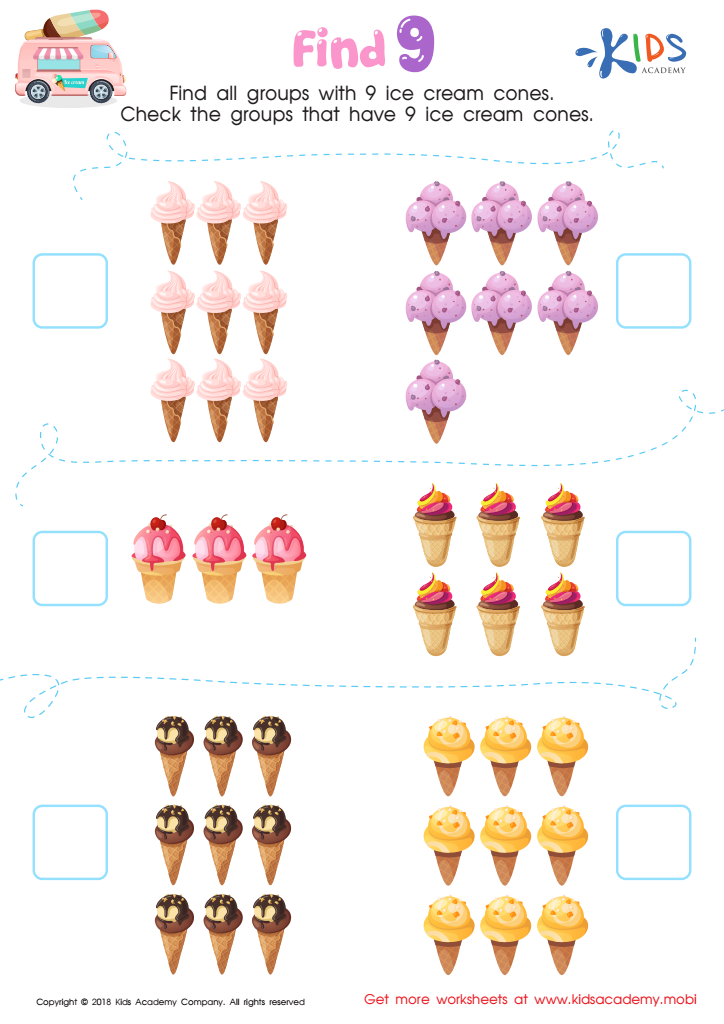
Find 9 Worksheet
 Assign to My Students
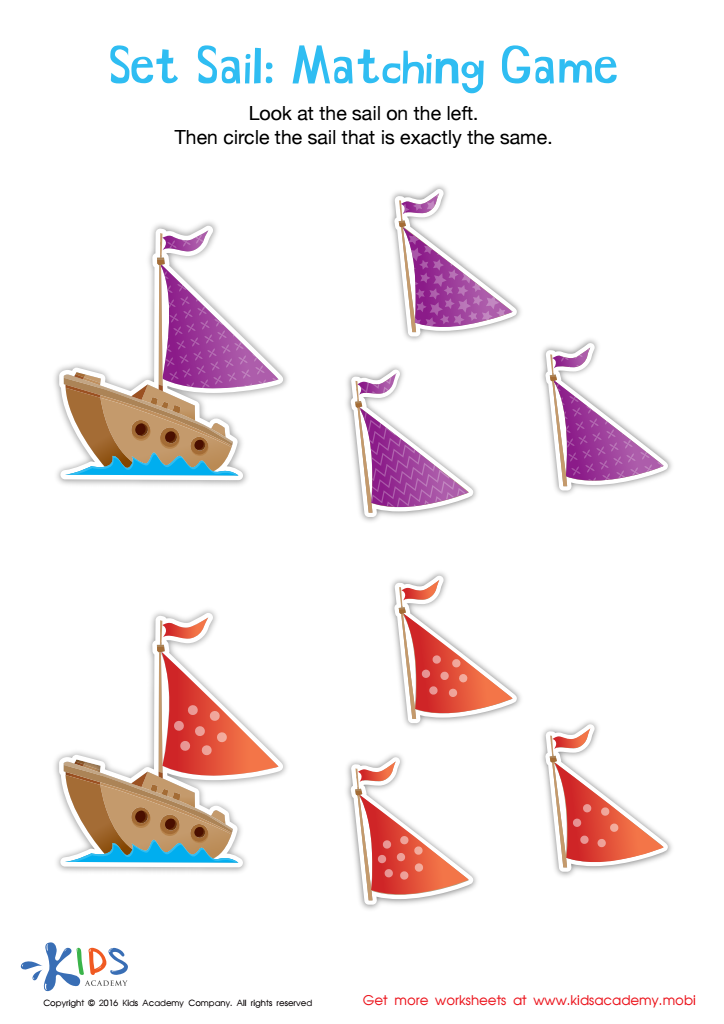
Set Sail Worksheet
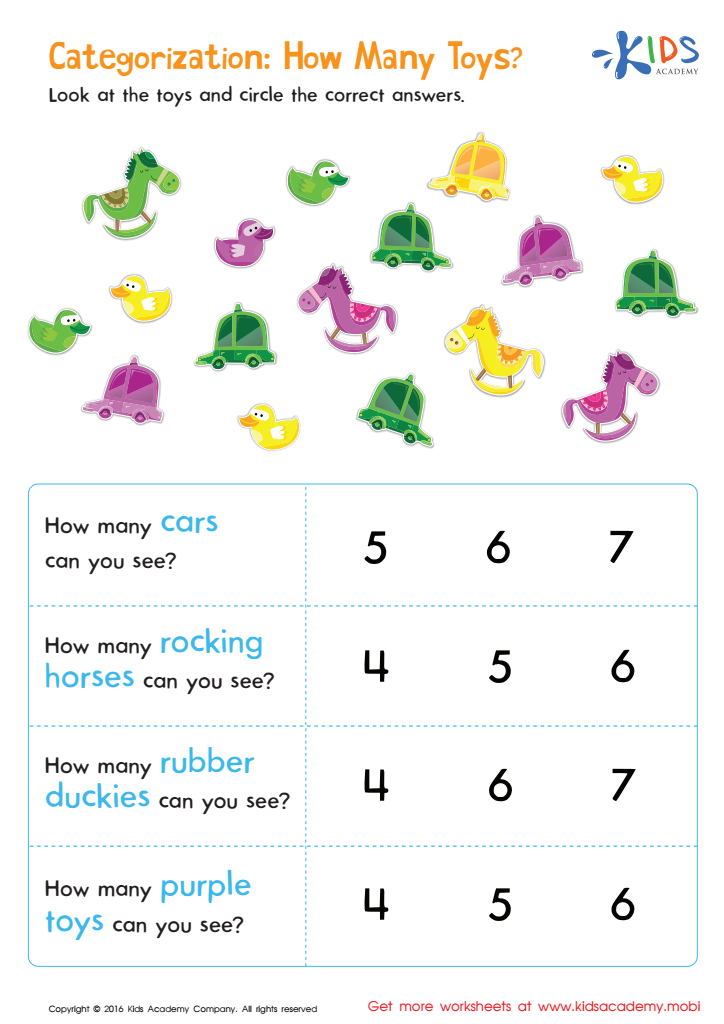
Classifying Toys by Type and Color Sorting Worksheet
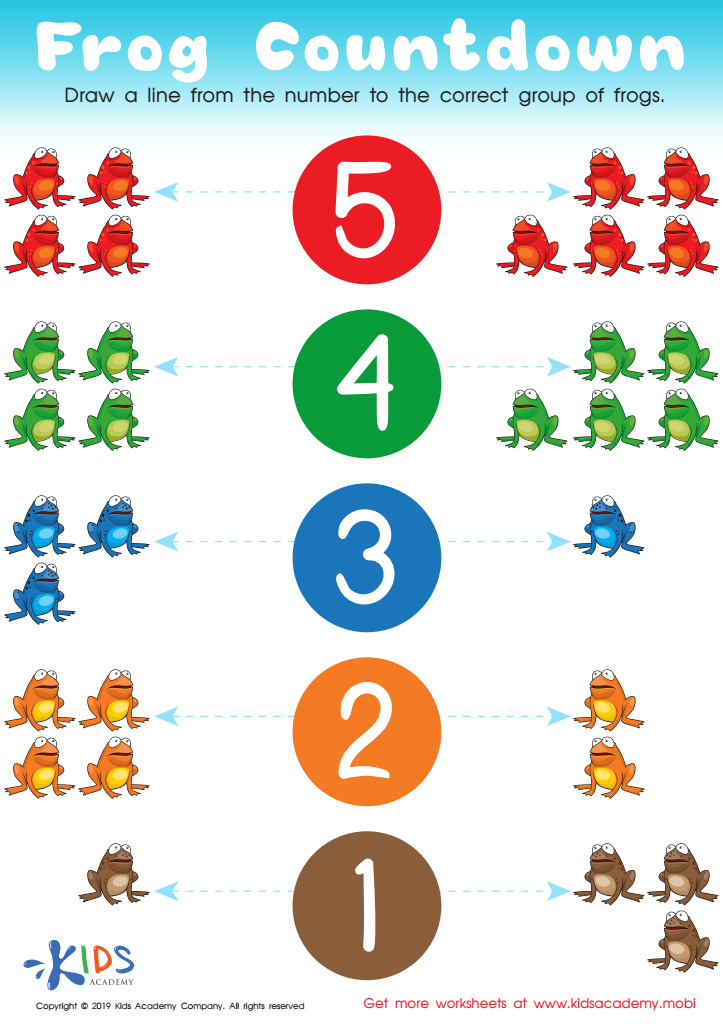
Frog Countdown Worksheet

Ten in the Bed Worksheet
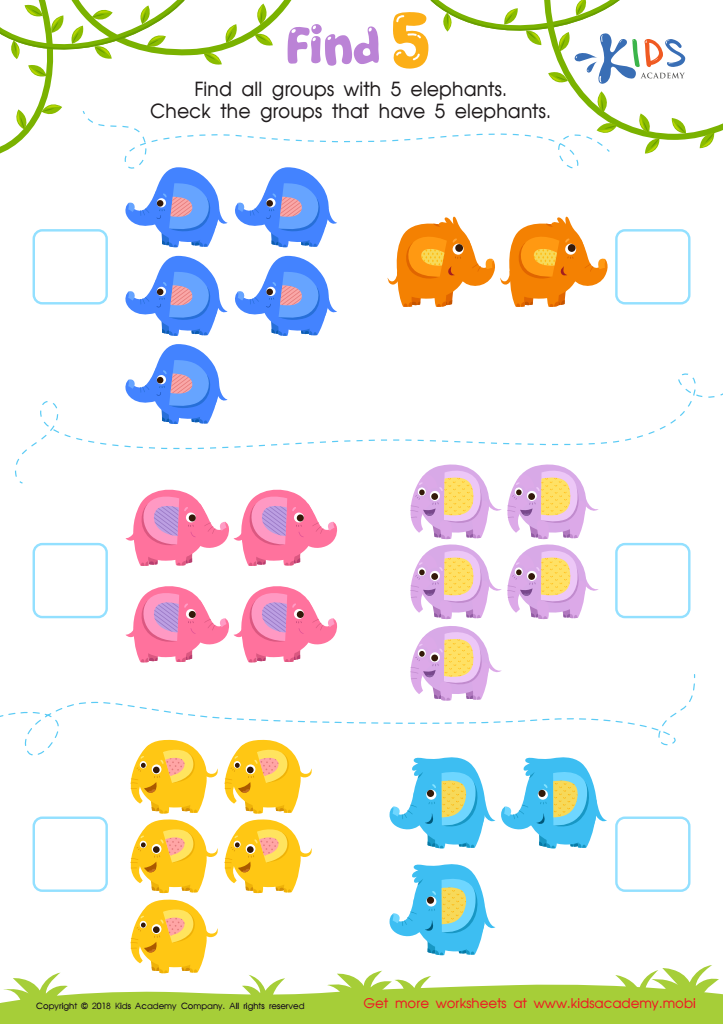
Find 5 Worksheet








Counting skills and number matching are foundational elements of early math education, crucial for children aged 4 to 7. During this developmental period, children begin to grasp essential concepts such as numerical value, quantity, and number recognition. When parents and teachers prioritize counting and number matching, they nurture cognitive growth, promoting problem-solving and critical thinking abilities.
These skills facilitate a deeper understanding of more complex mathematical concepts later on. For instance, mastering counting helps children in activities like addition and subtraction, which are integral in daily life and future academic pursuits. Additionally, number matching enhances their ability to recognize patterns and make connections between quantities and numerals, reinforcing overall number sense.
Engaging in counting and matching activities also supports children's social and emotional development. Through games and group activities, children learn to cooperate, communicate, and take turns, building their interpersonal skills.
Parents and teachers play a pivotal role in instilling a love for math as they create supportive learning environments. When children feel confident in their counting skills, they are more likely to succeed in mathematics, laying the groundwork for lifelong learning and academic achievement. Thus, investment in these fundamental skills benefits children enormously.








