Contextual understanding Normal Building Vocabulary Worksheets for Ages 4-7
4 filtered results
-
From - To
Welcome to our "Contextual Understanding Normal Building Vocabulary Worksheets" designed specifically for children aged 4-7! These engaging worksheets help young learners enhance their vocabulary and comprehension skills through context-based activities. By using relatable stories and examples, children will explore new words, phrases, and their meanings. Our resources foster critical thinking and encourage kids to make connections between language and real-world situations, promoting a deeper understanding. Parents and educators can utilize these worksheets to create a fun learning experience, developing essential reading skills that set the foundation for future academic success. Unlock your child's potential with our creative and educational materials!
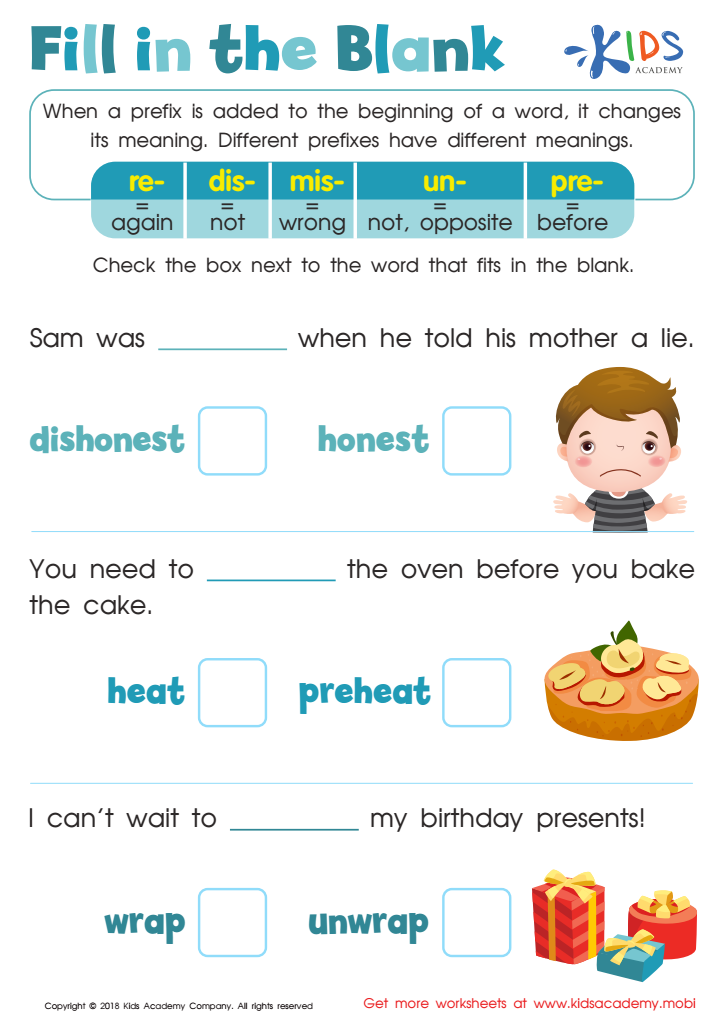
Reading: Fill in the Blank Worksheet
 Assign to My Students











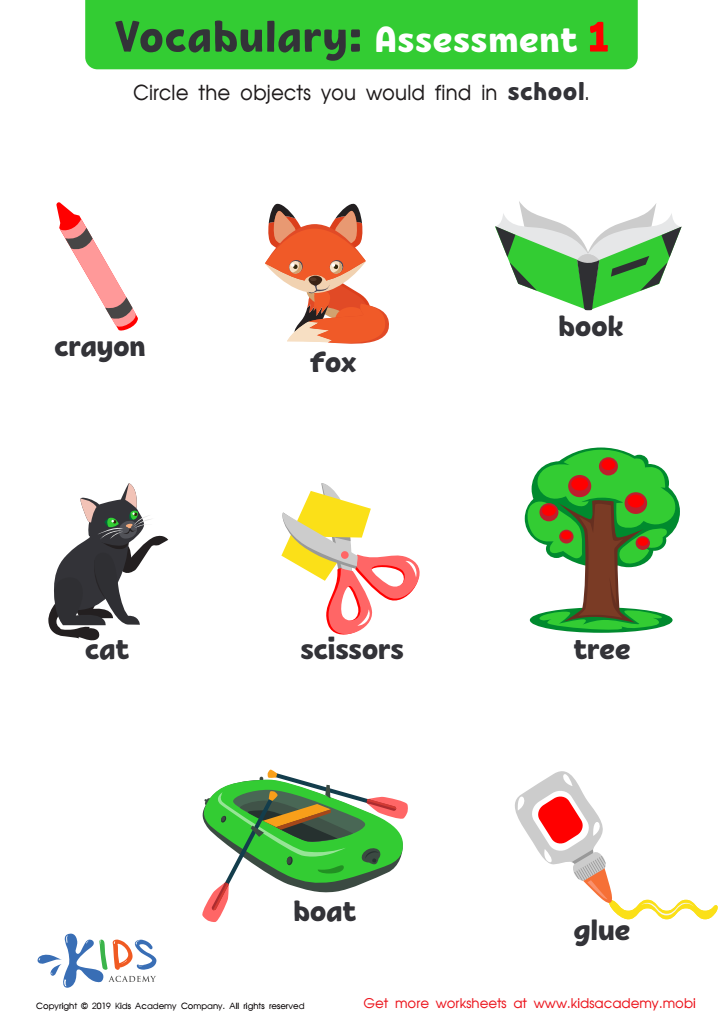
Vocabulary: Assessment 1 Worksheet
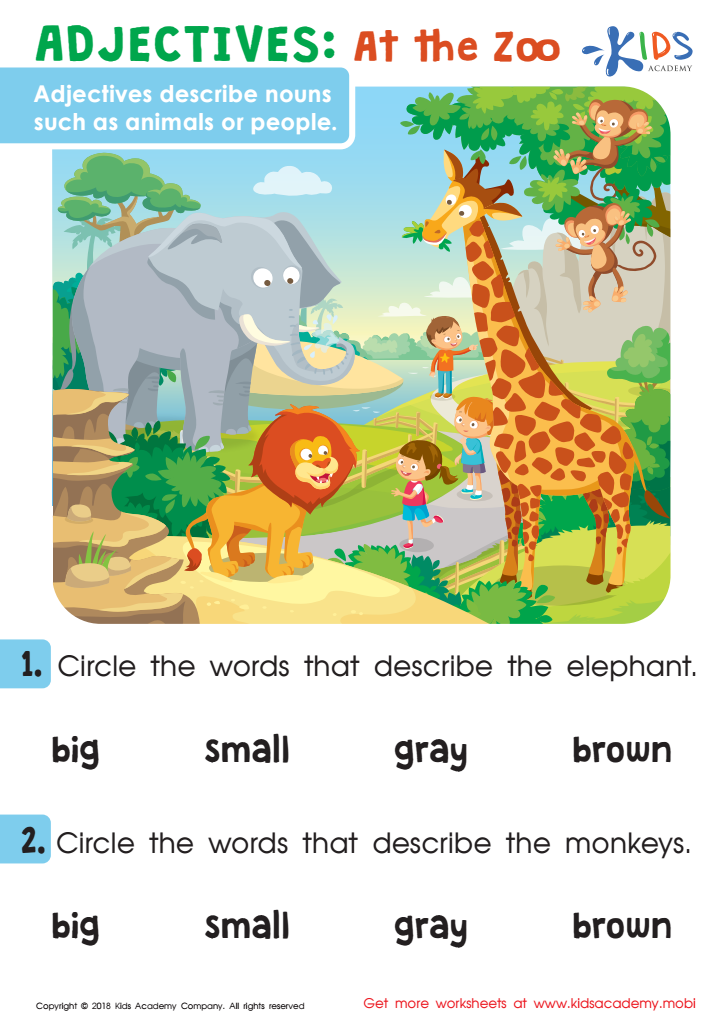
Adjectives: At The Zoo Worksheet
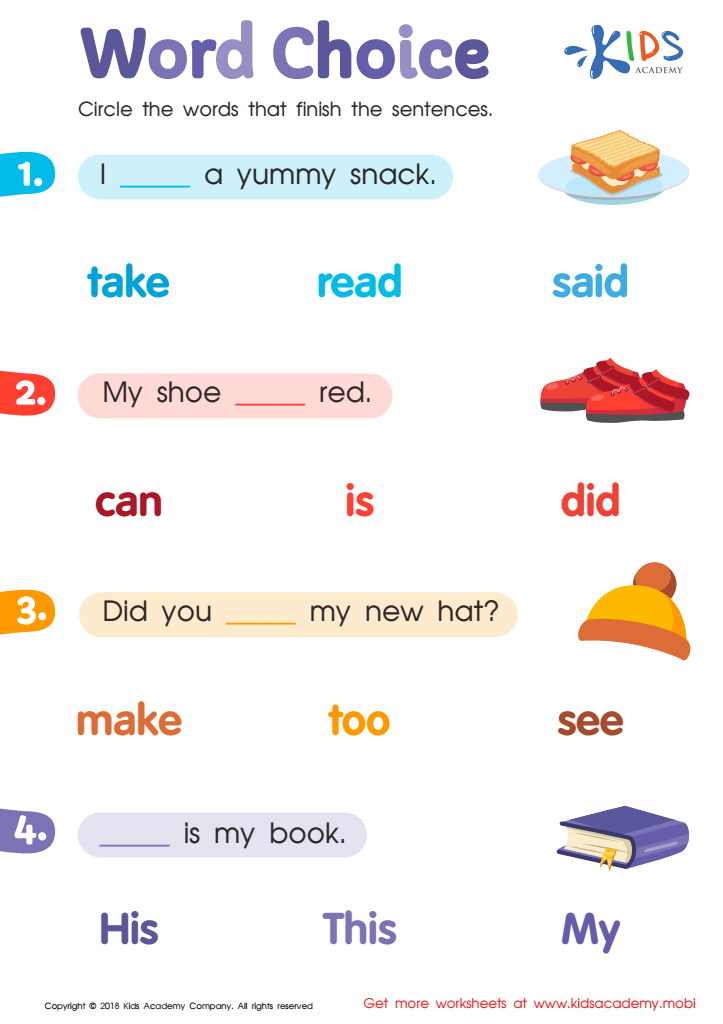
Word Choice Worksheet








Contextual understanding and vocabulary building are crucial for children aged 4-7 as they lay the foundation for future learning and communication. During this formative stage, children are like sponges, eager to absorb information and make sense of the world around them. When parents and teachers emphasize vocabulary within context, children learn not only the meanings of words but also how to use them effectively in sentences. This contextual learning enhances comprehension, making reading and writing more accessible and enjoyable.
Moreover, a strong vocabulary allows children to express their thoughts and feelings more clearly, fostering better social interactions and emotional development. When they understand words in context, they can relate ideas and concepts, forming connections that enhance critical thinking skills. It also aids in their ability to infer meanings from new experiences, which is essential for academic success as they progress through school.
Finally, parents and teachers who prioritize contextual understanding in vocabulary instruction help cultivate a love for language and learning. Engaging children with rich language experiences encourages curiosity and motivates them to explore new ideas, ultimately supporting their lifelong educational journey. Therefore, fostering these skills early on supports not just academic achievement but also social and emotional well-being.








