
Analytical thinking Normal Reading Worksheets for Ages 4-7
4 filtered results
Difficulty Level
Grade
Age
-
From - To
Subject
Activity
Standards
Explore our engaging Analytical Thinking Normal Reading Worksheets designed for ages 4-7! These worksheets are crafted to enhance young learners’ analytical skills while they develop essential reading abilities. Through fun and interactive activities, children will analyze, compare, and connect ideas, fostering critical thinking from an early age. Our carefully designed exercises promote understanding and retention, making learning enjoyable and effective. Each worksheet incorporates colorful graphics and age-appropriate scenarios to keep kids engaged. Perfect for home or classroom use, our resources support early literacy development while encouraging independent thought. Start nurturing your child's analytical thinking skills today with our comprehensive reading worksheets!
Favorites
With answer key
Interactive
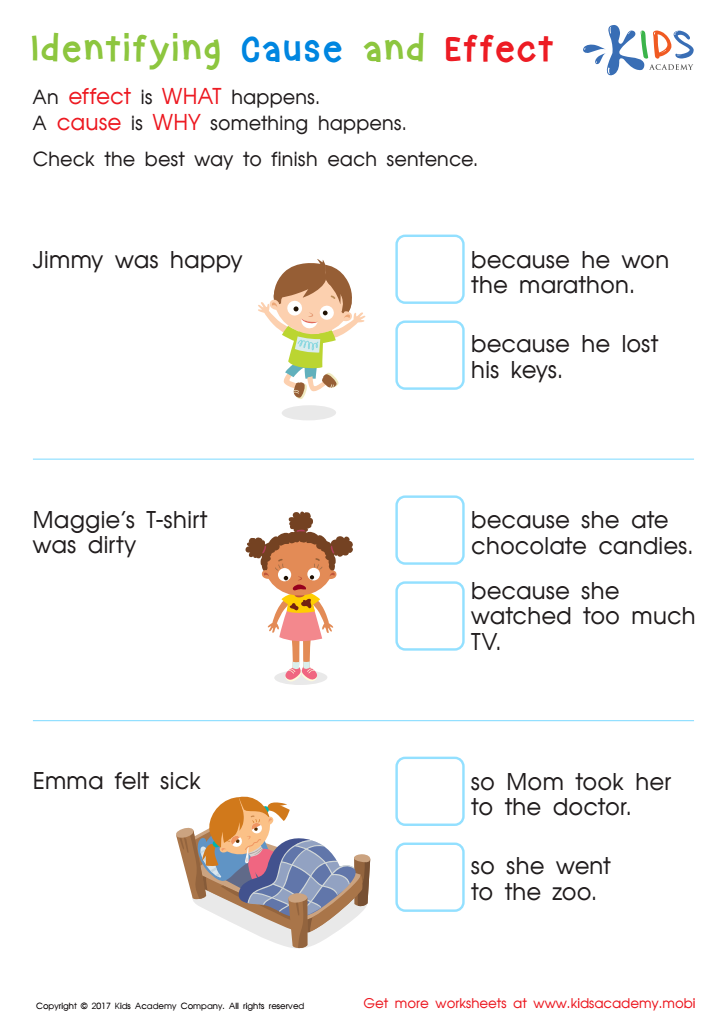
Indentifying Cause and Effect Worksheet
2nd grade cause & effect worksheets give your child practice making connections between events and their results. Fun activities help develop reading and critical thinking skills.
 Assign to My Students
Indentifying Cause and Effect Worksheet
Worksheet
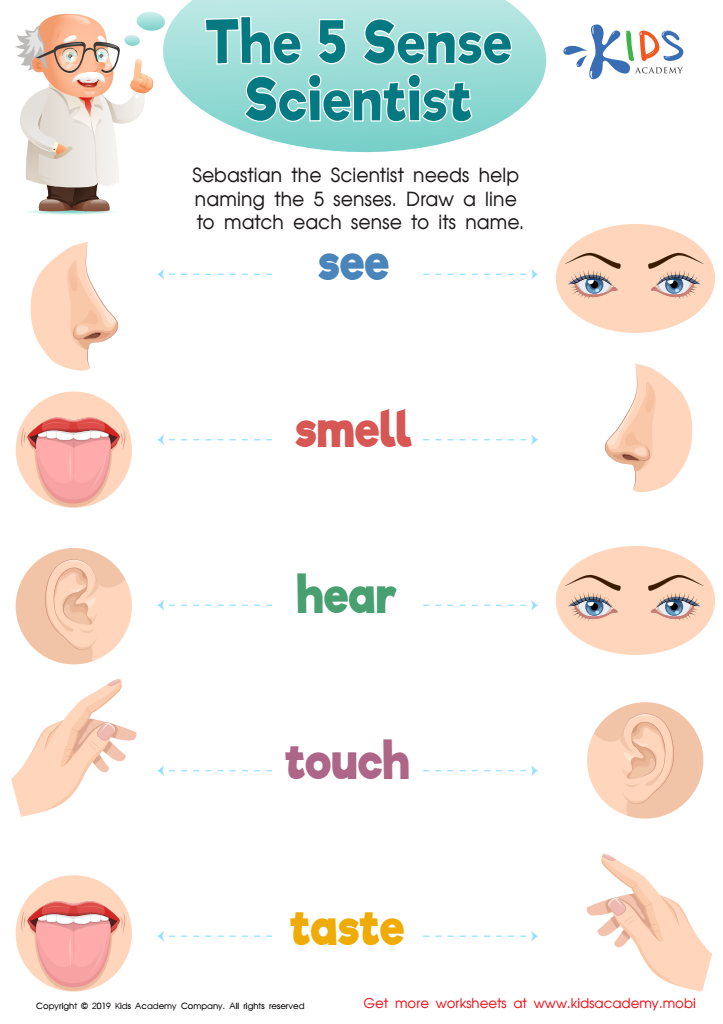
The 5 Sense Scientist Worksheet
Our young children will have fun learning about their five senses with this free Sense Scientist worksheet. Helping Sebastian the Scientist, they'll name the five senses and use traceable lines to connect each picture with its correct sense. Colorful words and pictures will create a memorable picture representation.
The 5 Sense Scientist Worksheet
Worksheet
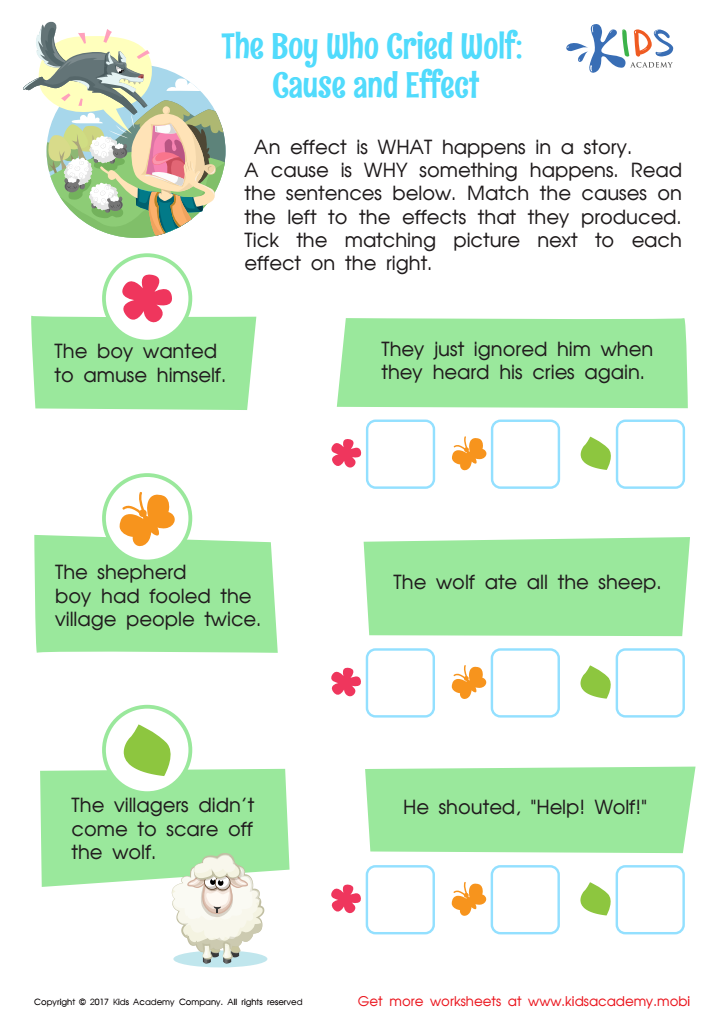
The Boy Who Cried Wolf: Cause and Effect Worksheet
With classic stories and fables, learning reading comprehension is easy - and fun!
The Boy Who Cried Wolf: Cause and Effect Worksheet
Worksheet
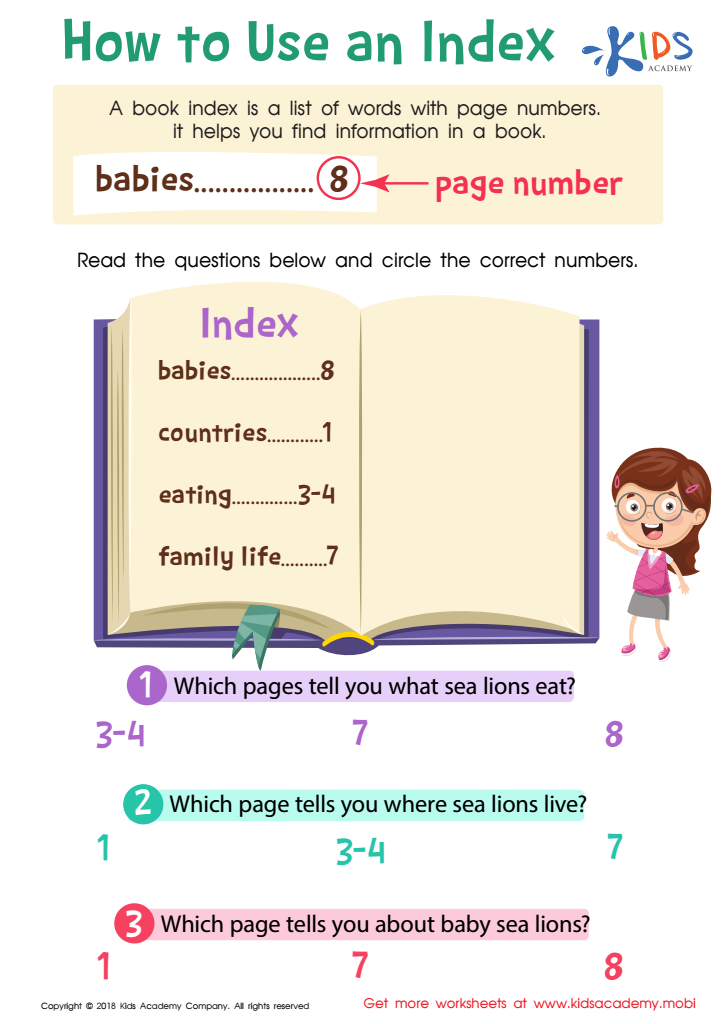
How Use Index Worksheet
Hand your kids a book, point out the index and explain that it's a list of words with page numbers. Ask them to look at the index in the worksheet and circle the correct number to the questions. Every book must have an index to help readers find chapters or information they need.
How Use Index Worksheet
Worksheet
Join Kids Academy for Free
Who is primarily going to use this learning content?








Parents and teachers should prioritize developing analytical thinking skills in children aged 4-7 because these foundational abilities enhance overall cognitive development and lay the groundwork for future learning. Analytical thinking, the capacity to break down complex information, recognize patterns, and solve problems, empowers children to navigate their world more effectively. At this young age, developing these skills encourages curiosity and fosters a love for exploration.
Engaging activities—such as puzzles, simple experiments, and story analysis—encourage children to ask questions, make predictions, and evaluate outcomes. These experiences are crucial, as they teach kids how to approach problems methodically and think critically. Furthermore, analytical thinking supports literacy; as children learn to dissect stories and recognize cause-and-effect relationships, their comprehension skills improve, leading to better reading abilities.
Additionally, teaching analytical thinking promotes persistence, resilience, and adaptability—key qualities necessary for success in school and life. As they learn to tackle challenges systematically, children gain confidence in their abilities. Ultimately, fostering analytical thinking in early childhood sets the stage for lifelong learning, equipping children with essential skills to thrive academically and personally. By nurturing these abilities, parents and teachers play a vital role in shaping thoughtful, resourceful individuals.








