
Historical Knowledge Normal Reading Worksheets for Ages 4-7
5 filtered results
Difficulty Level
Grade
Age
-
From - To
Subject
Activity
Standards
Encourage early literacy and inspire a love for history with our Historical Knowledge Normal Reading Worksheets designed for ages 4-7. These engaging worksheets combine captivating stories with essential reading skills, allowing young learners to explore key historical events and figures in an accessible format. Each activity fosters comprehension, vocabulary development, and critical thinking while igniting curiosity about the past. Perfect for home or classroom use, our worksheets support early readers in making connections to historical concepts. Help your child build a solid foundation in reading and history with our expertly crafted resources that make learning fun and interactive!
Favorites
With answer key
Interactive
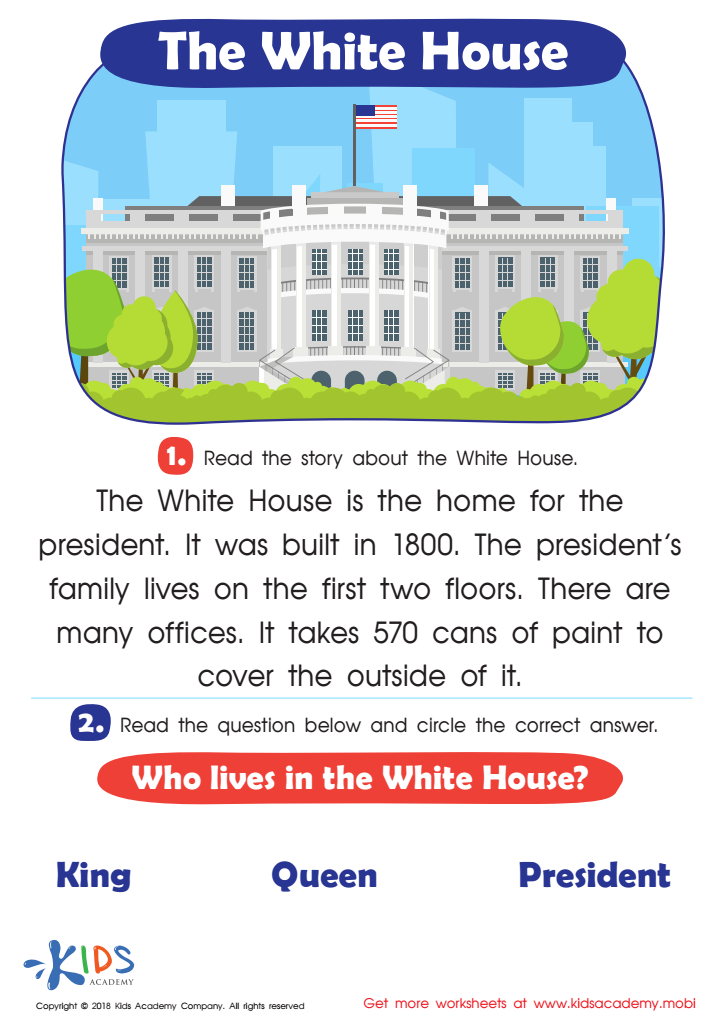
White House Worksheet
Read stories to your students to teach them new words, and about the White House. Before reading, ask your kindergartners what they already know. Then read short sentences for them to learn about the building the U.S President resides in.
 Assign to My Students
White House Worksheet
Worksheet
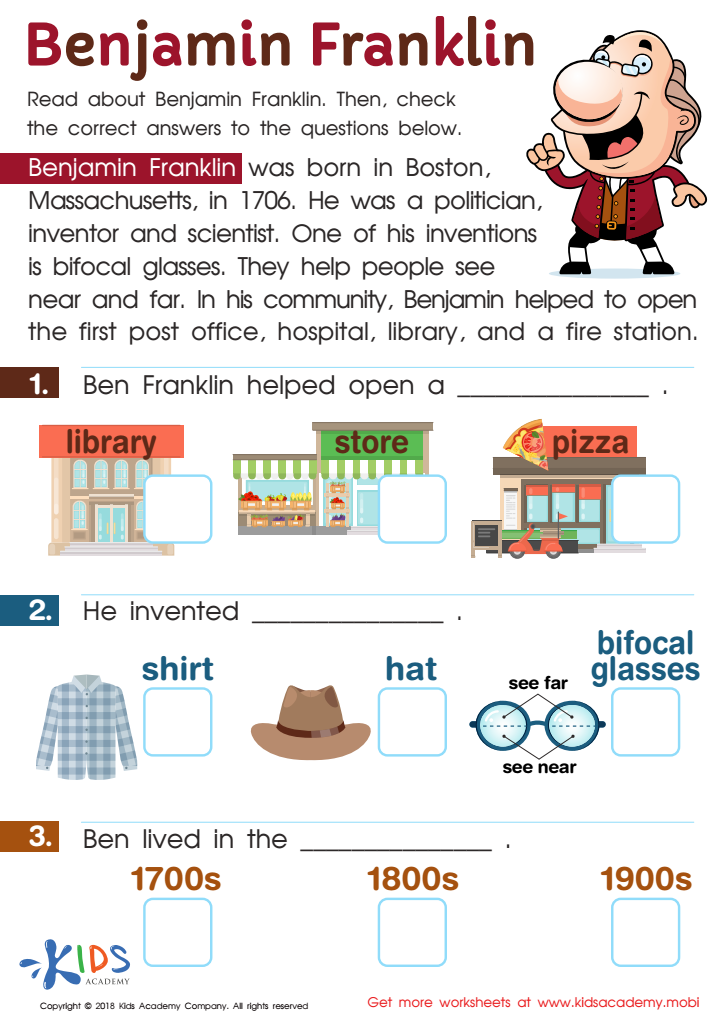
Benjamin Franklin Worksheet
Introduce your kids to one of history's most important figures - Benjamin Franklin! Tell them all about his remarkable contributions to the world and then use this worksheet to teach them even more. Read the text to them and check their answers against the questions afterwards.
Benjamin Franklin Worksheet
Worksheet
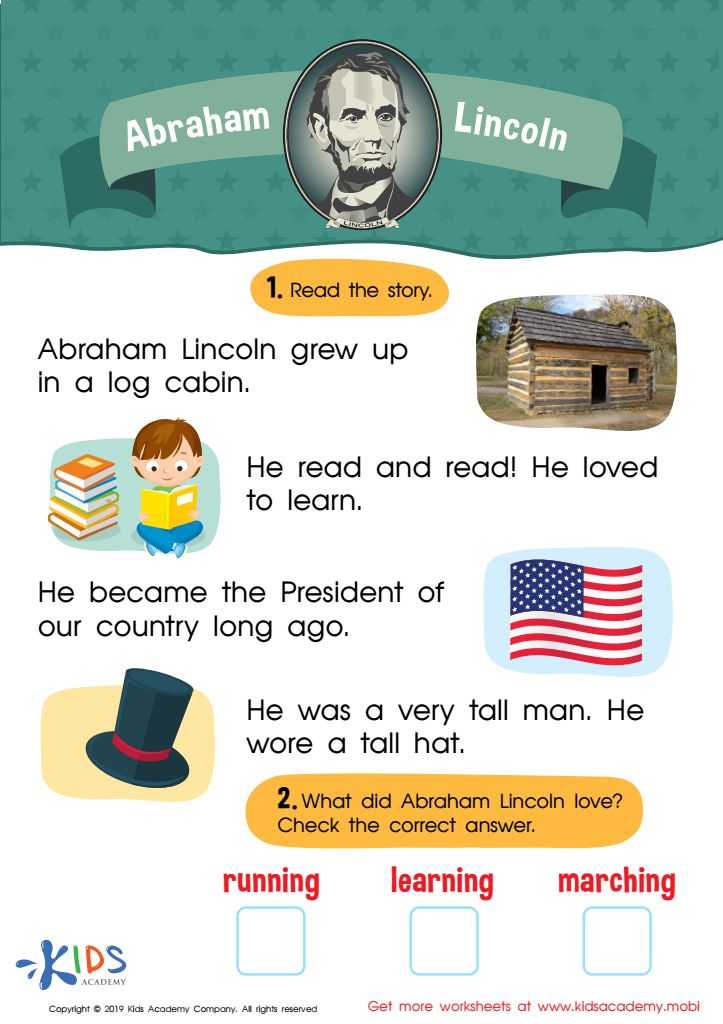
Abraham Lincoln Worksheet
Let your kids listen to interesting stories while having fun! Read the short story in this worksheet, point to the picture representing each sentence, then ask the questions and check the answers. Doing this will help your children learn new things and build their vocabulary.
Abraham Lincoln Worksheet
Worksheet
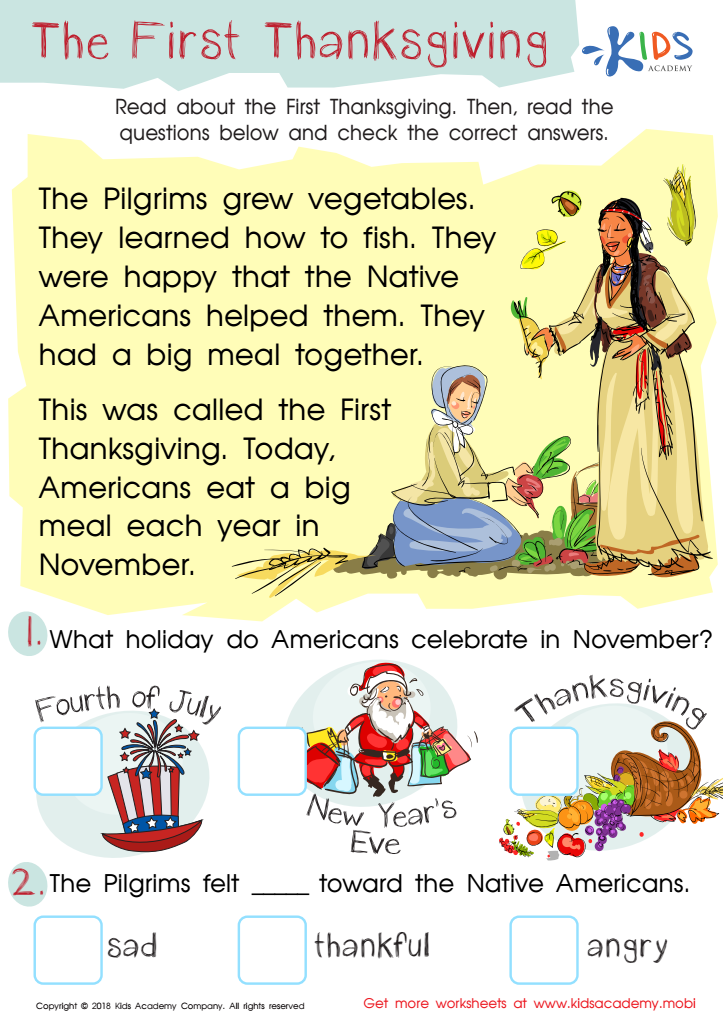
Assessment: First Thanksgiving Worksheet
When the Pilgrims arrived in America in 1620, they met the Native Americans and formed a pact to live in harmony. The Native Americans taught the Pilgrims how to survive in the new land, which helped them celebrate the First Thanksgiving. Read this text to your children and help them answer the questions below.
Assessment: First Thanksgiving Worksheet
Worksheet
Ben Franklin Part 2 Worksheet
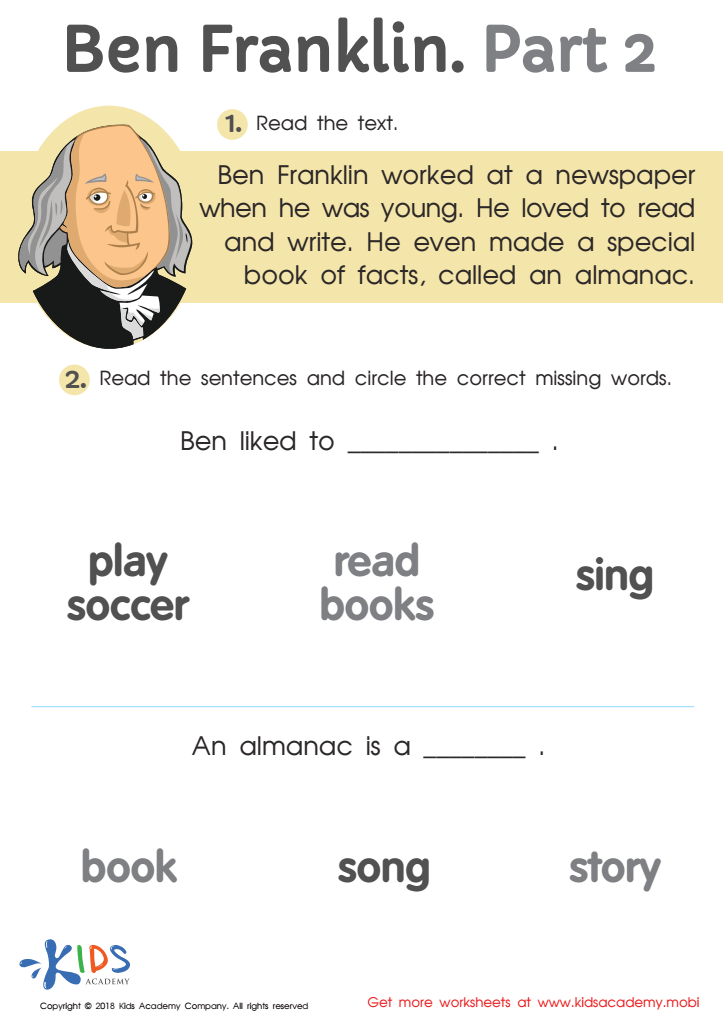
History is filled with great figures, like Benjamin Franklin. Let your kids in on the legacy by introducing them to the founder of the US fire department, diplomat, and inventor. Then, use a worksheet to have them fill in the blanks with the correct word to teach them more. Read the text, then read the sentences and have them circle the missing word.
Ben Franklin Part 2 Worksheet
Worksheet
Join Kids Academy for Free
Who is primarily going to use this learning content?








Parents and teachers should care about historical knowledge for children aged 4-7 because it lays a foundational understanding of the world and enriches critical thinking skills. Early exposure to history helps children grasp their cultural heritage and develop an appreciation for diverse perspectives. Learning about significant events, figures, and traditions fosters curiosity and a sense of identity.
Moreover, historical knowledge encourages the ability to make connections across time and context. For instance, when children learn about various cultures or significant inventions, they cultivate skills to compare, analyze, and synthesize information, which are crucial for their future academic success. This aids in developing cognitive abilities and enhances literacy through storytelling, vocabulary expansion, and comprehension.
Additionally, framing history in age-appropriate ways through engaging stories, visuals, and interactive experiences makes learning enjoyable and memorable. It promotes discussion and inquiry, empowering children to ask questions and seek answers about the world around them. Ultimately, nurturing historical knowledge at an early age contributes to well-rounded individuals capable of understanding and influencing their society, instilling empathy and critical thinking for the challenges they may face as they grow.








