Moral understanding Normal Reading Worksheets for Ages 4-7
4 filtered results
-
From - To
Enhance your child's reading skills while fostering moral understanding with our engaging worksheets designed for ages 4-7. These printable activities are specifically crafted to encourage young learners to explore essential values such as honesty, kindness, and empathy through relatable stories and questions. By integrating moral lessons with reading practice, children will develop critical thinking and comprehension skills in a fun and interactive way. Each worksheet promotes discussions around right and wrong, helping kids to connect reading with real-life ethical concepts. Perfect for independent practice or guided learning, our Moral Understanding Normal Reading Worksheets offer a valuable addition to your early education toolkit.
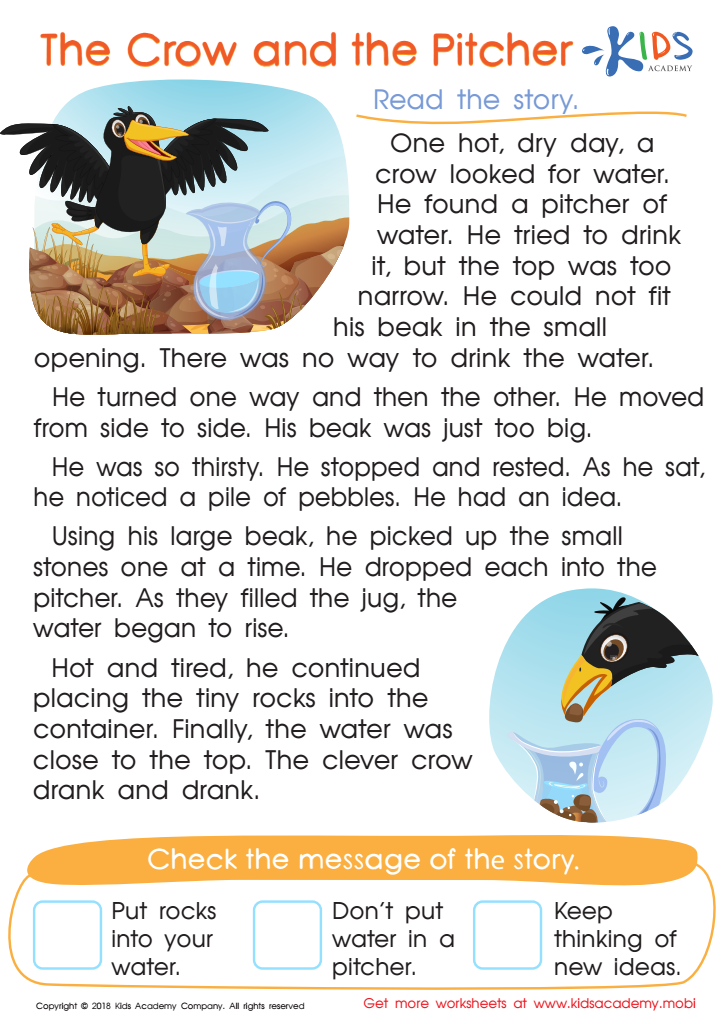
The Crow and the Pitcher Worksheet
 Assign to My Students
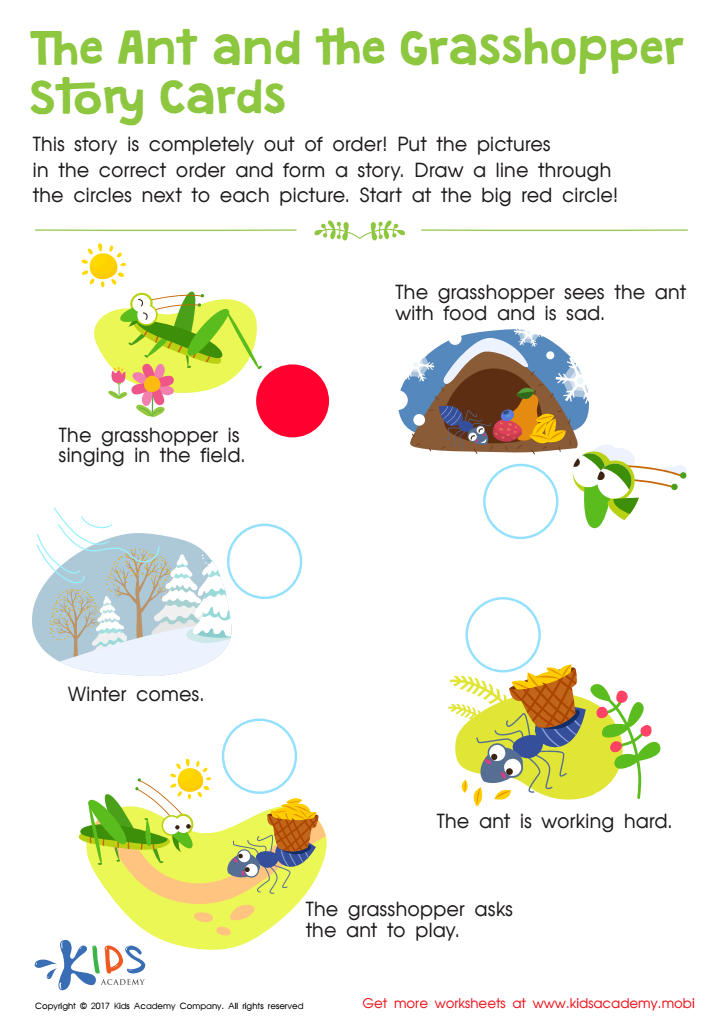
The Ant and The Grasshopper Worksheet
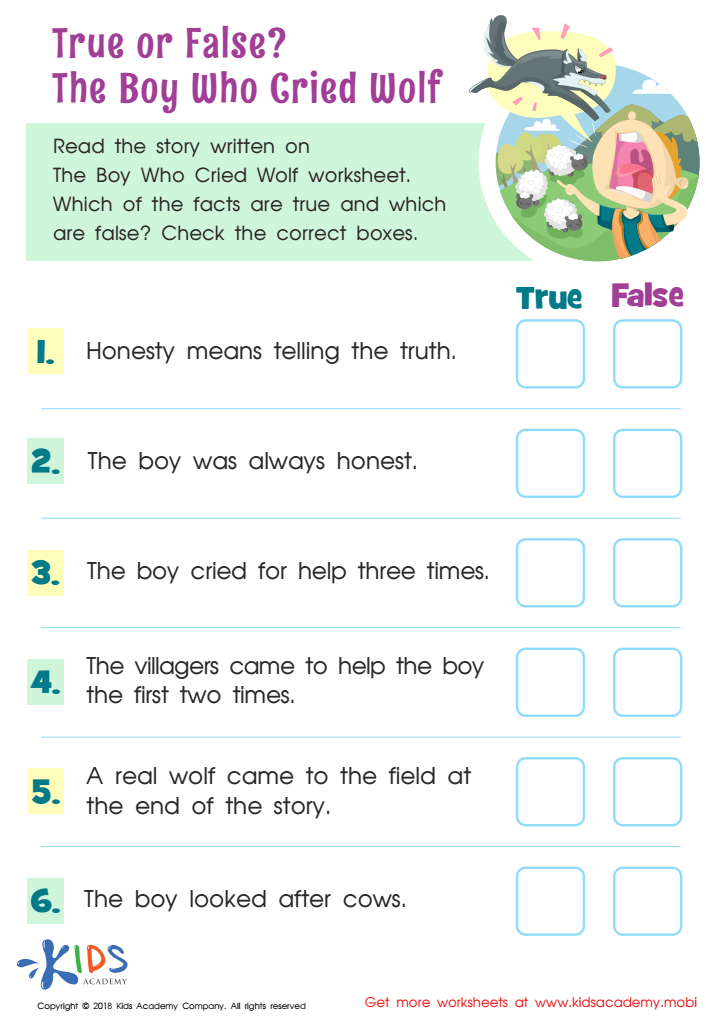
True or False? The Boy Who Cried Wolf Worksheet
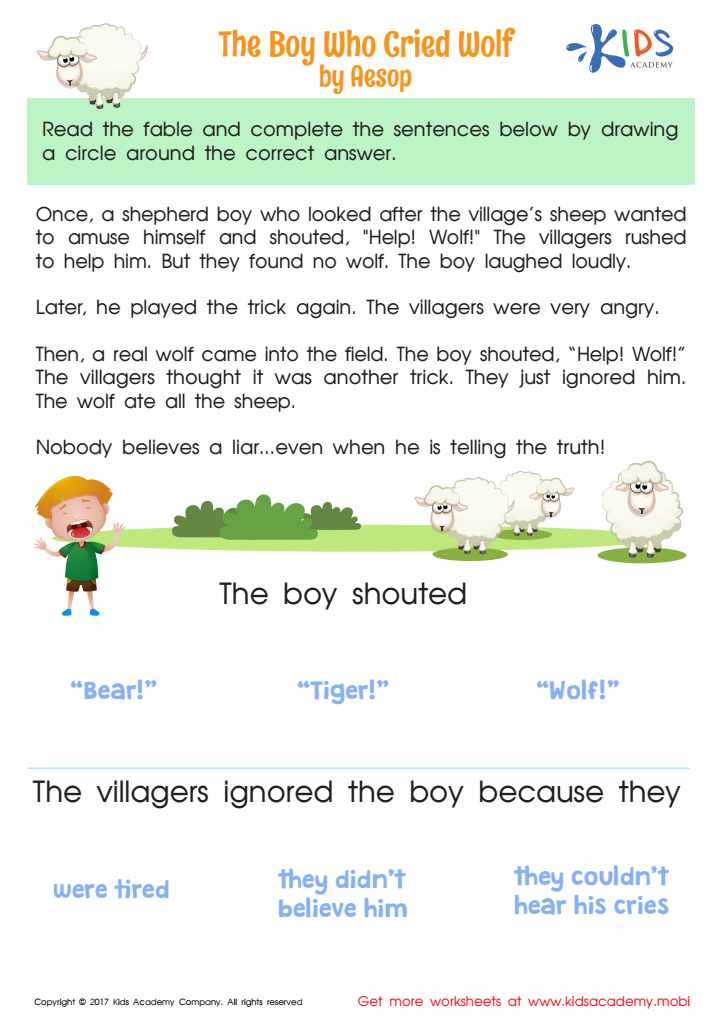
The Boy Who Cried Wolf Worksheet







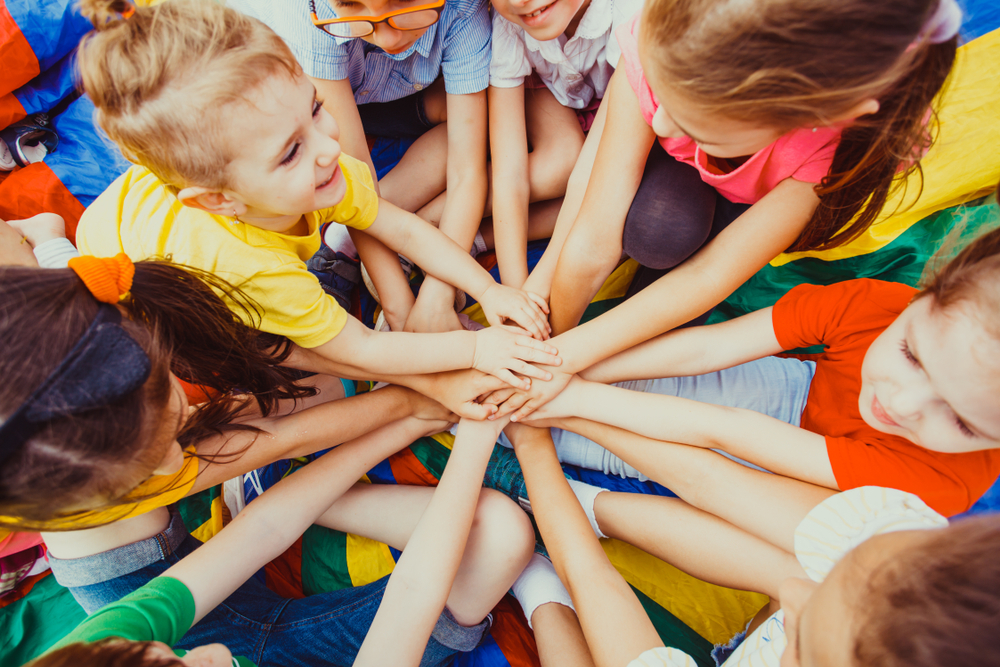
Moral understanding is vital for children aged 4-7, as it help them navigate social interactions and develop empathy. At this developmental stage, kids begin to comprehend right and wrong, and they learn about sharing, kindness, and respect. By fostering moral understanding, parents and teachers enable children to form positive relationships, build self-esteem, and create a supportive classroom environment.
Additionally, the lessons learned during these formative years set the foundation for lifelong values and ethical decision-making. Engaging in discussions about moral dilemmas using age-appropriate stories and real-life situations helps children articulate their feelings and opinions, promoting critical thinking and compassion.
Moreover, when parents and teachers model moral behavior, they reinforce these concepts in daily life, making moral understanding a shared community effort. These discussions can cultivate social skills, allow children to practice conflict resolution, and instill a sense of responsibility toward others.
Ultimately, prioritizing moral understanding paired with normal reading will enrich children’s lives and ensure they grow into caring, thoughtful individuals who can positively contribute to society. Supporting their social-emotional development now will lay a robust foundation for future learning and healthy relationships.








