Rhyming skills Normal Reading Worksheets for Ages 4-7
3 filtered results
-
From - To
Enhance your child’s reading abilities with our "Rhyming Skills Normal Reading Worksheets for Ages 4-7." Designed by educators, these worksheets support early learning by helping children recognize and produce rhyming words. Through engaging exercises, kids can improve their phonemic awareness, a crucial skill for reading success. Fun, colorful activities make learning enjoyable and effective as young learners identify word patterns and sounds. Perfect for use at home or in the classroom, our worksheets align with early reading standards, promoting literacy in an interactive and foundational way. Start your child’s rhyming adventure today with our expertly crafted resources.
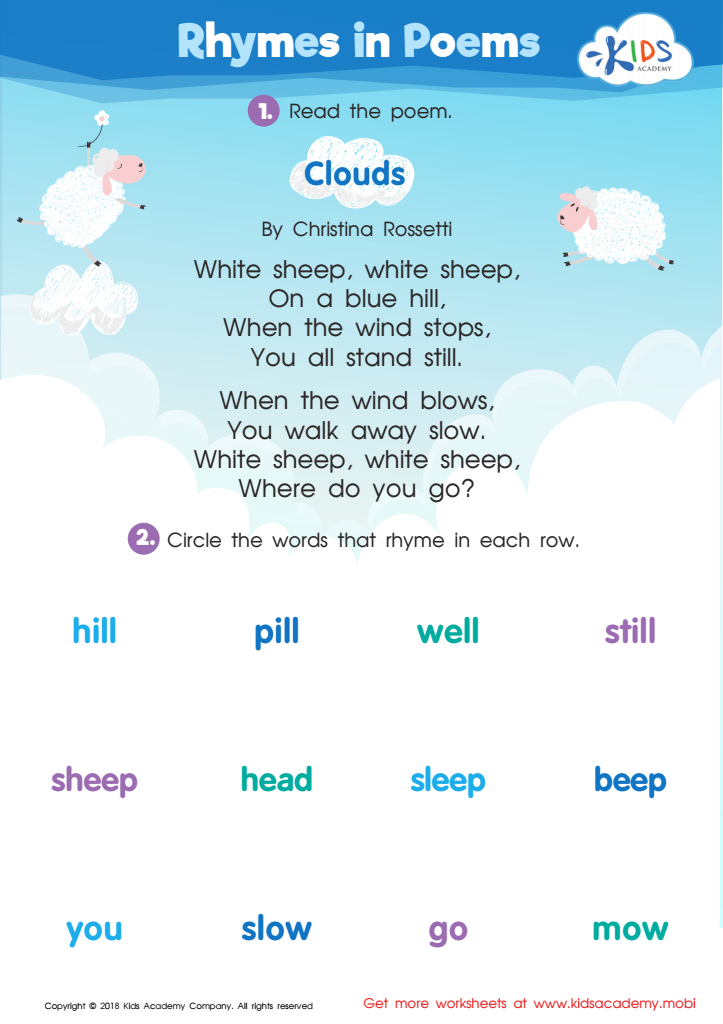
Rhymes in Poems Worksheet
 Assign to My Students
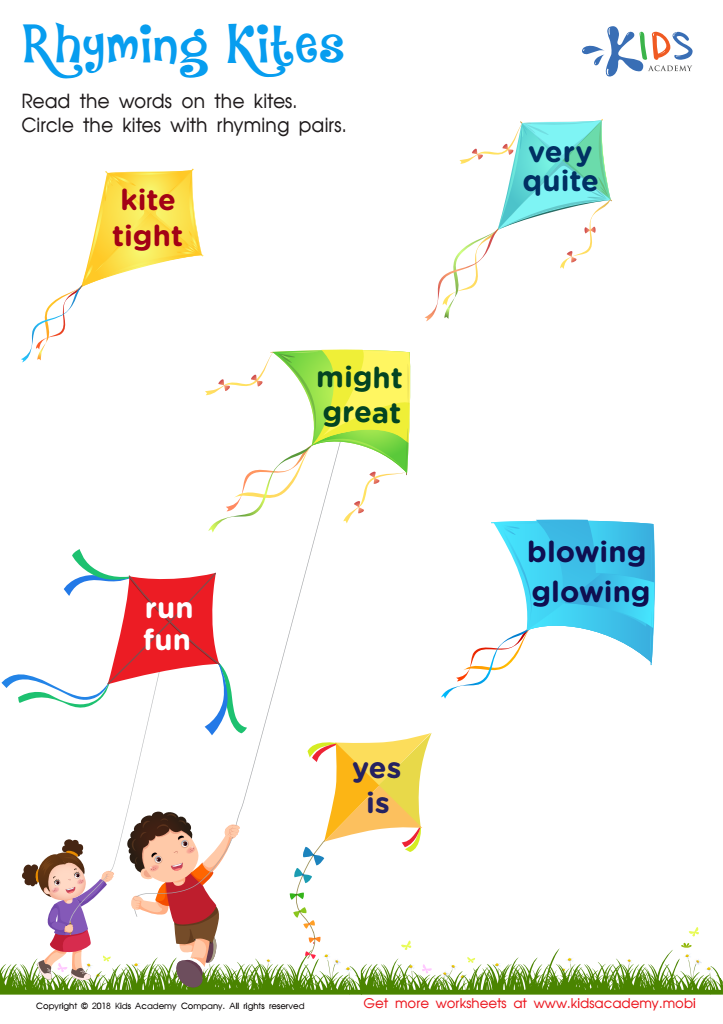
Rhyming Kites Worksheet
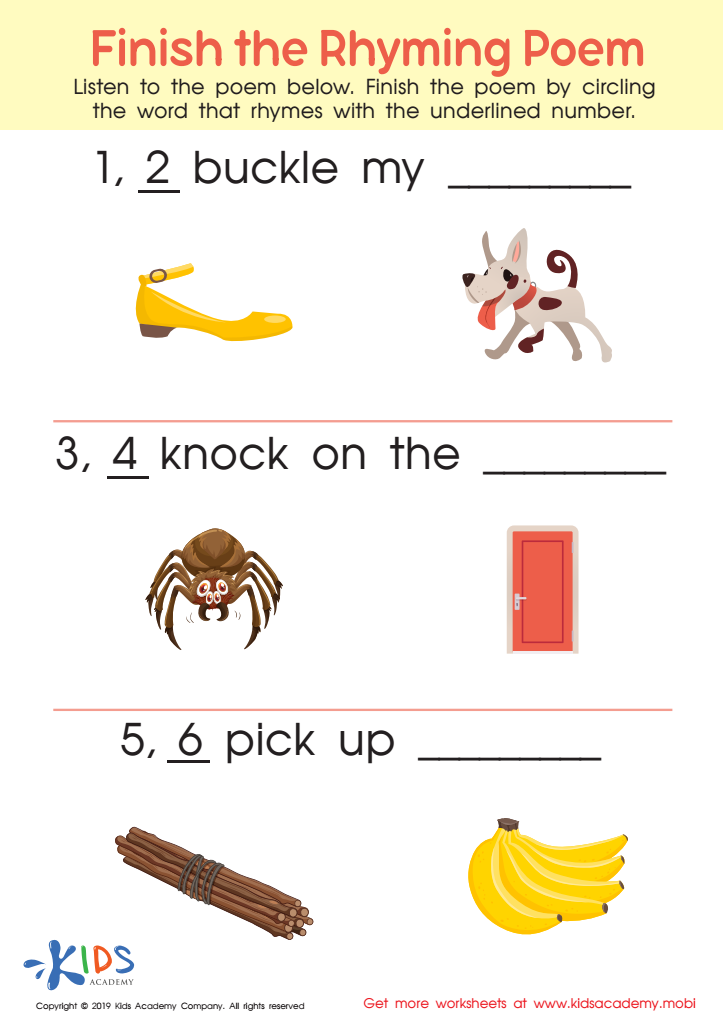
Finish Rhyming Poem Worksheet







Parents and teachers should prioritize rhyming skills for children aged 4-7 because these skills play a crucial role in early literacy development. Rhyming enhances phonemic awareness, which is the ability to hear, identify, and manipulate individual sounds in words—a foundational skill for reading. When children recognize rhyming patterns, they become more attuned to the sounds within words, making it easier for them to decode new words when they start reading.
Understanding and producing rhymes also improve a child's vocabulary, helping them to see connections between similar words and expand their language comprehension. It makes language learning more engaging and fun, which can foster a love for reading from an early age.
Moreover, rhyming supports memory retention. The rhythmic and repetitive nature of rhymes makes it easier for children to remember words and phrases, thus boosting their confidence and enthusiasm in learning.
Additionally, rhyming helps with the development of listening skills and the understanding of the structure and rules of language. Activities like nursery rhymes and rhyming games encourage social interaction and communication, promoting both linguistic and social skills.
In summary, fostering rhyming skills in young children offers significant benefits in their journey toward becoming proficient readers, making it a pivotal focus for parents and educators during early childhood education.








