Sound recognition Normal Reading Worksheets for Ages 4-7
4 filtered results
-
From - To
Discover our "Sound Recognition Normal Reading Worksheets for Ages 4-7," designed to enhance your child's early reading skills through engaging activities. These printable worksheets promote phonemic awareness by helping young learners identify different sounds and letters, crucial for developing strong reading foundations. Our carefully crafted exercises blend fun illustrations with educational tasks tailored to keep children motivated and interested. From recognizing initial sounds to matching letters with corresponding pictures, our worksheets make learning enjoyable and effective. Ideal for both classroom use and at-home practice, these resources support your child's journey to becoming a confident reader. Explore now and see them thrive!
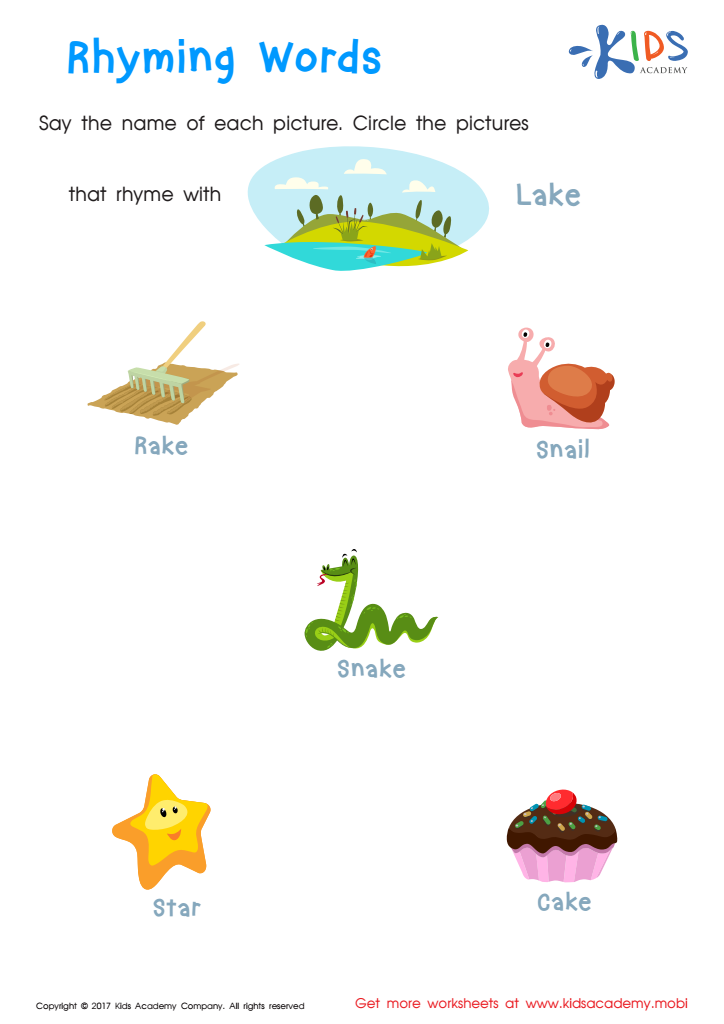
Rhyming Words Rhyming Worksheet

Long and Short U Worksheet
 Assign to My Students
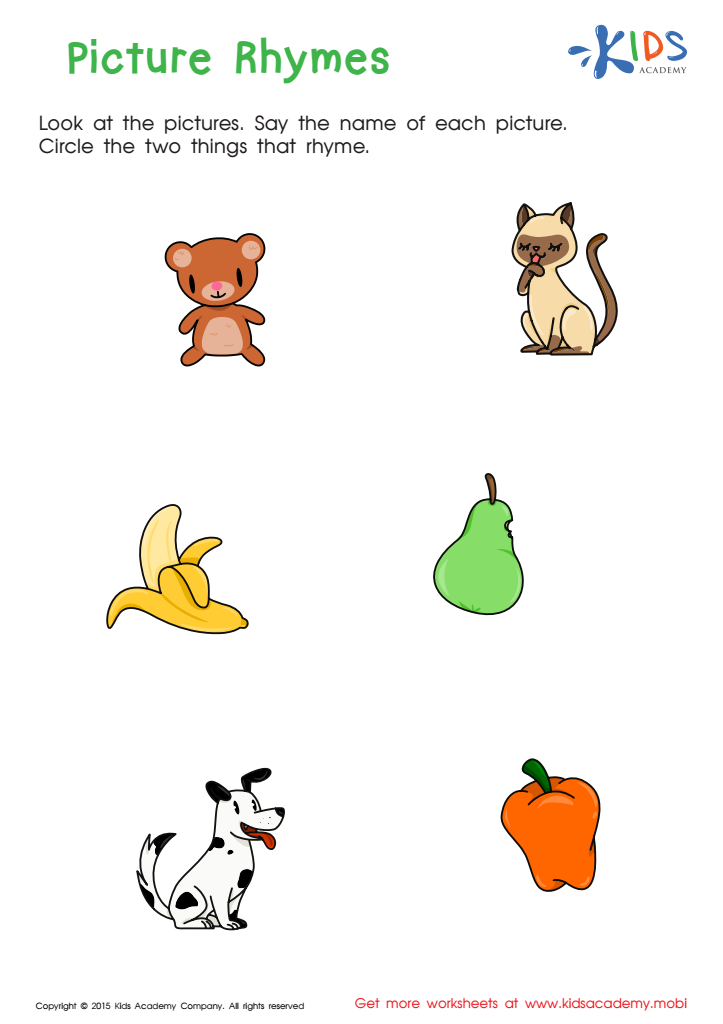
First Words: Picture Rhymes Worksheet
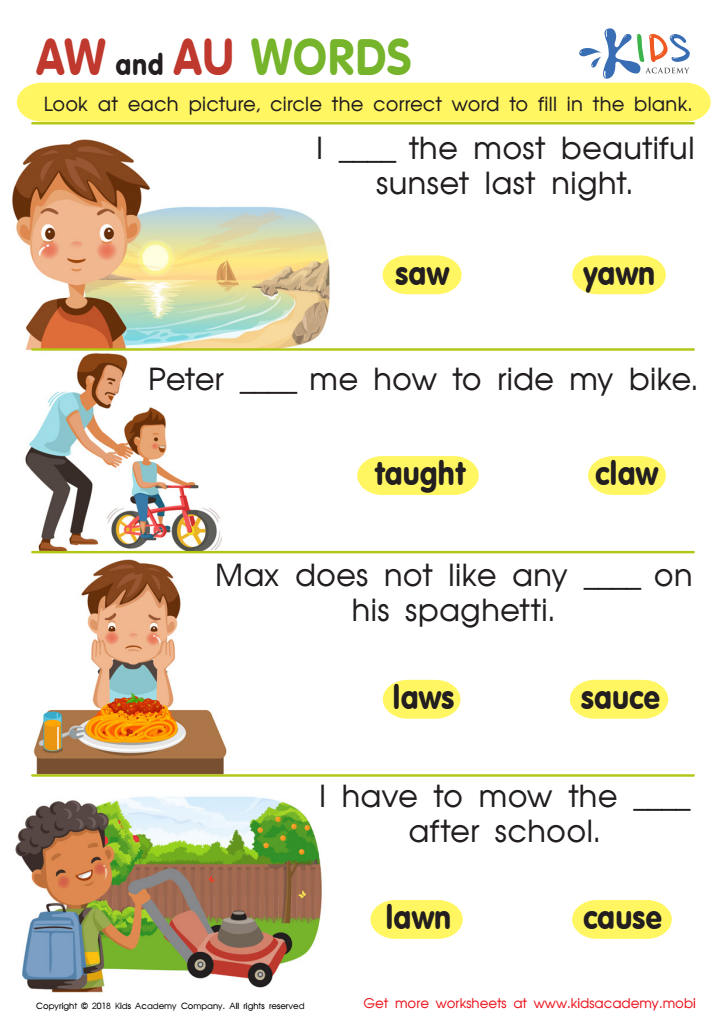
Reading: AW and AU Words Worksheet







Sound recognition and normal reading development in children aged 4-7 are pivotal because they lay the foundation for future literacy and academic success. During these early years, children are in a critical period of brain development; they are particularly receptive to learning sounds, letters, and the relationship between them—a skill known as phonemic awareness.
Parents and teachers play a crucial role in nurturing this development. Effective sound recognition enables a child to decode words, which is essential for fluent reading. Fluency, in turn, is linked to better comprehension and higher overall academic achievement. When children struggle with these foundational skills, they are likely to experience difficulties throughout their education, affecting their self-esteem and academic curiosity.
Additionally, normal reading encourages cognitive and language development, improves concentration and discipline, and stimulates imagination. For bilingual or multilingual families, early reading skills in one language can facilitate easier acquisition of others.
Intervening early to support sound recognition and reading ensures that children do not fall behind. Teachers and parents can provide enriched environments, use playful learning strategies, and engage in regular reading activities to make the learning process enjoyable. This also allows for the early detection of any learning disabilities, enabling timely intervention and support. Thus, fostering sound recognition and normal reading habits between ages 4-7 is essential for a child's holistic development and long-term educational success.








