Vocabulary Enrichment Normal Reading Worksheets for Ages 4-7
3 filtered results
-
From - To
Enhance your child's language development with our Vocabulary Enrichment Normal Reading Worksheets designed for ages 4-7. These expertly crafted resources boost early reading skills through engaging activities, making learning both enjoyable and effective. Our worksheets focus on expanding your child’s vocabulary by introducing them to new words in fun contexts, improving their comprehension and communication abilities. Ideal for young learners, parents, and educators alike, these printable resources are perfect for both classroom and home settings. Help your little ones take the first step towards becoming confident readers with our carefully structured worksheets. Explore now for a brighter reading future!
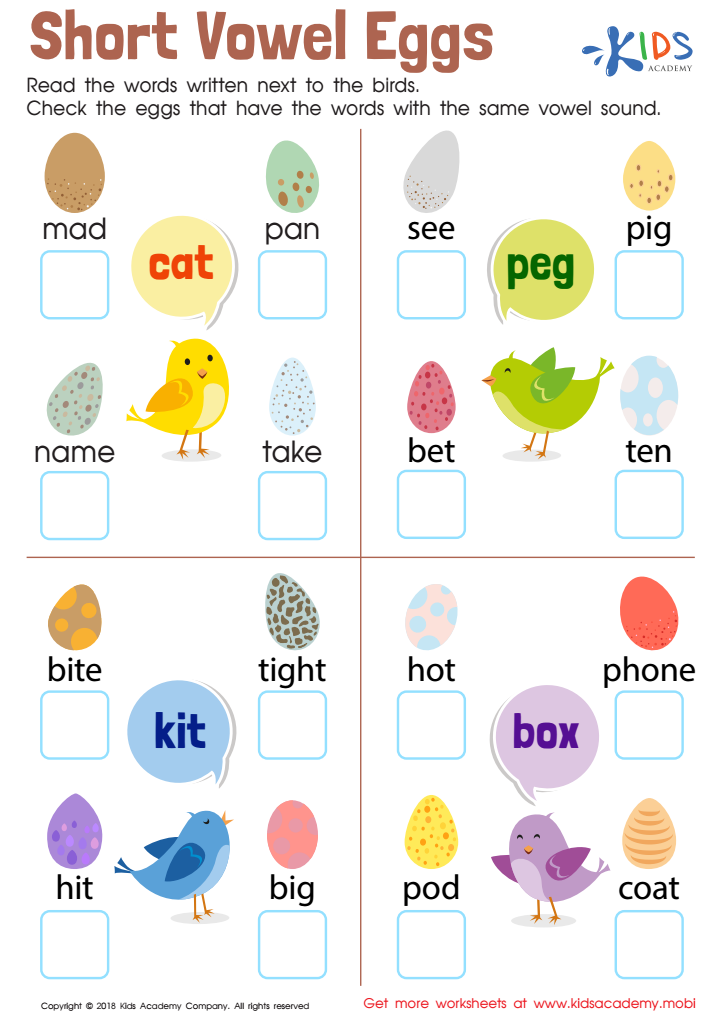
Short Vowel Eggs Worksheet
 Assign to My Students
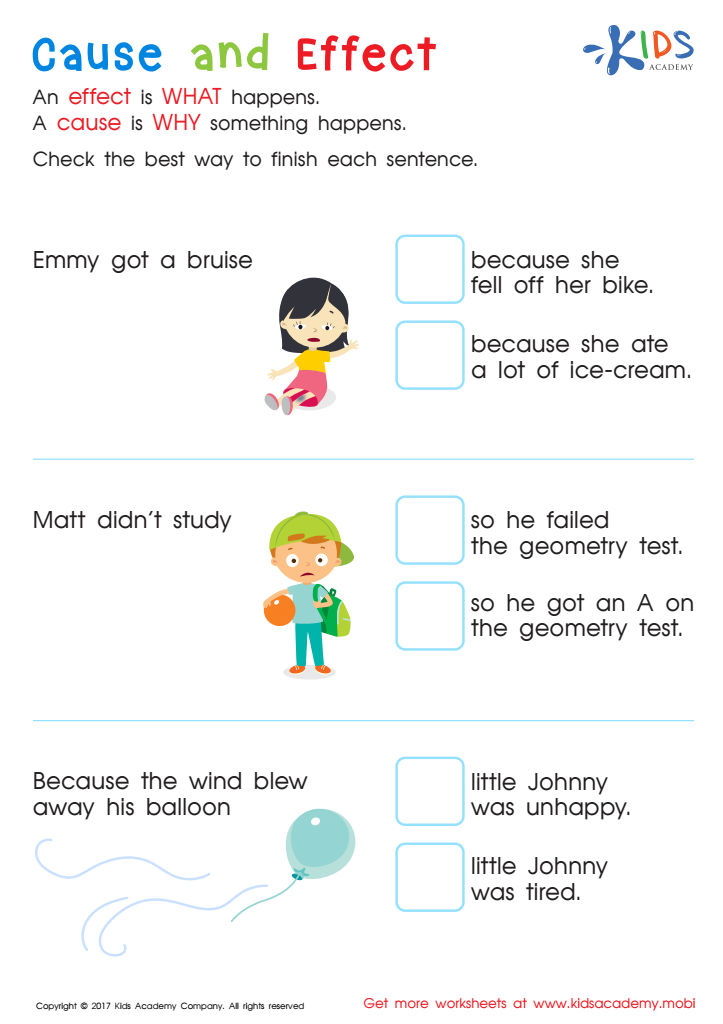
Cause and Effect Worksheet
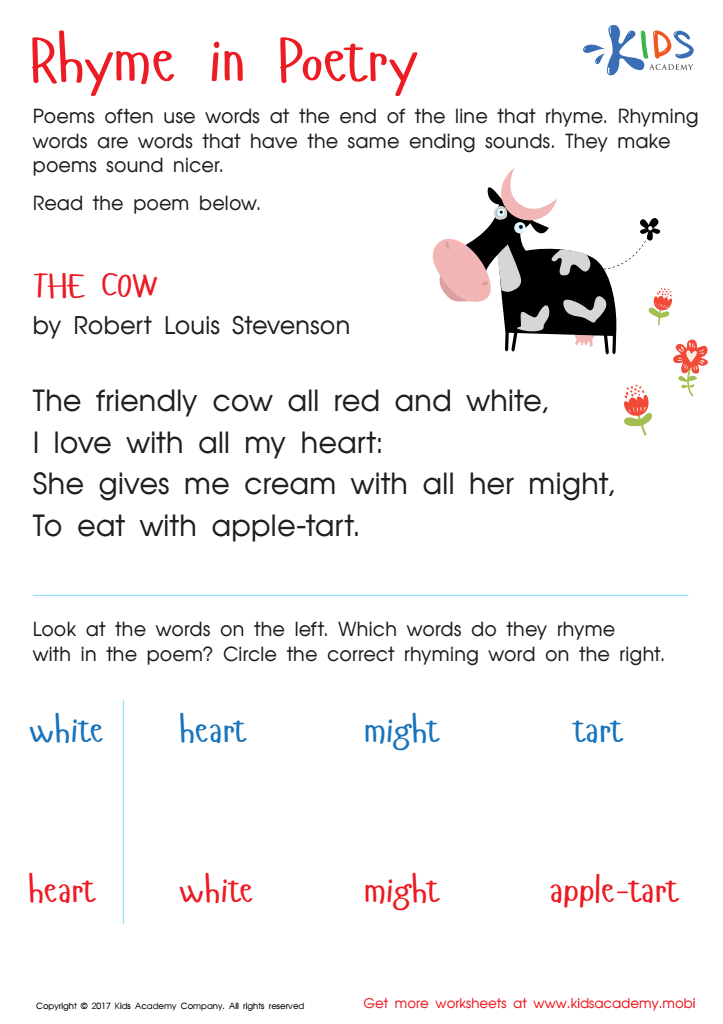
Rhyme In Poetry Worksheet








Vocabulary enrichment during the early reading years, from ages 4 to 7, is crucial for several reasons. During this sensitive period, children's brains are exceptionally primed to absorb new information. A rich vocabulary underpins all aspects of language development including speaking, reading, and writing.
First and foremost, a strong vocabulary enhances reading comprehension. When children recognize and understand more words, they can better grasp the meaning of the texts they read. This, in turn, fuels their interest in reading and learning, creating a positive feedback loop where reading begets more reading.
Additionally, vocabulary enrichment contributes to better communication skills. Children with a strong vocabulary are more capable of expressing their thoughts, needs, and feelings accurately, which is essential for social interactions both inside and outside the classroom.
Furthermore, early vocabulary development is a vital predictor of academic success. Studies have consistently shown that children with richer vocabularies tend to perform better in school. They are more likely to understand instructions, engage in classroom discussions, and perform well on standardized tests.
In summary, prioritizing vocabulary enrichment in children ages 4 to 7 sets the foundation for lifelong learning and cognitive development, making it an essential focus for both parents and teachers. By investing in this critical aspect of early childhood education, we are enabling children to thrive academically, socially, and emotionally.








