Analytical skills Normal Reading Comprehension Worksheets for Ages 4-7
5 filtered results
-
From - To
Unlock your child's potential with our Analytical Skills Normal Reading Comprehension Worksheets, designed specifically for children ages 4-7. These engaging worksheets help young learners develop critical thinking and analytical skills through fun reading activities. Each worksheet fosters comprehension by encouraging kids to analyze stories, draw connections, and answer questions that enhance their understanding. Perfect for early education settings or at-home learning, these resources support a solid foundation in reading while making learning enjoyable. Tailored for little minds, our worksheets align with educational standards to ensure your child gains essential skills for academic success. Explore our collection and nurture your child's love for reading today!
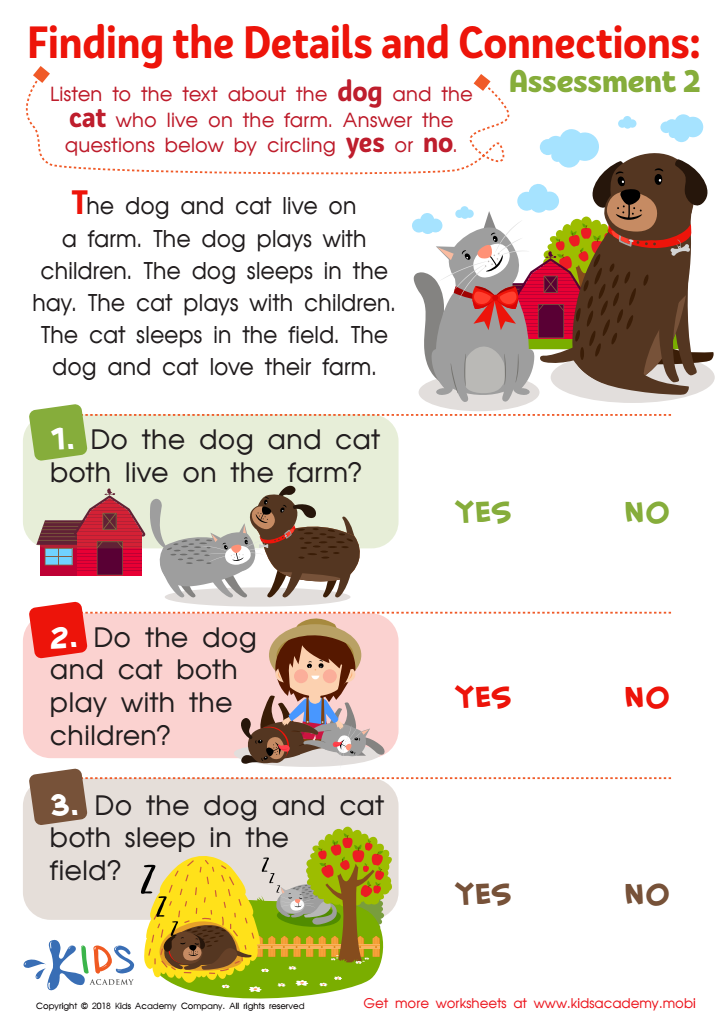
Finding the Details and Connections: Assessment 2 Worksheet
 Assign to My Students
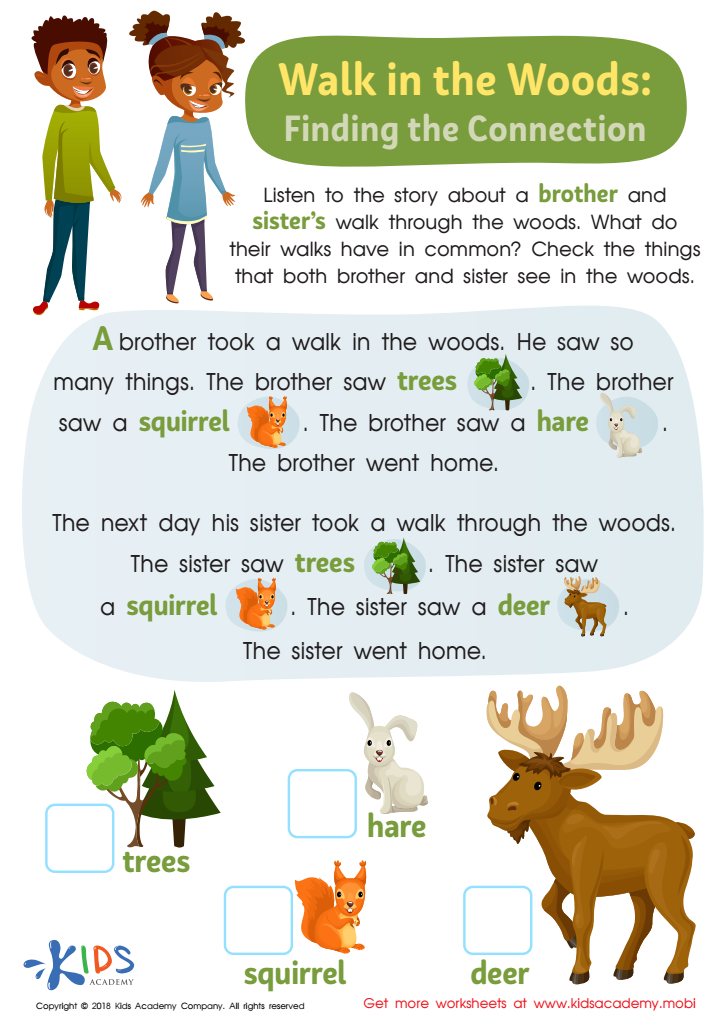
Walk In the Woods: Finding Connections Worksheet
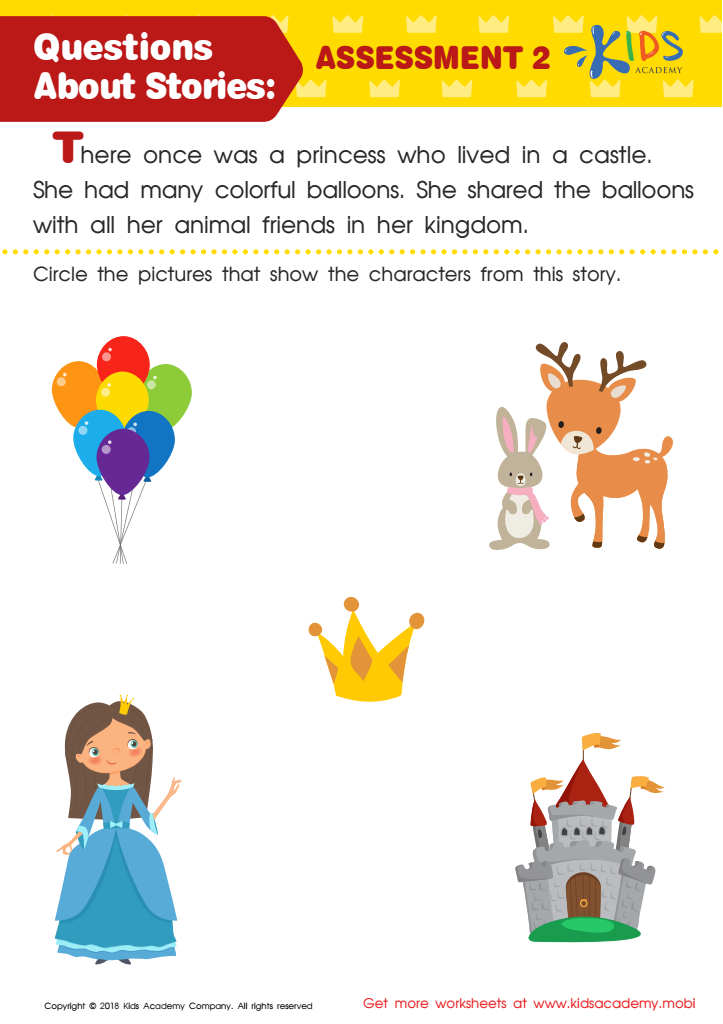
Questions About Stories: Assessment 2 Worksheet
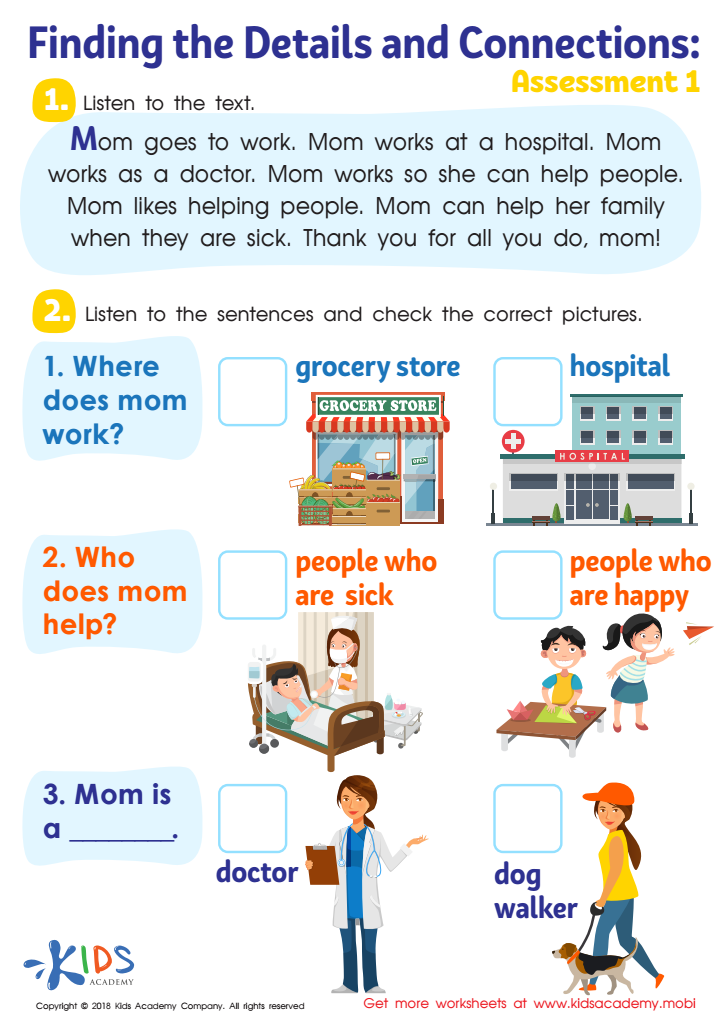
Finding the Details and Connections: Assessment 1 Worksheet
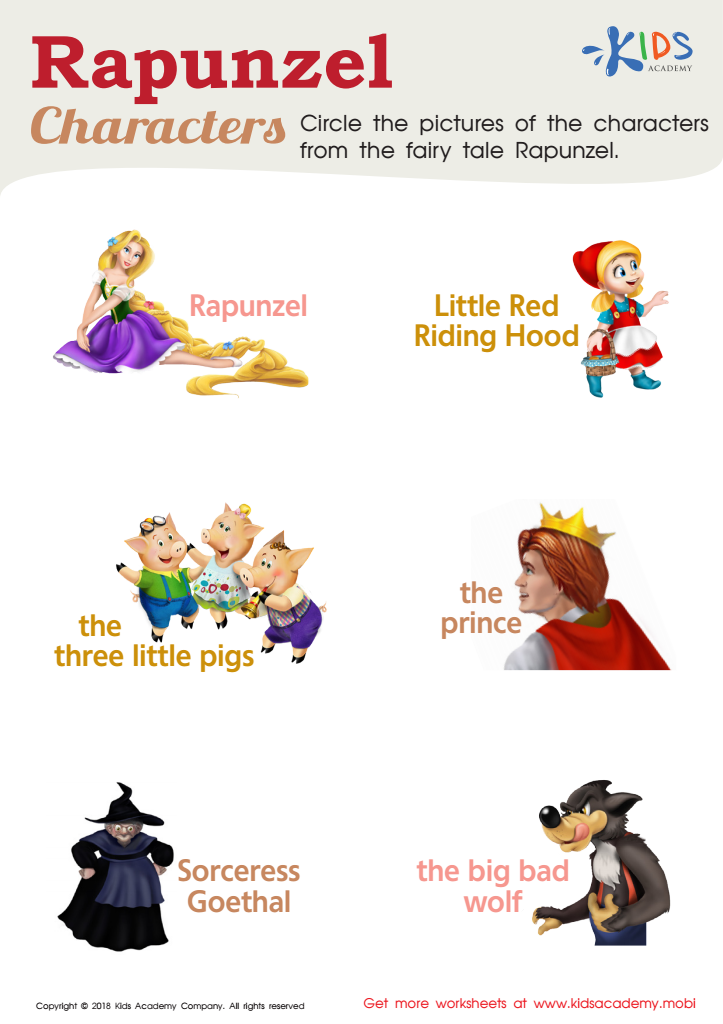
Rapunzel Characters Worksheet








Analytical skills and reading comprehension are critical components of early childhood education for children aged 4-7, as they lay the foundation for future learning. Developing strong analytical skills enables children to think critically, make connections, and solve problems. At this age, children aren't just learning to read; they are also learning to understand, interpret, and analyze the information they read. A solid grasp of reading comprehension helps children to grasp stories, identify main ideas, and make predictions, which enhances their enjoyment of literature and fosters a lifelong love for reading.
Parents and teachers should care about these skills because they are pivotal to academic success and overall cognitive development. Early reading experiences shape vocabulary, language development, and communication skills, which are essential across all subjects. Furthermore, children with strong analytical abilities tend to perform better in school, making them more confident and engaged learners.
In a world increasingly driven by information, these skills are not just academic necessities but life skills that help children navigate challenges they will face later. Investing time and resources in fostering analytical skills and reading comprehension during this formative period sets children on a path toward lifelong achievement and critical thinking.








