Animal knowledge Normal Reading Non-Fiction Worksheets for Ages 4-7
3 filtered results
Difficulty Level
Grade
Age
-
From - To
Subject
Activity
Standards
Discover our "Animal Knowledge Normal Reading Non-Fiction Worksheets for Ages 4-7," designed to ignite young minds with fascinating animal facts. Our worksheets offer age-appropriate content, engaging activities, and vibrant illustrations, helping children develop critical reading skills and a love for learning. Perfect for both classroom and home use, these resources encourage curiosity and boost confidence in reading non-fiction texts. Foster early reading abilities while nurturing a passion for wildlife with our expertly crafted worksheets that make learning fun and educational. Dive into the wonders of the animal kingdom today!
Favorites
With answer key
Interactive
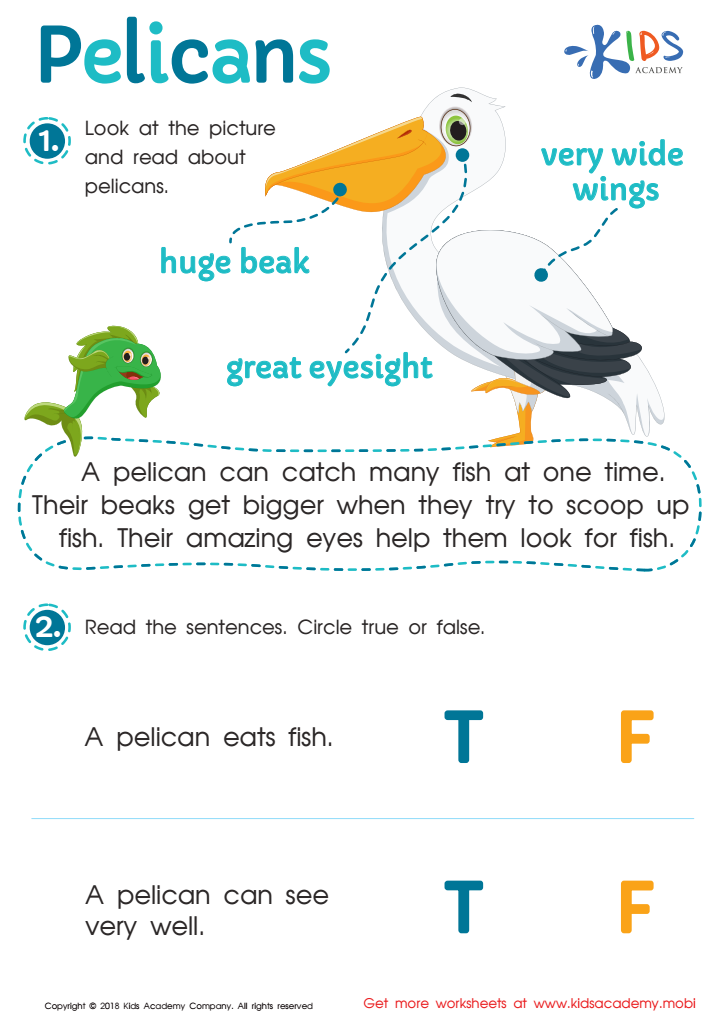
Pelicans Worksheet
This printable worksheet will help your child learn to read and analyze informational passages. It's fun and educational, featuring an animal science topic about pelicans. Read the passage and view the graph, then answer the questions by indicating if the statements are true or false.
 Assign to My Students
Pelicans Worksheet
Worksheet
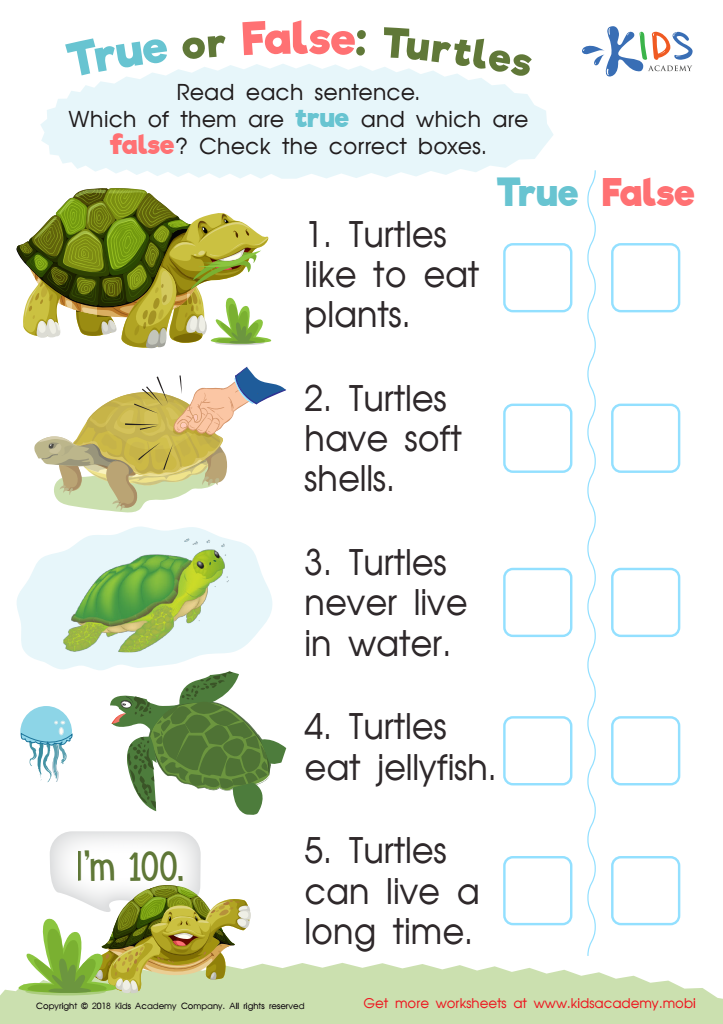
True or False: Turtles Worksheet
Print this free downloadable worksheet to strengthen your child's reading comprehension. Assist them to read each sentence and recall facts about turtles. Check true or false for each statement to verify their knowledge. Perfect for early learners!
True or False: Turtles Worksheet
Worksheet
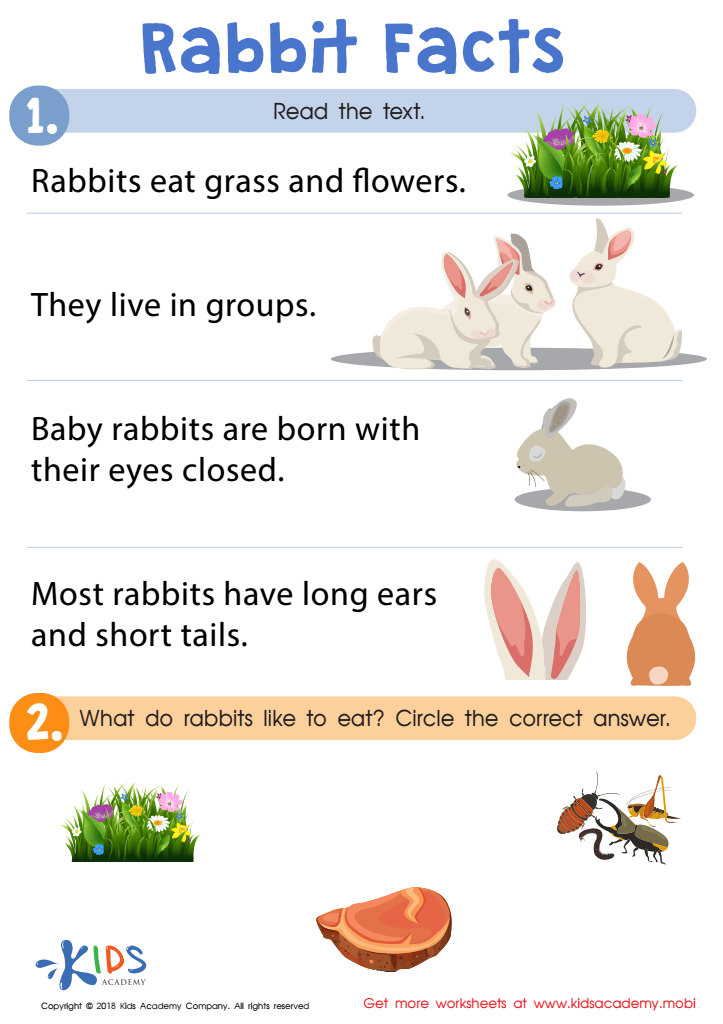
Rabbit Facts Worksheet
Informational texts offer great learning opportunities. Kids Academy's reading worksheet helps children read and recall important details from a text about bunnies. Kids will love it! Simply read the rabbit facts and circle the correct pictures to answer the questions.
Rabbit Facts Worksheet
Worksheet
Join Kids Academy for Free
Who is primarily going to use this learning content?








Parents and teachers should prioritize Animal Knowledge Non-Fiction for children aged 4-7 because it fosters a range of crucial early developmental skills in young learners. During these formative years, children are especially curious about the world around them, and providing age-appropriate, factual information about animals can greatly enhance their learning experience.
Firstly, knowledge about animals nurtures children's innate curiosity and expands their understanding of the natural world. It promotes cognitive development by introducing basic concepts of biology, habitats, and the behaviors of different species, laying a foundation for scientific thinking.
Secondly, reading non-fiction about animals helps develop a child's reading skills and comprehension. Engaging with rich, informative texts enhances vocabulary, sentence structure, and factual understanding. It transitions smoothly from simple picture books to more complex texts, accommodating varying levels of reading proficiency.
Moreover, learning about animals can foster empathy and emotional growth. Understanding the lives and needs of other creatures can teach children about care, compassion, and responsibility for the Earth's inhabitants. This emotional connection can have long-lasting impacts on their view towards nature and conservation.
Lastly, incorporating non-fiction animal books into early education supports interdisciplinary learning. It integrates subjects like science, geography, and reading literacy into cohesive and engaging themes. This holistic approach makes learning more meaningful and enjoyable for young readers.