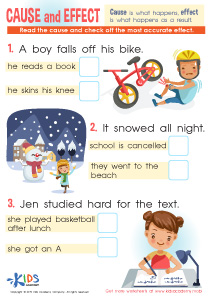
Historical Knowledge Normal Reading Non-Fiction Worksheets for Ages 4-7
5 filtered results
-
From - To
Explore our engaging "Historical Knowledge Normal Reading Non-Fiction Worksheets" designed for young learners aged 4-7. These worksheets introduce children to essential historical concepts and figures through fun, age-appropriate activities. Each interactive resource encourages critical thinking, enhances reading comprehension, and fosters a love for learning about the past. By integrating illustrations, questions, and simple texts, our worksheets make history accessible and enjoyable. Perfect for classroom or home use, these educational tools aim to spark curiosity and inspire future historians. Dive into the world of history with activities that promote literacy skills and enrich kids' understanding of significant historical events and personas!
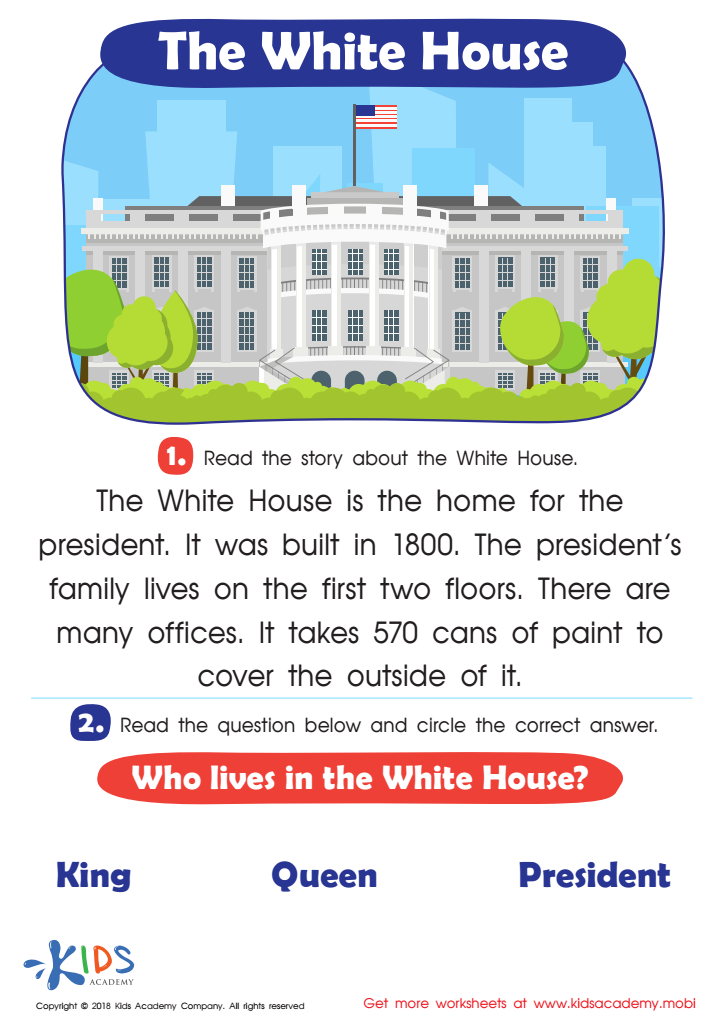
White House Worksheet
 Assign to My Students
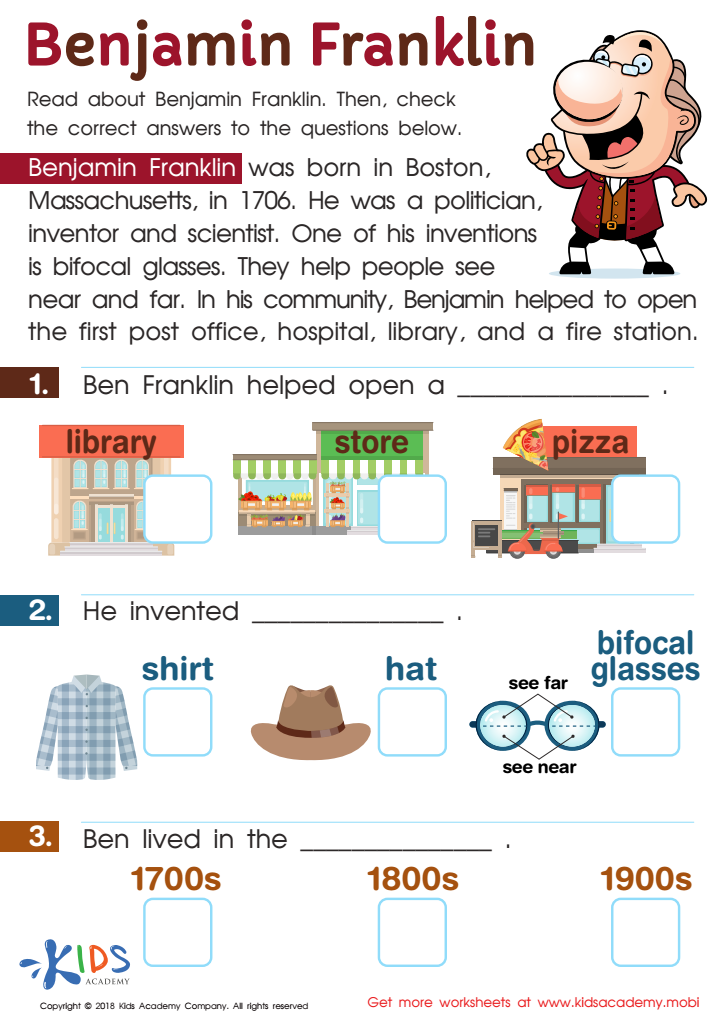
Benjamin Franklin Worksheet
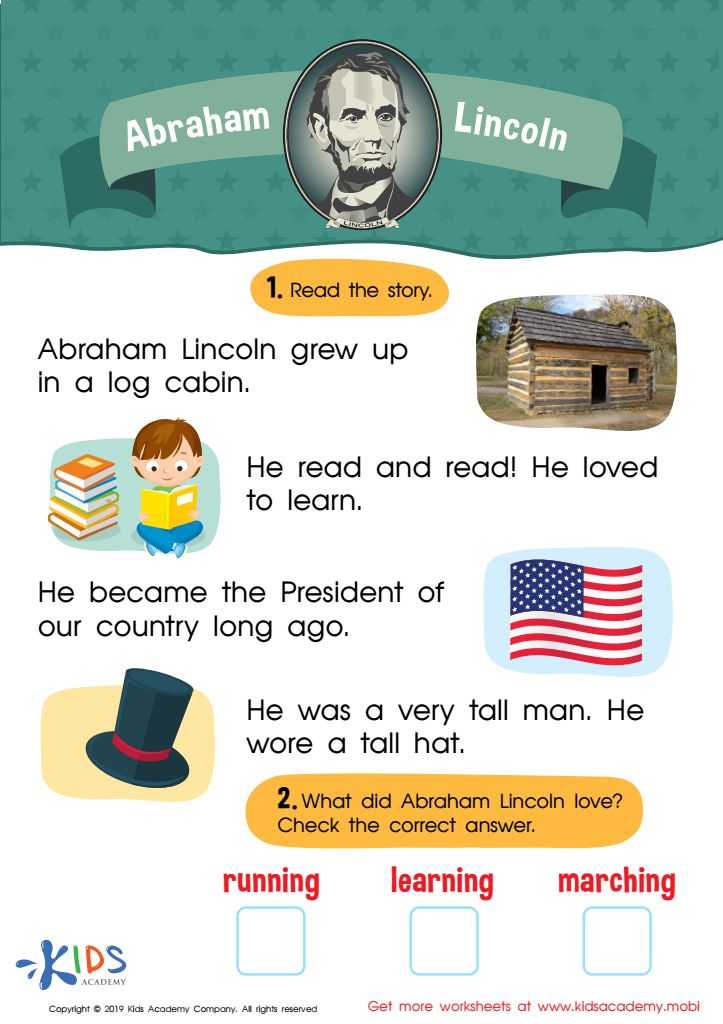
Abraham Lincoln Worksheet
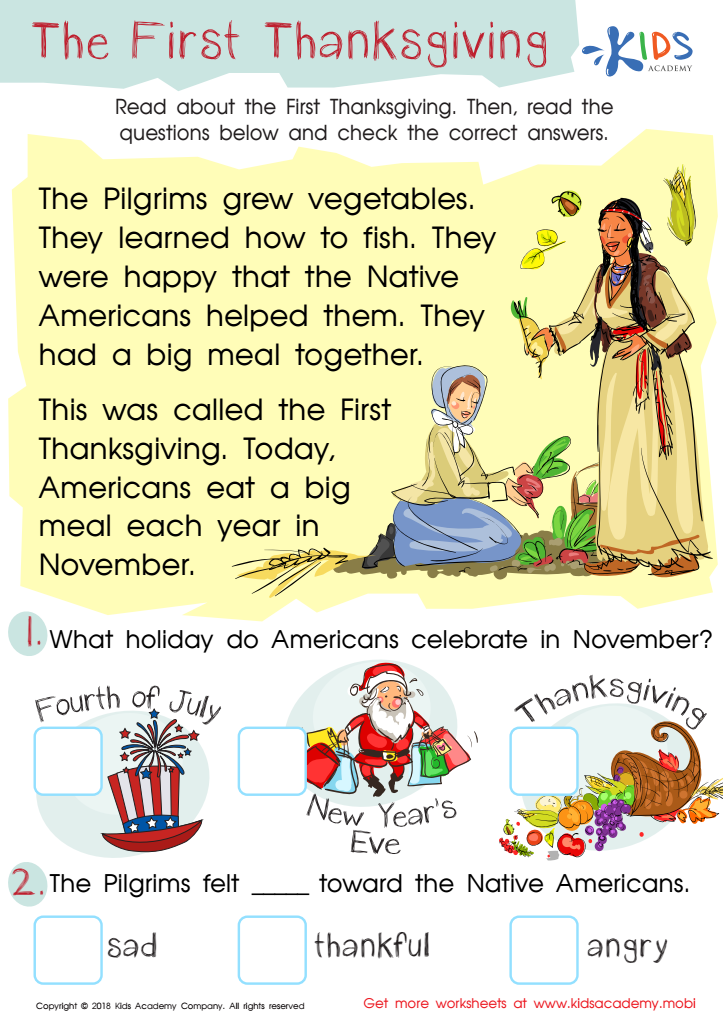
Assessment: First Thanksgiving Worksheet
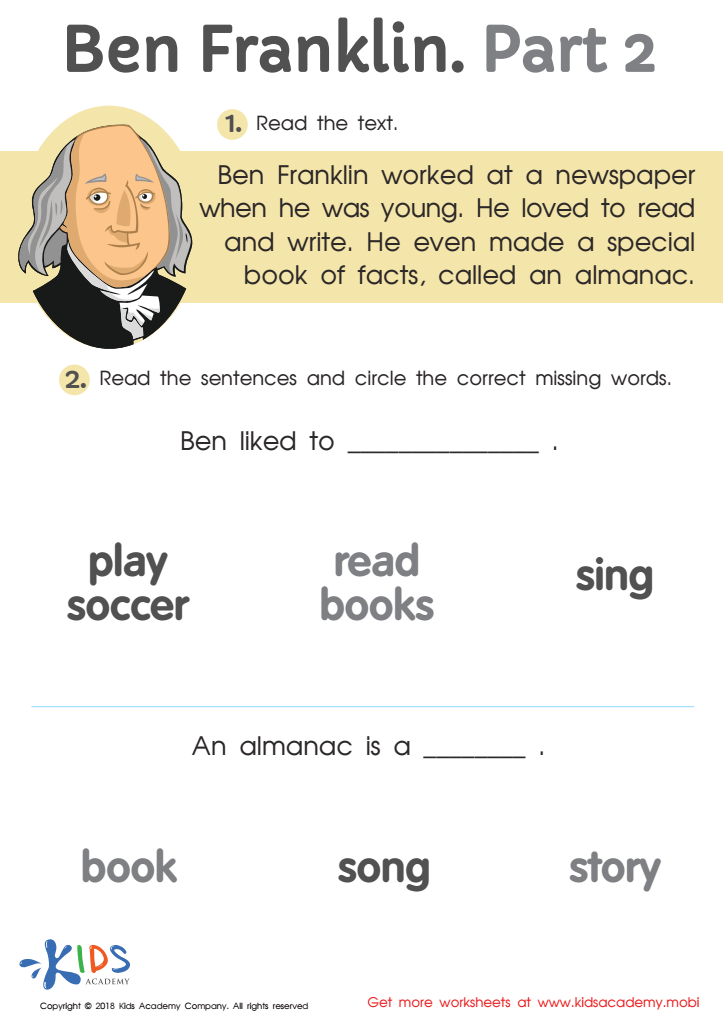
Ben Franklin Part 2 Worksheet








Parents and teachers should prioritize historical knowledge through non-fiction reading for children aged 4-7 for several compelling reasons. First, early exposure to historical concepts helps young learners understand their place in the world, fostering a sense of identity and community. When children learn about significant events, cultures, and figures from the past, they begin to appreciate the diversity and complexity of human experiences.
Moreover, non-fiction reading enhances critical thinking skills. By engaging with real-world information, children learn to question, analyze, and evaluate what they read, laying the groundwork for lifelong learning and inquiry. Non-fiction texts often introduce vocabulary and concepts that enrich a child's language skills and comprehension abilities.
Additionally, historical knowledge instills values such as empathy and respect for others. Kids who understand various historical narratives are more likely to develop an appreciation for different perspectives and cultures, promoting inclusivity and social awareness.
Finally, cultivating a habit of reading non-fiction nurtures curiosity and a love for learning. It encourages children to explore new ideas, fostering a desire to discover more about the world around them. Ultimately, integrating historical knowledge through non-fiction reading serves as a foundational pillar for cognitive and social development in early childhood.