Vocabulary enhancement Normal Rhyming Words Worksheets for Ages 4-7
6 filtered results
-
From - To
Enhance your child's vocabulary with our engaging "Vocabulary Enhancement: Normal Rhyming Words Worksheets" tailored specifically for ages 4-7. These fun and educational printable worksheets from Kids Academy focus on helping young learners recognize, pair, and understand rhyming words. Each activity is designed to develop early reading skills and phonemic awareness, setting a solid foundation for future literacy success. Vibrant illustrations and interactive exercises will keep your child motivated and excited to learn. Perfect for home or classroom use, these worksheets make vocabulary building enjoyable and effective. Give your child the boost they need to become confident and skilled readers!
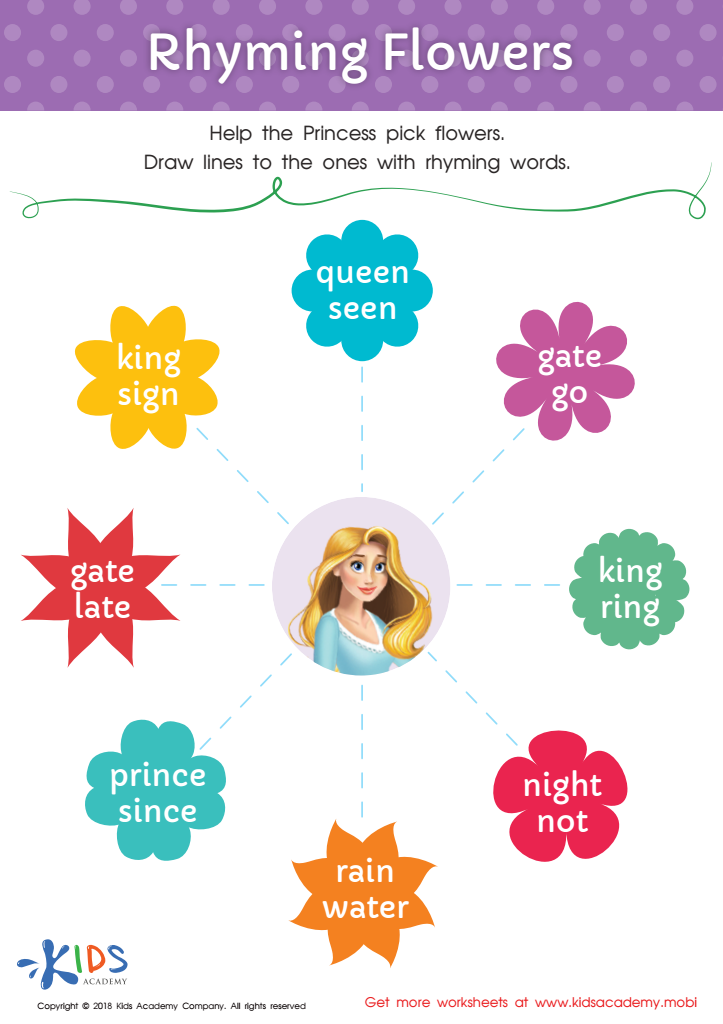
Rhyming Flowers Worksheet
 Assign to My Students
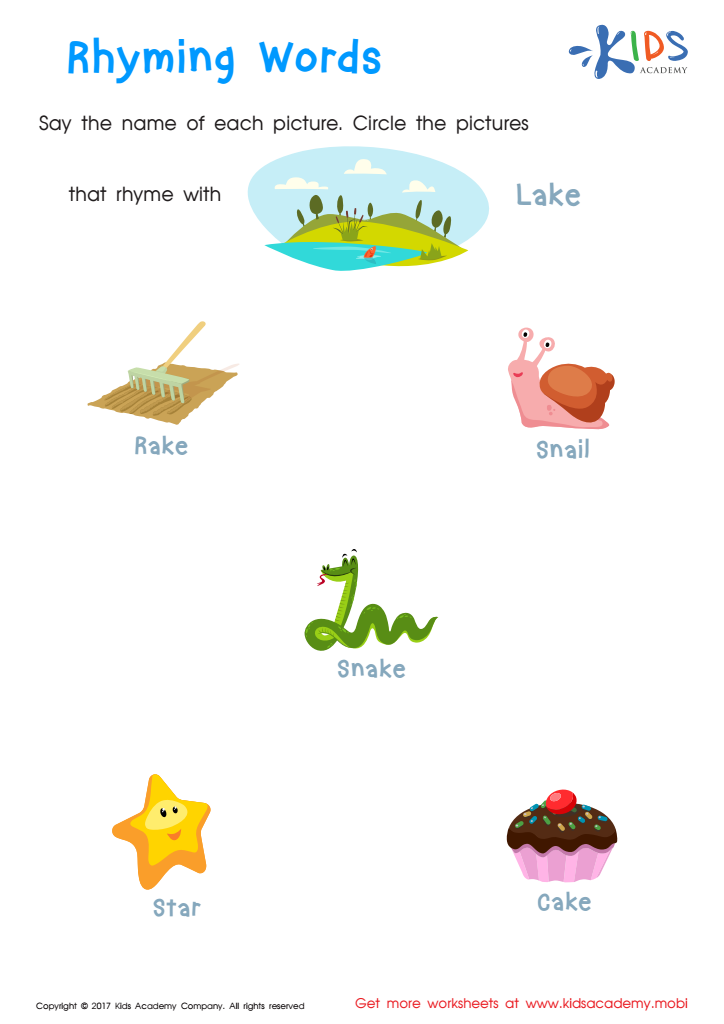
Rhyming Words Rhyming Worksheet
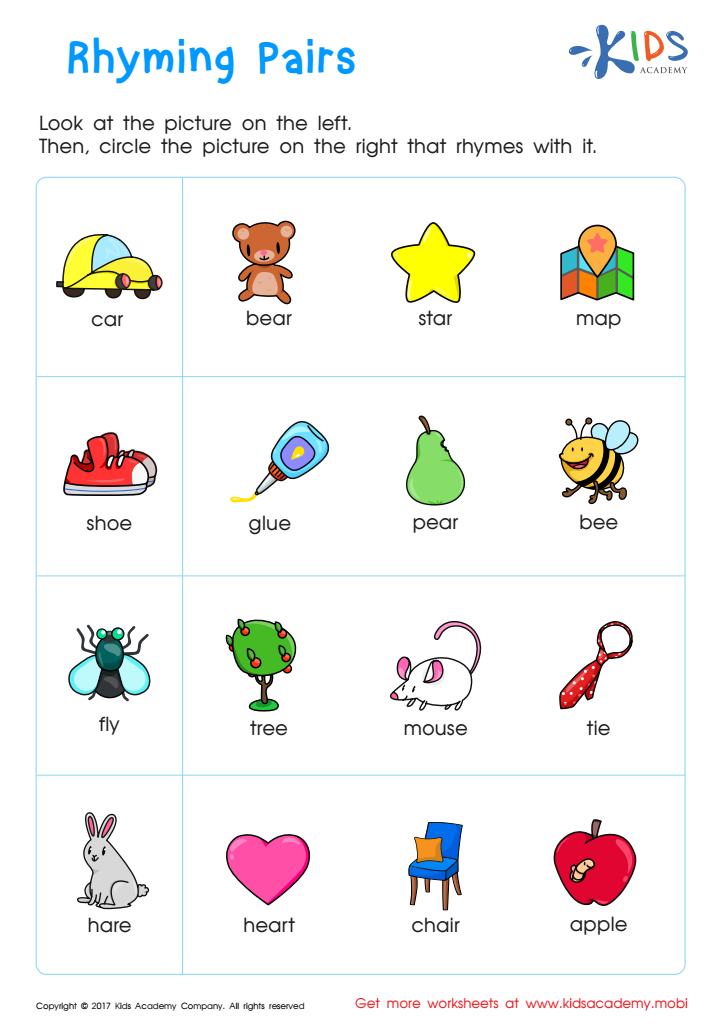
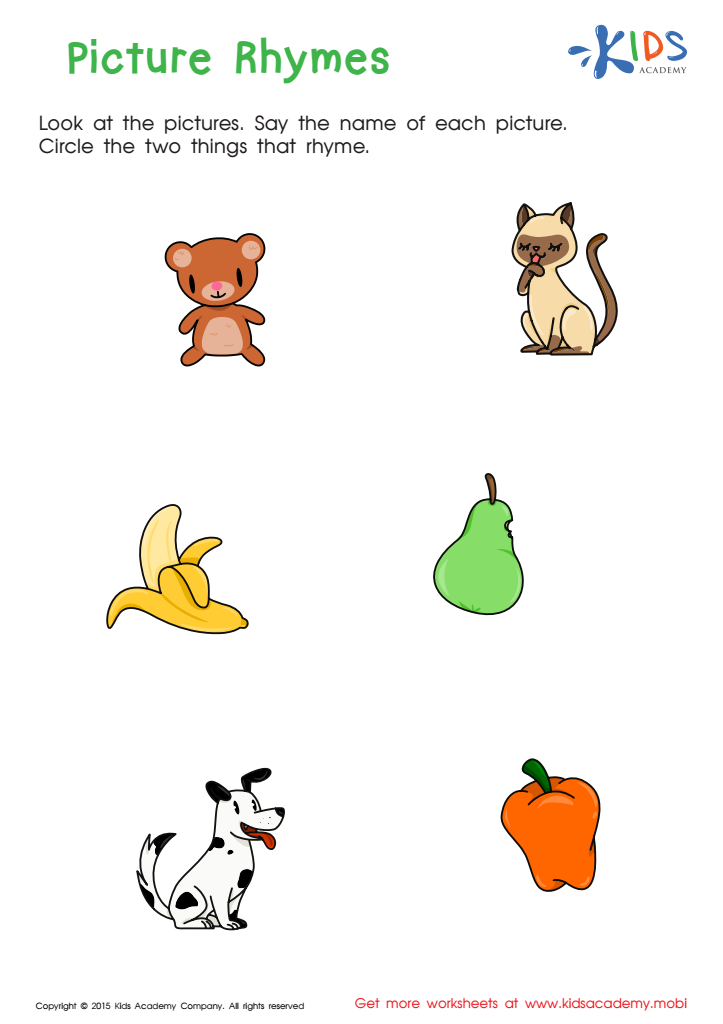
First Words: Picture Rhymes Worksheet
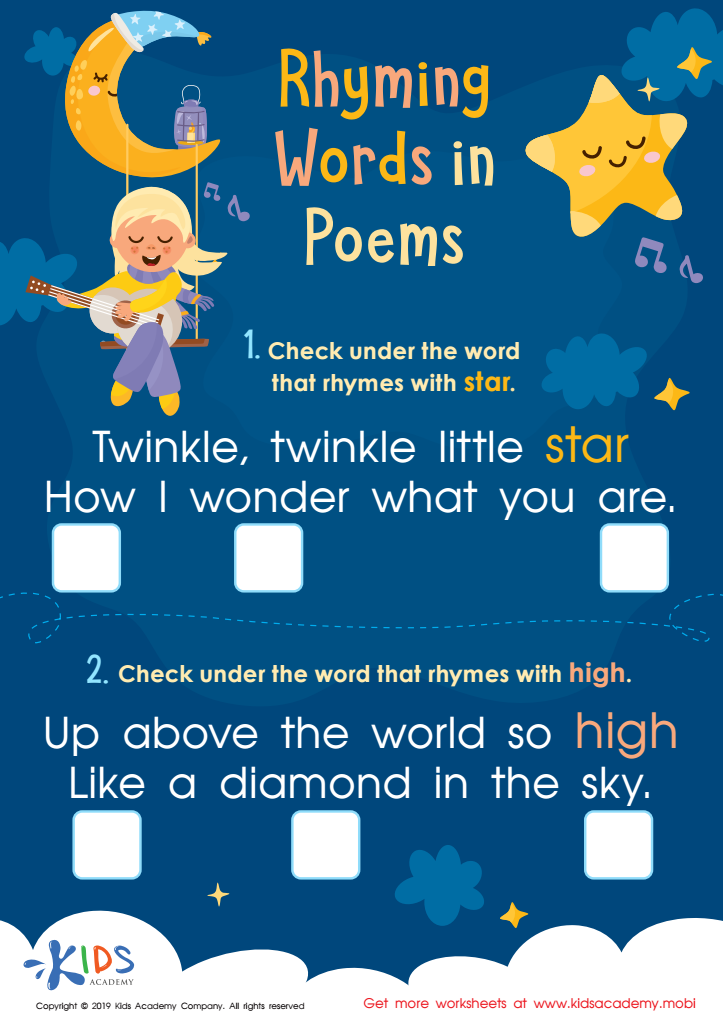
Rhyming Words in Poems Worksheet
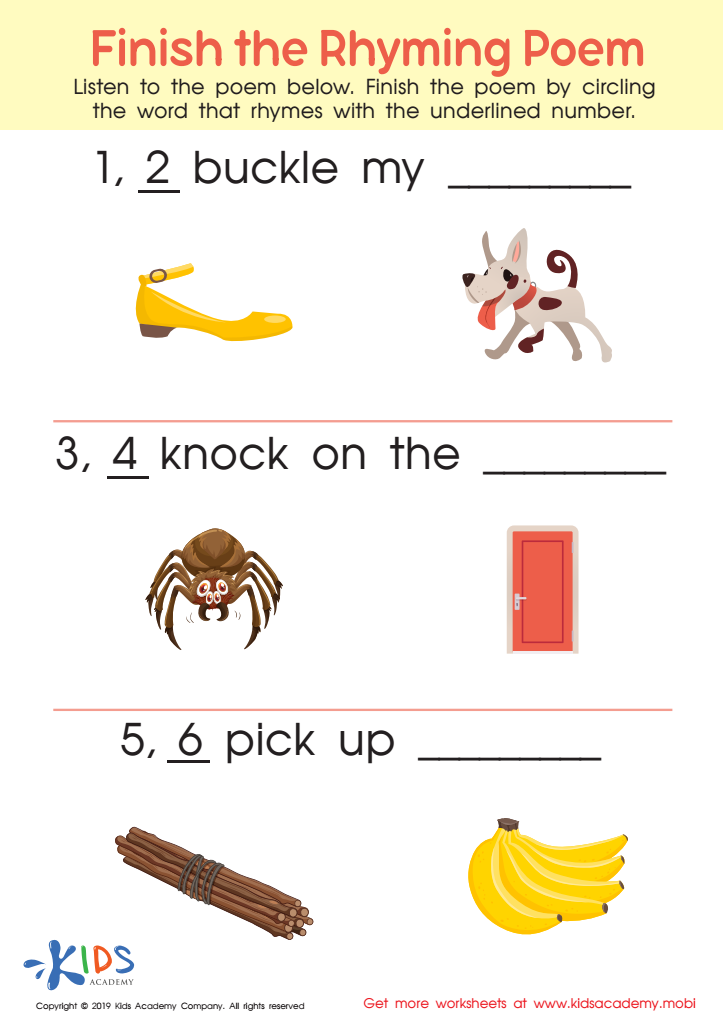
Finish Rhyming Poem Worksheet








Parents and teachers should prioritize vocabulary enhancement through normal rhyming words for children aged 4-7 because it lays a crucial foundation for language development and literacy skills. At this formative stage, young children are rapidly expanding their vocabulary and learning the rules of language, making it an ideal time to introduce them to rhyming words. Rhymes can be an enjoyable and engaging way for kids to recognize patterns in language, which helps them understand phonetics—the relationship between sounds and letters.
First, rhyming words improve phonological awareness, a key predictor of later reading success. Understanding that words like "cat" and "hat" share similar ending sounds helps children isolate phonemes, which is critical for decoding new words while reading. Additionally, rhyming activities can enhance memory and retention. Singing nursery rhymes or chanting word pairs are memorable practices that make language fun and accessible.
Second, a robust vocabulary allows children to express themselves more clearly and confidently, both orally and in writing. This fosters better communication skills and can even boost social interactions, as children can connect more meaningfully with peers and adults.
Overall, investing time in enhancing a young child's vocabulary through rhyming sets the stage for academic achievement and effective communication, essential skills for lifelong success.








