
Observational skills Normal Physical Science Worksheets for Ages 4-7
3 filtered results
Difficulty Level
Grade
Age
-
From - To
Subject
Activity
Standards
Enhance your child's observational skills with our engaging Normal Physical Science Worksheets designed for ages 4-7! These interactive worksheets encourage young learners to explore the wonders of the physical world around them. Through fun activities, children will develop critical observation techniques, sharpen their curiosity, and gather important information from their environment. Each worksheet is thoughtfully crafted to align with educational standards and promote STEM learning in early grades. Perfect for home or classroom use, these worksheets make science enjoyable while laying a strong foundation for future exploration. Foster a lifelong love for learning and discovery with our printable resources today!
Favorites
With answer key
Interactive
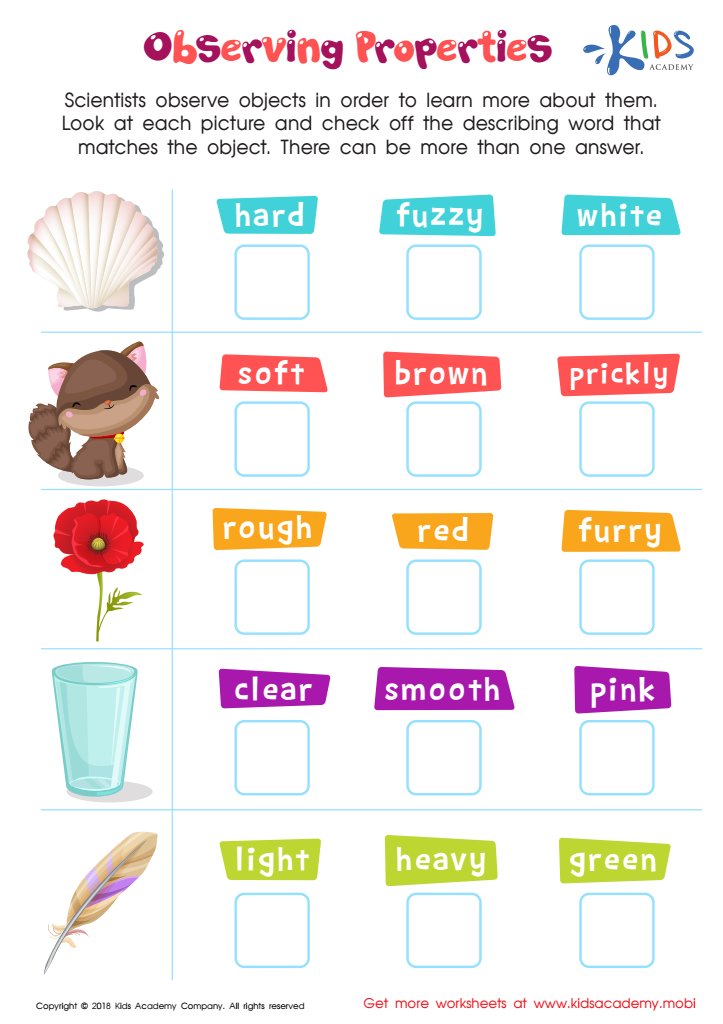
Observing Properties Worksheet
Encourage your kid's interest in science with this fun worksheet! Let them identify the five objects on the left, then choose the most accurate word from the options on the right. There might be more than one answer, so remind them to take their time observing the objects.
 Assign to My Students
Observing Properties Worksheet
Worksheet
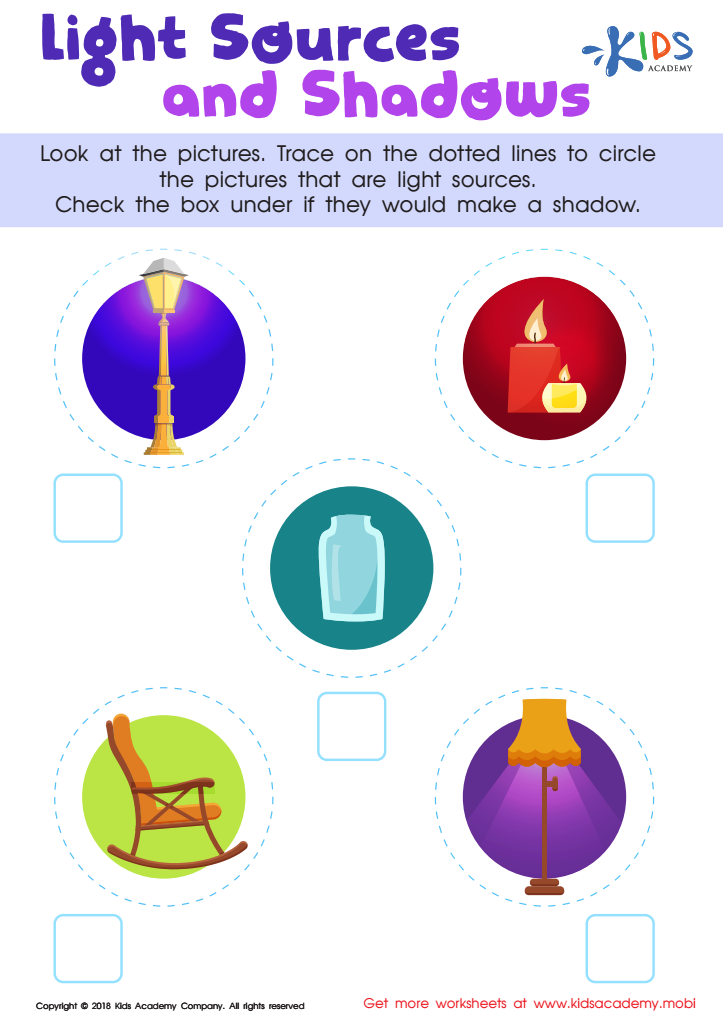
Light Sources and Shadows Worksheet
During the day, the sun radiates bright light. At night, when it's time for bed, the sun sets and darkness takes over. To light our way, we use other sources of light. With your students, trace the dotted lines around the pictures of light sources and check the boxes under the objects that will cast shadows.
Light Sources and Shadows Worksheet
Worksheet
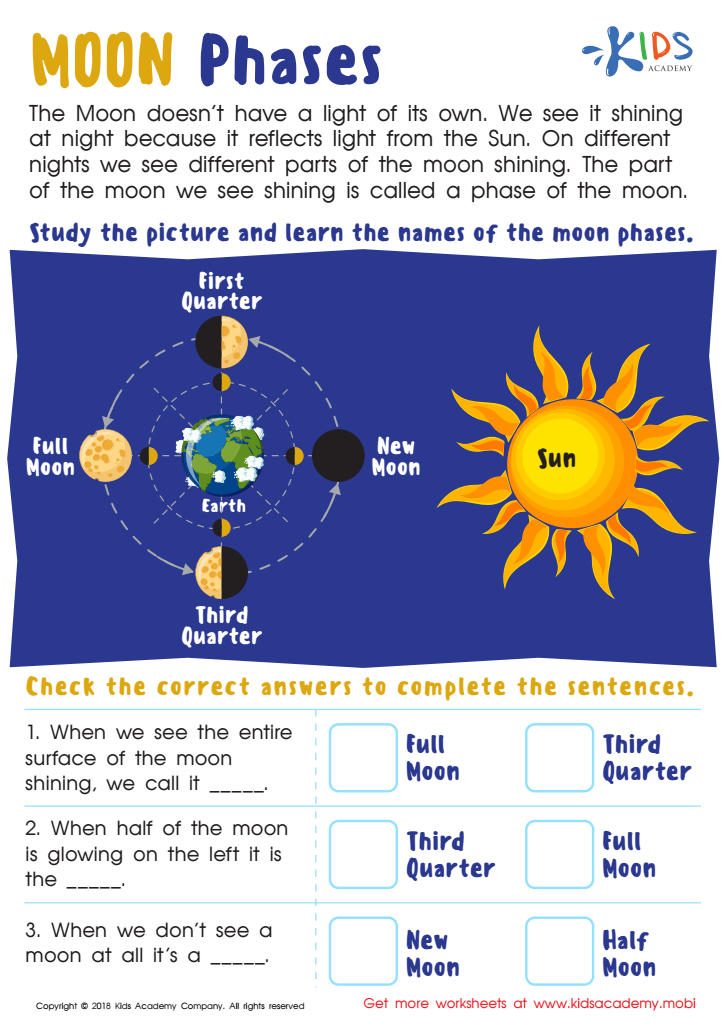
Moon Phases Worksheet
Gaze up at the night sky and the moon's appearance may change from night to night. Encourage your child to learn more about the sun, the moon, and space with this science worksheet. Have them read the text then study the picture. Finally, read the sentences and check the answers to identify the moon's phases.
Moon Phases Worksheet
Worksheet
Join Kids Academy for Free
Who is primarily going to use this learning content?




.jpg)



Observational skills in the realm of normal physical science are essential for children ages 4-7 as they form the foundation for critical thinking, inquiry, and scientific understanding. During this developmental stage, children are naturally curious and eager to explore their environment. By nurturing their observational skills, parents and teachers can foster a sense of wonder and encourage them to ask questions, explore concepts, and draw conclusions based on their observations.
Engaging in hands-on experiences related to physical science—such as exploring gravity through simple experiments or understanding cause and effect with everyday materials—helps children develop critical cognitive skills. They learn to notice details, differentiate between properties, and express their findings in logical ways. These skills not only enhance their understanding of scientific principles but also develop their language abilities, as they learn to articulate what they observe.
Moreover, strong observational skills are vital in everyday life, enabling children to process information critically and make informed decisions as they grow. By promoting these skills early on, parents and teachers contribute to shaping a generation of thoughtful, inquisitive learners poised to navigate the complexities of the world around them.







