Understanding light sources Normal Physical Science Worksheets for Ages 4-7
3 filtered results
-
From - To
Nurture your child's curiosity with our "Understanding Light Sources" worksheet, designed for ages 4-7. This engaging activity helps young learners explore different light sources, both natural and artificial, to build foundational knowledge in physical science. With colorful illustrations and simple exercises, children will identify objects that emit light and better understand their everyday environment. It's perfect for developing early learning skills like observation and critical thinking. Ideal for parents and teachers, this worksheet makes science fun and accessible. Download now from Kids Academy to illuminate young minds with the wonders of light!
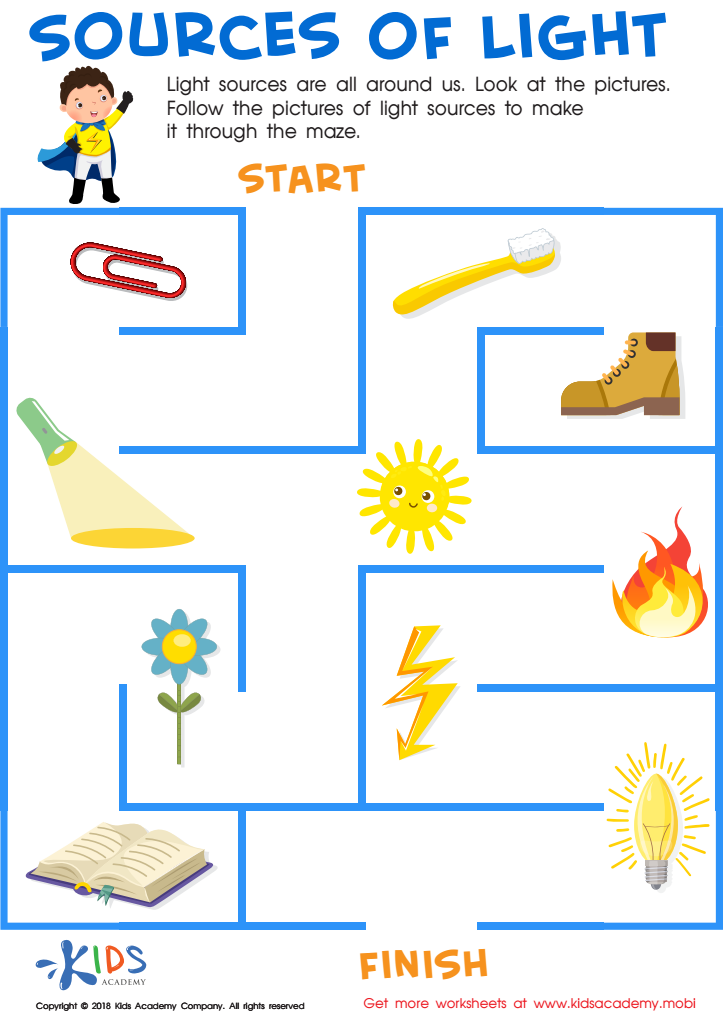
Sources of Light Worksheet
 Assign to My Students
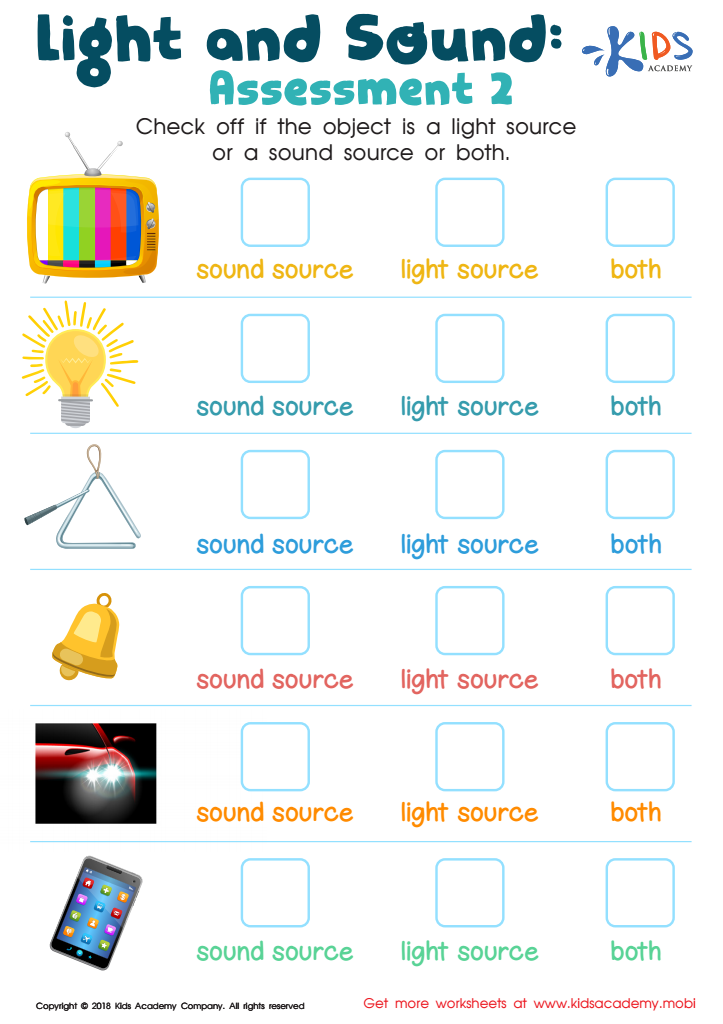
Light and Sound: Assessment 2 Worksheet
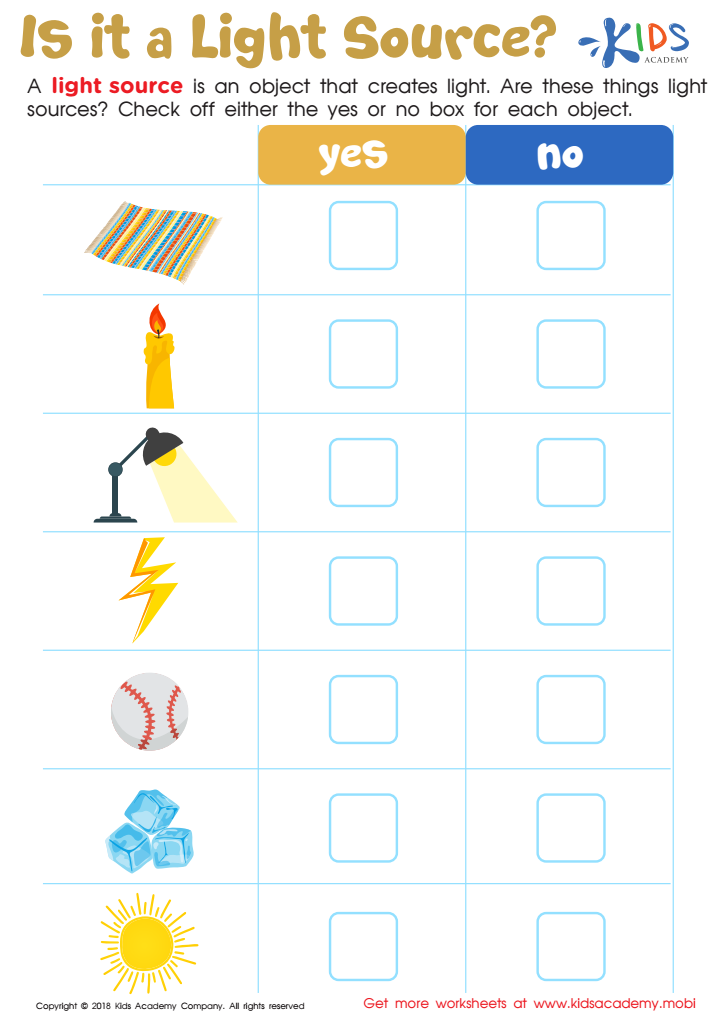
Is It a Light Source? Worksheet







Understanding light sources is an essential part of early education in science for children ages 4-7. At this stage, young minds are curious and rapidly developing fundamental notions about how the world works. Learning about light sources helps lay the groundwork for understanding more complex concepts later on.
Firstly, light is a key part of everyday experiences. From sunlight to lamps, understanding where light comes from helps children make sense of their surroundings. It enhances their observational skills, making them more attentive and inquisitive. For example, recognizing that the sun is a natural light source and a lamp is an artificial one deepens their comprehension of their environment.
Secondly, early science education fosters critical thinking. Learning about light allows for simple, engaging experiments, like using flashlights to explore shadows. Such hands-on activities not only make learning fun but also teach problem-solving skills. This sets a foundation for scientific thinking.
Furthermore, awareness of light sources has practical safety applications. Understanding that looking directly at the sun can harm their eyes or that certain sources of light can be hot educates children on how to keep themselves safe.
Ultimately, integrating lessons about light sources creates a richer, more engaging learning experience, fostering curiosity, safety, and a lifelong passion for science.







