Comprehension skills Normal Plants and Animals Worksheets for Ages 4-7
3 filtered results
Difficulty Level
Grade
Age
-
From - To
Subject
Activity
Standards
Discover exciting "Comprehension Skills: Normal Plants and Animals Worksheets" designed for ages 4-7! These engaging, printable worksheets from Kids Academy boost young learners' understanding of the natural world while honing their reading comprehension. Perfect for early grades, our activities align with key science concepts about plants and animals. Fun illustrations and interactive tasks keep kids amused and stimulate critical thinking. Additionally, the worksheets support kindergarten and early elementary curriculum, making them an excellent resource for educators and parents. Enhance your child's learning today with our expertly-crafted worksheets, and see their knowledge blossoms! Explore more at Kids Academy.
Favorites
With answer key
Interactive
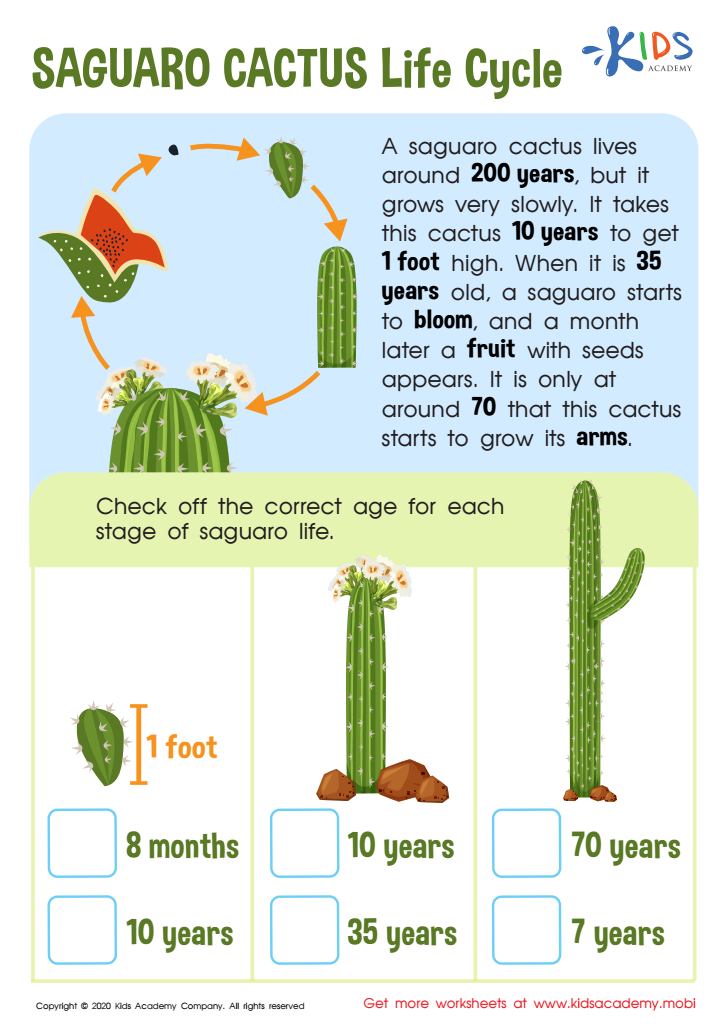
Saguaro Cactus Life Cycle Worksheet
Teach your child about the saguaro cactus, which takes 35 years to bloom and can live up to twice the lifespan of a human! Print this free PDF worksheet to engage learners with an interesting passage. Check off the correct answers to reflect their learning!
 Assign to My Students
Saguaro Cactus Life Cycle Worksheet
Worksheet

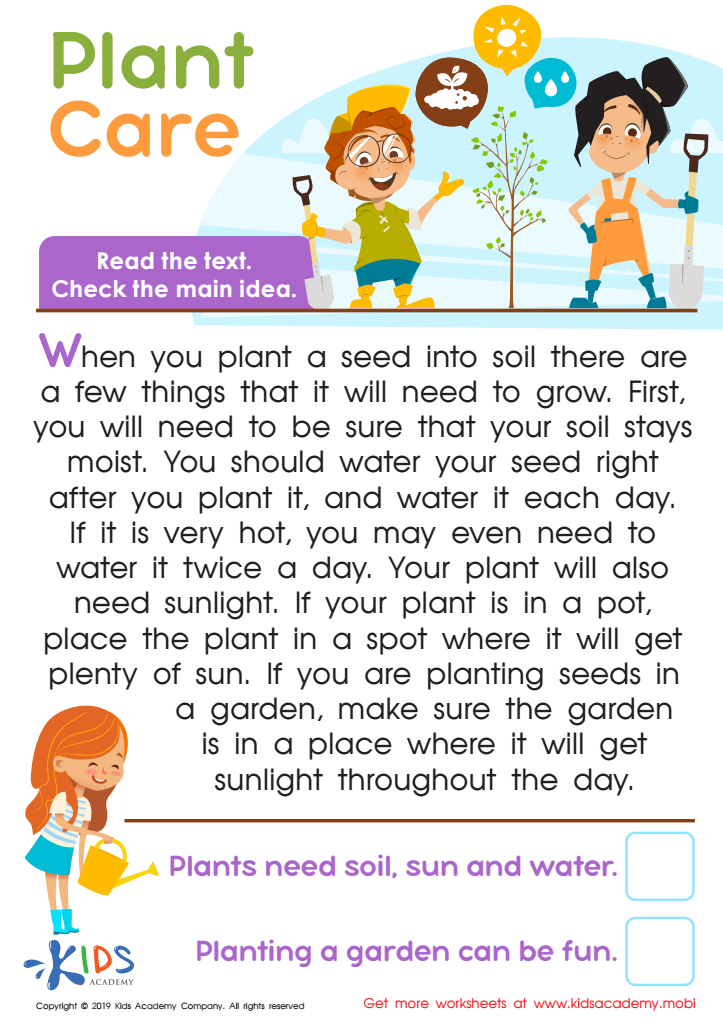
Plant Care Worksheet
Encourage your children to read by helping them practice. Print out the worksheet and read the text with them. Help them understand the words and find the main idea. This will improve their reading skills and prepare them for school.
Plant Care Worksheet
Worksheet
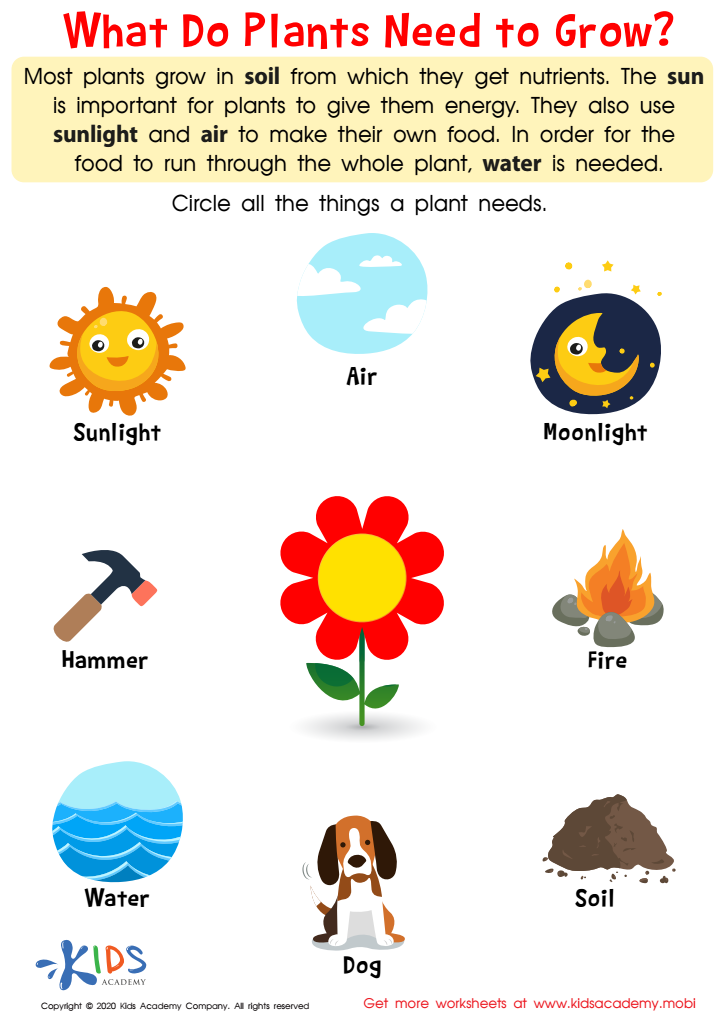
What Do Plants Need to Grow Worksheet
Help your child explore and discover the world of plants with this fun how do plants grow worksheet! They'll gain knowledge, sharpen problem solving skills, and build science foundations as they identify what plants need to grow. Afterward, plant a seed together and watch it sprout right before their eyes!
What Do Plants Need to Grow Worksheet
Worksheet
Join Kids Academy for Free
Who is primarily going to use this learning content?







Parents and teachers should prioritize developing comprehension skills related to plants and animals in children aged 4-7 because these foundational understanding impacts their holistic development and fosters a lifelong love for learning. During this critical developmental stage, children's brains are highly receptive to new information, laying the groundwork for future educational success. Understanding the basics of plant and animal life cultivates curiosity about the natural world, leading young learners to ask questions and explore their environments actively.
Comprehending simple concepts about plants and animals also enhances vocabulary and language skills, essential for effective communication. As children identify and describe different plants and animals, they practice categorizing information, noting similarities and differences, and developing critical thinking abilities.
Moreover, knowledge about plants and animals promotes emotional and social growth. Interacting with nature can teach children empathy and responsibility; understanding that all living things have needs fosters a sense of connection and caring for the environment. Hands-on experiences, such as gardening or caring for a pet, also strengthen fine motor skills and can serve as a calming, focused activity.
Incorporating comprehension of the natural world in early education builds a multidisciplinary foundation, integrating science, literacy, and personal growth, ultimately nurturing well-rounded, informed, and curious individuals.