Spatial awareness Normal Space Worksheets for Ages 4-7
3 filtered results
-
From - To
Enhance your child’s spatial awareness with our engaging Normal Space Worksheets designed for ages 4-7! These fun-filled activities will help young learners develop essential skills in understanding and interpreting their surroundings. Each worksheet is thoughtfully crafted to promote critical thinking and problem-solving as children explore concepts such as shapes, directions, and distances. Perfect for home or classroom use, these worksheets encourage interactive learning while making it easy to track progress. Let your child embark on a journey of discovery and creativity as they build a foundation for future learning in math, science, and everyday life. Download today and watch their skills soar!
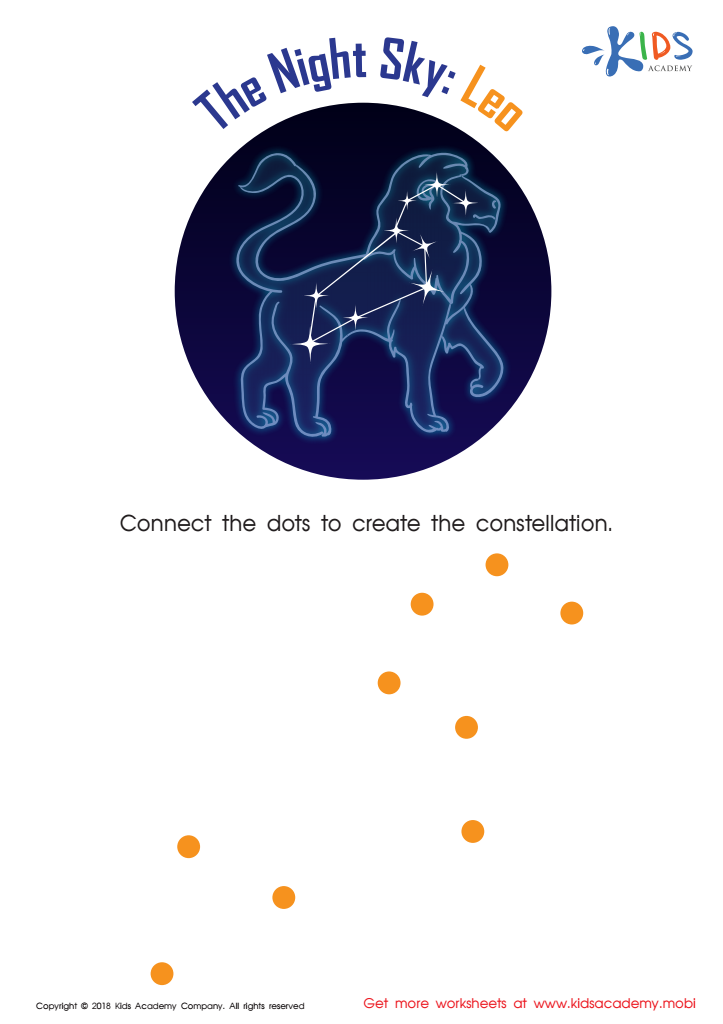
The Night Sky: Leo Worksheet
 Assign to My Students
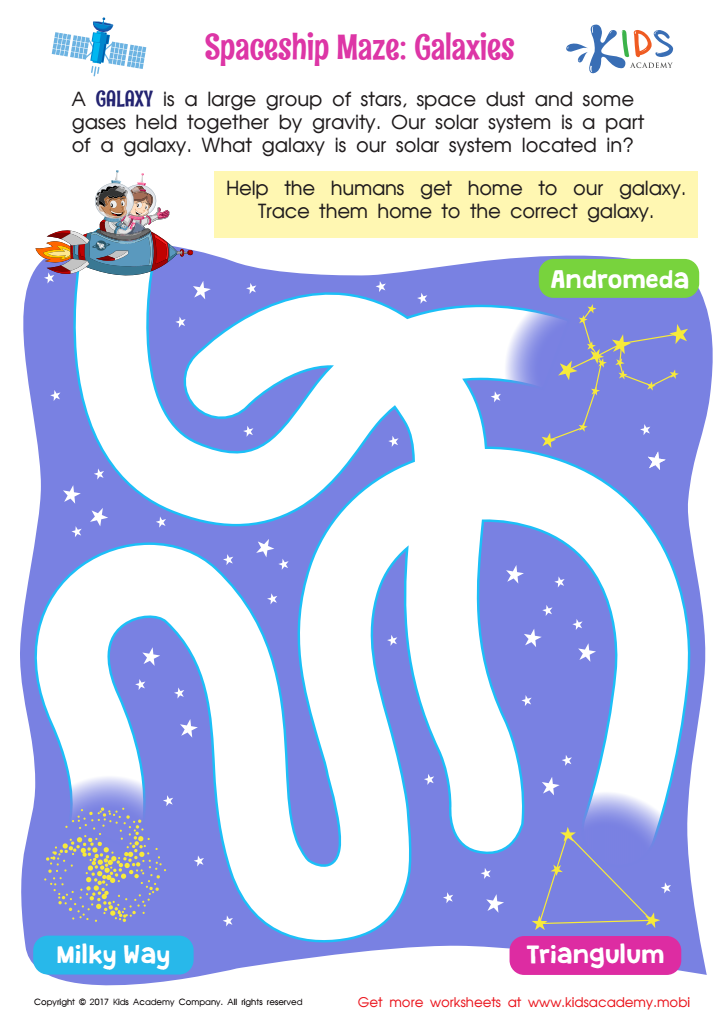
Spaceship Maze: Galaxies Worksheet
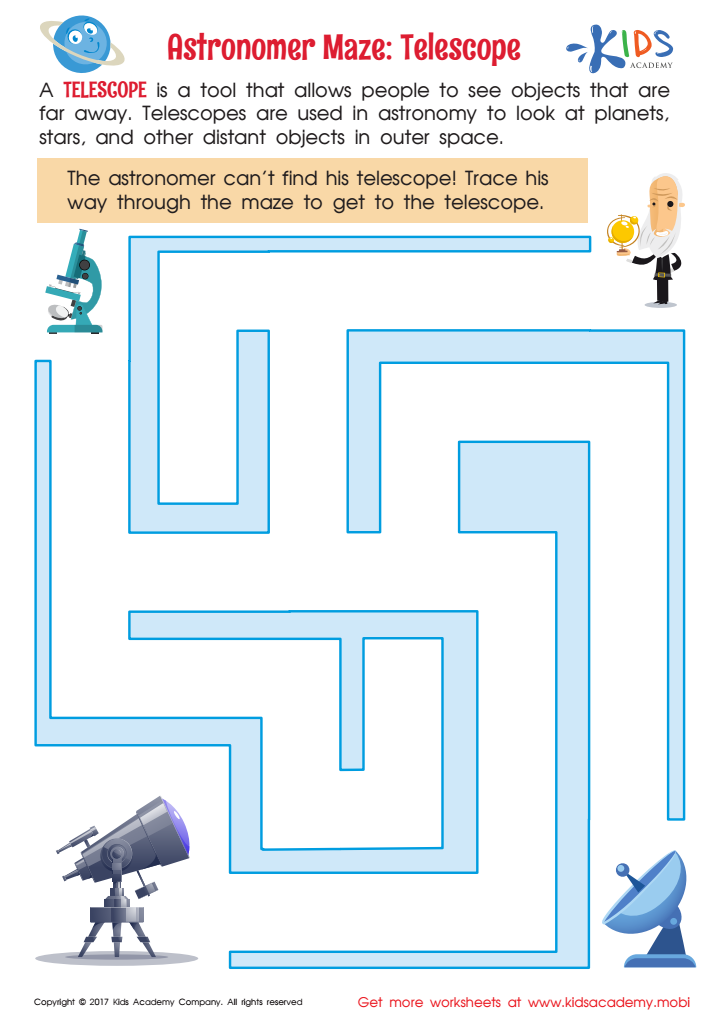
Astronomer Maze: Telescope Worksheet




.jpg)

Parents and teachers should prioritize spatial awareness in children aged 4-7 because it is a foundational skill that significantly impacts their overall development. Spatial awareness, particularly in the context of Normal Space, involves understanding the relationship between objects and oneself in various environments. This skill enables children to navigate their surroundings confidently and participate effectively in both play and academic settings.
At this age, children are naturally curious and eager to explore. By fostering spatial awareness through activities like puzzles, building blocks, and outdoor play, educators and parents can enhance problem-solving abilities, critical thinking, and coordination. These exercises not only support cognitive development but also promote motor skills essential for daily tasks and future learning.
Furthermore, strong spatial awareness is crucial for early mathematics and literacy skills. It helps children grasp concepts like shapes, sizes, and positions, laying the groundwork for geometry and reading comprehension. Moreover, enhancing spatial skills nurtures creativity and imagination as children visualize and manipulate objects mentally. Ultimately, supporting spatial awareness from a young age can lead to greater academic success and improved self-esteem as children become more competent in exploring and interacting with the world around them.







