Cognitive Development Normal Community Worksheets for Ages 4-7
4 filtered results
-
From - To
Explore our engaging "Cognitive Development Normal Community Worksheets" ideal for children ages 4-7. Designed to enhance critical thinking, problem-solving, and reasoning skills, these worksheets offer enjoyable activities focused on community awareness. Children will learn about their surroundings through tasks that promote cognitive growth, encouraging them to make connections between concepts and develop essential social skills. Our user-friendly format makes it easy for parents and educators to incorporate these resources into daily learning routines. Foster a love for learning in young minds while helping them become aware, responsible members of their community. Access these valuable worksheets today!

Let's Look! Assessment Worksheet
 Assign to My Students

City Workers Community Helpers Worksheet
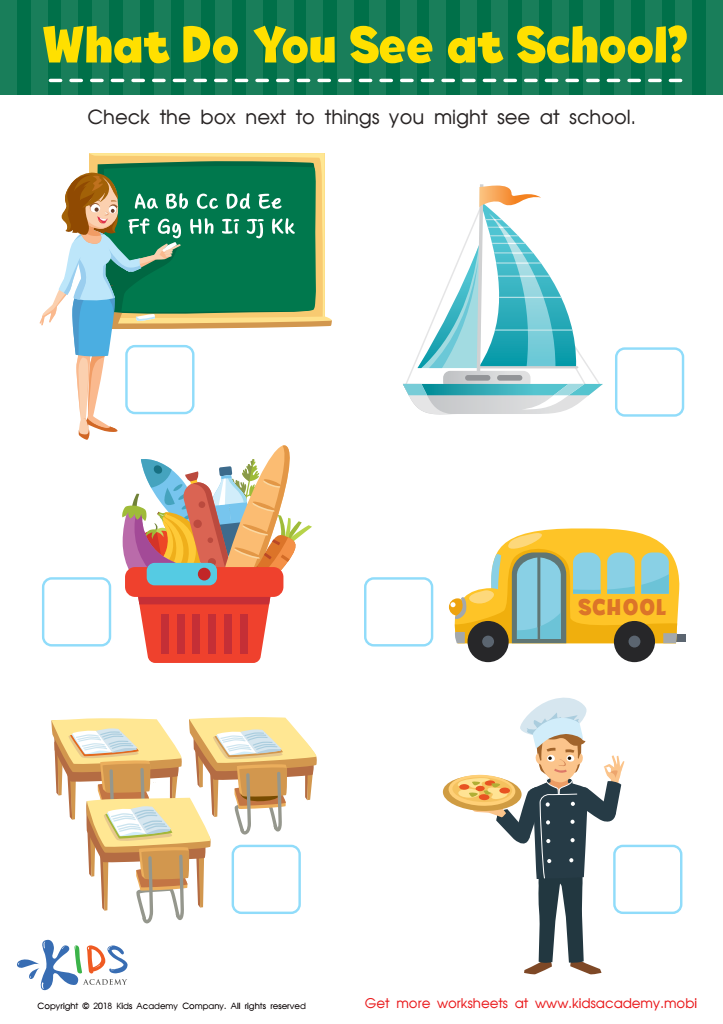
What Do you See at School? Worksheet
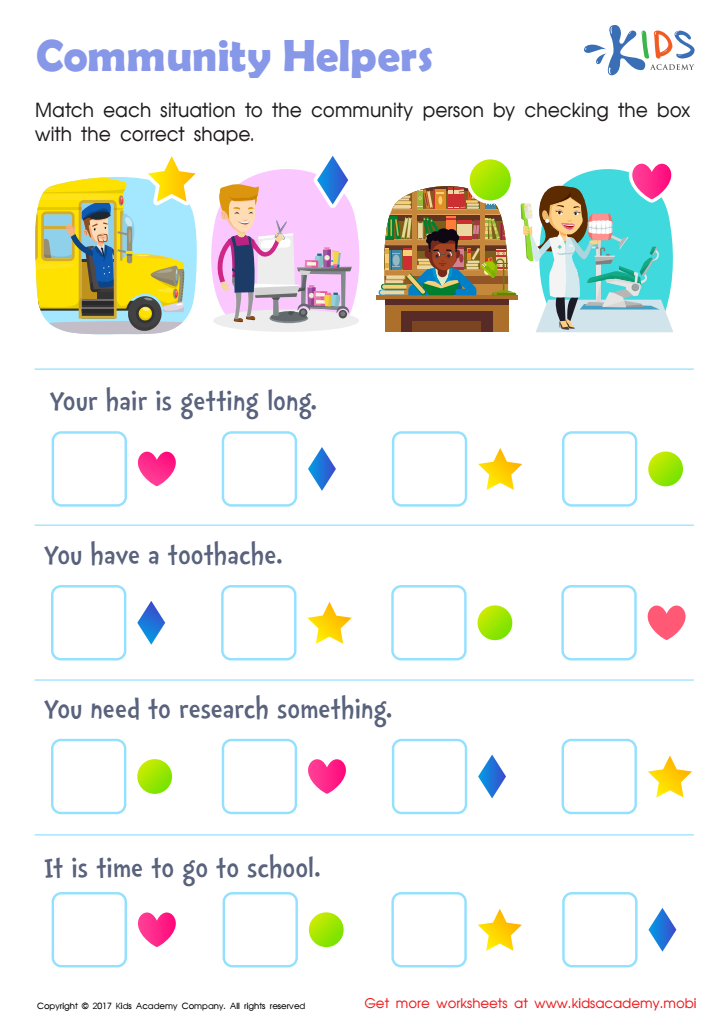








Cognitive development in early childhood, particularly for children aged 4-7, is crucial as it forms the foundation for future learning and critical thinking skills. Parents and teachers should care about nurturing this development because it significantly affects a child’s social, emotional, and academic future.
During this stage, children begin to engage in problem-solving, understand abstract concepts, and develop language skills. By focusing on cognitive development, caregivers can foster curiosity, creativity, and a love for learning. Engaging children in age-appropriate activities—like puzzles, reading, and open-ended questioning—stimulates their brains and enhances their ability to process information.
Moreover, understanding normal cognitive milestones helps parents and teachers identify any concerns or delays early. This promotes timely intervention, setting children on a path to success. Creating a supportive and stimulating environment contributes not only to cognitive growth but also to emotional resilience and social skills, enabling children to interact effectively with peers.
Ultimately, when parents and teachers recognize the significance of cognitive development, they empower children to thrive academically and socially, helping them navigate their world with confidence and competence. This investment significantly shapes their future success and overall well-being.