Spatial awareness Normal Community Worksheets for Ages 4-7
3 filtered results
-
From - To
Discover our "Spatial Awareness Community Worksheets" tailored for children aged 4-7! These engaging and educational resources are designed to help young learners develop essential spatial reasoning skills through fun community-themed activities. By interacting with maps, positioning exercises, and various puzzles, children enhance their understanding of different spatial concepts, while also improving their problem-solving abilities. Each worksheet aims to make learning enjoyable and effective, preparing your child for future academic success. Dive into our collection and watch as your little one gains confidence navigating their world, both inside and outside the classroom. Start exploring today!
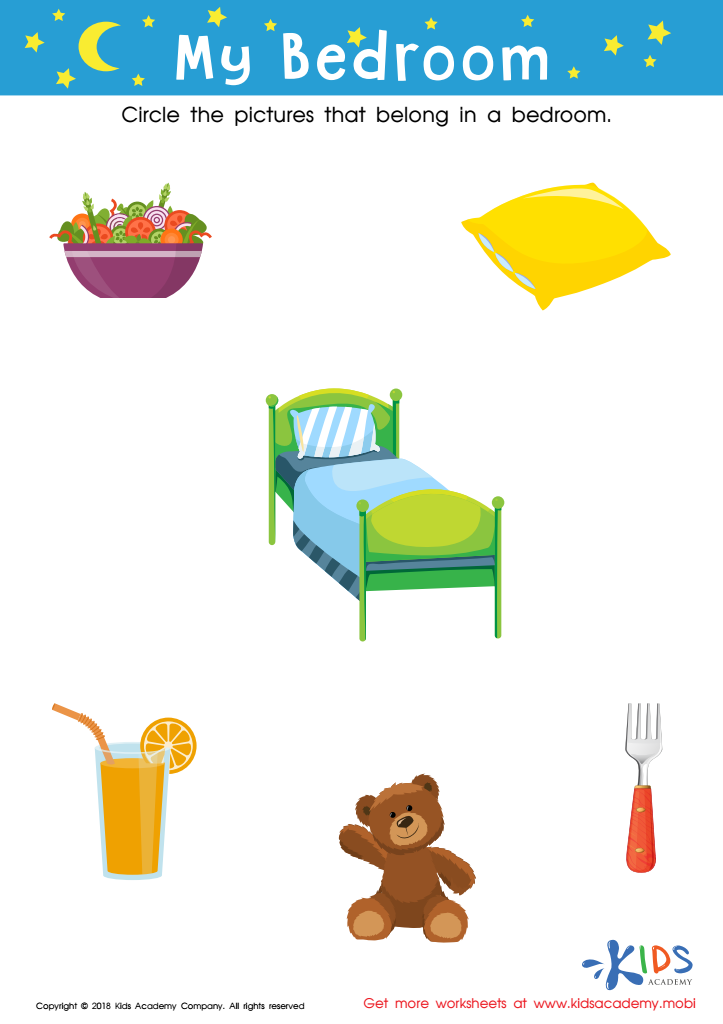
My Bedroom Worksheet
 Assign to My Students
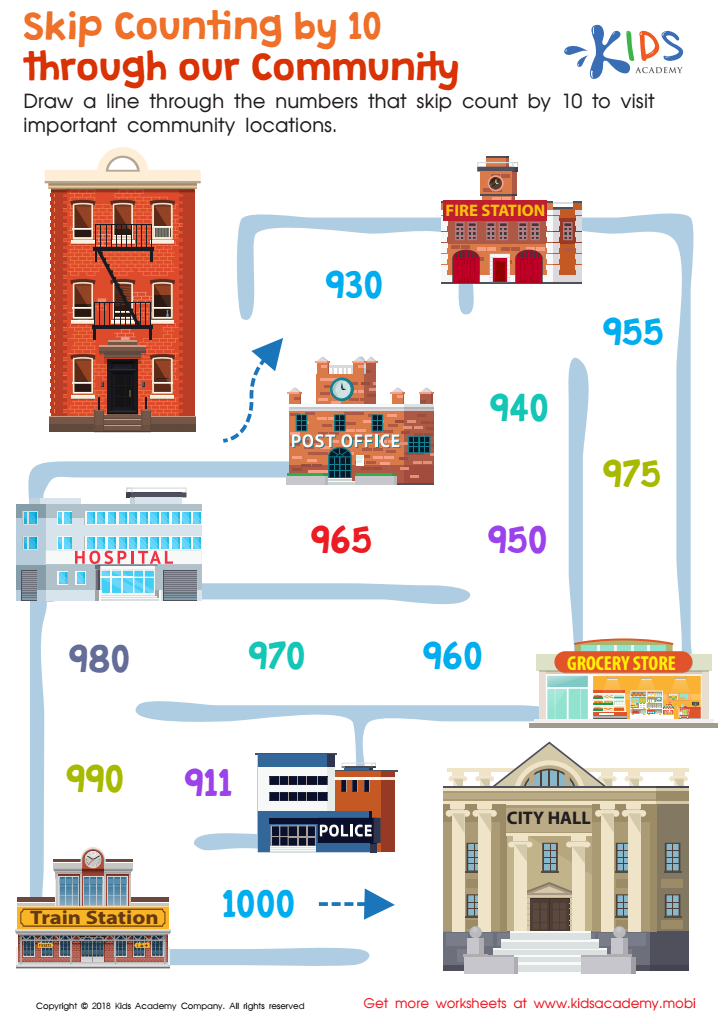
Skip Counting by 10 Through Our Community Worksheet
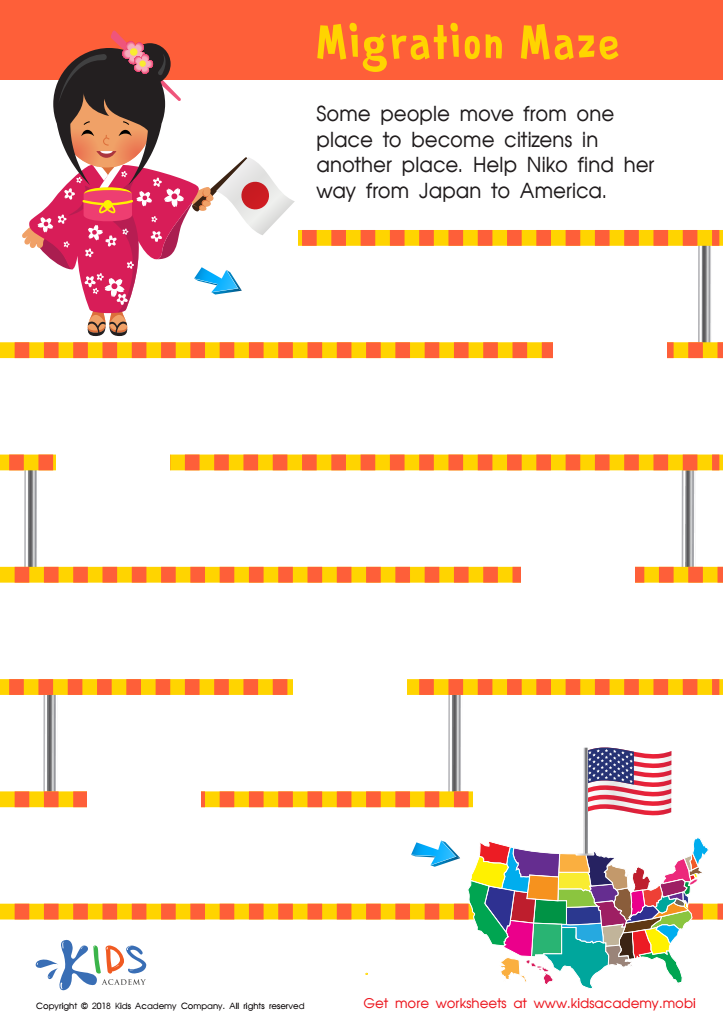
Migration Maze Worksheet








Caring about spatial awareness in children aged 4-7 is crucial for both parents and teachers because it forms the foundation for numerous cognitive and physical skills essential for daily life and academic success.
Spatial awareness involves understanding the relationships between objects in the environment and oneself. This skill is vital for navigation, problem-solving, and executing everyday tasks such as dressing, organizing space, and understanding maps. For young children, strong spatial skills translate to improved abilities in mathematics and language, as they help in comprehending geometry, reading, and writing, where positioning and orienting letters are fundamental.
Additionally, developing spatial awareness enhances physical coordination and motor skills. For instance, it allows children to safely move through spaces, participate in sports, and manipulate objects, which builds confidence and fosters an active lifestyle.
Incorporating spatial awareness activities in early education, such as puzzles, drawing, constructing blocks, and interactive games, nurtures these skills in an engaging manner. By placing emphasis on cultivating spatial awareness, parents and teachers not only support a child's immediate learning and physical development but also lay the groundwork for advanced thinking and problem-solving abilities, setting them up for long-term academic and personal success. Thus, focusing on spatial awareness contributes to nurturing well-rounded and capable individuals.








