Letter recognition Normal Tracing Words Worksheets for Ages 4-7
3 filtered results
-
From - To
Discover engaging "Letter Recognition Normal Tracing Words Worksheets" for children aged 4-7 at Kids Academy. These expertly designed worksheets help young learners identify and trace letters, boosting early literacy skills. Each worksheet features fun, age-appropriate activities that promote fine motor skills and letter recognition, paving the way for successful reading and writing. Perfect for both classroom and home use, our worksheets provide a solid foundation for your child’s educational journey. Encourage your little one’s progress as they trace, write, and learn with our interactive, user-friendly resources tailored to foster a love for learning.
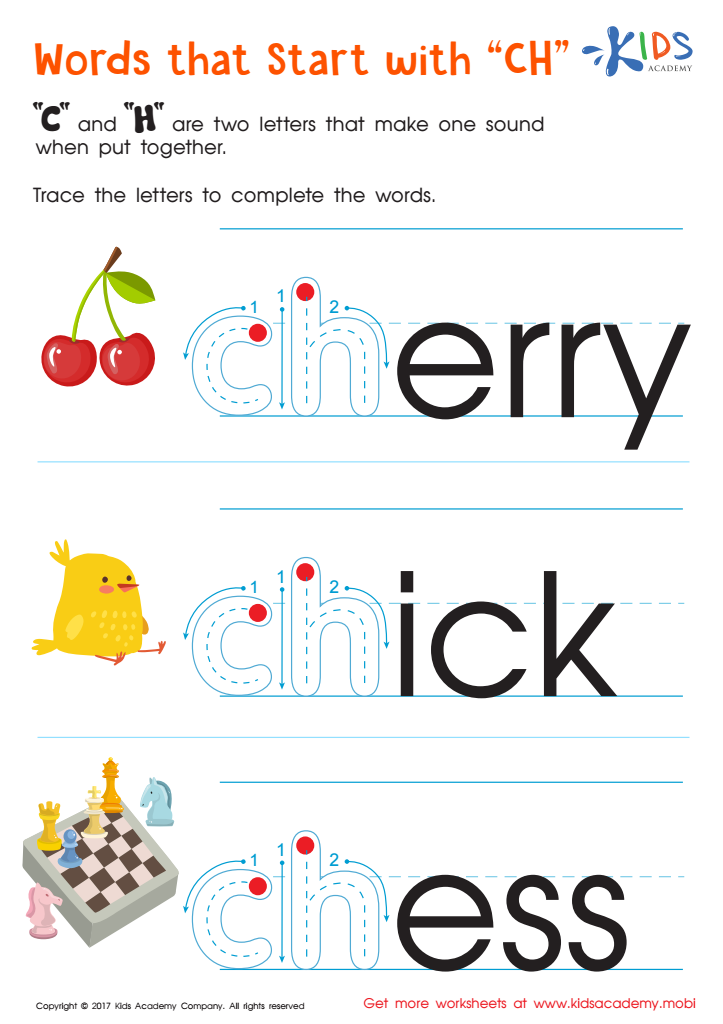
Words That Start with "ch" Spelling Worksheet
 Assign to My Students
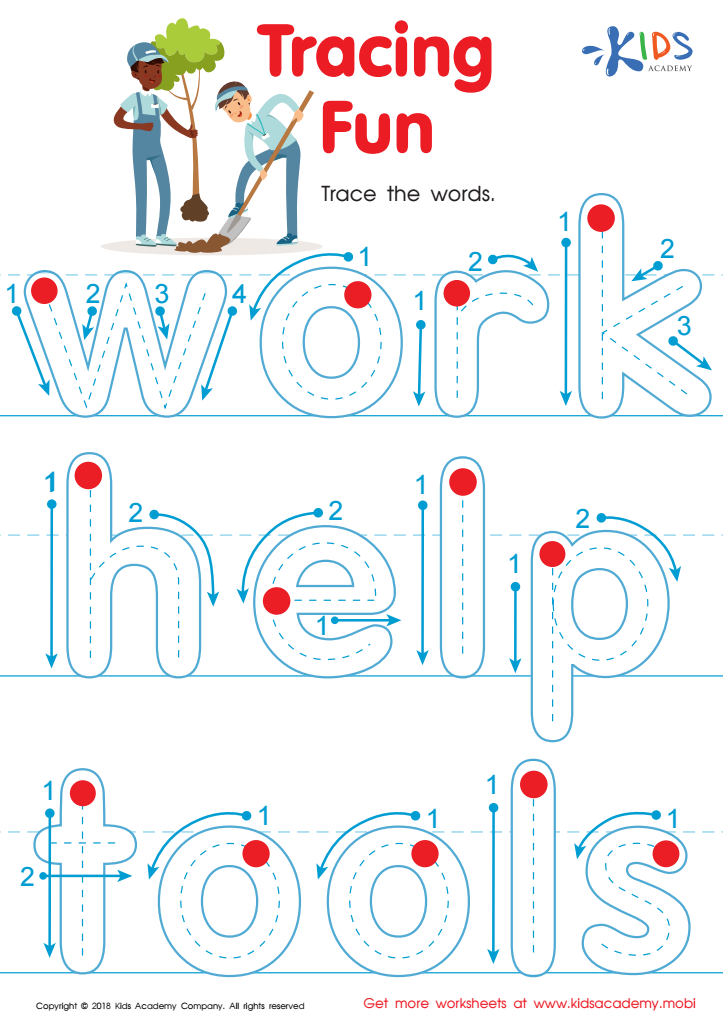
Tracing Fun Worksheet
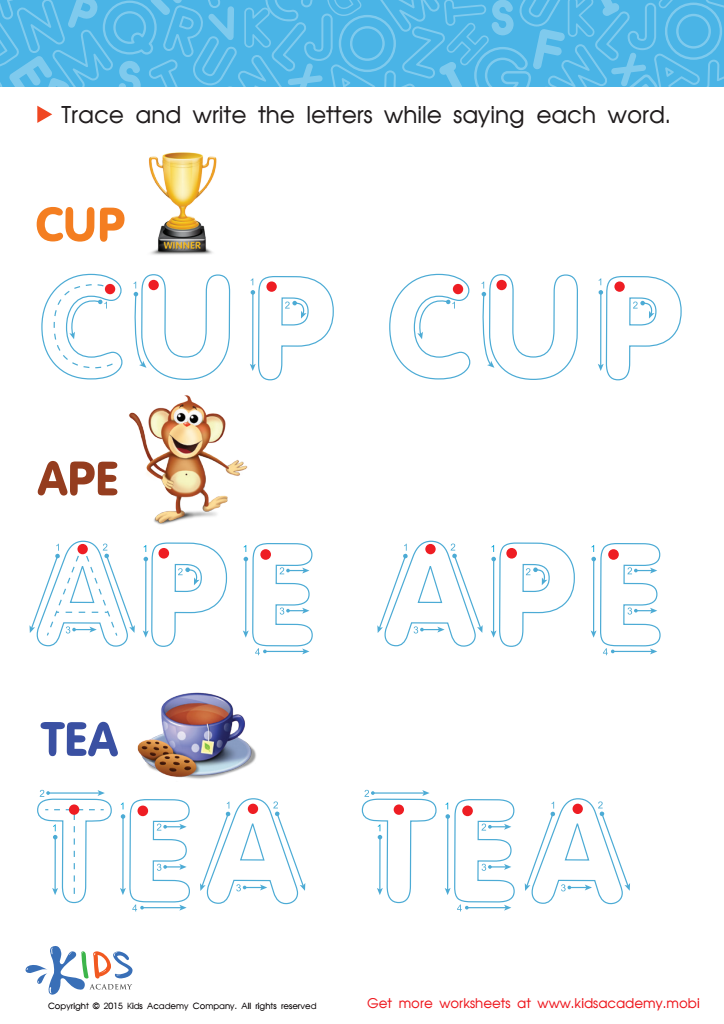
A Cup, an Ape and Tea Spelling Worksheet








Letter recognition and normal tracing are foundational aspects of early literacy, making them critically important for children ages 4-7. At this developmental stage, children are honing their fine motor skills and learning how to navigate the world of written language. Mastery of letter recognition enables children to identify individual letters and their associated sounds, paving the way for reading fluency. Without this fundamental skill, children may struggle to decode words and face delays in reading comprehension, hindrance their academic progress in all subjects, not just language arts.
Tracing letters, on the other hand, serves a dual purpose. It reinforces letter recognition by engaging visual and tactile senses, thereby solidifying memory retention. Additionally, tracing activities develop fine motor skills and hand-eye coordination, which are crucial for writing legibly and efficiently. By practicing tracing, children learn proper letter formation, spacing, and alignment, which leads to better handwriting skills in the future.
Teachers and parents have a significant role in facilitating these skills. Early, consistent practice in letter recognition and tracing helps build a strong educational foundation. It imbues confidence and reduces frustration in young learners, setting them on a path to academic success and lifelong learning. Therefore, focusing on these activities in the formative years is essential for cognitive and developmental growth.