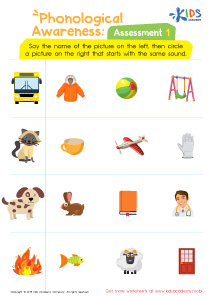
Phonics practice Normal Beginning Sounds Worksheets for 4-Year-Olds
5 filtered results
-
From - To
Introducing our engaging Phonics Practice Normal Beginning Sounds Worksheets for 4-Year-Olds! These expertly designed worksheets help young learners develop foundational reading skills by recognizing and matching letters with their initial sounds. Each sheet features fun, interactive activities that captivate your child's interest and encourage effective learning. Ideal for use at home or in the classroom, these resources support preschoolers in mastering phonics through playful tasks. Download now to support your child’s literacy journey and watch them grow into confident and enthusiastic readers! Explore our collection for a variety of downloadable worksheets perfect for budding linguists.
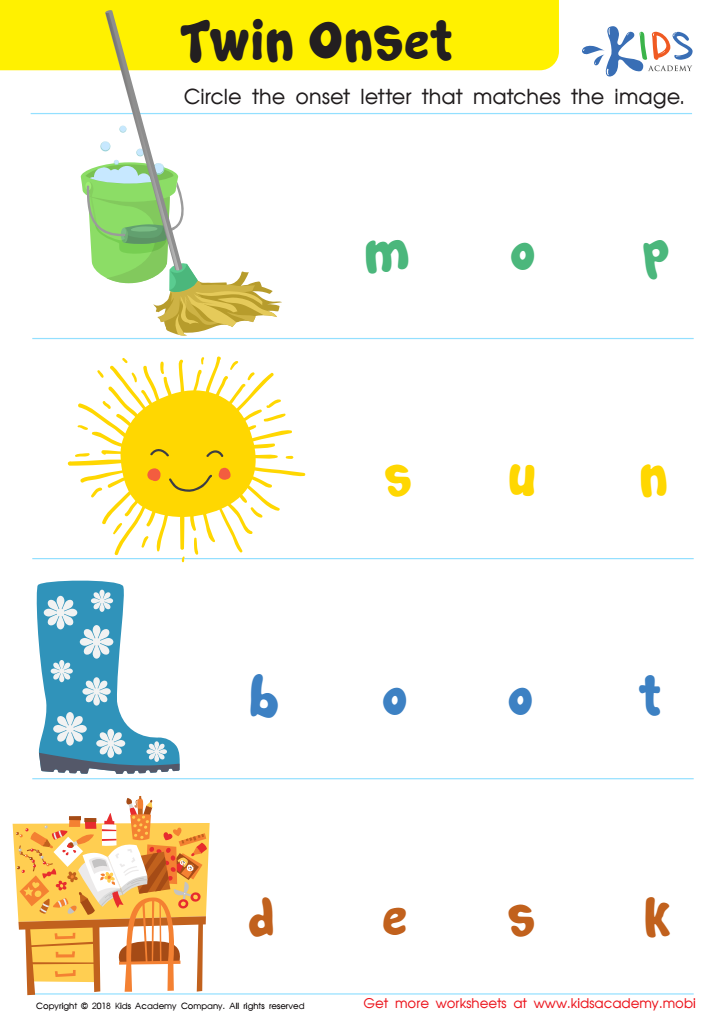
Twin Onset Worksheet
 Assign to My Students
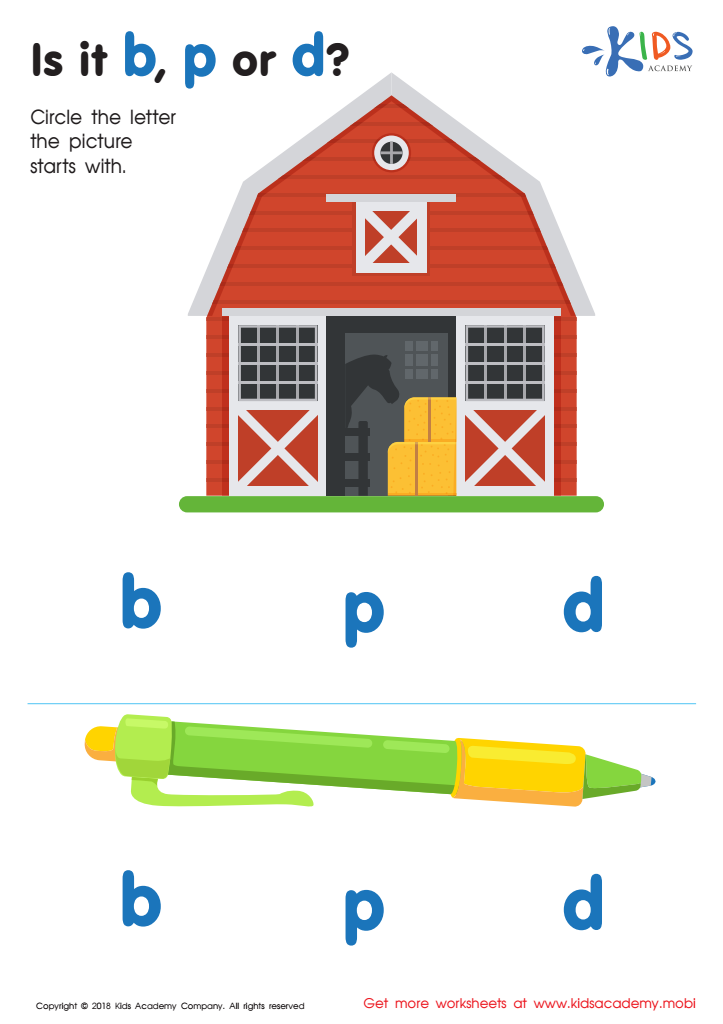
Is it b, p or d? Worksheet
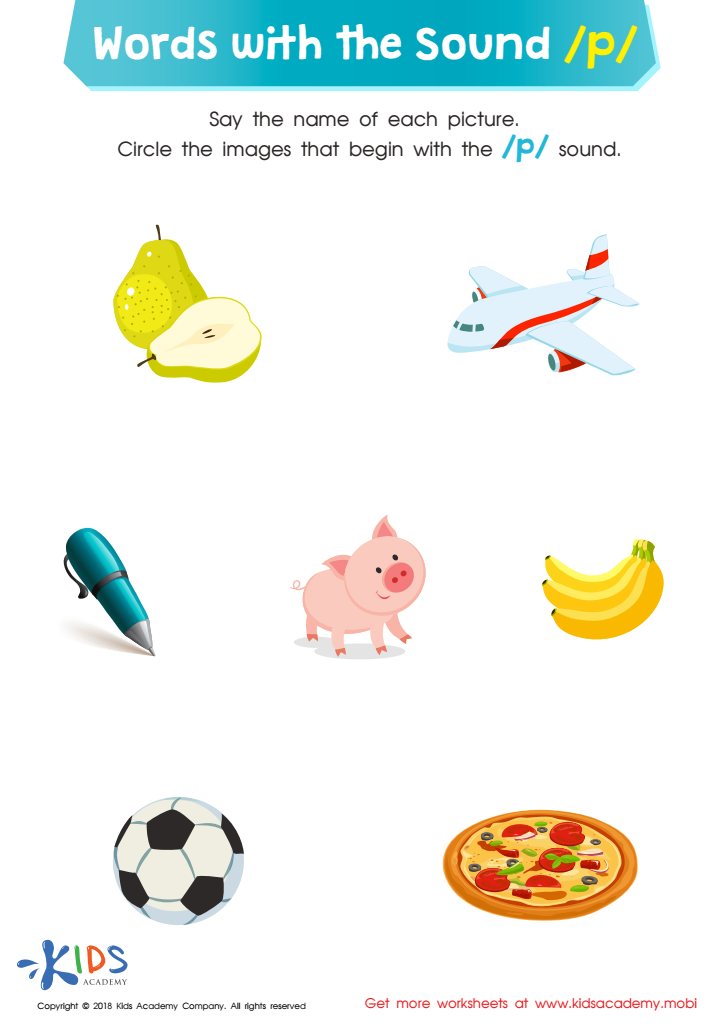
Words with sound p Reading Worksheet
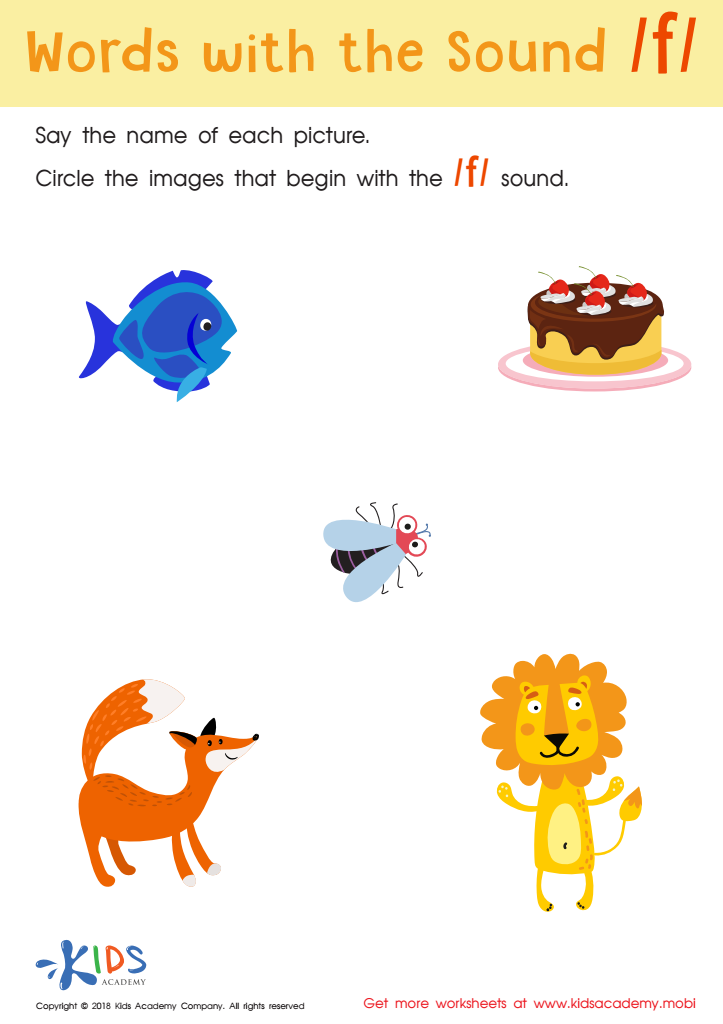
Words with sound f Reading Worksheet
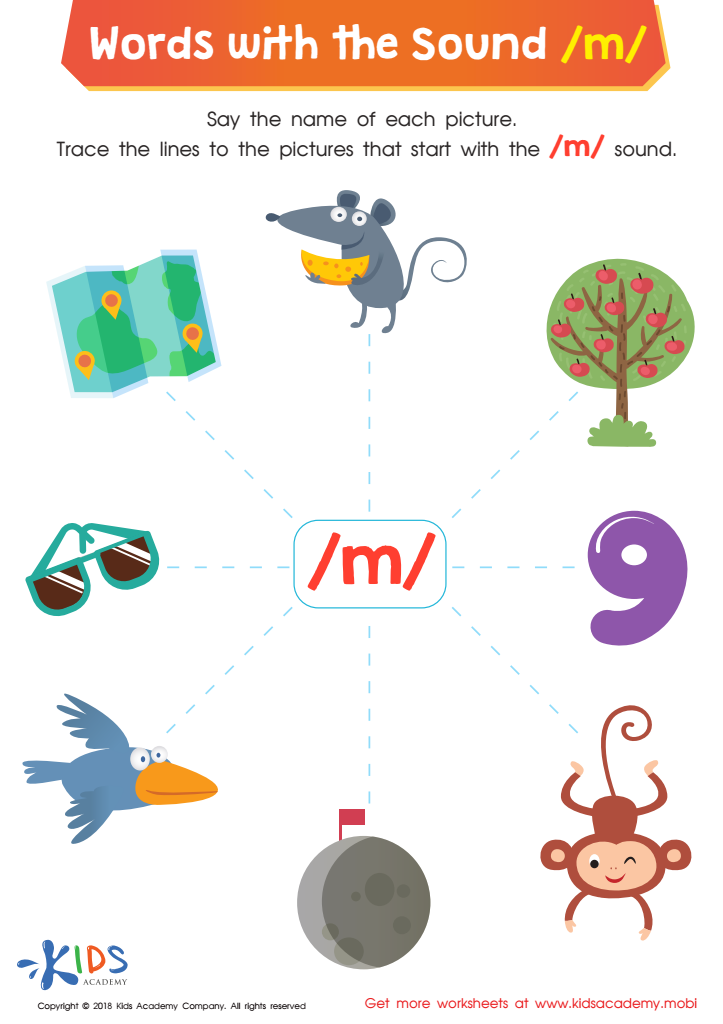
Words with Sound M Reading Worksheet








Phonics practice, particularly focusing on normal beginning sounds, is fundamental for 4-year-olds as it lays the groundwork for successful reading and writing skills. At this formative age, children's brains are rapidly developing, making it an ideal time to introduce phonemic awareness—the understanding that words are made up of discrete sounds. When young children can recognize and verbalize these beginning sounds, they start to decipher how letters and sounds work together.
Parents and teachers should care about phonics practice because it's a cornerstone of literacy. Developing strong phonemic awareness can significantly enhance a child's ability to learn new words, spell them correctly, and ultimately, improve their reading fluency. A methodical approach to learning sounds fosters better comprehension skills, aiding them as they progress academically. It reduces the risk of reading difficulties later on by providing a solid foundation.
Additionally, phonics practice supports other cognitive skills such as memory, listening, and pronunciation. Engaging activities like singing songs, playing letter games, and reading aloud can make phonics learning fun and effective. By investing time in these practices, parents and teachers set children on a path of confident, lifelong learning. Practical support at this early stage contributes positively to a child's academic and personal growth.