Visual discrimination Normal Alphabet Worksheets for 4-Year-Olds
4 filtered results
-
From - To
Discover our engaging Visual Discrimination Normal Alphabet Worksheets designed specifically for 4-year-olds! These worksheets focus on enhancing visual discrimination skills, essential for early literacy development. Through fun, interactive activities, children will practice identifying letters, distinguishing between similar shapes, and matching uppercase and lowercase letters. Our Low-prep, printable resources are perfect for home or preschool use, helping little learners improve their observational skills while making alphabet recognition enjoyable. Plus, these worksheets align with early childhood education standards, ensuring that your child receives a high-quality learning experience. Start your child's journey to reading success with our captivating visual discrimination activities today!
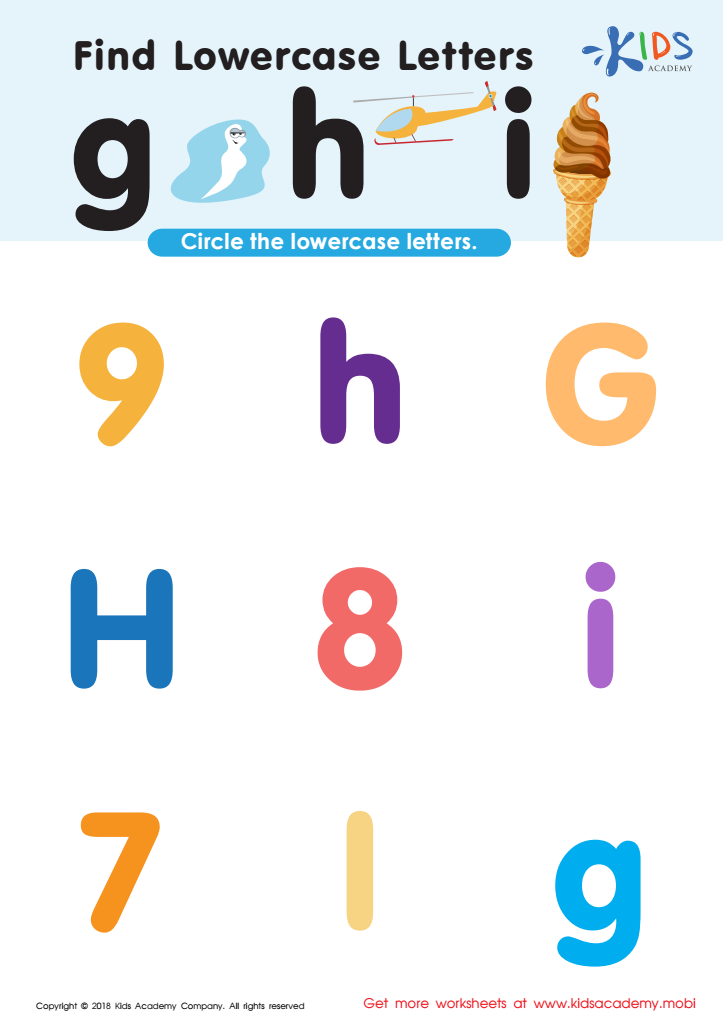
Find Lowercase Letters g h i Worksheet
 Assign to My Students
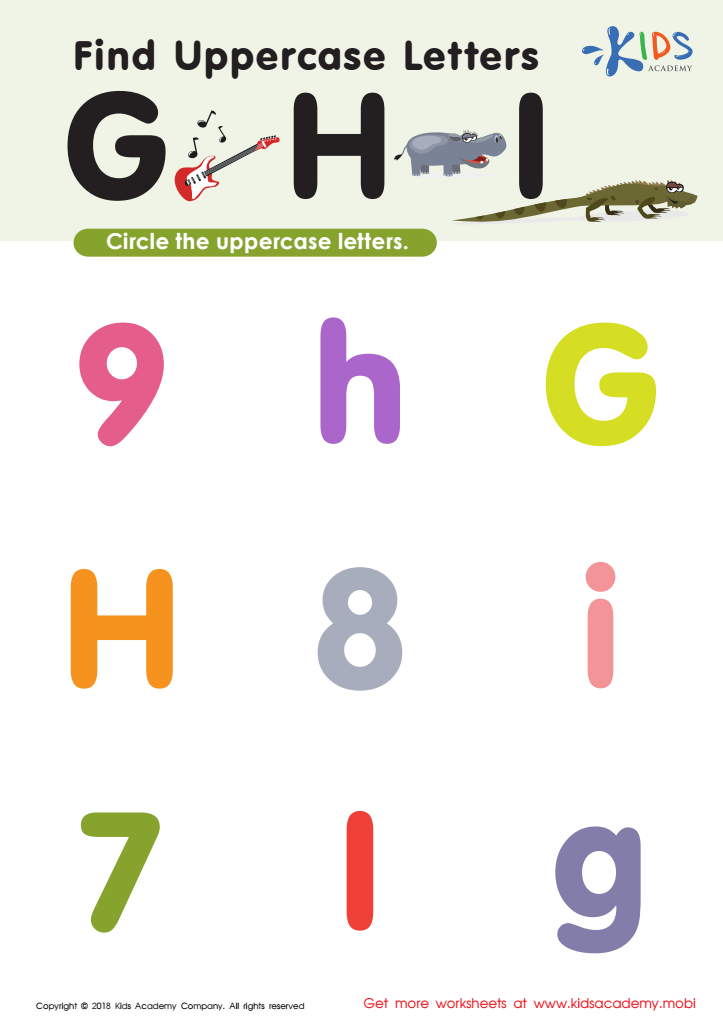
Find Uppercase Letters G, H, and I Worksheet
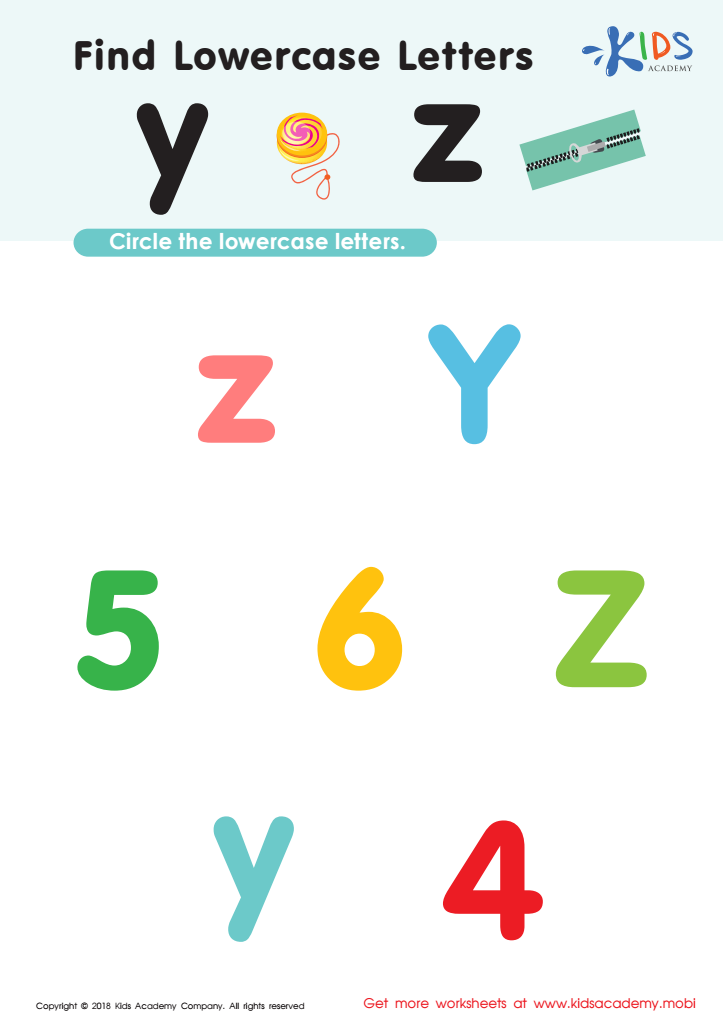
Find Lowercase Letters y z Worksheet
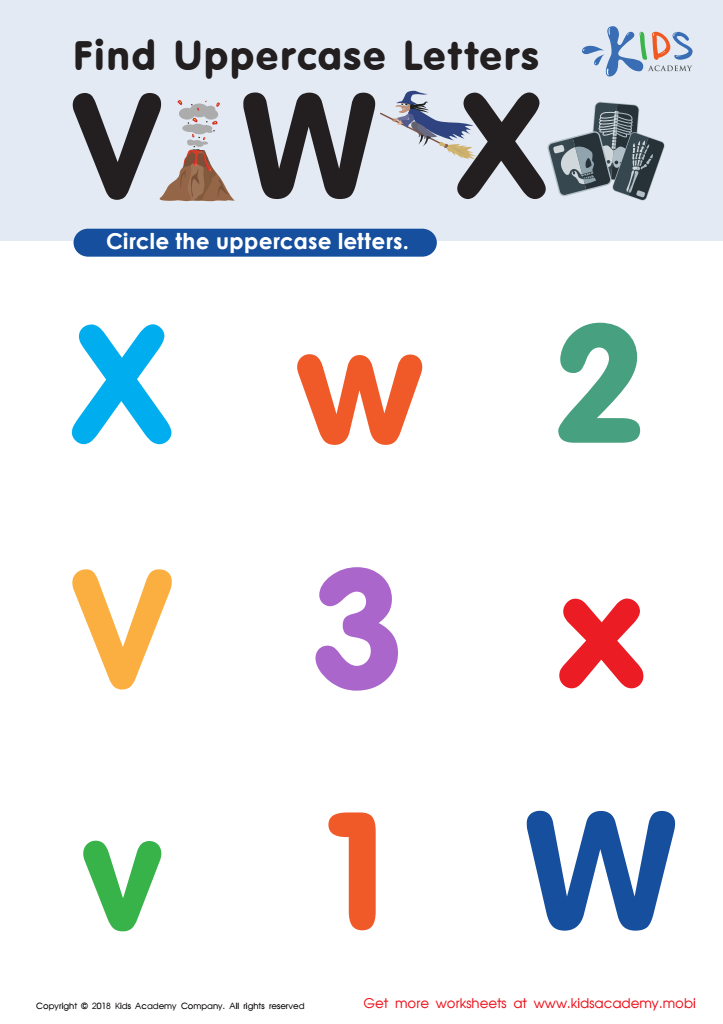
Find Uppercase Letters V, W, X Worksheet






Visual discrimination is the ability to differentiate between similar images or letters, and it plays a crucial role in a child's early literacy development, especially for 4-year-olds. Parents and teachers should care about this skill as it lays the groundwork for recognizing letters, words, and ultimately reading comprehension.
Early exposure to visual discrimination exercises helps children distinguish between different shapes and symbols. This skill will support them as they encounter letters of the alphabet, as kids must grasp the differences between visually similar letters like "b" and "d," or "p" and "q." Mastering these distinctions is vital for preventing early reading difficulties and fostering a positive learning experience.
Furthermore, strong visual discrimination skills contribute to overall cognitive development, enhancing memory, spatial awareness, and problem-solving. Engaging activities, like letters in a sensory bin or matching games, can make learning fun and impactful.
Ultimately, by prioritizing visual discrimination for young learners, parents and teachers are investing in stronger foundational skills that can lead to academic success. This investment not only sparks a love for reading but also encourages children to explore and engage with printed materials, setting them on a path toward lifelong learning and literacy.







