Visual discrimination skills Normal Alphabet Worksheets for 4-Year-Olds
5 filtered results
-
From - To
Enhance your child's ability to identify letters with our Visual Discrimination Skills Normal Alphabet Worksheets for 4-Year-Olds. Specifically designed for young learners, these engaging worksheets help children recognize differences in letter shapes and improve their reading readiness. By completing a variety of fun, interactive exercises, kids boost their visual memory, attention to detail, and foundational literacy skills. Each worksheet combines play with learning, ensuring both enjoyment and educational value. Prep your little one for future academic success by downloading these expertly crafted worksheets today, available at Kids Academy for a colorful and productive start to alphabet mastery.
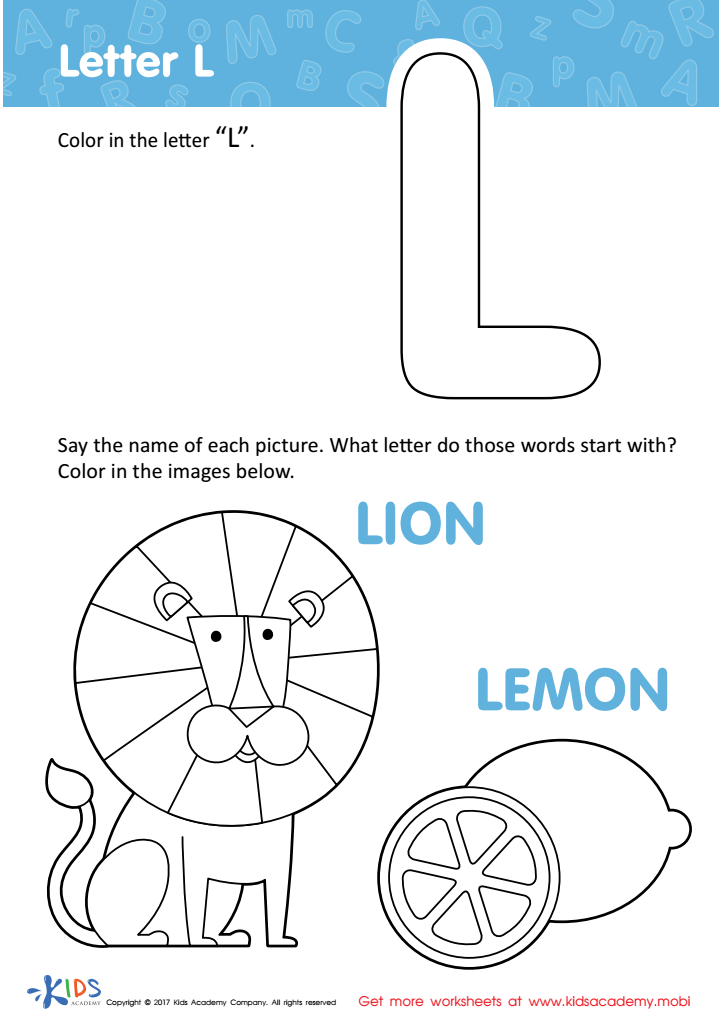
Letter L Coloring Sheet
 Assign to My Students

Find Uppercase Letters A, B, and C Worksheet
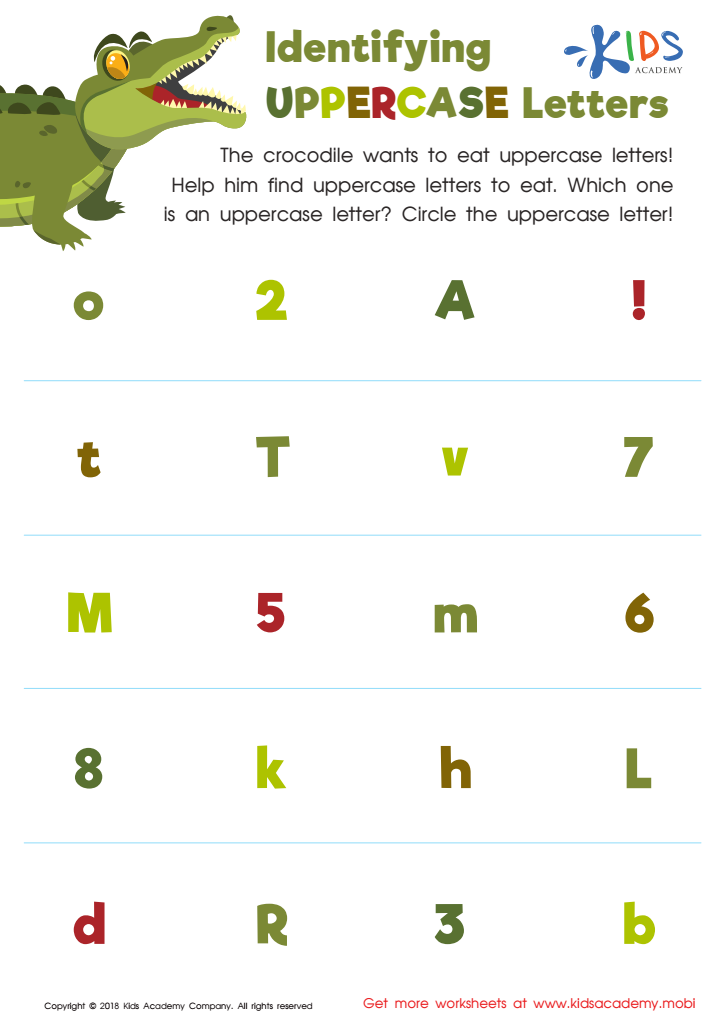
Identifying Uppercase Letters Worksheet
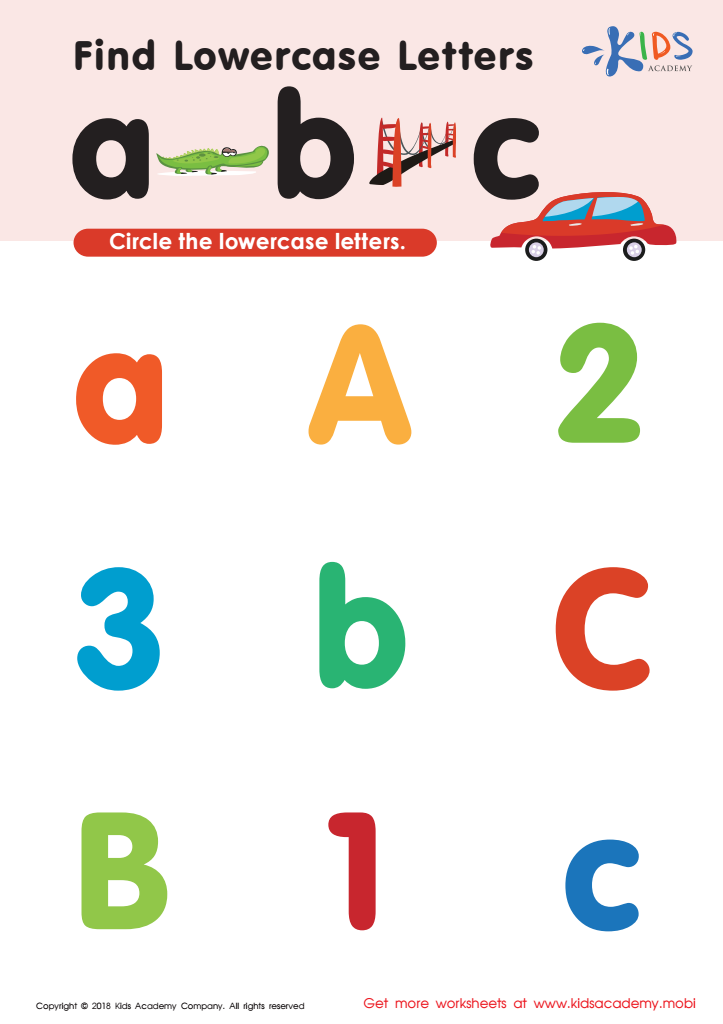
Find lowercase letters a b c Worksheet
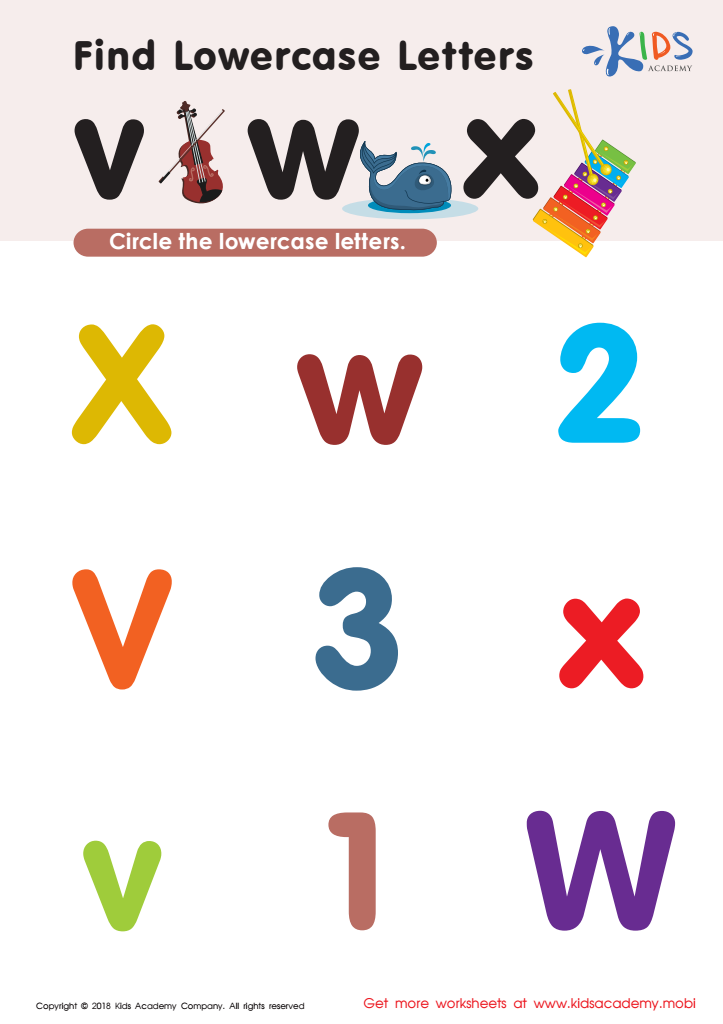
Find Lowercase Letters v w x Worksheet








Visual discrimination is the ability to recognize differences and similarities in shapes, patterns, and symbols, including letters of the alphabet. It's a foundational skill for early literacy and critical thinking. For 4-year-olds, developing visual discrimination skills with the normal alphabet is incredibly important, as it sets the stage for reading and writing success.
When children can distinguish between letters like 'b' and 'd' or 'p' and 'q,' they're better prepared to decode words, which is essential for reading fluency. This skill helps them avoid letter reversals that can lead to confusion and delays in reading development. Additionally, strong visual discrimination supports early writing skills by enabling children to accurately copy letters and words, fostering better communication and academic performance.
Moreover, visual discrimination enhances cognitive abilities such as attention to detail, memory, and hand-eye coordination. These abilities are not only crucial for academic areas like math and science but also for everyday tasks and problem-solving skills.
As parents or teachers, focusing on activities that strengthen visual discrimination – like matching games, puzzles, and letter sorting – can make a significant difference in a child's educational journey. Early attention to these skills facilitates a smoother transition into more advanced literacy tasks, contributing to long-term academic success and confidence.







