
Handwriting Skills Normal Letter Recognition Worksheets for 4-Year-Olds
5 filtered results
Difficulty Level
Grade
Age
-
From - To
Subject
Activity
Standards
Enhance your 4-year-old's foundational learning with our engaging Handwriting Skills Normal Letter Recognition Worksheets. Designed specifically for young learners, these worksheets combine fun activities with essential skills practice. Children will explore letter shapes, improve fine motor skills, and boost alphabet recognition through tracing and writing letters in various engaging formats. Our worksheets encourage creativity while fostering a love for writing and reading. Perfect for homeschooling or classroom settings, these resources provide a structured approach to learning, ensuring children develop confidence as they master their handwriting skills. Start your child's educational journey on the right path with our interactive and effective worksheets today!
Favorites
With answer key
Interactive
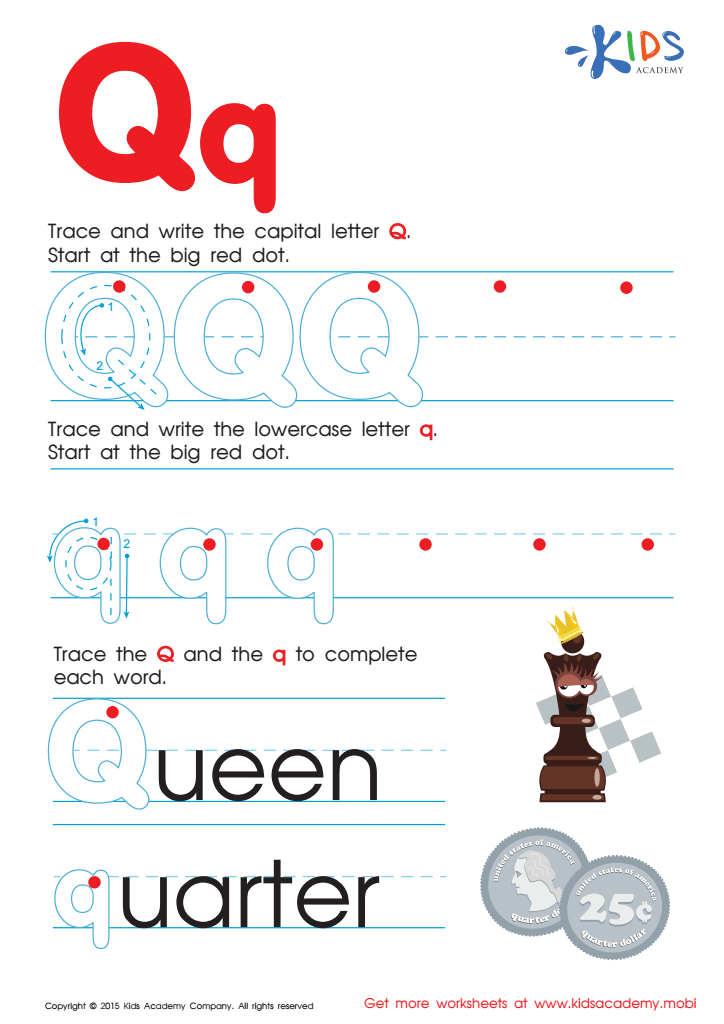
Letter Q Tracing Page
Learn the letter "Q"! Trace and write it a few times in upper and lowercase. Then help the Queen by writing her initial letter. Finally, write "quarters" and practice with more alphabet worksheets.
 Assign to My Students
Letter Q Tracing Page
Worksheet
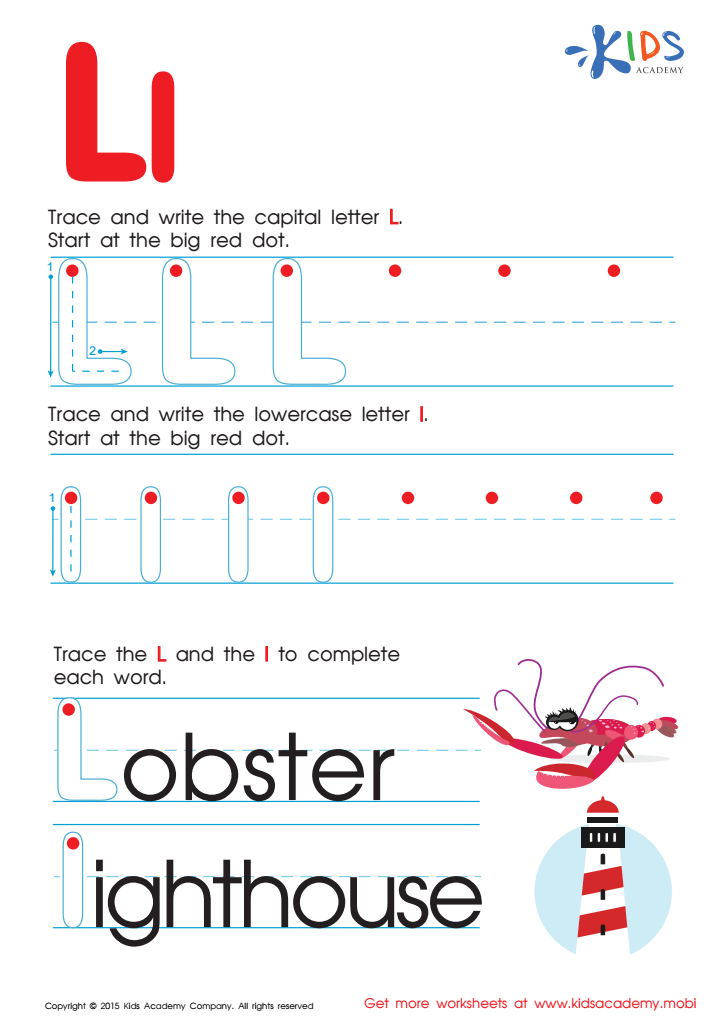
Letter L Tracing Page
Trace uppercase and lowercase letters to practice writing. Pay attention to the lowercase letters, like the "L", that are not as tall as an uppercase "I" or as short as a lowercase "i". Words like "lobster" and "lighthouse" are waiting to be completed. Enjoy!
Letter L Tracing Page
Worksheet
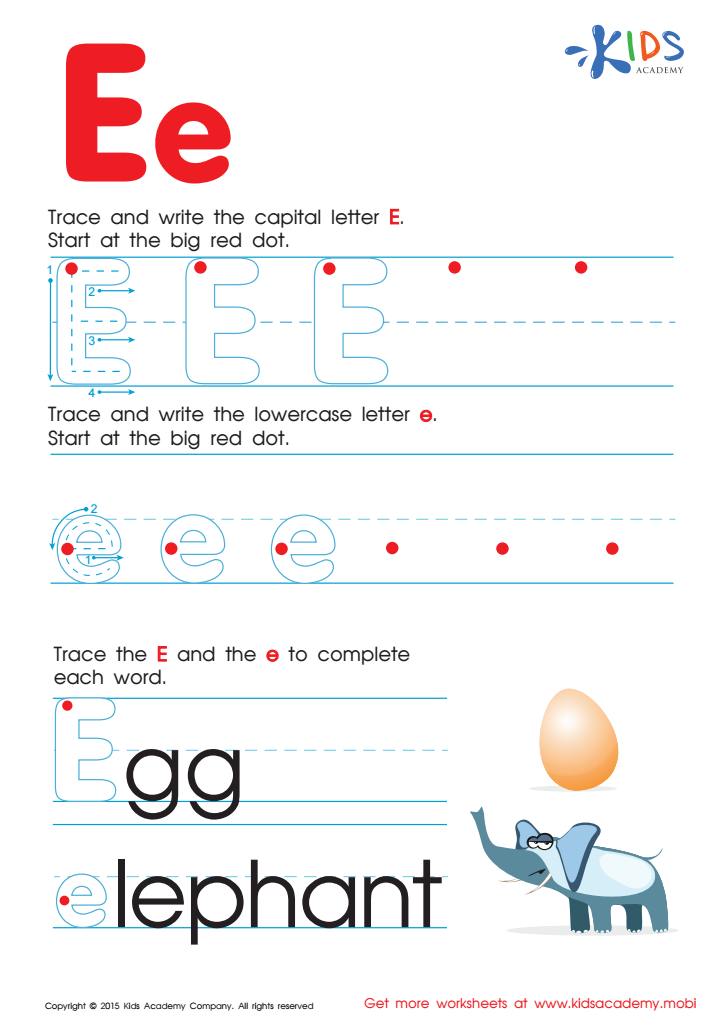
Letter E Tracing Page
Trace and write the uppercase and lowercase "E" starting at the big red dot. Complete words to perfect letter writing. Egg and Elephant must be written carefully. More alphabet worksheets for kindergarten are available for download to spend more time with your children learning.
Letter E Tracing Page
Worksheet
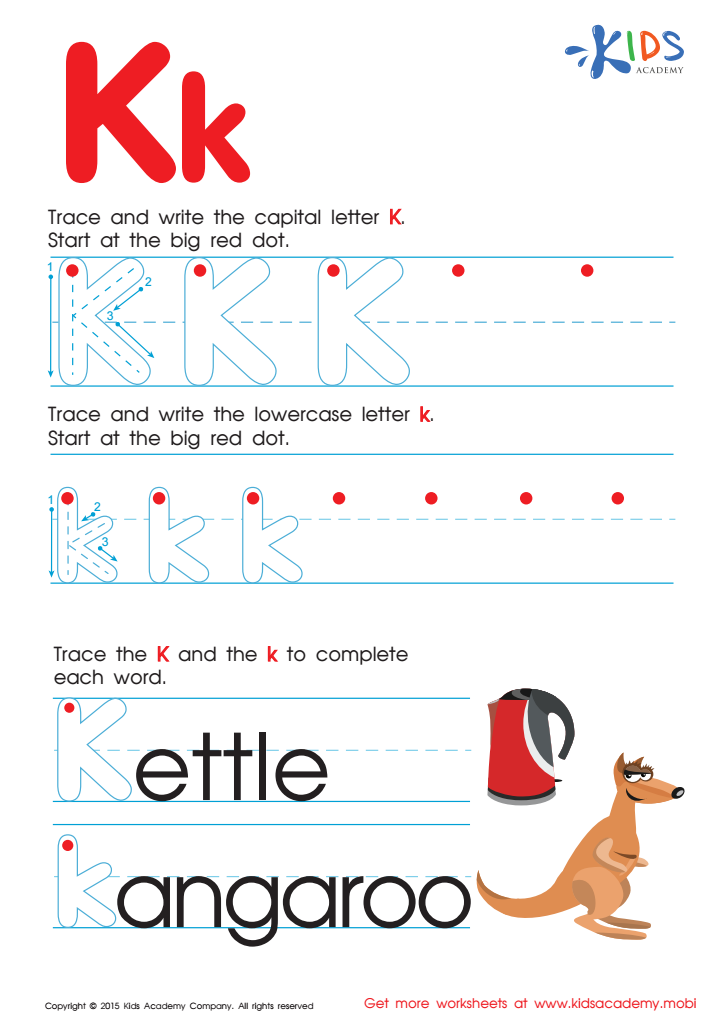
Letter K Tracing Page
Trace and write the letter K; start at the big red dot. Use it to complete words like "Kettle" and "Kangaroo". Visit Kids Academy for more free alphabet worksheets for kindergarten.
Letter K Tracing Page
Worksheet
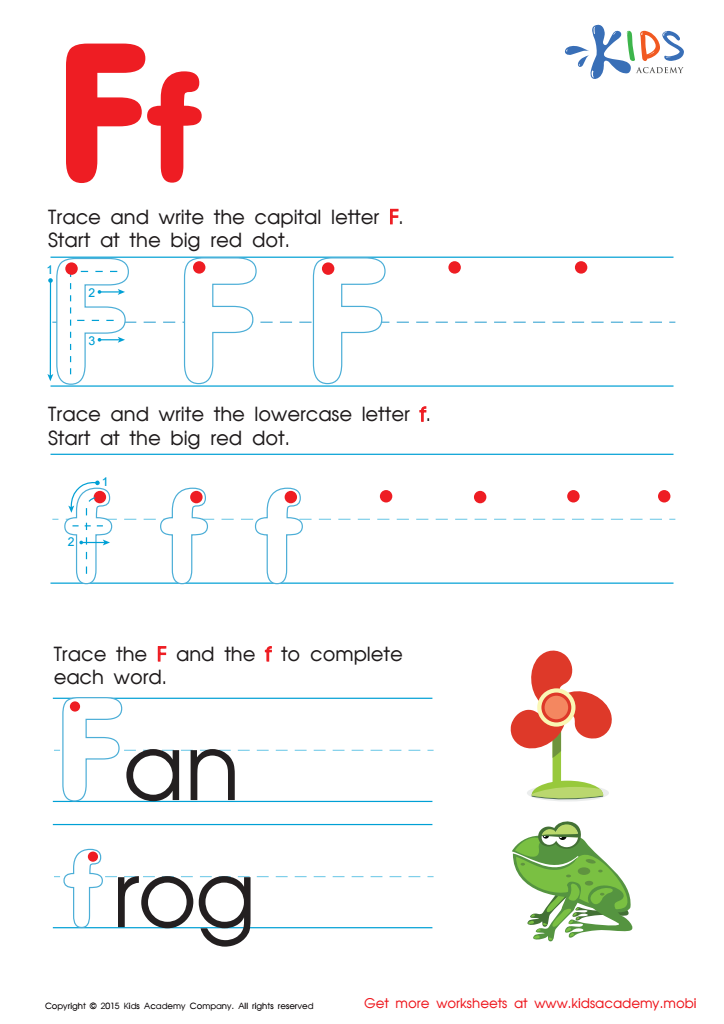
Letter F Tracing Page
Trace "F" with your pencil! Start at the red dot and draw lines — it's fun! Check it out — it looks great! Keep practicing to make it even better. Then, try completing words. Help out the broken fan and funny frog! Get free alphabet worksheets and activities for your kids. Come see our new tracing pages!
Letter F Tracing Page
Worksheet
Join Kids Academy for Free
Who is primarily going to use this learning content?








Handwriting skills and letter recognition are foundational elements of early literacy development crucial for 4-year-olds. At this stage, children are typically exploring their environment, soaking up language exposure, and building fine motor skills. Developing good handwriting habits and understanding letter recognition supports their overall cognitive growth and prepares them for more complex literacy concepts in the future.
Effective handwriting enables children to express their thoughts and ideas more clearly, promoting creativity and boosting confidence. It also aids in the development of fine motor skills, which are essential for various daily activities beyond writing. Mastering letter recognition lays the groundwork for reading and spelling, empowering children to decode words and comprehend texts.
Moreover, early attention to handwriting and letter recognition helps identify any potential challenges a child might face in writing or language learning. By fostering these skills early on, parents and teachers can create a solid educational foundation that promotes a lifelong love for learning and communication. Ultimately, caring about handwriting and letter recognition is an investment in a child's future academic success and personal self-expression, making it a critical focus for educators and families alike.








