Vocabulary enhancement Normal Long And Short Vowel Worksheets for 4-Year-Olds
3 filtered results
Difficulty Level
Grade
Age
-
From - To
Subject
Activity
Standards
Enhance your child's vocabulary with our engaging Normal Long and Short Vowel Worksheets, specially designed for 4-year-olds! These interactive worksheets help young learners differentiate between long and short vowel sounds, boosting their phonics skills and word recognition. Featuring colorful illustrations and fun activities, your little ones will enjoy learning while developing essential literacy skills. Perfect for preschool or home learning, these worksheets align with early childhood education standards, making them a valuable resource for parents and educators alike. Equip your child with the foundational skills necessary for reading and language use while nurturing a love for learning! Dive into vocabulary enrichment today!
Favorites
With answer key
Interactive
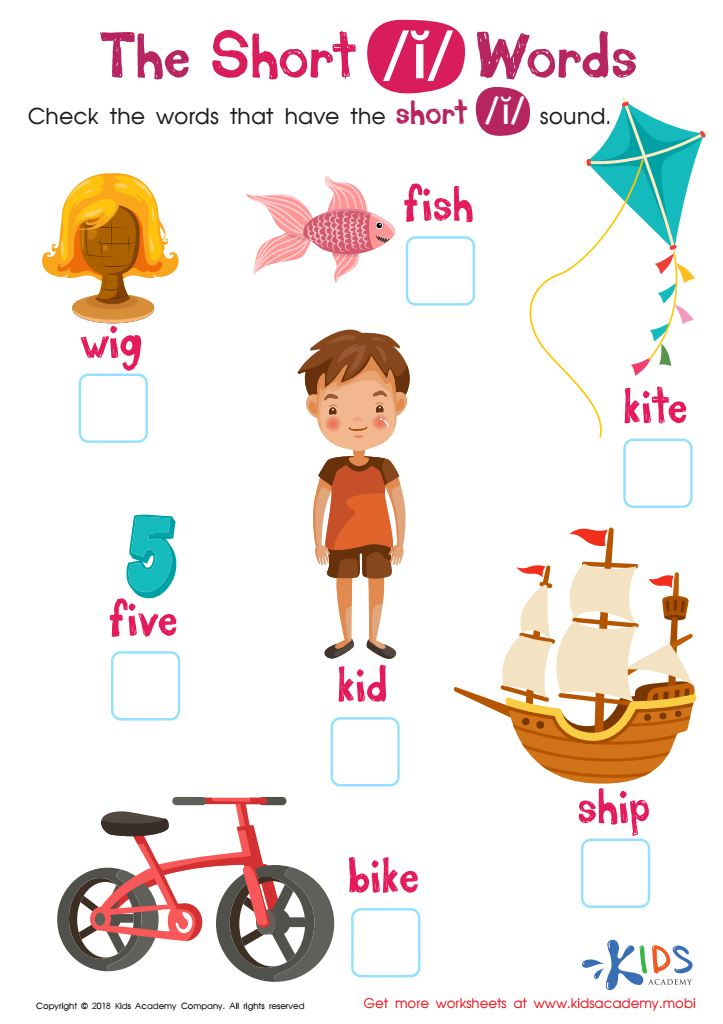
The Short I Words Reading Worksheet
Teach your kindergartner phonics with this printout worksheet! It introduces the short «i» sound and helps them differentiate and articulate sounds and letters of the alphabet. With practice, your child will soon find it easy to classify sounds into long and short vowels.
 Assign to My Students
The Short I Words Reading Worksheet
Worksheet
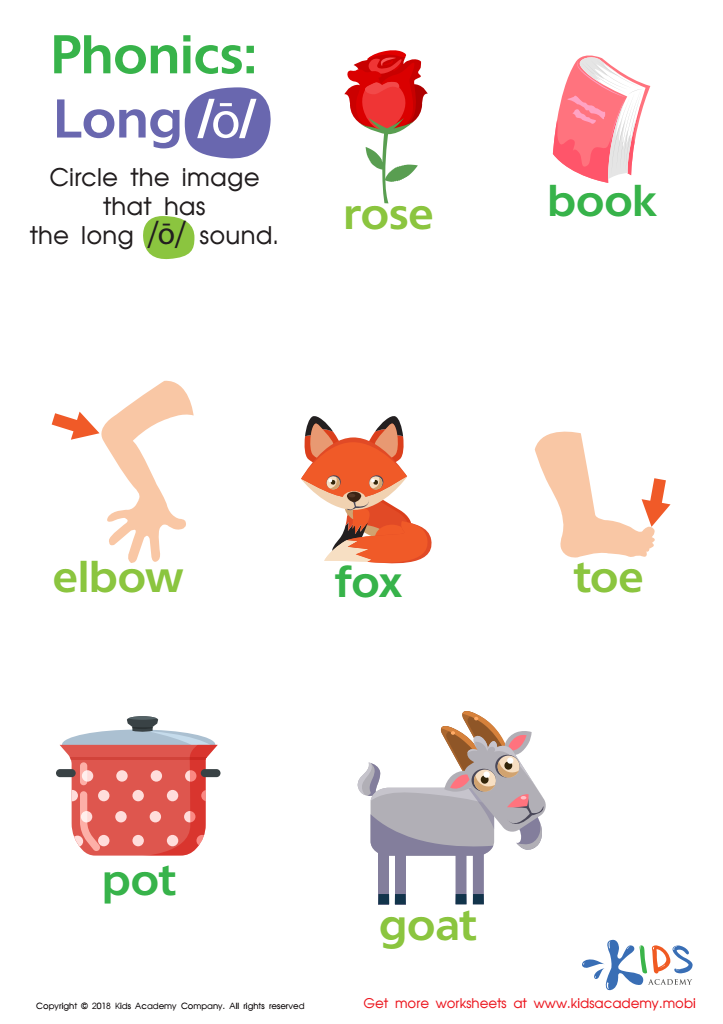
Phonics Long O Reading Worksheet
Are you ready to help your child learn the phonics long «o» sound? This worksheet is designed to aid them in getting familiar with the sound. After completing the exercise, your child should be able to differentiate letters, and recognize words with the long «o» sound. Encourage them to circle the images that have the sound.
Phonics Long O Reading Worksheet
Worksheet
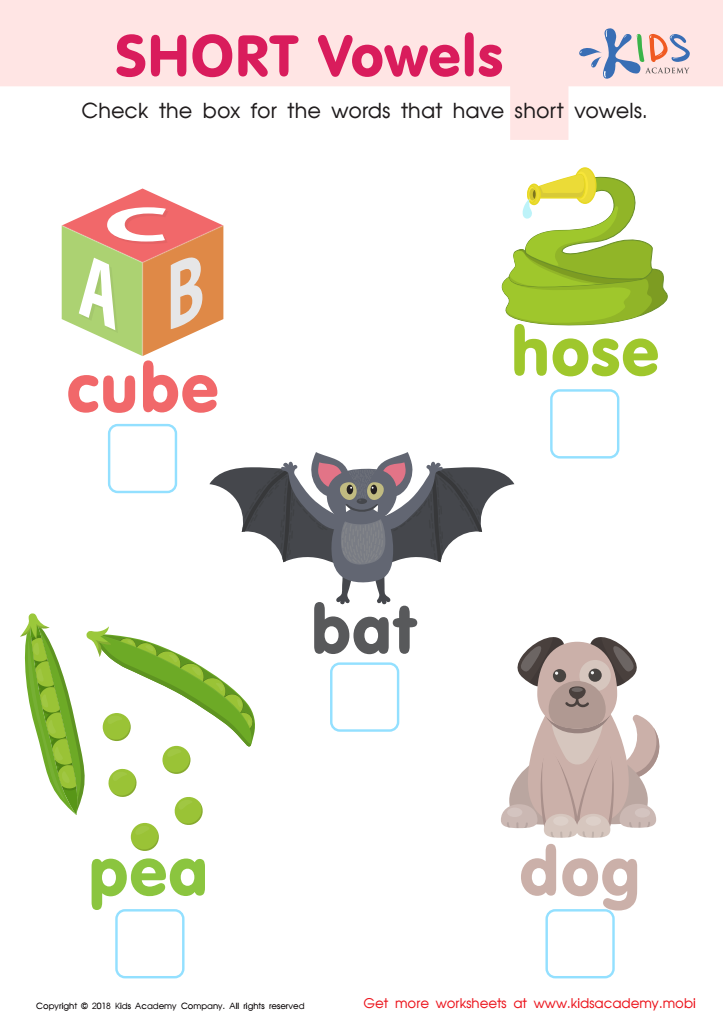
short vowels Worksheet
Say "dog" and notice how long it takes to pronounce the vowel. Is it short or long? Compare it to "pea" and use this worksheet to quickly assess your child's mastery. Have them name each picture and listen for the vowel sounds. Only check the boxes for words with short vowel sounds.
short vowels Worksheet
Worksheet
Join Kids Academy for Free
Who is primarily going to use this learning content?




Vocabulary enhancement focusing on normal, long, and short vowels is vital for 4-year-olds because it lays the foundation for effective communication and lifelong learning. At this age, children are like sponges, eagerly absorbing language through play, stories, and social interactions. A strong vocabulary helps them express thoughts, needs, and emotions clearly, fostering confidence.
Understanding vowel sounds is crucial for their phonemic awareness, which correlates to reading readiness. Children who can differentiate between long and short vowel sounds are better equipped to decode words when they begin to read. Early vocabulary skills also support language development, essential for academic success. When teachers and parents engage children with rich vocabulary and phonics activities, they create a supportive environment for language acquisition.
Moreover, enhancing vocabulary promotes cognitive development, as children learn to categorize, compare, and connect words to their experiences. When parents and teachers prioritize vocabulary enhancement, they equip children with communication tools that aid social interaction and comprehension. As children articulate their thoughts and comprehend instructions better, they also experience improved relationships and social skills. Investing in vocabulary growth at this young age fosters not only literacy but also a love for learning, an essential trait for future educational endeavors.