
Phonics development Normal Phonics Worksheets for 4-Year-Olds
3 filtered results
Difficulty Level
Grade
Age
-
From - To
Subject
Activity
Standards
Boost your 4-year-old's phonics development with our engaging and effective Normal Phonics Worksheets. Designed specifically for this age group, these worksheets offer a playful and interactive approach to learning essential phonetic skills. Children will explore letter sounds, blending, and letter recognition through a variety of fun activities that stimulate their curiosity. Our carefully crafted exercises help build a strong foundation in reading, making learning enjoyable and effective. Perfect for home or classroom use, these printable worksheets are simple to access and easy to implement. Start your child on the path to literacy today with our entertaining phonics resources!
Favorites
With answer key
Interactive
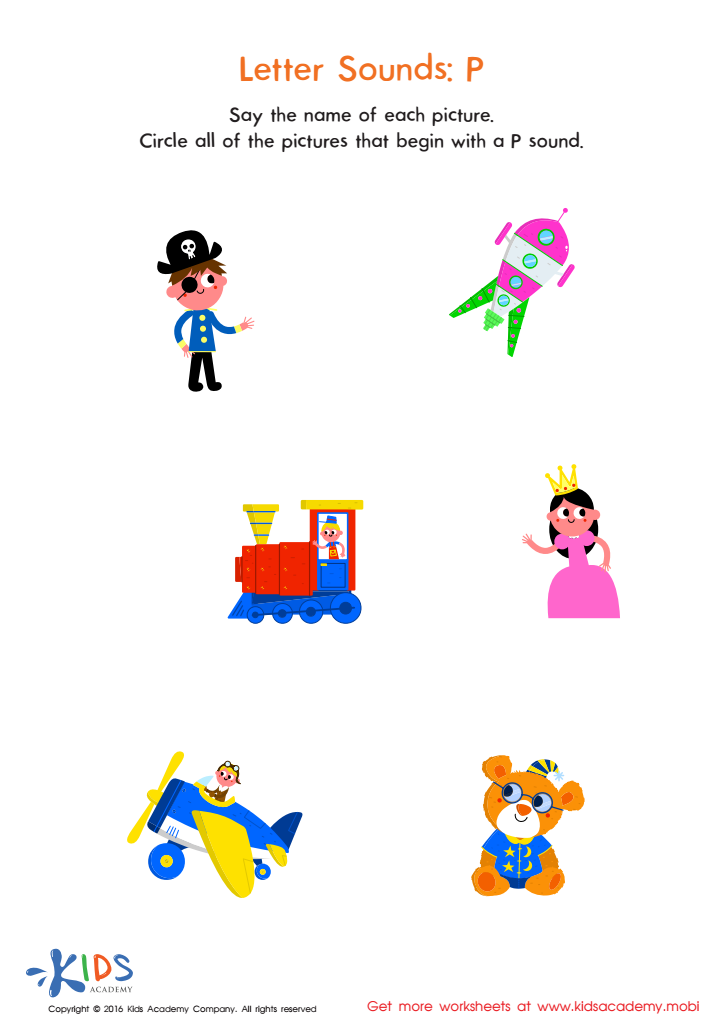
Letter P Sound Worksheet
Think P! Kids practice phonics with this fun letter P worksheet. With delightful illustrations, they'll sound out simple words and get closer to reading.
 Assign to My Students
Letter P Sound Worksheet
Worksheet
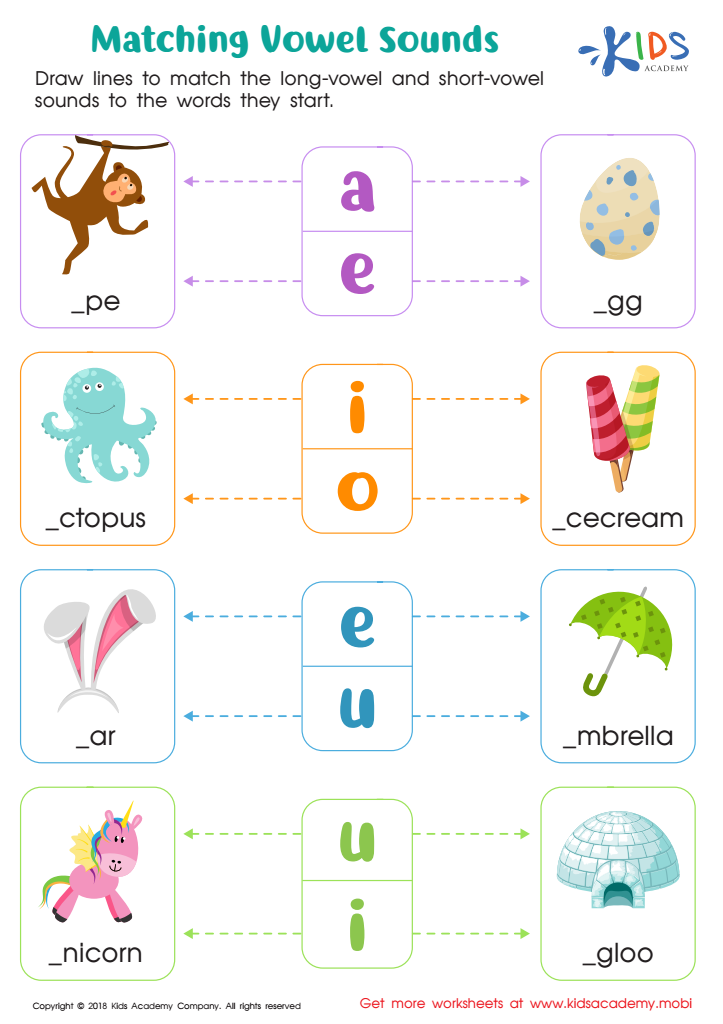
Matching Vowel Sounds Worksheet
Teach your child phonics with a fun worksheet! Ask your child to name a vowel sound and listen if it's long or short. Differentiating between long and short vowel sounds can be tricky, but this matching worksheet makes it easy for kids to understand. Have fun and master phonics - the worksheet will help them understand the difference between long and short vowel sounds!
Matching Vowel Sounds Worksheet
Worksheet
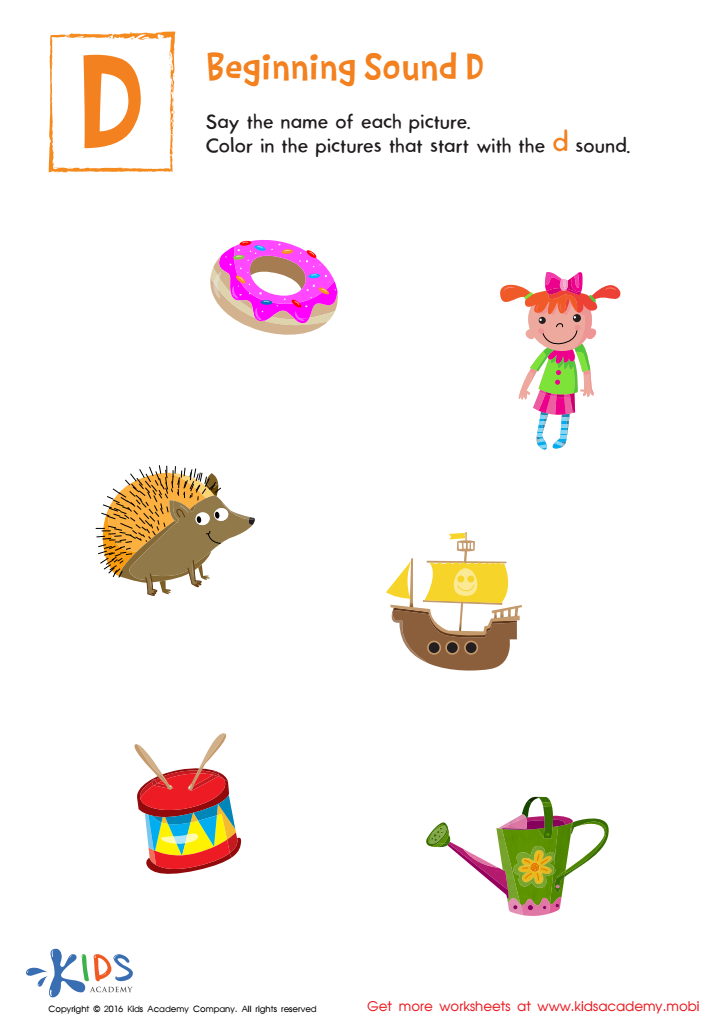
Beginning Sound D Worksheet
Reinforce phonics with this vibrant beginning sound d worksheet! Pictures help kids identify words beginning with 'd' and develop early reading skills. Sounding out each word increases literacy!
Beginning Sound D Worksheet
Worksheet
Join Kids Academy for Free
Who is primarily going to use this learning content?








Phonics development in 4-year-olds is crucial for fostering early literacy skills and setting the foundation for successful reading later on. Understanding phonics—the relationship between letters and their sounds—helps young children develop crucial decoding skills necessary for reading. When parents or teachers prioritize phonics, they support children in recognizing letters, blending sounds, and segmenting words, allowing them to read independently by the time they enter formal schooling.
Engaging in phonics activities can also enhance children's language development, improving their vocabulary and comprehension skills. Moreover, early phonics instruction cultivates confidence in literacy, as children learn to sound out words and develop a love for reading. This success can have long-lasting effects, influencing academic performance across subjects.
Additionally, children who struggle with phonics can be at risk of reading difficulties later on. By nurturing phonics skills early, parents and teachers can identify any challenges and provide targeted support, ensuring that every child has the opportunity to thrive in their literacy journey. Ultimately, phonics development is a shared responsibility that promotes cognitive growth, enhances communication skills, and cultivates a lifelong passion for reading among young learners.







