Phonics recognition Normal Phonics Worksheets for 4-Year-Olds
5 filtered results
-
From - To
Explore our fantastic collection of Phonics Recognition worksheets tailored for 4-year-olds. These highly engaging and educational worksheets are designed to help young learners grasp fundamental phonics skills, enhancing their ability to recognize sounds and letters with ease. Perfect for preschoolers, our worksheets combine fun activities with effective learning strategies, ensuring your child develops a strong phonics foundation. From interactive letter tracing to exciting sound-matching exercises, each worksheet promotes critical reading and writing skills. Visit Kids Academy now to unlock a world of learning and watch your child's phonics abilities flourish! Start creating confident early readers today.
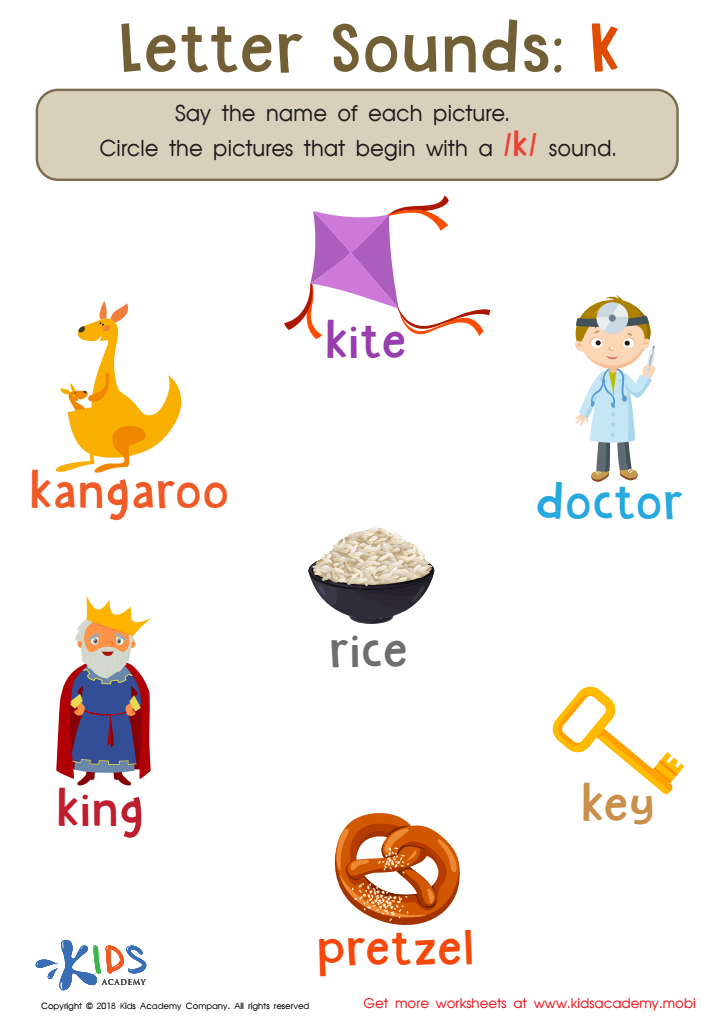
Letter K Sounds Worksheet
 Assign to My Students
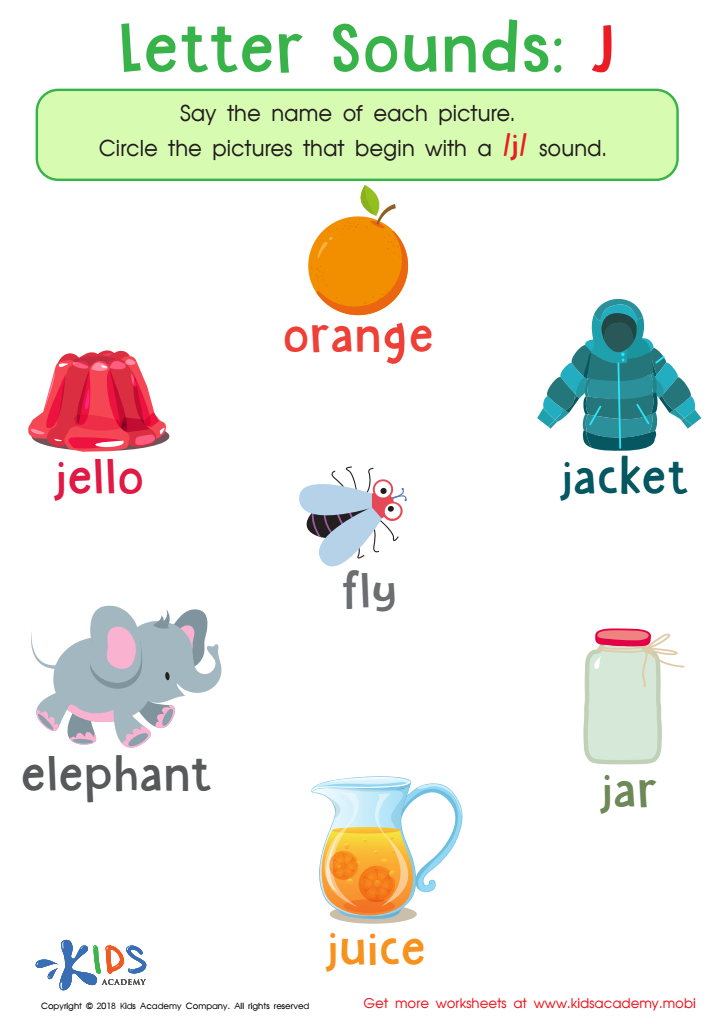
Letter Sounds: J Printable Worksheet
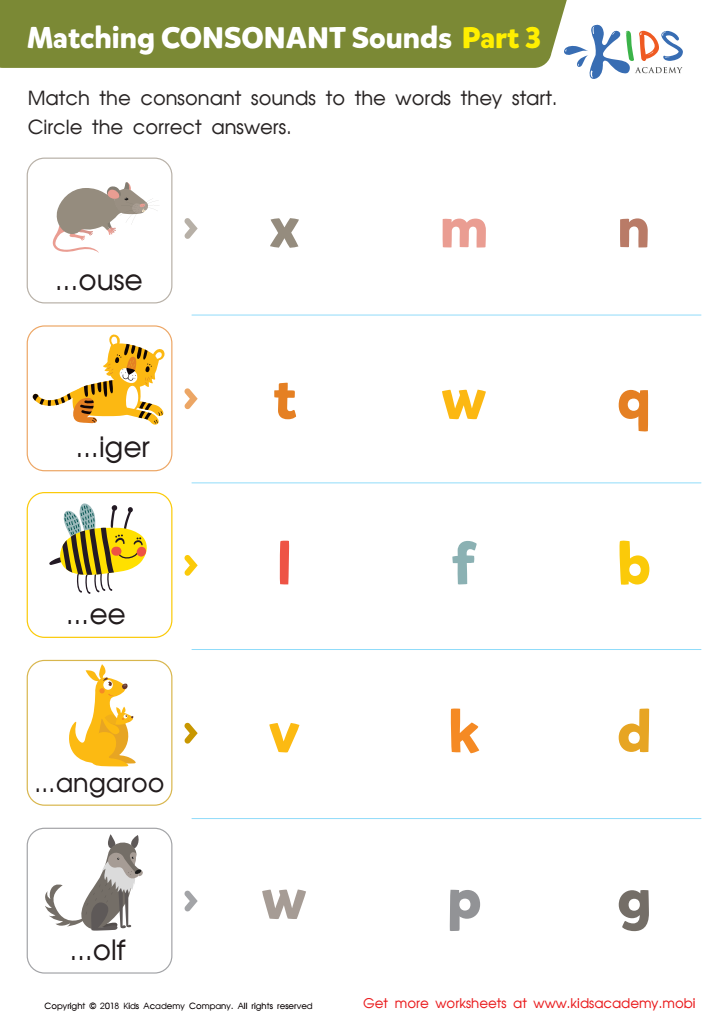
Matching Consonant Sounds: Part 3 Worksheet
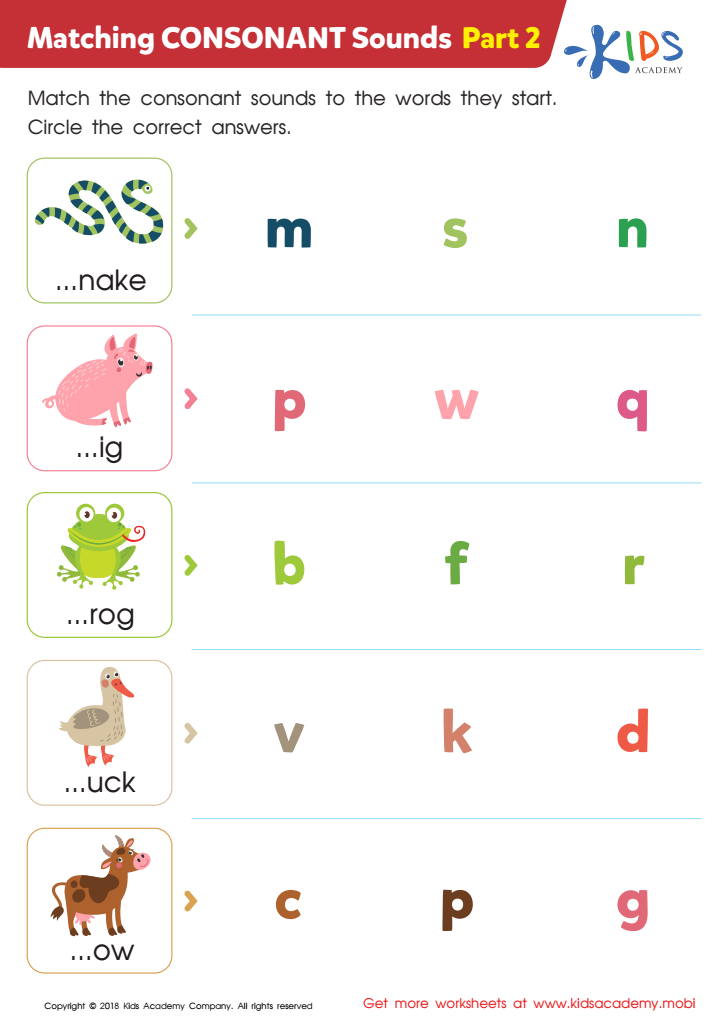
Matching Consonant Sounds: Part 2 Worksheet
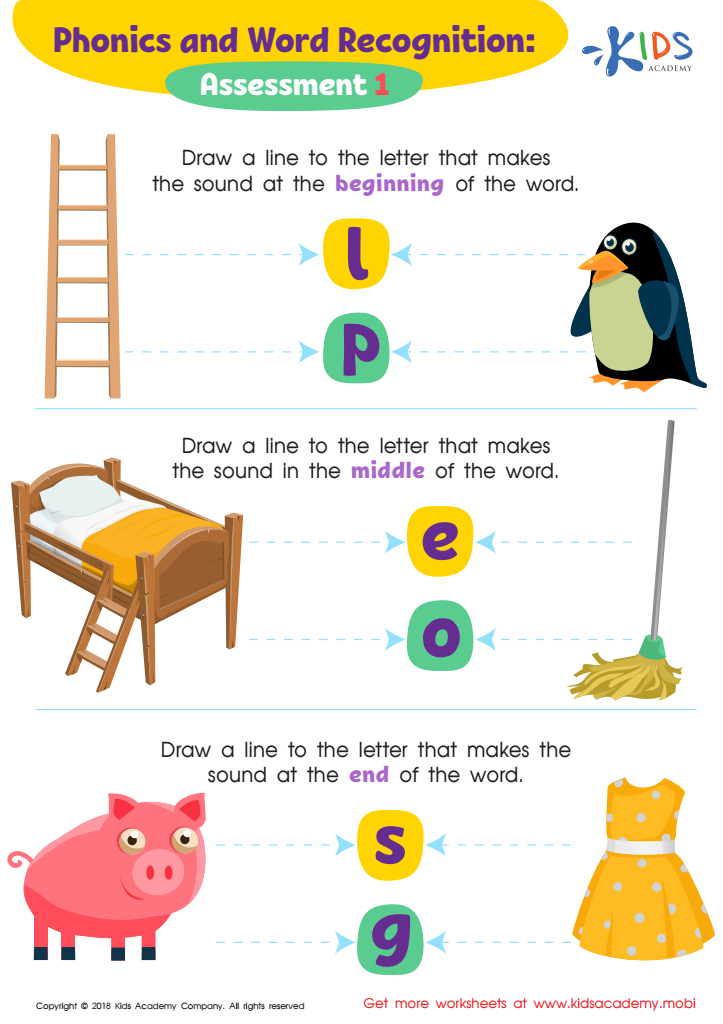
Phonics and Word Recognition: Assessment 1 ELA Worksheet








Phonics recognition is crucial for early literacy development, making it an essential focus for parents and teachers of 4-year-olds. Phonics involves the relationship between letters and the sounds they represent, which is the foundational building block for reading and writing skills.
When children learn phonics at an early age, they gain the ability to decode words by sounding them out. This ability boosts their reading confidence, enabling them to tackle new words independently and enjoy the reading process more freely. A solid grasp of phonics also enhances spelling, as children can break down words into their individual sounds and match these to corresponding letters.
Early phonics instruction helps children develop phonemic awareness, the understanding that words are composed of individual sounds. This awareness is a critical component of early reading skills and has been linked to better reading comprehension later on. Additionally, early mastery of phonics helps to identify and address potential reading difficulties or dyslexia at a younger, more manageable stage.
Caring about phonics recognition in 4-year-olds is investing in their academic future. By supporting our young learners in mastering phonics, parents and teachers are setting them on a path to become proficient, confident, and enthusiastic readers, which has overarching benefits for their education and lifelong learning.







