Rhyming skills development Normal Rhyming Worksheets for 4-Year-Olds
3 filtered results
-
From - To
Enhance your 4-year-old's pre-reading abilities with our Rhyming Skills Development worksheets! These engaging, age-appropriate resources help young learners identify and create rhymes, build their phonemic awareness, and develop a strong foundation for future reading success. Each worksheet is carefully crafted to make learning fun and effective, featuring adorable illustrations and simple exercises. Designed by early education experts, our worksheets not only promote language skills but also foster creativity and critical thinking. Perfect for both classroom and at-home learning, give your child the gift of rhyming mastery today!

Rhyming Words Rhyming Worksheet
 Assign to My Students
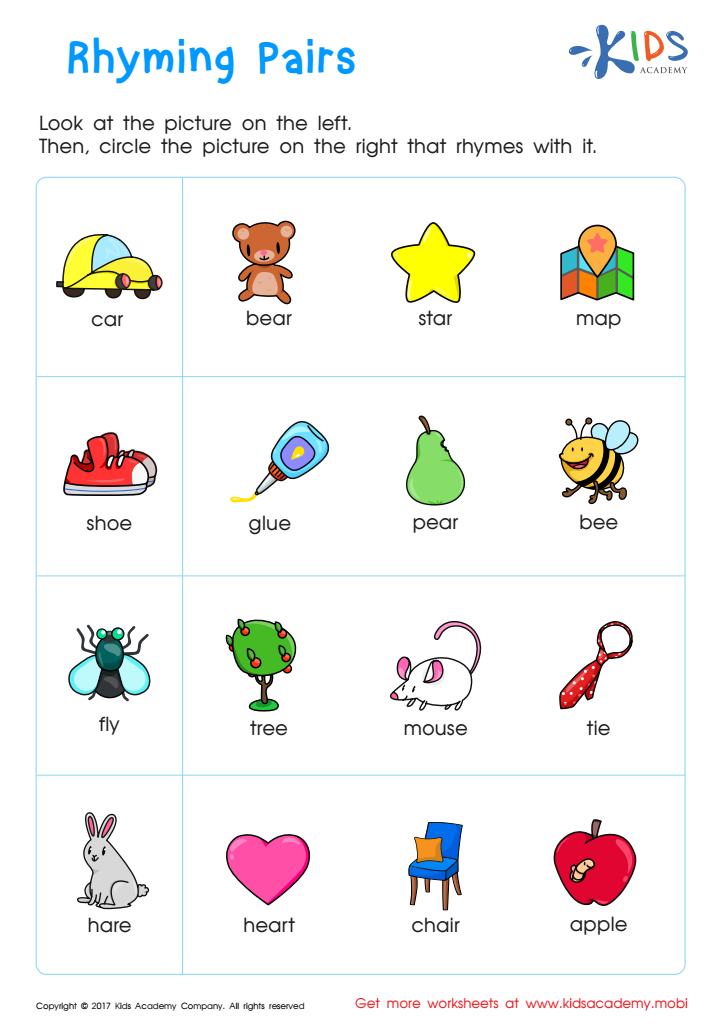

First Words: Picture Rhymes Worksheet








Rhyming skills are a crucial part of early childhood development, especially for 4-year-olds. These skills underpin phonological awareness, which is vital for later success in reading and writing. When children recognize and produce rhymes, they are honing their ability to hear, identify, and manipulate the distinct units of sound, or phonemes, within words. This mastery lays the groundwork for decoding and word recognition abilities.
Engaging in rhyming activities is not just about fun and games—though these can be enjoyable! Rhyming helps children grasp language patterns, an understanding that makes learning to read simpler and more intuitive. Rhymes boost vocabulary by exposing children to different words and structures in engaging and memorable contexts.
Moreover, rhyming fosters critical listening skills and enhances memory retention. When hearing or creating rhymes, children must listen carefully and think creatively, which bolsters cognitive development. This repetition and music-like quality also make it easier for kids to remember words and sounds.
On a social level, rhyming can support emotional and social learning. Singing and reciting rhymes together can enhance bonding, cooperation, and increase a child’s confidence in speaking. Given these benefits, parents and teachers should undoubtedly incorporate rhyming into early learning activities, further supporting a child's comprehensive development.






