Visual discrimination skills Normal Upper & Lowercase Letters Worksheets for 4-Year-Olds
4 filtered results
-
From - To
Enhance your child's reading readiness with our Visual Discrimination Skills Normal Upper & Lowercase Letters Worksheets designed for 4-year-olds. These engaging and educational printables help young learners distinguish between uppercase and lowercase letters, sharpening their visual discrimination abilities. Each worksheet features a variety of fun activities, including matching, tracing, and identifying letters, tailored to captivate children's interest. With vibrant illustrations and clear instructions, these worksheets support early literacy development and prepare children for future academic success. Visit our website to download and start boosting your child's letter recognition skills today!
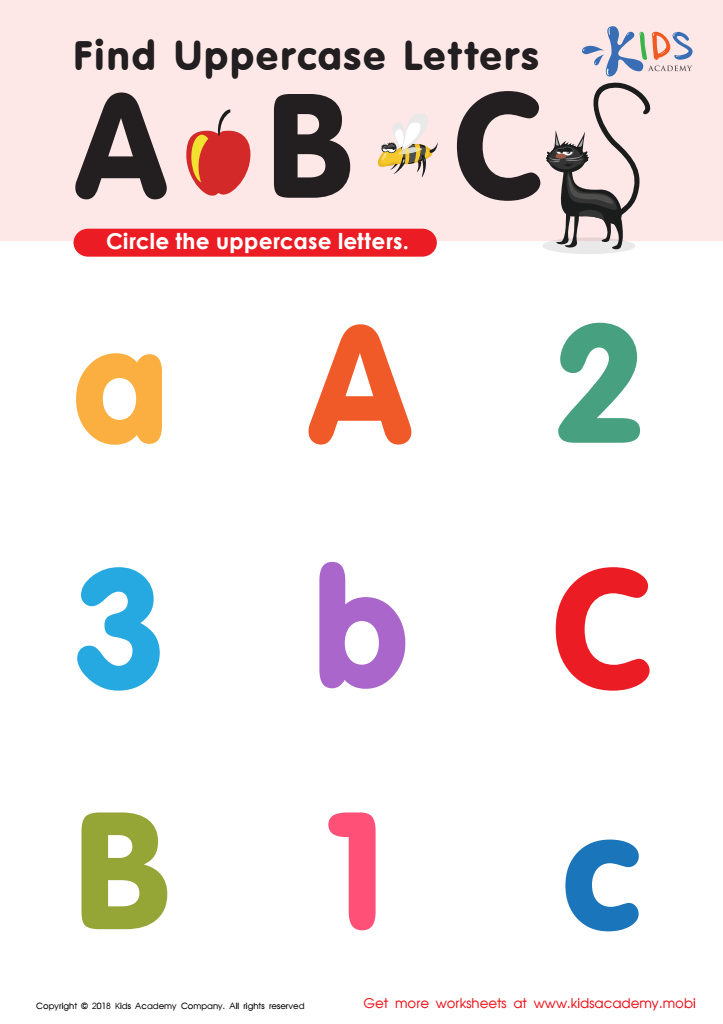
Find Uppercase Letters A, B, and C Worksheet
 Assign to My Students

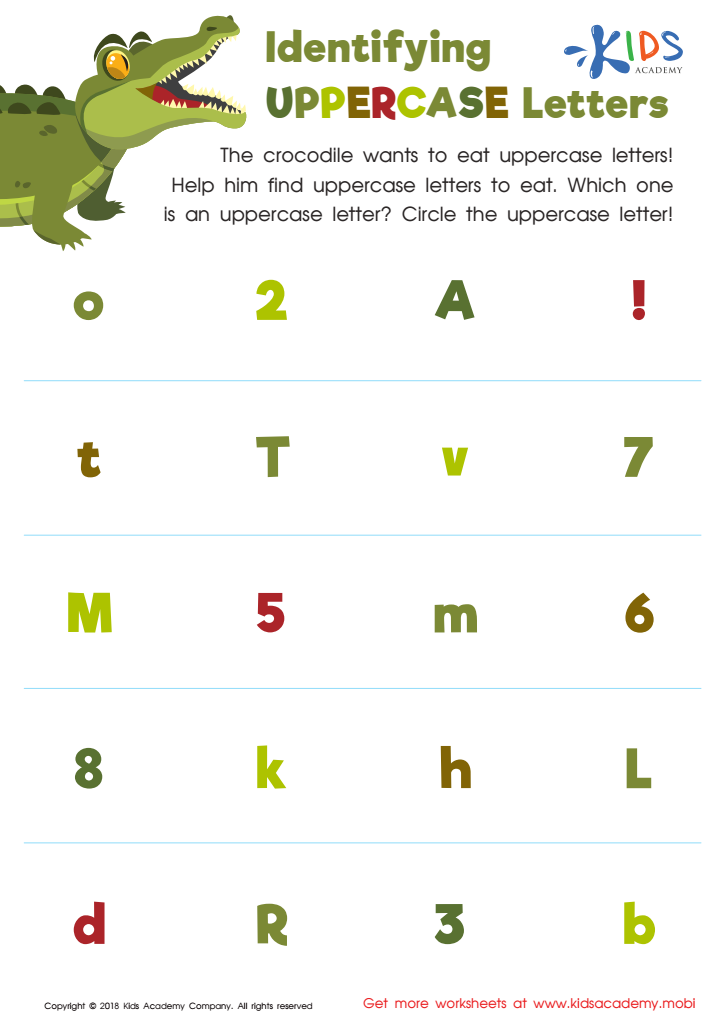
Identifying Uppercase Letters Worksheet
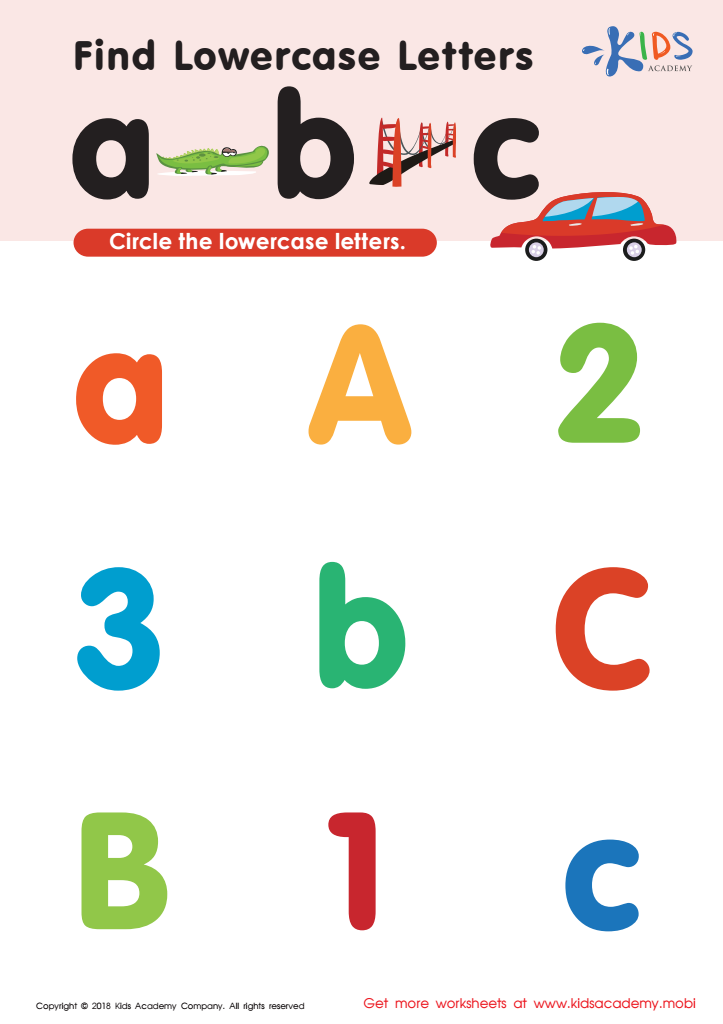
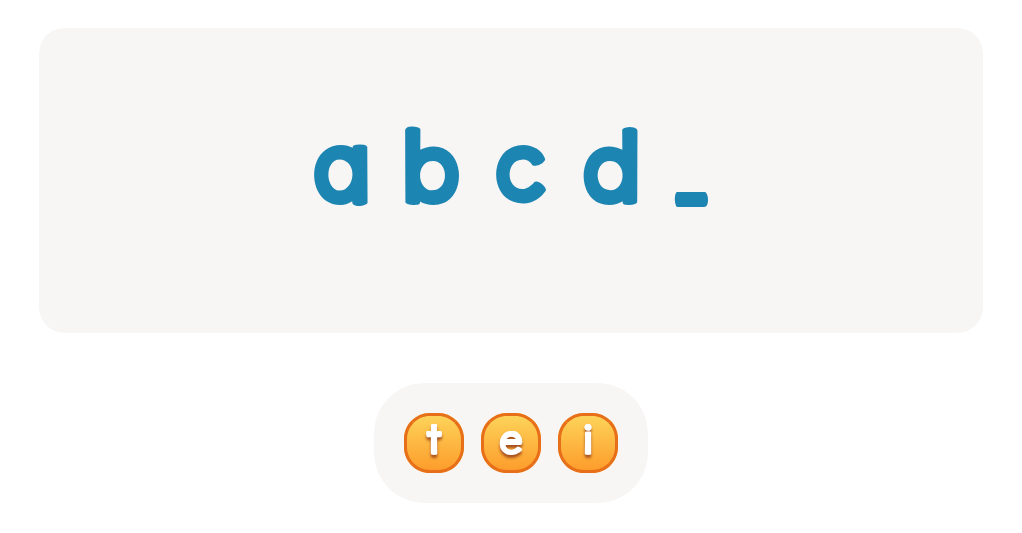
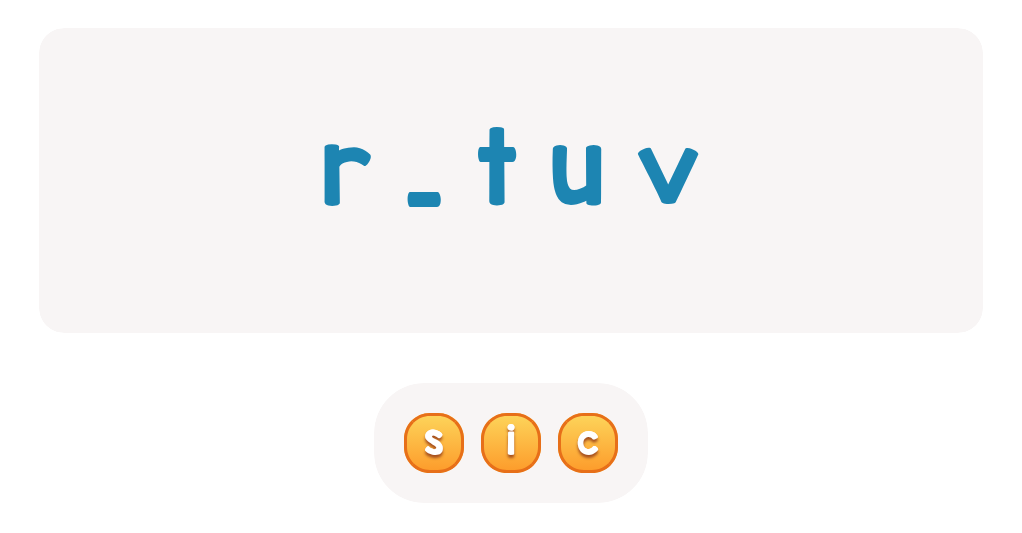
Find lowercase letters a b c Worksheet
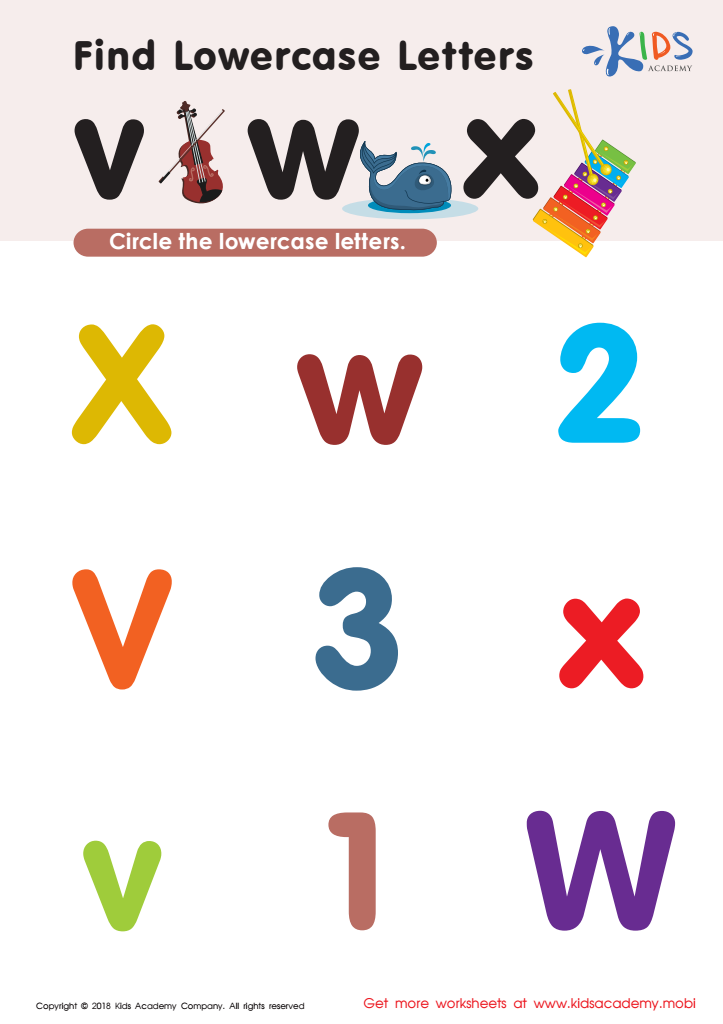
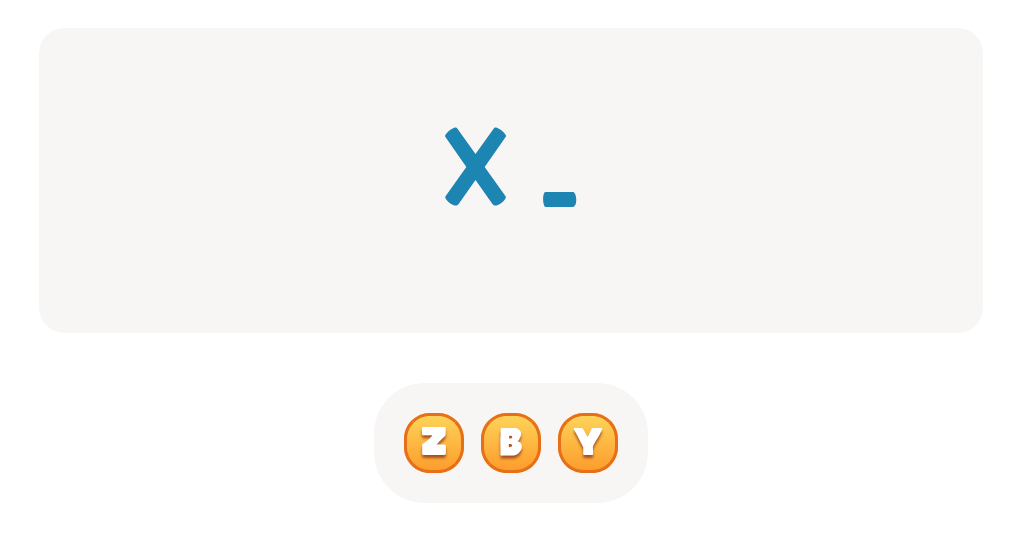
Find Lowercase Letters v w x Worksheet






Visual discrimination skills, especially in recognizing upper and lower case letters, are foundational for young children's literacy development. These skills enable children to distinguish between different shapes, letters, and symbols, which is crucial for reading and writing proficiency. When 4-year-olds can accurately differentiate and identify upper and lowercase letters, they are more likely to develop strong reading skills as they grow older.
Parental and educational support in honing these skills ensures that children can smoothly transition from pre-reading activities to actual reading. Early recognition of letter forms helps children understand that each letter has a corresponding sound, paving the way for phonemic awareness. Consistency in distinguishing correct letter forms also aids in the development of handwriting skills, promoting fluent writing as they progress through school.
Moreover, fostering these skills at an early age builds children's confidence in their abilities to interact with written language. With improved visual discrimination, children can follow instructions better, engage more fully in classroom activities, and feel less frustrated when learning to read and write. Ultimately, early attention to visual discrimination equates to better educational outcomes, underscoring the importance of parental and teacher involvement in fostering these skills in preschool-aged children.







