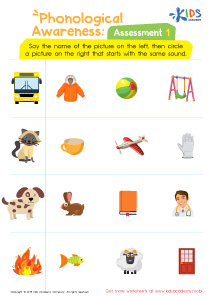
Vocabulary development Normal Vowels Worksheets for 4-Year-Olds
4 filtered results
-
From - To
Unlock your child's potential with our engaging Vocabulary Development Normal Vowels Worksheets designed specifically for 4-year-olds! These fun, interactive worksheets focus on essential vowel sounds to enhance early language skills. Through colorful illustrations and simple activities, your little learners will explore words associated with each vowel, boosting their vocabulary and comprehension. Our thoughtfully crafted exercises make learning enjoyable, encouraging kids to connect sounds with letters and words. Ideal for preschoolers, these worksheets support fine motor skills while fostering a love for reading and language. Start your child's journey to literacy today with our captivating vowel-themed resources!
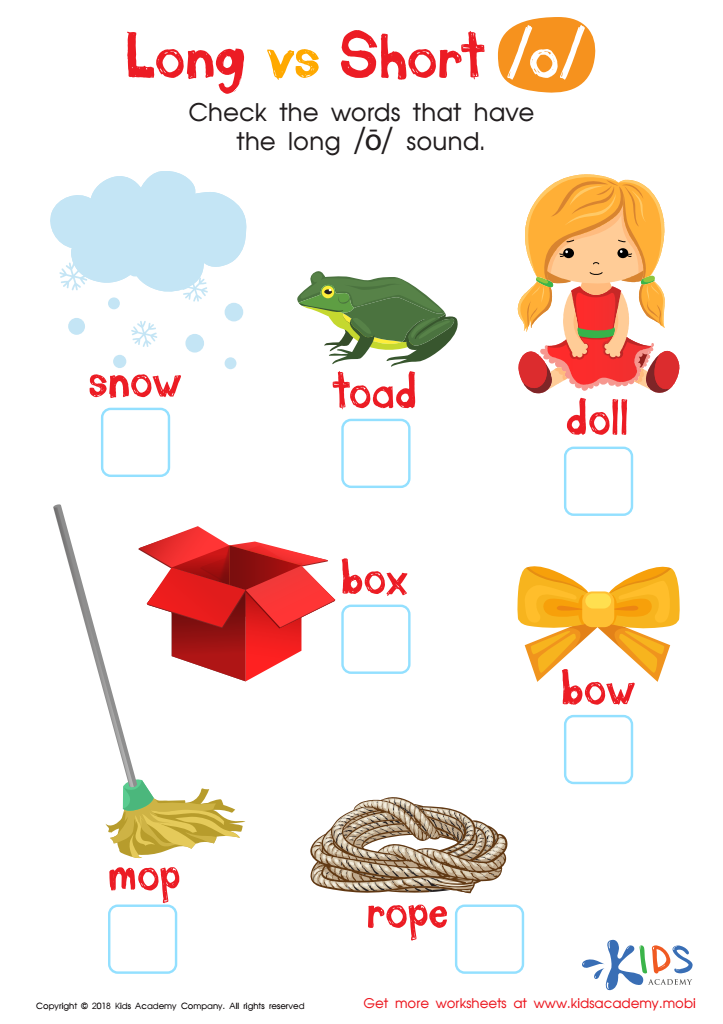
Long vs Short O Reading Worksheet
 Assign to My Students
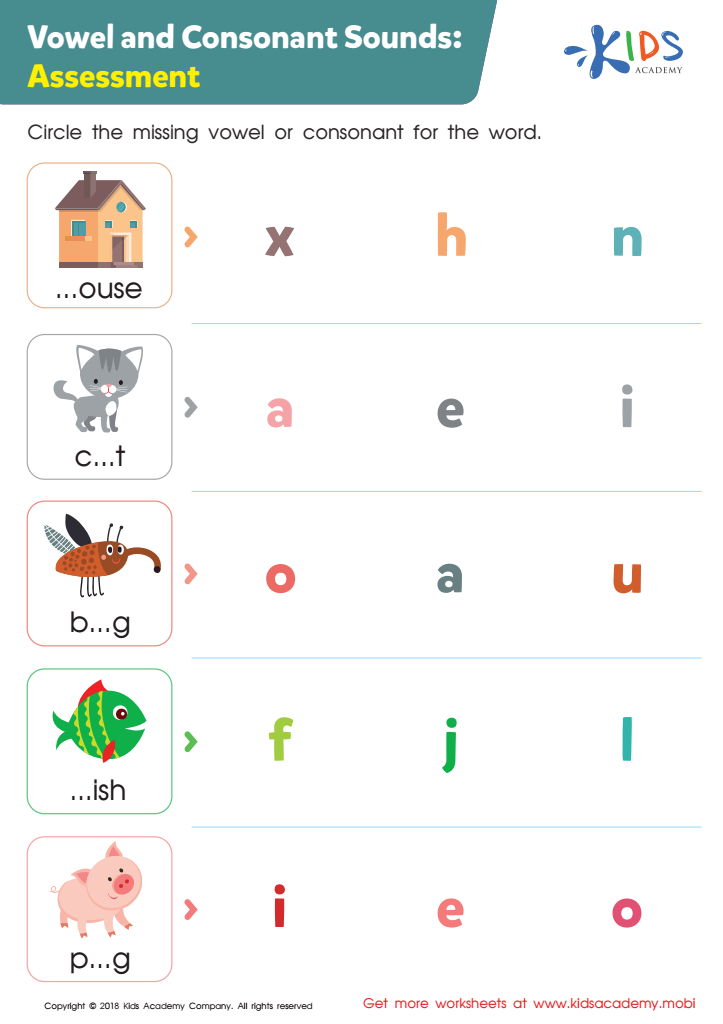
Vowel and Consonant Sounds: Assessment Worksheet
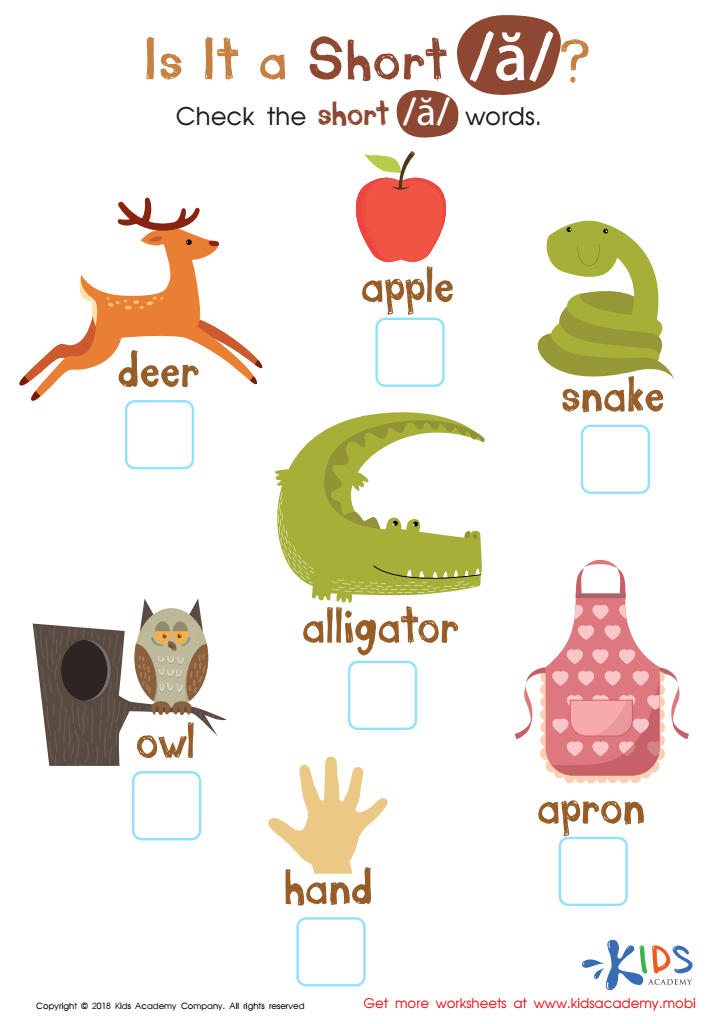
Is It Short A? Reading Worksheet
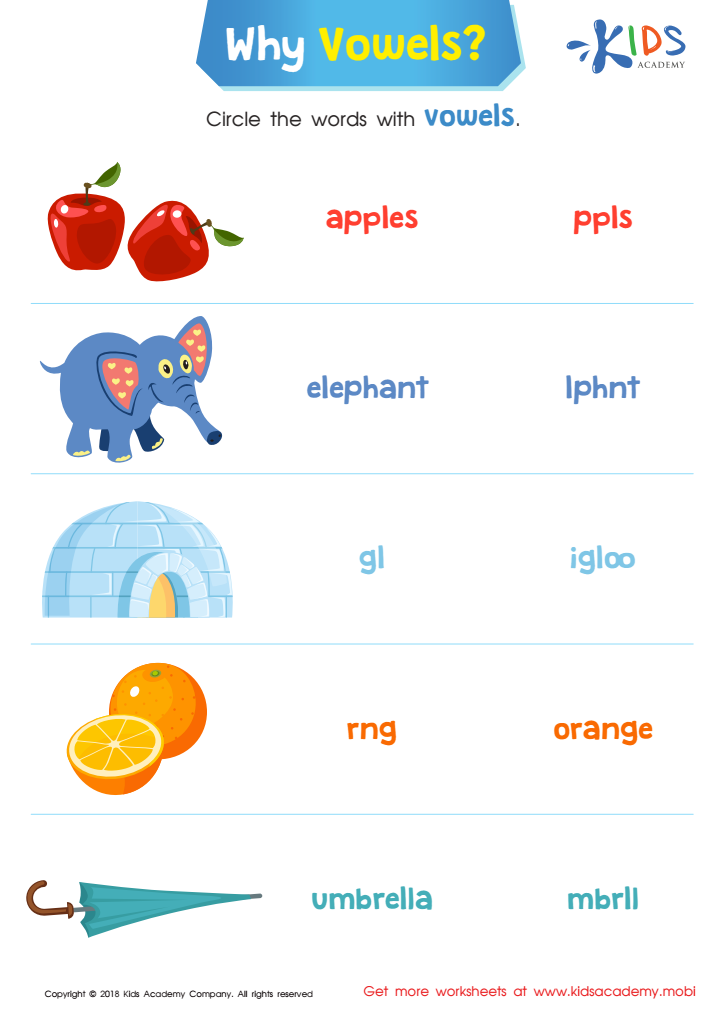
Why Vowels? Reading Worksheet





Vocabulary development, particularly focusing on normal vowels, is essential for 4-year-olds as it forms the foundation for effective communication and literacy. At this age, children are rapidly expanding their language skills, learning to express their thoughts, needs, and feelings. Through vowel-focused activities, they become more aware of the sounds and structures of words, which enhances their pronunciation and spelling abilities.
Parents and teachers play a vital role in facilitating this growth. Engaging children in playful interactions—such as singing, rhyming, and storytelling—encourages them to recognize and use new vocabulary in context. This not only boosts their verbal skills but also fosters confidence in social situations.
Moreover, a strong vocabulary is linked to better reading comprehension later on. When children master the sounds of normal vowels, they can decode words more easily, making the transition to reading smoother. This early investment in language skills directly influences their academic trajectory, enhancing their ability to understand complex concepts in the future.
In summary, fostering vocabulary development centered around normal vowels in 4-year-olds is crucial. It empowers them socially, emotionally, and academically, paving the way for lifelong learning and communication skills.