Understanding communities Normal Worksheets for 4-Year-Olds
3 filtered results
-
From - To
"Understanding Communities Normal Worksheets for 4-Year-Olds" is designed to help young children explore and grasp how communities function. These engaging and age-appropriate worksheets introduce essential social skills and concepts, such as identifying community helpers, recognizing community places, and understanding roles within a community. By blending fun activities with foundational learning, these worksheets support the development of critical thinking and promote an early appreciation of diverse communities. Perfect for parents and educators, these printable worksheets offer a valuable resource for nurturing young minds and fostering a sense of belonging and responsibility in the wider world.
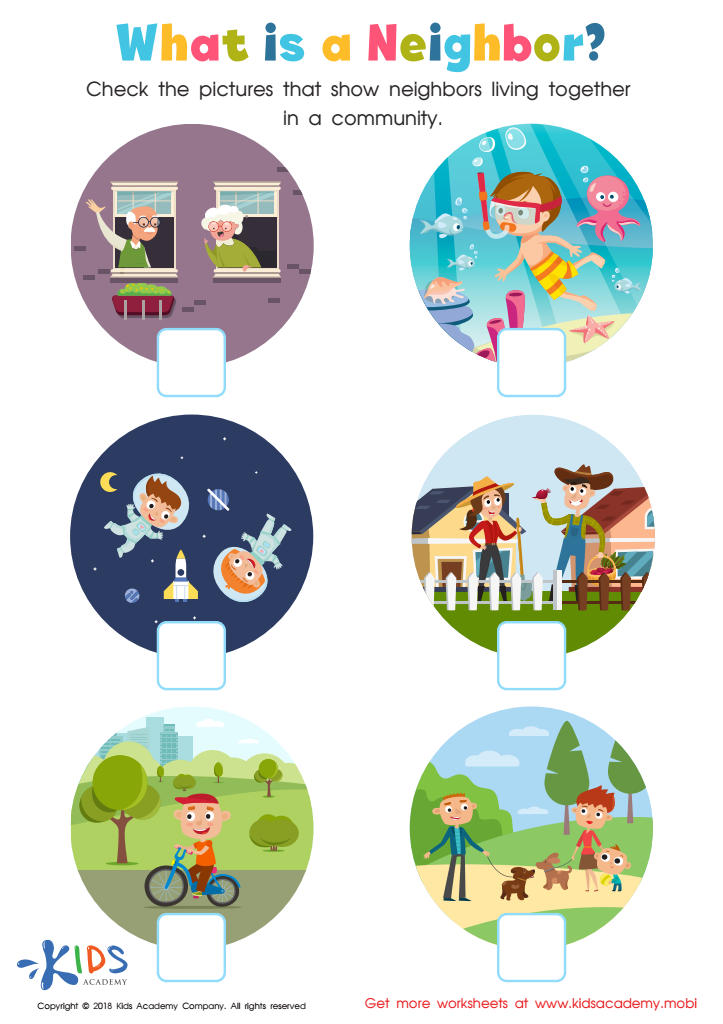
What is a neighbor Worksheet
 Assign to My Students
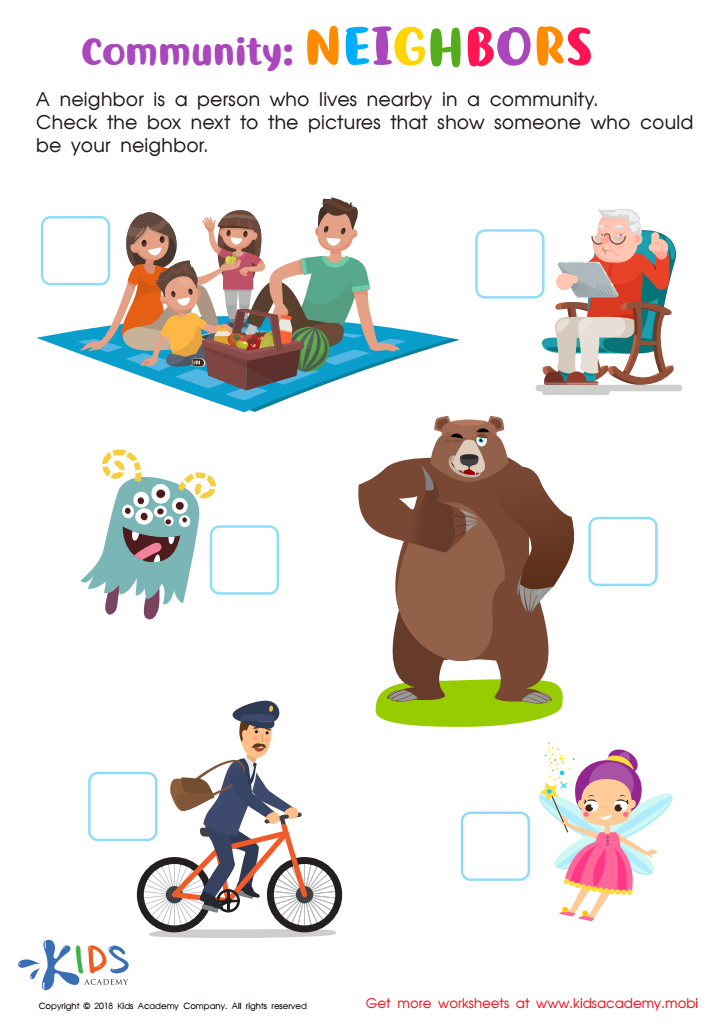
Community: Neighbors Worksheet
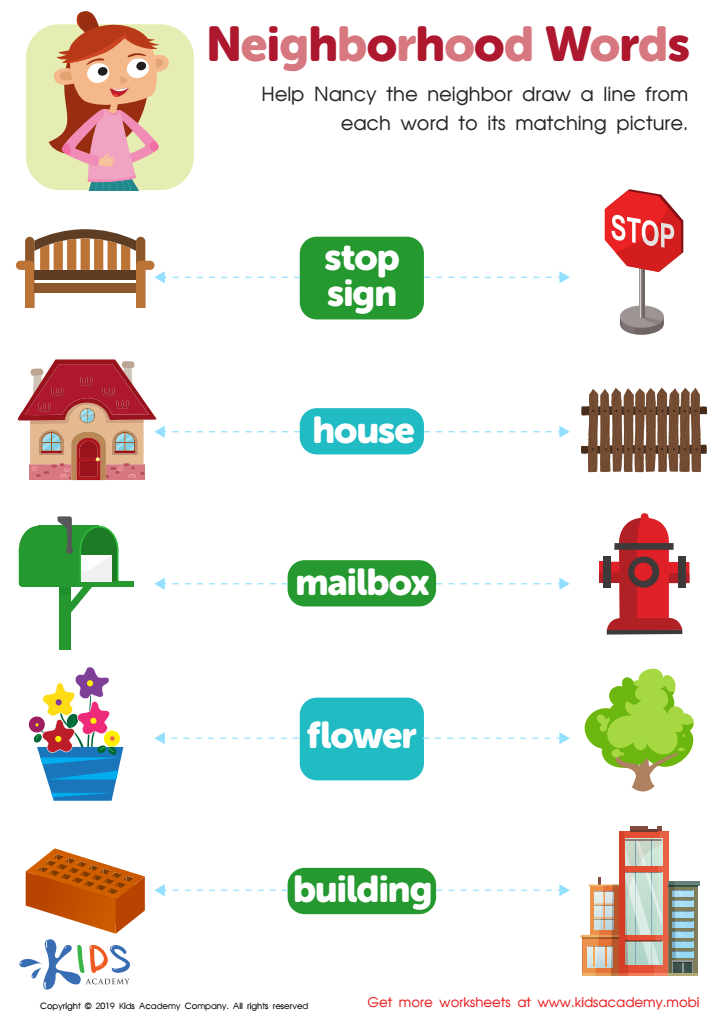
Neighborhood Words Worksheet







Understanding "communities" is crucial for 4-year-olds as it lays the foundation for their social and emotional development. In early childhood, children start recognizing the importance of relationships and communities around them, such as families, preschool settings, and neighborhoods. By teaching kids about communities, parents and teachers help them gain a sense of belonging and security. This foundational understanding fosters empathy, cooperation, and shared responsibility.
At this impressionable age, children are highly observant and tend to imitate the behaviors and attitudes of adults around them. Guiding them to appreciate diversity, respect differences, and engage with others positively can sculpt them into caring, responsible adults. Moreover, understanding communities introduces basic social norms and helps children learn important skills like communication, sharing, and problem-solving.
Parents and teachers play a pivotal role by creating engaging experiences that highlight community roles and values. Activities like playing "community helper" dress-up, storytelling, or neighborhood walks facilitate real-world learning. Encouraging curiosity and answering their questions about community functions helps solidify their understanding.
Overall, investing in teaching kids about communities nurtures inclusive mindsets, enhances social skills, and supports holistic development, preparing them for future interpersonal interactions and societal contributions.








