Spatial reasoning Normal Math Worksheets for 4-Year-Olds
3 filtered results
-
From - To
Enhance your 4-year-old's spatial reasoning skills with our engaging math worksheets! These thoughtfully designed printable resources help young learners explore shapes, patterns, and spatial relationships through fun activities. Each worksheet features colorful illustrations and simple instructions, making it easy for kids to understand and enjoy while they learn. By interacting with these worksheets, children will develop critical thinking skills and improve their ability to visualize and manipulate objects in space. Perfect for home or classroom use, our spatial reasoning worksheets provide a solid foundation for future math success. Start fostering your child's love for learning today!
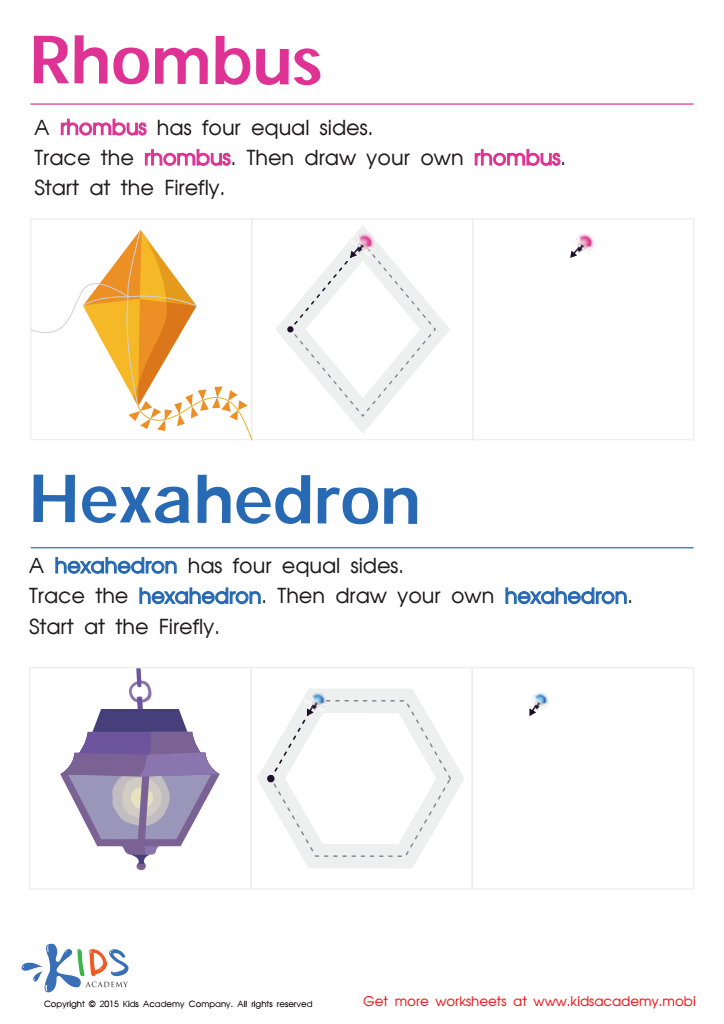
Draw a Rhombus And a Hexahedron Printable
 Assign to My Students
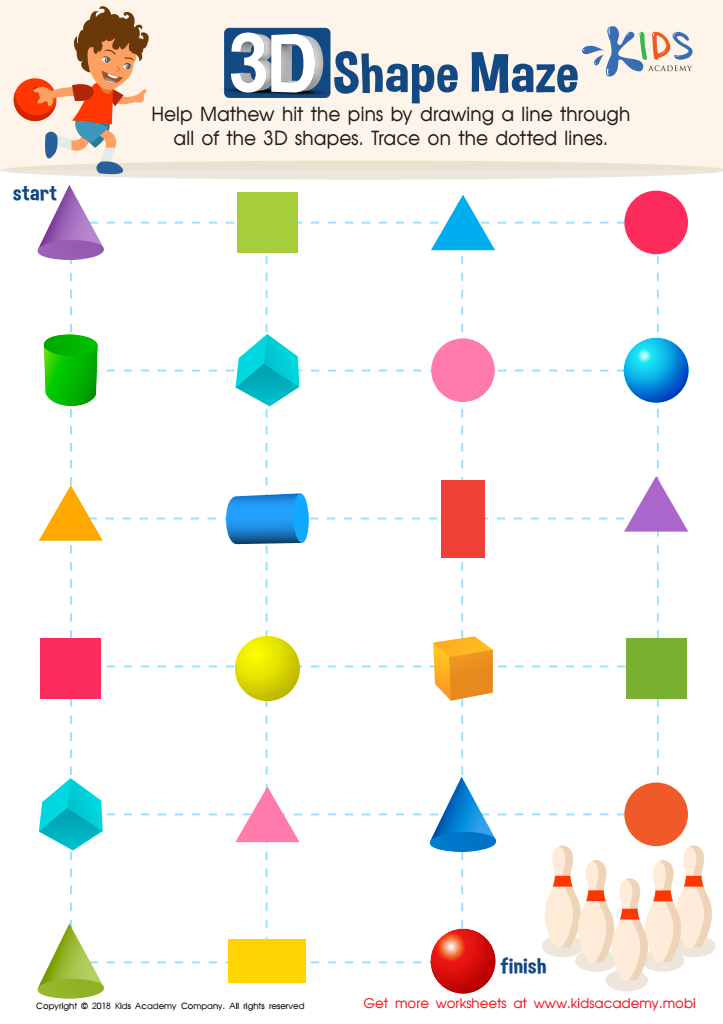
Shapes Maze Geometry Worksheet
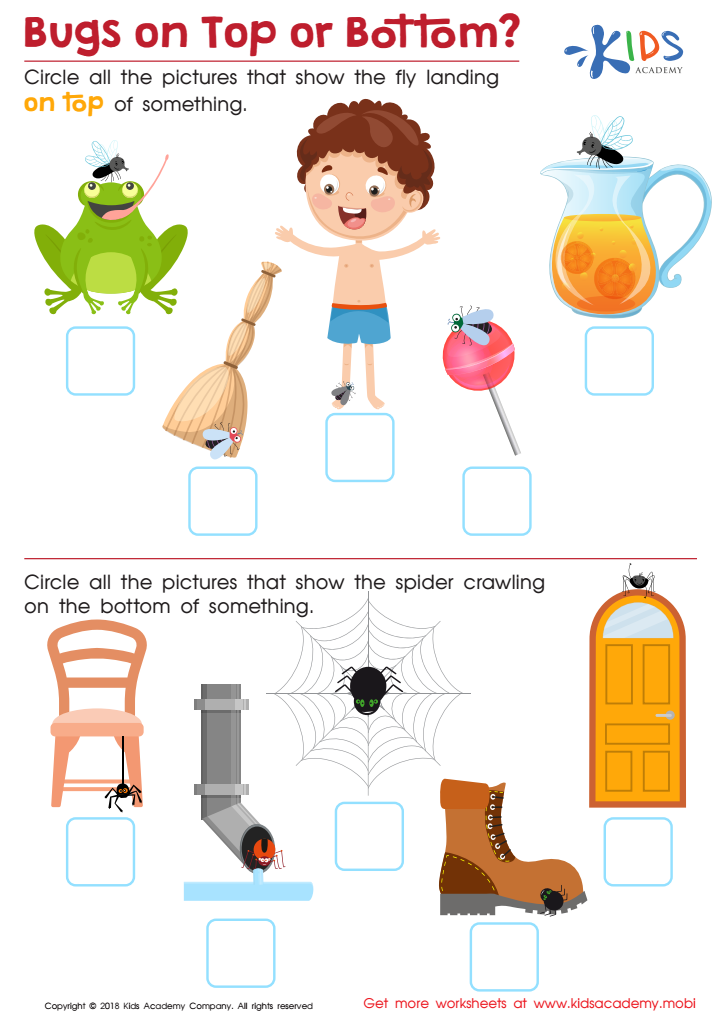
Bugs on Top or Bottom? Worksheet







Spatial reasoning is an essential cognitive skill that involves understanding how objects relate to each other in space. For 4-year-olds, developing spatial reasoning is crucial as it forms the foundation for mathematical concepts, problem-solving abilities, and everyday tasks. When parents and teachers emphasize spatial reasoning alongside traditional math learning, they help children appreciate shapes, sizes, and the relationships between objects—skills that are not only vital in mathematics but also in creativity and critical thinking.
Incorporating spatial reasoning into learning encourages children to engage in activities such as building blocks, puzzles, and art projects, which stimulate their imaginations and improve fine motor skills. These activities help strengthen their ability to visualize and manipulate objects mentally, setting the stage for future learning in geometry and measurement.
Moreover, research has shown a positive correlation between strong spatial reasoning skills and higher achievement in STEM (science, technology, engineering, mathematics) fields. By nurturing spatial skills at this early age, parents and teachers can help children become more adept thinkers, better problem-solvers, and lifelong learners who are capable of navigating both academic and everyday challenges with confidence. Enriching a child's spatial understanding offers them essential tools for success in school and beyond.








