Understanding Quantities Normal Math Worksheets for 4-Year-Olds
3 filtered results
-
From - To
Explore our "Understanding Quantities" Normal Math Worksheets for 4-Year-Olds to enhance your child's early math skills. Our expertly crafted worksheets focus on helping young learners grasp the fundamental concepts of counting, comparing, and recognizing quantities in an engaging and interactive way. Each worksheet is designed to make learning enjoyable and accessible, providing fun activities that appeal to a child’s imagination. Ideal for both classroom and home use, these resources will set the foundation for future math success by nurturing number sense and critical thinking in your child. Unlock your child's numerical potential today!
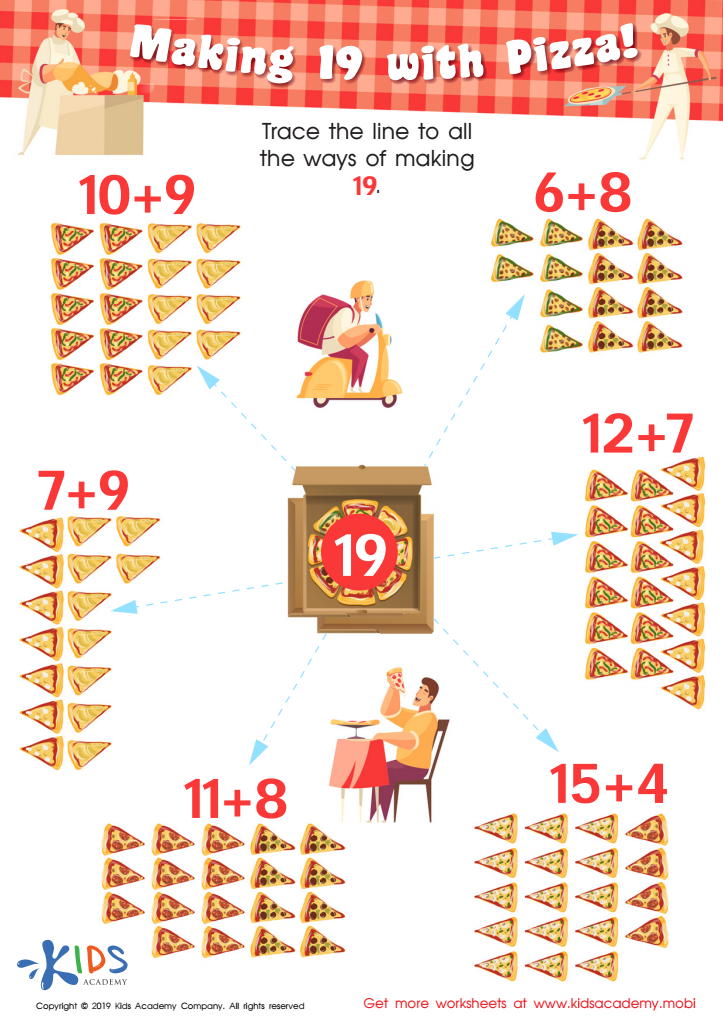
Making 19 with Pizza! Worksheet
 Assign to My Students
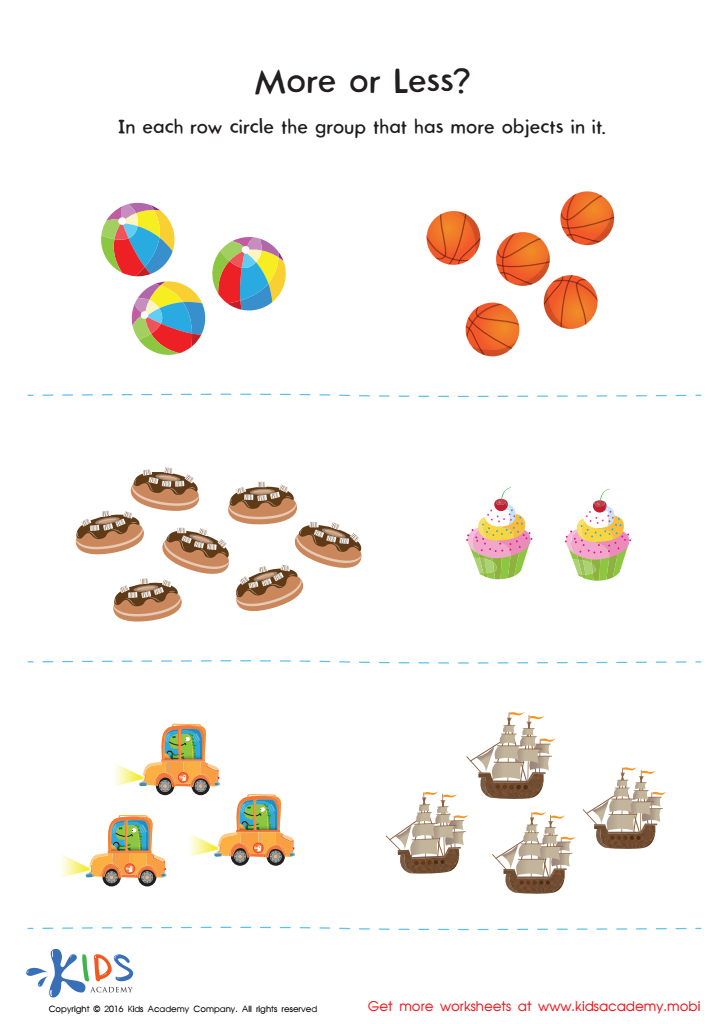
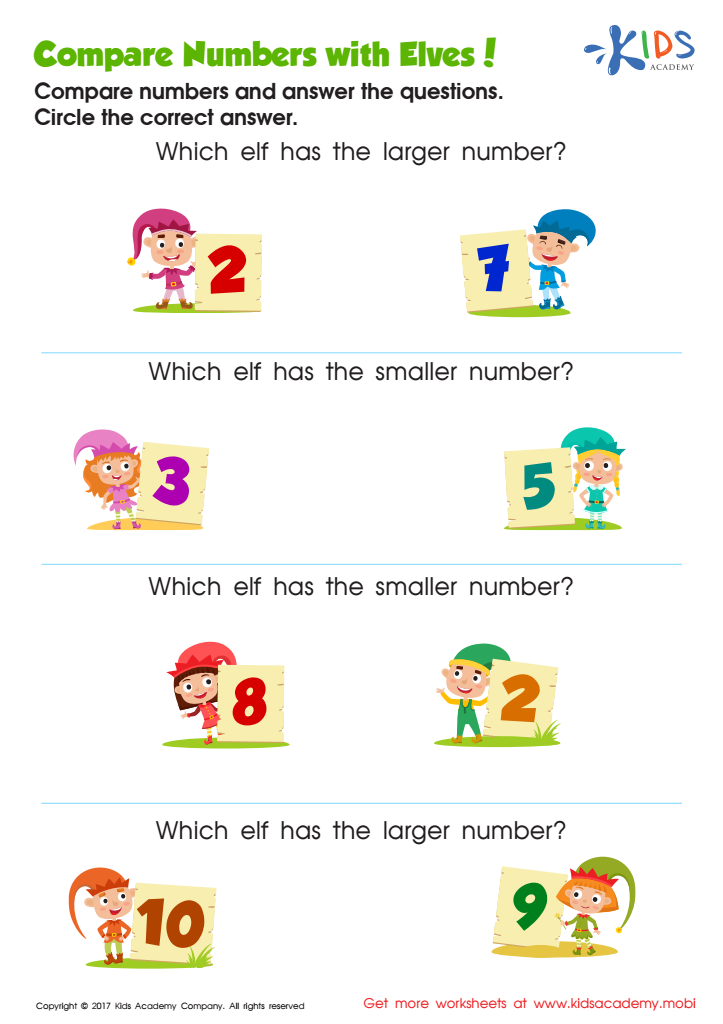
Comparing Numbers Worksheet for Kindergarten








Understanding quantities is a foundational math skill crucial for 4-year-olds as it sets the stage for more complex mathematical concepts they will encounter later in life. For parents and teachers, prioritizing this aspect of early math education is vital for multiple reasons.
First, grasping quantities promotes number sense, which is the ability to understand, relate, and connect numbers. When children can match objects to numbers or understand amounts, they begin to form a concrete understanding that numbers represent specific quantities. This skill allows them to engage in basic addition and subtraction as they move forward to more advanced stages of math learning.
Second, early comprehension of quantities fosters critical thinking and problem-solving abilities. These are essential skills not only in math but in everyday situations that require logical reasoning and decision-making. Engaging young learners with activities that involve counting, comparing, and sorting items helps develop these cognitive skills.
Lastly, an early focus on understanding quantities builds confidence. When children feel comfortable with basics, they are more likely to approach new challenges with a positive mindset. Confidence in their math abilities can lead to academic success and an eagerness to learn.
Overall, understanding quantities isn't just about numbers; it's about developing a stronger, well-rounded foundation for lifelong learning and critical thinking skills.








